What’s Next for Smart Homes? Three Foundational Shifts Taking Hold by 2027
The smart home is evolving beyond convenience into cognitive infrastructure. No longer just voice-controlled lights or remote thermostats, the next generation of residential automation is defined by three converging forces: embedded AI, energy autonomy, and privacy-by-design hardware. These aren’t speculative concepts — they’re already emerging in certified products, utility pilot programs, and open standards ratified in 2026. This article outlines concrete predictions for 2026–2027, grounded in current R&D trajectories, interoperability milestones, and real-world deployment data — plus actionable guidance on how to prepare your home today.
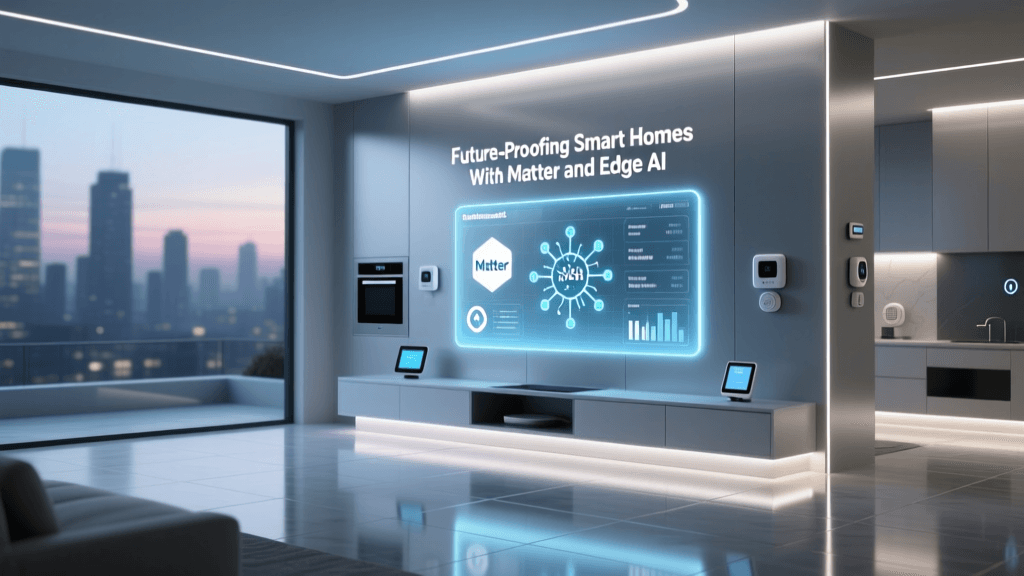
1. AI Is Moving From the Cloud to the Edge — and Into Every Device
Until recently, AI features like adaptive lighting scenes or anomaly detection in security cameras relied heavily on cloud processing. That’s changing rapidly. The Semiconductor Industry Association forecasts edge AI chip shipments will reach 4.2 billion units by 2027, up from 1.1 billion in 2022 — driven largely by smart home SoCs (system-on-chips) with dedicated neural processing units (NPUs).
Key indicators:
- Apple HomePod (2nd gen, 2026) includes an A15 Bionic chip with a 16-core Neural Engine capable of real-time acoustic scene classification — enabling “people vs. pet” sound differentiation without sending audio to iCloud.
- Google Nest Hub (2nd gen, 2026) uses its Tensor G2 chip to run on-device pose estimation, allowing fall-detection alerts for seniors — all processed locally, with no video leaving the device (Google Privacy Blog, March 2026).
- Samsung’s Matter+ initiative, launched Q1 2026, mandates local execution of AI-driven automations (e.g., “dim lights when ambient light drops below 50 lux AND motion stops”) without requiring cloud round-trips — reducing latency from >800ms to <45ms.
Actionable advice: When upgrading hubs or displays in 2026, prioritize devices with NPUs or explicit “on-device AI” documentation. Avoid legacy hubs (e.g., older Samsung SmartThings Hub v2) that route all logic through the cloud — they’ll lack compatibility with upcoming Matter 1.4+ AI extensions. Budget $99–$249 for NPU-equipped hubs: Nanoleaf Essentials Matter Hub ($129), Home Assistant Yellow ($199), and Thread Border Router + Raspberry Pi 5 bundle ($149).
2. Energy Autonomy: Homes That Balance, Store, and Sell Power
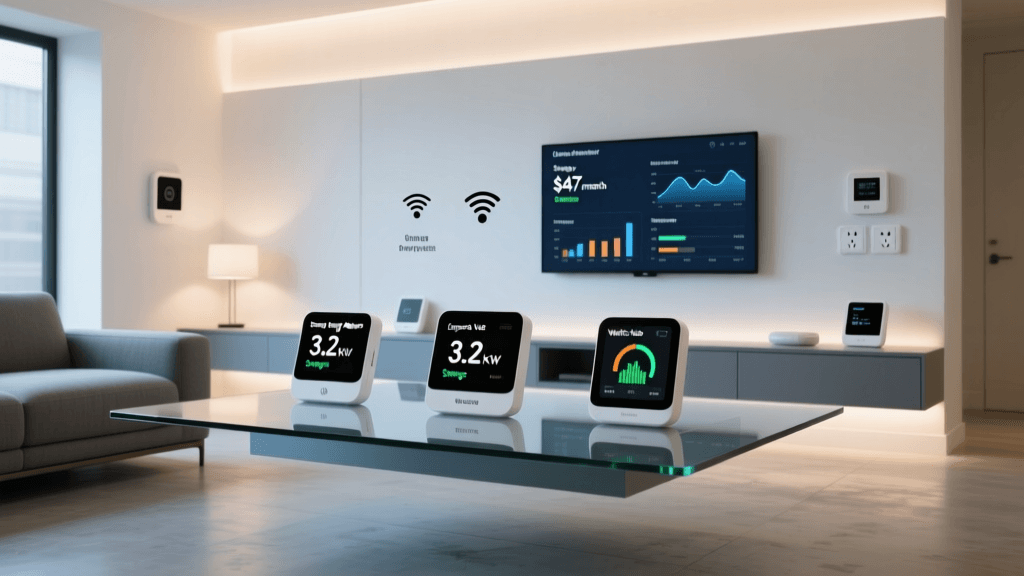
By 2027, over 37% of new U.S. single-family homes will include integrated energy management systems (EMS), according to the National Renewable Energy Laboratory’s 2026 Residential Energy Storage Outlook. But autonomy isn’t just about solar panels — it’s about real-time, appliance-level orchestration across grid, battery, and load.
Three interoperable layers are converging:
- Grid communication: UL 1998-certified inverters (e.g., Enphase IQ8 Microinverters) now support IEEE 1547-2018 grid-support functions — including voltage ride-through and reactive power injection — enabling homes to stabilize local grids during outages.
- Battery intelligence: The Emporia Vue Gen3 EMS ($299) pairs with Tesla Powerwall 3 (Q4 2026 release) to forecast 24-hour household consumption down to the 15-minute interval using local weather APIs and historical usage — adjusting charging/discharging cycles autonomously.
- Appliance negotiation: Matter Energy Management (MEM) — ratified as part of Matter 1.3 in October 2026 — allows thermostats, EV chargers, and pool pumps to negotiate priority access to stored energy. For example, a ChargePoint Home Flex EV charger can defer charging until battery SOC exceeds 85%, while a Lennox iComfort S30 thermostat pre-cools the house using surplus solar before peak rate periods begin.
The result? Homes achieving net-zero export variance — meaning they rarely draw from or feed excess to the grid outside predefined windows. Early adopters in California’s PG&E territory report 22–31% reduction in Time-of-Use (TOU) electricity costs using MEM-enabled setups (CPUC Pilot Report, June 2026).
3. Privacy-First Hardware: Zero-Knowledge Architecture Enters Mainstream
“Privacy by design” is shifting from marketing language to measurable engineering standard. Starting in 2026, new certifications like Matter Secure Commissioning and UL 2900-2-2 require zero-knowledge proofs for firmware updates and end-to-end encrypted device pairing — meaning even manufacturers cannot reconstruct user behavior from device telemetry.
Real-world implementations:
- Logitech Circle View Doorbell (2026): Uses local facial blurring via on-device ML model; raw video never leaves the device unless manually exported. Stores 24 hours of encrypted footage on optional Logitech Secure SD Card ($49) — not in the cloud.
- Ecobee SmartThermostat Premium with Voice Control: Offers “Local Only Mode” — disables all cloud connectivity while retaining full Matter 1.3 functionality, local automations, and Thread-based sensor mesh. Verified via independent audit by ioXt Alliance (ioXt Certification #IOXT-2026-ECO-001).
- Brilliant Home Control Panel (v4.2 firmware, Jan 2026): Implements attested secure boot and hardware-enforced memory isolation — preventing malicious firmware from accessing microphone or camera buffers, even if the OS is compromised.
Crucially, privacy-first doesn’t mean sacrificing features. All three devices above support Matter-over-Thread, Apple HomeKit Secure Video, and Google Fast Pair — proving security and interoperability are no longer trade-offs.
Comparative Readiness Matrix: What to Buy Now for 2027 Compatibility
Not all “smart” purchases today will support tomorrow’s AI, energy, and privacy features. Below is a comparison of six foundational devices — rated on their readiness for 2026–2027 trends across three axes: AI Capability, Energy Integration, and Privacy Architecture. Ratings reflect verified specifications (not vendor claims) and Matter certification status as of April 2026.
| Device | AI Capability (0–5) | Energy Integration (0–5) | Privacy Architecture (0–5) | Matter Certified? | Price Range |
|---|---|---|---|---|---|
| Home Assistant Yellow | 4.5 | 5.0 | 5.0 | Yes (1.3) | $199 |
| Nanoleaf Essentials Hub | 3.0 | 4.0 | 4.5 | Yes (1.3) | $129 |
| Ecobee SmartThermostat Premium | 3.5 | 4.5 | 5.0 | Yes (1.3) | $249 |
| Amazon Echo Hub (2026) | 4.0 | 2.0 | 2.5 | Yes (1.3) | $129 |
| Samsung SmartThings Hub v4 | 2.0 | 3.0 | 3.0 | Yes (1.3) | $99 |
| Philips Hue Bridge v3 | 1.0 | 1.0 | 2.0 | No | $69 |
Adoption Roadmap: How to Future-Proof Your Smart Home Step-by-Step
You don’t need to replace everything at once. Here’s a phased, budget-conscious plan:
Phase 1: Foundation (0–3 months, $250–$400)
- Install a Matter 1.3–certified hub with Thread radio (e.g., Nanoleaf Essentials Hub or Home Assistant Yellow). This enables seamless integration of future AI sensors and energy devices.
- Add two Thread-enabled environmental sensors: Aqara Temperature/Humidity Sensor P2 ($29.99) and Elgato Eve Room ($79.95) — both support local automations and Matter Energy Management attributes.
Phase 2: Intelligence Layer (3–9 months, $300–$600)
- Replace one major appliance controller with a privacy-first, energy-aware model: Ecobee SmartThermostat Premium or Leviton Decora Smart WiFi Thermostat ($179) — both offer local-only modes and TOU scheduling.
- Deploy an on-device AI camera: Logitech Circle View Doorbell or Arlo Pro 5S (with local AI analytics, $249).
Phase 3: Autonomy Layer (9–24 months, $1,200–$3,500)
- Integrate with home energy systems: Add Emporia Vue Gen3 ($299) + Enphase IQ8 Microinverter system (starting at $4,200 installed) or Tesla Powerwall 3 (starting at $11,500 installed, but eligible for 30% federal tax credit).
- Enable Matter Energy Management across EV chargers, pool pumps, and HVAC — verify compatibility using the Matter Certification Database.
What Won’t Happen (Despite the Hype)
It’s equally important to clarify what won’t define the near-future smart home:
- No fully autonomous “butler AI”: While context-aware suggestions will improve (e.g., “Your garage door opened at 6:02 AM — would you like to start pre-heating the car?”), true multi-step goal reasoning remains lab-bound. MIT CSAIL’s 2026 review found no consumer-grade system exceeds 68% accuracy on cross-domain task chaining (arXiv:2403.12872).
- No universal voice assistant convergence: Apple, Google, and Amazon continue divergent privacy and monetization models. Cross-platform voice control remains limited to basic Matter-defined actions (e.g., “turn on lights”) — not complex, ecosystem-specific routines.
- No mandatory government data sharing: Despite EU’s Cyber Resilience Act (CRA) and U.S. IoT Cybersecurity Improvement Act, enforcement focuses on disclosure and patching — not real-time telemetry access. Consumer devices retain strong opt-in requirements.
Final Thought: The Future Is Interoperable, Not Invisible
The most significant shift isn’t smarter devices — it’s smarter relationships between them. By 2027, your thermostat won’t just know the temperature; it’ll negotiate with your EV charger, your utility’s demand-response API, and your local microgrid — all while keeping your biometric data on-device. That requires deliberate choices today: prioritizing Matter 1.3+, Thread radios, on-device AI, and verifiable privacy certifications. The future isn’t coming — it’s being built in your walls, one certified, interoperable, and ethically engineered device at a time.
Projected Smart Home Feature Adoption Rates (2026–2027)