The Shift from Reactive to Proactive Smart Living
The smart home industry is undergoing a seismic shift. For the past decade, home automation has been largely reactive and fragmented. You pressed a button, a light turned on. You set a schedule, the thermostat adjusted. However, as we look toward the next era of domestic technology, the paradigm is shifting from reactive commands to proactive, predictive environments. This transformation is being driven by two foundational pillars: the Matter protocol and Edge AI. Together, these technologies are dismantling walled gardens, eliminating cloud latency, and turning houses into intuitive, energy-efficient ecosystems.
For homeowners, renters, and tech enthusiasts, understanding these concepts is no longer optional—it is essential for protecting your investment. Upgrading to future-proof hardware ensures your devices will not become obsolete as ecosystems evolve. In this comprehensive guide, we will explore how Matter and Edge AI are shaping future living, provide actionable hardware recommendations, and outline a strategic roadmap for migrating your home to a local-first, predictive network.
The Matter Protocol: Breaking Down Walled Gardens
Historically, the smart home market has been plagued by fragmentation. Consumers had to choose between competing ecosystems like Apple HomeKit, Amazon Alexa, Google Home, or Samsung SmartThings. If you bought a Zigbee sensor from one brand, it likely would not communicate with a Wi-Fi smart plug from another without a complex third-party bridge. The introduction of the Matter protocol, developed by the Connectivity Standards Alliance (CSA), fundamentally solves this issue.
Matter is not a wireless radio protocol like Wi-Fi or Bluetooth; rather, it is a universal application layer that runs on top of existing networking technologies, primarily Wi-Fi, Ethernet, and Thread. It uses IPv6 to give every device its own IP address, allowing them to communicate seamlessly across different brand ecosystems simultaneously. A Matter-certified smart lock can be controlled by an Apple iPhone, an Amazon Echo, and a Google Nest Hub all at the exact same time, without requiring multiple proprietary hubs.
Actionable Hardware: Matter-Compatible Upgrades
To future-proof your home, prioritize devices that carry the official Matter logo. Here are specific, high-value upgrades to consider:
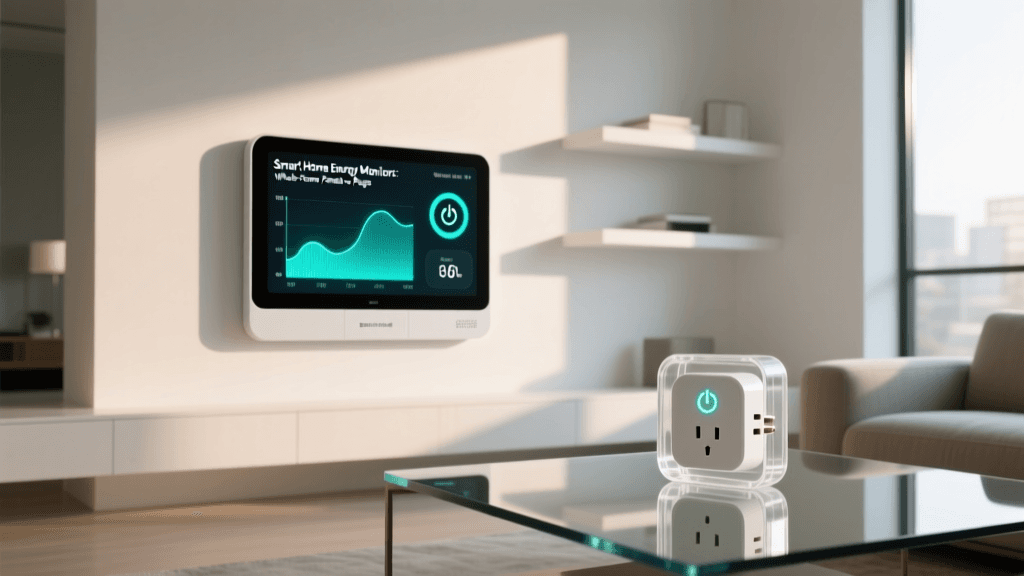
- Eve Energy Smart Plug (Matter over Thread): Priced around $25, this plug not only provides energy monitoring but acts as a Thread border router extension, strengthening your local mesh network.
- Apple HomePod (2nd Generation): At $299, it serves as a premier Matter controller and Thread border router, offering exceptional local processing and high-fidelity audio.
- SwitchBot Hub 2: Retailing for approximately $90, this hub bridges older Bluetooth and infrared SwitchBot devices into the new Matter ecosystem, protecting your legacy investments while bringing them into a unified modern app.
Thread Mesh Networks: The Backbone of Local Reliability
While Matter handles the 'language' devices speak, Thread handles the 'transport' for low-power devices. Thread is an IPv6-based, low-power mesh networking protocol. Unlike traditional Wi-Fi, where every device connects directly to a central router (creating congestion), Thread devices connect to one another, forming a self-healing mesh. If one smart bulb loses power, the network automatically reroutes the signal through neighboring bulbs.
For a standard 2,500-square-foot home, deploying three to four Thread border routers (such as the aforementioned HomePod or an Amazon Echo 4th Gen) ensures blanket coverage with latency measured in milliseconds. Because Thread operates on the 2.4 GHz spectrum but uses a different channel structure than Wi-Fi, it avoids the interference that typically plagues crowded smart homes with dozens of connected sensors.
Edge AI: The Brain Behind Predictive Automation
The second pillar of future living is Edge AI. Traditional smart homes rely on cloud computing: a sensor detects motion, sends that data to a server farm hundreds of miles away, the server processes the logic, and sends a command back to your smart switch. This introduces latency, requires constant internet connectivity, and raises significant privacy concerns.
Edge AI moves machine learning models directly onto local hardware—either within the smart hub or on the microcontrollers of the devices themselves (a concept known as TinyML). This allows your home to process complex data locally, in real-time, without sending sensitive video or audio feeds to the cloud.
Predictive Contextual Awareness
Edge AI enables a home to learn and predict rather than simply react. Instead of a rigid 'If This Then That' schedule, an Edge AI hub analyzes historical data, ambient light, weather forecasts, and occupancy patterns to make micro-adjustments. For example, a local AI hub can recognize that when the living room TV turns on at 8:00 PM and the ambient light sensor drops below 40 lux, the homeowner prefers the blinds closed and the color temperature shifted to 2700K. It executes this instantly, even if the home's internet connection is completely severed.
Data Table: Legacy Cloud Hubs vs. Modern Edge Hubs
When selecting the brain of your smart home, the distinction between cloud-reliant legacy hubs and local-first Edge hubs is critical. Below is a comparison of popular hub architectures:
| Smart Hub | Processing Architecture | Protocol Support | Local Execution | Avg. Cost |
|---|---|---|---|---|
| Hubitat Elevation | Edge (Local Server) | Zigbee, Z-Wave, Matter, LAN | 100% Local | $150 |
| Samsung SmartThings Station | Hybrid (Cloud + Edge) | Thread, Matter, Zigbee | Partial (Routine dependent) | $70 |
| Amazon Echo (4th Gen) | Cloud-First (Edge for basic) | Zigbee, Matter, Thread | Limited to basic routines | $100 |
| Home Assistant Green | Edge (Open Source Local) | Ethernet (requires USB dongles) | 100% Local | $99 |
Visualizing the Shift: Cloud vs. Edge Processing
The transition from cloud-dependent automation to Edge AI drastically improves performance and privacy. The chart below illustrates the operational differences between processing a standard multi-device automation routine via the Cloud versus locally via Edge AI.
Energy Management and Grid Interactivity
Future smart homes are not just about convenience; they are active participants in energy management. According to the U.S. Department of Energy, smart home devices play a pivotal role in reducing residential energy consumption and managing peak grid loads. Edge AI takes this a step further by integrating with dynamic utility pricing.
Modern smart electrical panels, such as the Span Smart Panel (starting around $5,000 installed) or the Schneider Electric Wiser system, utilize local AI to monitor circuit-level energy usage. If your home is equipped with solar panels and a battery backup (like a Tesla Powerwall), Edge AI can predict weather patterns and adjust your HVAC pre-cooling schedules to maximize battery retention before a storm hits. It can also automatically shed non-essential loads (like EV charging or pool pumps) during peak pricing hours without requiring cloud connectivity, ensuring your home remains resilient and cost-efficient.
Actionable Steps to Future-Proof Your Home Today
Transitioning to a Matter and Edge AI ecosystem does not require tearing out your walls or replacing every device at once. Follow this strategic, phased approach:
Step 1: Establish a Local-First Foundation
Begin by purchasing a dedicated local hub. The Home Assistant Green ($99) is an exceptional, user-friendly entry point for local processing. Connect it via Ethernet to your primary router. This ensures that your core automations (lighting, locks, security sensors) will continue to function flawlessly even during internet outages.
Step 2: Upgrade Your Border Routers
Thread and Matter rely on border routers to bridge the low-power mesh network with your main IP network. Strategically place three Thread border routers in your home. The Apple TV 4K (Ethernet model, $149) or the Google Nest Hub (2nd Gen) ($100) are excellent choices. Place them centrally, avoiding corners and thick masonry walls, to ensure a 30-to-50-foot indoor mesh radius per router.
Step 3: Prioritize Wi-Fi 6E for High-Bandwidth Devices
While Thread handles sensors and switches, high-bandwidth devices like smart displays, security cameras, and AI-driven appliance hubs require robust Wi-Fi. Upgrade your primary router to a Wi-Fi 6E mesh system (such as the Eero Pro 6E, $399 for a 2-pack). Wi-Fi 6E utilizes the uncongested 6 GHz spectrum, ensuring that your local AI video processing (like a smart doorbell recognizing a familiar face) does not compete with your living room streaming traffic.
Step 4: Migrate to Matter-Certified Endpoints
As your legacy devices reach the end of their lifespan, replace them exclusively with Matter-certified alternatives. Look for the Matter QR code on the packaging. For lighting, the Philips Hue Secure line now supports Matter over Thread. For climate, the Ecobee Smart Thermostat Premium ($249) acts as both a Matter device and an Edge AI sensor hub, utilizing local radar to detect room occupancy without relying on cloud-based camera feeds.
Cost Analysis and ROI of Future-Ready Upgrades
Investing in a future-proof smart home requires upfront capital, but the return on investment manifests in energy savings, hardware longevity, and increased property value. Below is an estimated cost breakdown for upgrading a standard 2,000-square-foot, 3-bedroom home to a Matter/Edge AI standard:
- Local Hub & Network Infrastructure: $350 (Home Assistant Green + Wi-Fi 6E Router)
- Thread Border Routers (x3): $450 (Using smart displays/speakers that serve dual purposes)
- Matter Smart Lighting (20 bulbs): $500 (Using Nanoleaf Essentials Matter over Thread)
- Matter Climate & Energy Control: $350 (Ecobee Thermostat + Eve Energy Plugs)
- Matter Security (Locks & Sensors): $400 (Aqara U100 Lock + Contact Sensors)
- Total Estimated Investment: $2,050
Pro Tip: By utilizing local Edge AI to optimize HVAC run-times and eliminate phantom power draw via smart plugs, the average household can reduce its monthly energy bill by 10% to 15%. Over a five-year period, the energy savings alone can offset nearly half of the initial hardware investment, not including the intangible benefits of enhanced privacy and security.
Conclusion: Embracing the Autonomous Home
The era of the 'gimmick' smart home is ending. As the Matter protocol unifies the fractured landscape of device compatibility, and Edge AI brings powerful, private, and predictive machine learning directly into our living rooms, the smart home is maturing into an autonomous, reliable environment. By prioritizing local processing, investing in Thread mesh networks, and selecting Matter-certified hardware, you are not just buying gadgets—you are building a resilient digital infrastructure. Future-proofing your home today ensures that as technology continues to accelerate, your living space will adapt, learn, and serve you seamlessly for decades to come.