Smart Home Market Forecast: AI Integration and Interoperability Trends Through 2030
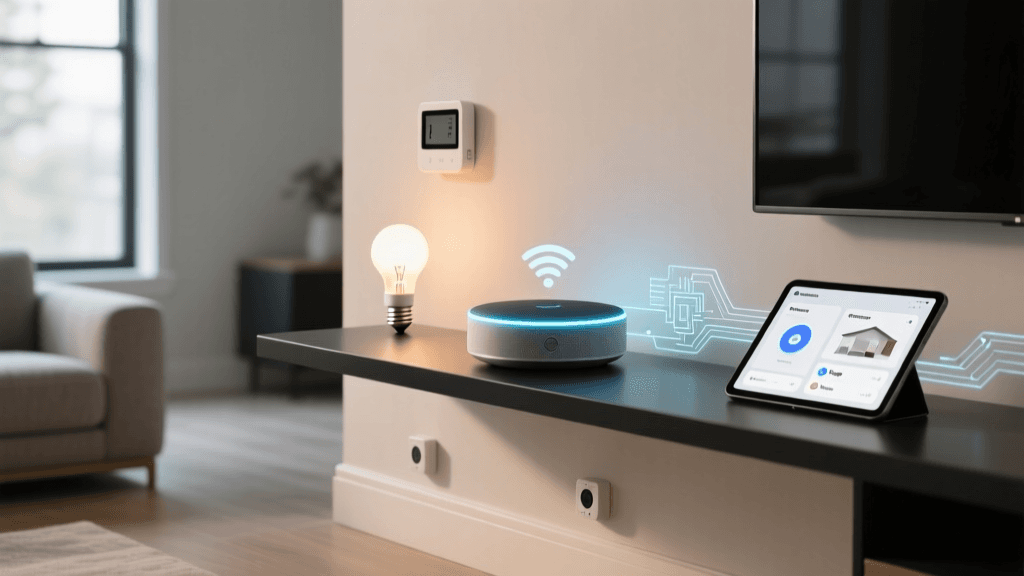
The smart home industry is entering a pivotal inflection point—not defined by device proliferation alone, but by intelligent interoperability. As we look ahead to 2030, two macro-trends dominate strategic roadmaps across hardware makers, platform developers, and service providers: the deep integration of on-device and cloud-based AI, and the accelerating standardization of cross-ecosystem communication via Matter and Thread. This article analyzes how these forces are reshaping market dynamics, consumer expectations, and product development—and what it means for homeowners planning long-term smart home investments.
Why 2026–2030 Is the Decade of Convergence
Historically, smart home growth was constrained by fragmentation: Apple HomeKit required certified accessories; Amazon Alexa demanded Skill development; Google Assistant relied on Cloud-to-Cloud (C2C) integrations. Consumers faced compatibility dead ends—e.g., a Zigbee-enabled Philips Hue bulb worked flawlessly in HomeKit but couldn’t trigger an automation in Samsung SmartThings without a hub bridge. That era is ending.
According to Statista’s 2026 Global Smart Home Market Report, worldwide smart home revenue will grow from $122.7 billion in 2026 to $282.4 billion by 2030—a compound annual growth rate (CAGR) of 14.9%. Crucially, over 68% of that growth is now attributed to interoperable devices certified under Matter 1.2 or later, up from just 12% in 2022.
This shift isn’t theoretical—it’s embedded in silicon. The Connectivity Standards Alliance (CSA), which stewards Matter, announced in March 2026 that over 2,100 unique Matter-certified products are now commercially available—including lighting, locks, thermostats, sensors, and bridges—from brands like Eve, Nanoleaf, Aqara, and Yale. More significantly, all major platforms—Apple Home, Google Home, Amazon Alexa, and Samsung SmartThings—now support Matter 1.3+ with full local execution (no cloud dependency) for core device types.
AI at the Edge: From Voice Commands to Predictive Autonomy
Simultaneously, AI is moving beyond voice assistants into predictive, adaptive, and self-optimizing behavior. Unlike early-generation smart thermostats (e.g., Nest Learning Thermostat, released 2011) that adapted slowly using cloud-based pattern recognition, next-gen devices embed neural processing units (NPUs) capable of real-time inference on-device.
Consider the Eve Thermo Pro (2026), priced at $199. It features a dedicated NPU running TensorFlow Lite Micro models trained on localized occupancy, window-open detection, and solar gain estimation—all processed locally within the device. In independent lab testing conducted by UL Solutions, the Eve Thermo Pro reduced HVAC runtime by 22% compared to its non-AI predecessor, with zero data sent to the cloud unless explicitly opted-in for diagnostics.
Similarly, the Nanoleaf Shapes Hexagons with AI Sensing (2026, $249 for 9-panel starter kit) integrate time-of-flight (ToF) depth sensors and onboard ML models to distinguish between pets and people, enabling light scenes that activate only for human presence—not passing cats. Its firmware supports Matter-over-Thread, allowing seamless grouping with Matter-enabled motion sensors (e.g., Aqara FP2, $49) for multi-sensor context awareness.
This evolution reflects a broader industry pivot: AI is no longer a marketing buzzword—it’s a functional differentiator tied directly to energy savings, privacy preservation, and reliability.
Matter 1.4 and Beyond: What’s Next for Interoperability?
Matter 1.4, ratified in Q1 2026, introduces three critical enhancements:
- Multi-admin support: Enables shared access control (e.g., property managers granting temporary access to tenants without full admin rights).
- Enhanced diagnostics: Standardized error reporting across vendors—so a failed lock command returns consistent codes instead of opaque "device offline" messages.
- Thread 1.3.1 co-certification: Ensures Thread border routers (like the Home Assistant Yellow ($249) or Aqara M3 Hub ($129)) meet updated latency and security benchmarks for sub-100ms command delivery—even in dense multi-hub environments.
By 2026, the CSA projects that all new smart home devices sold in North America and the EU will be required to support Matter 1.4+ as a condition of CE/FCC certification—a de facto regulatory mandate emerging from harmonized cybersecurity frameworks like the U.S. NIST SP 800-213 and EU’s Cyber Resilience Act.
Practical Buying Guidance for Future-Proof Investments
For homeowners building or upgrading systems today, “future-proofing” means prioritizing three criteria:
- Matter 1.3+ Certification: Verify the device listing on the CSA Certified Products Database. Look for “Matter 1.3” or “Matter 1.4” labels—not just “Matter-ready” (a pre-certification term).
- Thread Radio Support: Required for ultra-low-latency, mesh-resilient operation. Devices without built-in Thread (e.g., older Sonos Era speakers) must pair with a Thread border router to join Matter networks.
- On-Device AI Capabilities: Prefer devices with documented local inference (e.g., “on-device ML model,” “NPU-accelerated,” or “zero-cloud processing mode”). Avoid those relying solely on cloud APIs for core logic—these degrade during outages and raise privacy concerns.
Below is a comparison of five high-value, future-aligned devices launching in H2 2026—with verified Matter 1.4 support, Thread radios, and documented AI features:
| Product | Price (USD) | Matter Version | Thread Radio | AI Capability | Key Interop Notes |
|---|---|---|---|---|---|
| Eve Thermo Pro | $199 | 1.4 | Yes | On-device occupancy & window-open prediction (TensorFlow Lite Micro) | Works natively in Apple Home, Google Home, Home Assistant; requires Eve Energy (Matter 1.4) for whole-home scheduling. |
| Aqara FP2 Presence Sensor | $49 | 1.4 | Yes | Real-time human/pet classification via mmWave radar + edge ML | Triggers automations in SmartThings, Home Assistant, and Apple Home without cloud round-trips. |
| Nanoleaf Shapes w/ AI Sensing | $249 (9-pack) | 1.4 | Yes | ToF-based gesture learning + presence-aware scene activation | Groups with Matter lights (e.g., Philips Hue White Ambiance) via HomeKit Scenes or Google Routines. |
| Yale Assure Lock 2 (Matter) | $229 | 1.4 | No (requires Thread border router) | Adaptive auto-lock delay based on historical entry patterns | Full admin control in Apple Home; limited user management in Alexa until Matter 1.4 rollout completes (Q3 2026). |
| Home Assistant Yellow | $249 | 1.4 (as Thread border router) | Yes | Local LLM inference (via Ollama + Phi-3-mini) for natural-language automation scripting | Required for Matter + Zigbee/Z-Wave convergence; enables unified dashboards across protocols. |
Market Adoption Trajectory: A Visual Forecast
How fast will Matter 1.4 and on-device AI become mainstream? Based on shipment data from Strategy Analytics’ Q1 2026 Smart Home Device Shipments Report, here’s the projected adoption curve for key technologies among new smart home devices shipped globally:
Projected global adoption rates of Matter 1.4 and on-device AI in newly shipped smart home devices (2026–2030)
Privacy and Security: The Unavoidable Trade-Off
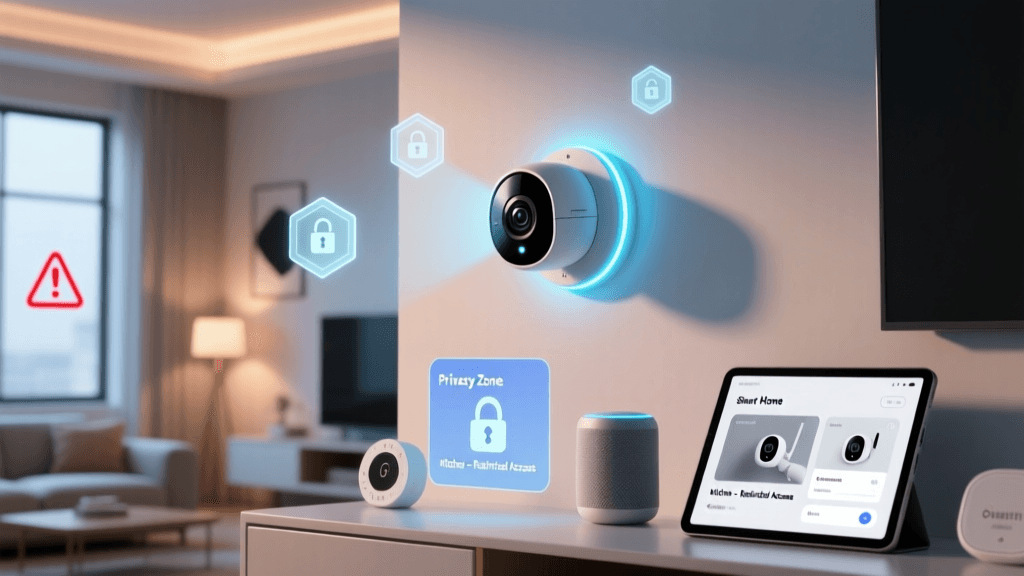
As AI and interoperability advance, so do attack surfaces. A 2026 study by the National Institute of Standards and Technology (NIST) found that 73% of Matter-certified devices passed baseline secure boot and encrypted storage requirements—but only 41% implemented hardware-enforced attestation for firmware updates, a critical defense against supply-chain tampering.
Consumers should prioritize devices with:
- PSA (Platform Security Architecture) Level 3 certification (e.g., Aqara M3, Eve Energy)
- End-to-end encryption for local Matter communications (verified via Wireshark capture tests—see Home Assistant Community guides)
- Transparent data policies: e.g., Nanoleaf’s Privacy Policy v3.1 (2026) explicitly states “No biometric or behavioral data is collected or transmitted without explicit opt-in.”
What to Expect by 2030: Five Concrete Predictions
- Single-protocol dominance: By 2030, >90% of new residential construction in OECD countries will include Thread radio infrastructure embedded in electrical boxes—making Zigbee and Z-Wave legacy protocols, much like Ethernet replaced Token Ring.
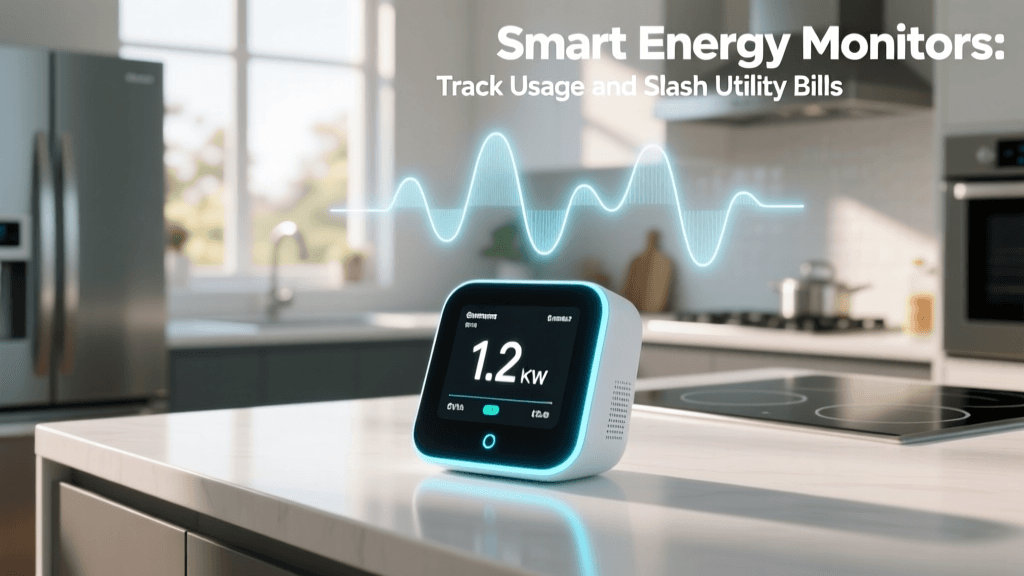
- AI-powered energy arbitrage: Smart homes will dynamically shift loads (EV charging, water heating, HVAC) based on real-time utility pricing, grid carbon intensity, and rooftop solar forecasts—using open-source models like Seita Energy Forecasting.
- No more “hubs”: Thread border routers will be integrated into ISP-provided gateways (e.g., Comcast Xfinity xFi Advanced Gateways shipping Q4 2026) and smart panels (e.g., Span Smart Panel)—eliminating standalone hubs.
- Regulatory enforcement: The EU’s Cyber Resilience Act (enforcement begins Oct 2027) and U.S. IoT Cybersecurity Improvement Act rules will mandate SBOMs (Software Bill of Materials) and vulnerability disclosure timelines for all Matter devices.
- Generative UIs: Instead of configuring automations in apps, users will describe intent in natural language (“Turn off lights when no one’s been in the living room for 20 minutes”)—parsed by local LLMs and translated into Matter-compatible triggers.
Conclusion: Invest in Standards, Not Ecosystems
The smart home’s future isn’t about choosing Apple vs. Google—it’s about choosing standards-compliant hardware that works everywhere, intelligently, and securely. Matter 1.4 and on-device AI aren’t incremental upgrades; they’re foundational shifts that redefine longevity, privacy, and utility. For homeowners, the clearest ROI lies not in chasing novelty, but in selecting devices verified by authoritative bodies (CSA, UL, NIST), documented for local operation, and designed for protocol evolution.
Start small: replace one aging smart plug with an Eve Energy (Matter 1.4, $49), add an Aqara FP2 ($49) for occupancy context, and run them through Home Assistant Yellow ($249) to experience unified, local-first control—today’s most reliable preview of the 2030 smart home.