The Evolution of the Smart Home Market
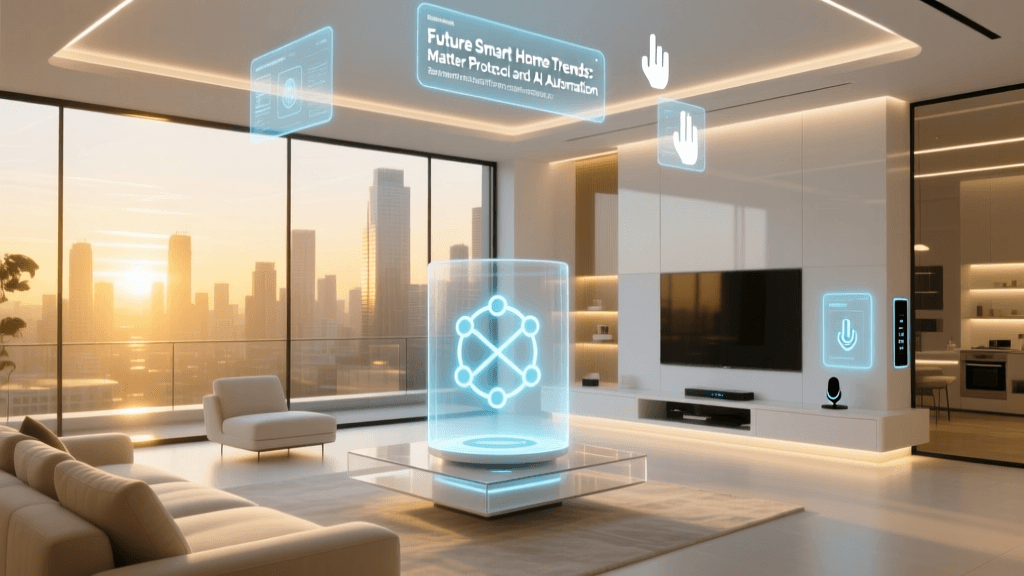
The smart home industry is currently undergoing a seismic shift, transitioning from a fragmented landscape of proprietary ecosystems into a unified, intelligent, and highly interoperable environment. For years, consumers were forced to choose sides—locking themselves into Apple HomeKit, Amazon Alexa, Google Home, or Samsung SmartThings. This fragmentation created friction, limited device compatibility, and stifled widespread adoption. However, as we look toward the future of smart home technology, two massive industry trends are dismantling these walled gardens: the universal adoption of the Matter protocol and the integration of localized Artificial Intelligence (AI).
Understanding these market trends is no longer just for industry analysts; it is essential for any homeowner or renter looking to invest in smart home technology. Purchasing devices without considering Matter compatibility or AI-driven edge processing is akin to buying a 3G smartphone on the eve of the 4G LTE rollout. In this comprehensive market analysis, we will explore how these foundational shifts are altering product development, pricing structures, and the overall consumer experience, providing you with the actionable insights needed to future-proof your home.
Matter and Thread: The End of Ecosystem Walled Gardens
Launched by the Connectivity Standards Alliance (CSA), Matter is an open-source, royalty-free connectivity protocol designed to allow smart home devices from different manufacturers to communicate seamlessly. Matter operates over existing IP-based networks, primarily Wi-Fi and Thread. While Wi-Fi handles high-bandwidth devices like cameras and displays, Thread is the unsung hero of the future smart home.
Thread is a low-power, mesh-networking protocol. Unlike traditional Zigbee or Z-Wave networks that require proprietary, brand-specific hubs, Thread devices create a decentralized mesh. Every Thread-enabled device acts as a node, strengthening the network's range and reliability. To connect a Thread mesh to your home's Wi-Fi and the broader internet, you need a Thread Border Router. Fortunately, many modern smart speakers and hubs already contain the necessary silicon.
Cost and Hardware Implications
The market has rapidly adjusted to this new standard. Legacy hubs that only support Zigbee or proprietary RF frequencies are being phased out or relegated to bridge devices. When budgeting for a future-proof smart home, consumers should prioritize devices that natively support Thread and Matter.
- Apple TV 4K (3rd Generation, Wi-Fi + Ethernet): Priced around $149, this device acts as a robust Thread Border Router and a Matter controller, seamlessly bridging HomeKit and Matter devices.
- Google Nest Hub (2nd Gen): Available for approximately $99, it includes Thread support, making it an affordable entry point for Google Home users to establish a Matter-compatible mesh network.
- Amazon Echo (4th Generation): Retailing at $99, the spherical Echo includes a built-in Zigbee hub, a Thread Border Router, and Matter controller capabilities, making it one of the most versatile legacy-bridging devices on the market.
Protocol Comparison: Legacy vs. The Future
| Protocol | Network Topology | Power Consumption | Matter Compatibility | Future Outlook |
|---|---|---|---|---|
| Wi-Fi 6/6E | Star (Router-centric) | High | Native (IP-based) | Standard for high-bandwidth devices (cameras, displays) |
| Thread | Mesh (Decentralized) | Ultra-Low | Native (IP-based) | The future standard for sensors, locks, and lighting |
| Zigbee | Mesh (Hub-centric) | Low | Requires Bridge/Hub | Declining; will be maintained for legacy support |
| Z-Wave | Mesh (Hub-centric) | Low | Requires Bridge/Hub | Niche; favored by DIY security enthusiasts but losing market share |
Artificial Intelligence: From Reactive to Predictive
While Matter solves the communication problem, Artificial Intelligence is solving the automation problem. Historically, smart homes were entirely reactive or reliant on rigid, user-programmed routines. You had to explicitly tell your smart speaker to turn off the lights, or set a strict schedule for your thermostat. The future market trend is predictive automation, driven by on-device AI and machine learning algorithms.
Manufacturers are increasingly embedding Neural Processing Units (NPUs) directly into smart home hardware. This shift toward "Edge AI" means data is processed locally on the device rather than being sent to a cloud server. This drastically reduces latency, ensures functionality during internet outages, and vastly improves user privacy.
For example, Amazon's AZ2 Neural Edge processor, found in newer Echo devices, allows for local processing of voice commands and predictive routines. Similarly, advanced smart thermostats like the Ecobee Smart Thermostat Premium (retailing around $249) use localized AI combined with remote room sensors to learn your household's occupancy patterns, adjusting HVAC usage dynamically to save energy without requiring manual scheduling.
Market Growth and Consumer Adoption Projections
The financial projections for the smart home market reflect immense consumer confidence in these new interoperable and AI-driven technologies. As the friction of setup decreases and the utility of predictive automation increases, household penetration rates are expected to surge globally.
This upward trajectory is heavily fueled by the transition from early adopters to the early majority. The early majority demands reliability and ease of use—two promises that Matter and local AI are finally equipped to deliver. Market analysts predict that by 2028, over 60% of new residential builds in North America and Europe will feature pre-installed, Matter-compatible smart infrastructure, treating smart home wiring as standard as Ethernet or coaxial cabling.
Energy Management and AI-Driven Sustainability
One of the most compelling market trends is the intersection of smart home technology and residential energy management. With rising global energy costs and a push toward sustainable living, AI-driven smart homes are becoming essential tools for grid management and personal cost savings.
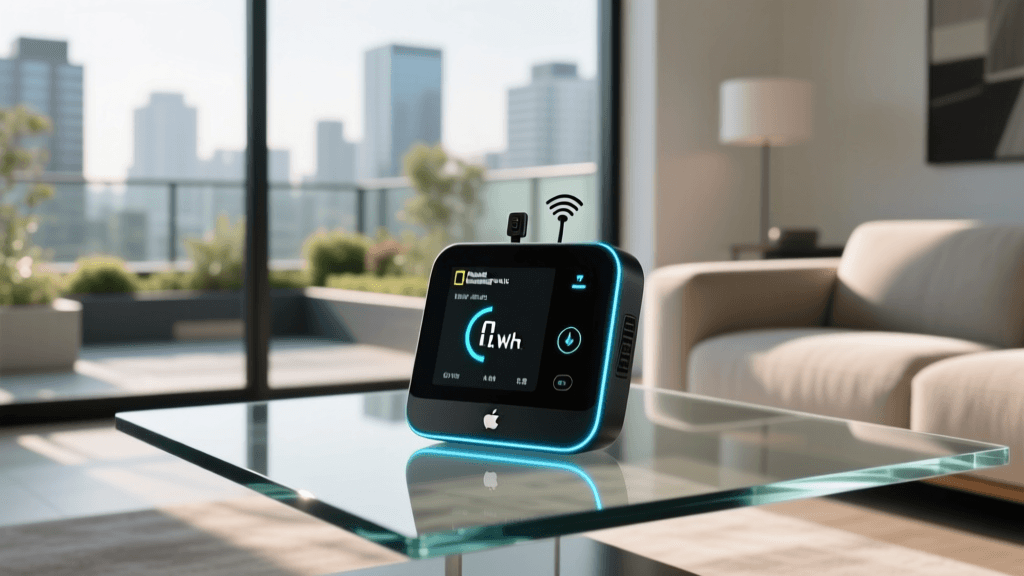
According to the U.S. Department of Energy, smart thermostats can save homeowners an average of 10% to 15% on heating and cooling costs annually. However, the next generation of energy management goes beyond simple scheduling. Future systems will integrate with local utility grids to participate in Demand Response programs. Your home's AI will negotiate with the grid, automatically dimming lights, pausing EV charging, or adjusting the thermostat by a single degree during peak pricing hours, all without noticeable impact on your comfort.
To capitalize on this trend, consumers should look for devices that support the Matter Energy Management specification. This includes smart electrical panels, such as the Span.IO smart panel (a premium investment starting around $3,000+ including installation), which provides circuit-level AI monitoring, allowing homeowners to shut off specific non-essential circuits during a power outage to maximize battery backup life.
Practical Guide: Future-Proofing Your Smart Home Today
Translating these macroeconomic and technological trends into a practical purchasing strategy requires a deliberate approach. If you are building or upgrading a smart home today, follow this actionable blueprint to ensure your investment remains relevant for the next decade.
1. Audit and Upgrade Your Core Infrastructure
Before buying new smart bulbs or locks, ensure your network can handle the traffic. While Thread offloads sensor traffic, high-bandwidth Matter devices still rely on Wi-Fi. Upgrade to a Wi-Fi 6 or Wi-Fi 6E mesh router system (e.g., TP-Link Deco XE75, approx. $299 for a 3-pack) to ensure you have the bandwidth and device-capacity to support 100+ concurrent smart home connections.
2. Establish a Thread Mesh Network
Do not buy standalone Thread devices without a Border Router. Start by purchasing at least two Thread Border Routers to create a stable mesh. Placing an Apple TV 4K in the living room and a Nest Hub in the bedroom ensures that Thread signals can hop seamlessly across your home, eliminating the dead zones that plagued early Zigbee networks.
3. Demand the Matter Logo
When shopping for new switches, plugs, and sensors, physically look for the Matter logo on the packaging. If a device only supports a proprietary app and lacks Matter certification, skip it. Companies like Eve Systems, Aqara, and Nanoleaf have fully embraced Matter, offering premium, future-proof alternatives to legacy brands.
4. Budgeting for the Future
- Entry-Level Future-Proof Kit ($300 - $500): Includes one Matter/Thread Border Router hub, 4-6 Matter-over-Thread smart plugs/switches, and a basic Matter-compatible smart lock.
- Mid-Range AI & Energy Kit ($800 - $1,500): Includes multiple Border Routers, an AI-driven smart thermostat (Ecobee/Nest), Thread-enabled motorized blinds, and localized presence sensors (like the Aqara FP2).
- Whole-Home Infrastructure ($3,000+): Involves hardwired smart switches (e.g., Lutron Caseta RA3 or similar Matter-ready hardwired solutions), smart electrical panels, and integrated AI security systems with local NVR processing.
Privacy and Security in the AI-Driven Home
As our homes become more predictive, they must ingest more data. Presence sensors, smart microphones, and AI cameras map our daily routines. This raises significant privacy concerns, making security a primary driver of future market trends. The National Institute of Standards and Technology (NIST) has continually emphasized the need for rigorous IoT security frameworks to protect consumer data from exploitation.
The Matter protocol addresses this by mandating robust, blockchain-like security measures, including device attestation and encrypted local communication. When a Matter device joins your network, it uses a unique cryptographic key, ensuring that even if your Wi-Fi password is compromised, the commands sent to your smart locks remain encrypted and secure.
Furthermore, the push for Edge AI means that camera feeds and voice profiles are increasingly processed locally. When purchasing AI cameras, prioritize brands that offer local storage via microSD or local NAS integration (such as Eufy or certain Ubiquiti UniFi setups) rather than those that mandate a monthly cloud subscription, ensuring your visual data never leaves your physical property.
Conclusion
The future of the smart home market is defined by interoperability, localized intelligence, and energy efficiency. The era of fragmented apps and proprietary hubs is rapidly drawing to a close, replaced by the unified language of Matter and the resilient architecture of Thread networks. Coupled with the predictive power of on-device AI, smart homes are finally evolving from novel gadgets into invisible, intuitive infrastructure. By understanding these market trends and strategically investing in compatible, secure hardware today, consumers can build a living space that is not only responsive to their current needs but adaptable to the technological innovations of tomorrow.