The Paradigm Shift: From Connected to Autonomous Homes
For the past decade, the smart home industry has been defined by connectivity. We have successfully figured out how to connect light bulbs, thermostats, and locks to the internet, allowing users to control them via smartphone apps or basic voice commands. However, as we look toward the future of smart home technology, the industry is undergoing a massive paradigm shift. We are moving away from manual, app-based control toward autonomous, predictive environments. This transition is being driven by two foundational pillars: the universal Matter protocol and the integration of ambient Artificial Intelligence (AI).
Understanding these trends is no longer just for tech enthusiasts; it is essential for any homeowner looking to invest in smart home technology today. Buying into a closed ecosystem or relying on cloud-dependent devices is becoming a liability. In this comprehensive market analysis and educational guide, we will explore how AI and Matter are reshaping the smart home landscape, what the market data tells us about future growth, and exactly how you can future-proof your home network and device lineup today.
Matter Protocol: The End of Ecosystem Walled Gardens
Historically, the smart home market has been fragmented. Consumers had to choose between Apple HomeKit, Amazon Alexa, Google Home, or Samsung SmartThings, often finding that a device purchased for one ecosystem was entirely incompatible with another. The introduction of the Matter protocol, developed by the Connectivity Standards Alliance (CSA-IoT), is fundamentally solving this fragmentation.
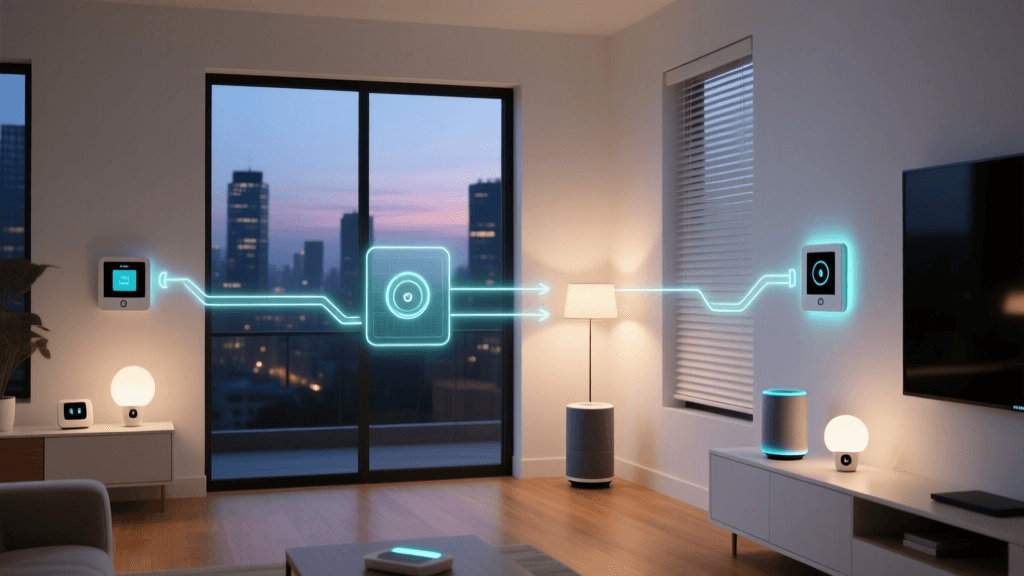
Matter is an open-source, royalty-free connectivity standard that operates over Internet Protocol (IP). It allows smart home devices to communicate locally over your network, regardless of the brand or the voice assistant you prefer. This means a Matter-certified smart lock from Yale can seamlessly integrate with an Apple TV, a Google Nest Hub, and an Amazon Echo simultaneously, without relying on third-party cloud servers.
Underlying Technologies: Thread, Wi-Fi, and Ethernet
To truly understand Matter, you must understand the transport layers it relies on. Matter does not replace Wi-Fi or Thread; rather, it sits on top of them as a unified application layer.
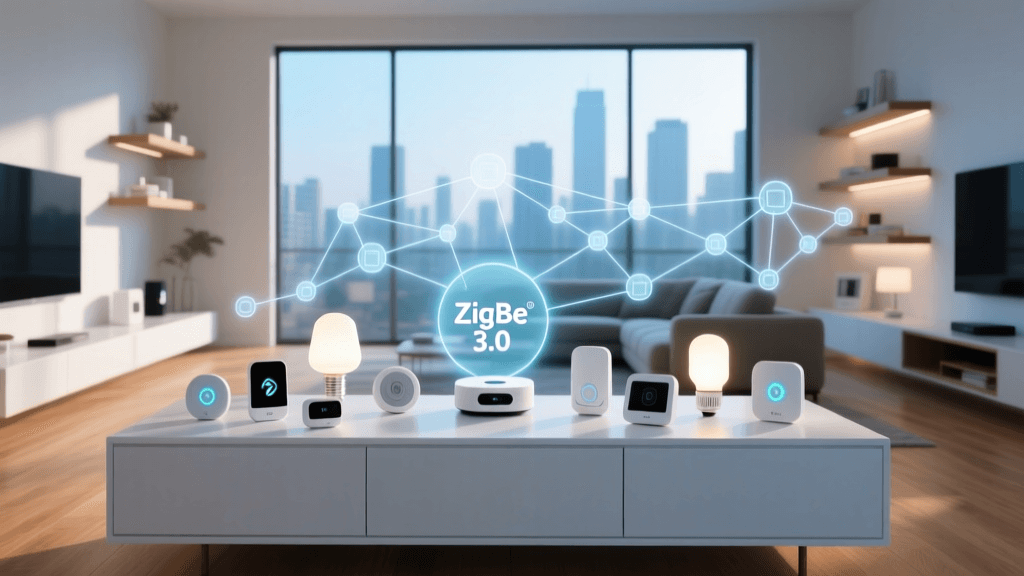
- Thread (IEEE 802.15.4): A low-power, low-latency mesh networking protocol ideal for battery-operated sensors, smart locks, and light switches. Thread devices create a self-healing mesh network, meaning if one device drops, the signal routes through another. Thread requires a 'Border Router' to connect the mesh to your main IP network.
- Wi-Fi (802.11): Used for high-bandwidth devices like smart displays, security cameras, and smart appliances that require constant, high-speed data transmission.
- Ethernet: Utilized for primary hubs and stationary bridges that require absolute reliability and zero wireless interference.
From a market analysis perspective, Matter is driving a hardware refresh cycle. Manufacturers are rushing to release Matter-compatible hardware, and consumers are increasingly looking for the Matter logo on packaging before making a purchase. This shift ensures that devices purchased today will retain their utility and resale value far into the future.
AI and Predictive Automation: The Brain of the Future Home
While Matter solves the communication problem, Artificial Intelligence solves the interaction problem. The current generation of smart homes relies on explicit commands (e.g., 'Hey Siri, turn off the lights') or rigid, rule-based automations (e.g., 'If motion is detected, turn on the porch light'). The future smart home utilizes predictive AI and machine learning to anticipate user needs without explicit commands.
Energy Management and HVAC Optimization
One of the most significant applications of AI in the smart home is energy management. According to the U.S. Department of Energy, heating and cooling account for nearly half of a typical home's energy use. Future smart thermostats, such as the Ecobee Smart Thermostat Premium or the latest Google Nest Learning Thermostat, use AI to build a thermal model of your specific home.
These devices analyze variables such as local weather forecasts, the rate at which your home loses heat, your historical occupancy patterns, and real-time utility grid pricing (Time-of-Use rates). The AI then preemptively adjusts the HVAC system to pre-cool or pre-heat the home when energy is cheapest, maintaining comfort while minimizing costs. This shifts the thermostat from a reactive dial to a proactive energy broker.
Ambient Computing and Contextual Awareness
Future AI in the smart home relies on ambient computing—technology that fades into the background. Using mmWave (millimeter-wave) radar sensors, future homes will detect human presence, posture, and even breathing rates without the privacy invasion of optical cameras. An AI-driven system could detect that you have fallen asleep on the couch, automatically dim the lights to zero, lower the smart blinds, adjust the thermostat to your preferred sleeping temperature, and arm the perimeter security system, all without a single voice command.
Market Analysis: Smart Home Segment Growth Projections
The global smart home market is experiencing robust growth, but the distribution of that growth is shifting. While smart speakers and basic lighting saw massive adoption between 2015 and 2022, the next wave of market expansion is heavily concentrated in climate control, security, and major appliances driven by AI and Matter integration.
Projected Smart Home Market Segment Growth (2024-2030)
As illustrated in the market data, Smart HVAC and Smart Appliances are projected to see the highest Compound Annual Growth Rate (CAGR). This is directly correlated with the rising cost of energy and the consumer demand for AI-driven efficiency. Security remains a strong contender, driven by the transition from cloud-based video storage to local, AI-processed edge computing.
Privacy Considerations: The Rise of Edge AI
As smart homes become more autonomous, they require vast amounts of data to function effectively. This raises significant privacy concerns. Relying on cloud-based AI means that data regarding your daily routines, voice recordings, and home occupancy is constantly being transmitted to remote servers. The Federal Trade Commission (FTC) has repeatedly highlighted the privacy and security risks associated with IoT devices that lack robust data protection standards.
The industry's response to this is Edge AI. Edge AI involves processing machine learning algorithms locally on the device or a local hub, rather than in the cloud. For example, modern smart security cameras use local neural engines to differentiate between a human, a pet, and a swaying tree branch. Only the metadata or a secure, encrypted alert is sent to your phone; the raw video footage never leaves your local network unless you explicitly request it. When future-proofing your home, prioritizing devices that advertise 'local processing' or 'Edge AI' is critical for long-term privacy.
Current vs. Future Smart Home Capabilities
| Feature | Current Smart Home (2015-2023) | Future Autonomous Home (2024+) |
|---|---|---|
| Interoperability | Fragmented; relies on brand-specific hubs and cloud APIs. | Unified via Matter; local IP-based communication across all brands. |
| Automation Logic | Reactive; rigid 'If This Then That' (IFTTT) rules. | Predictive; AI learns habits and adjusts contextually. |
| Network Protocol | Wi-Fi 5 (2.4GHz congestion) and proprietary Zigbee/Z-Wave. | Wi-Fi 6E/7, Thread mesh networks, and Matter over IP. |
| AI Processing | Cloud-dependent; high latency, privacy risks. | Edge AI; local processing, low latency, high privacy. |
| Sensing Technology | PIR motion sensors (detects large movements only). | mmWave radar (detects micro-movements, presence, and vitals). |
Actionable Advice: Future-Proofing Your Smart Home Today
If you are currently researching or entering the smart home space, you do not need to wait for the future to arrive to start building it. By making strategic hardware and network investments today, you can ensure your home is ready for the next decade of AI and Matter advancements.
1. Upgrade Your Network Infrastructure
The backbone of any autonomous smart home is a robust, high-capacity network. Standard Wi-Fi 5 routers will quickly become bottlenecked by dozens of IoT devices.
- Action: Upgrade to a Wi-Fi 6E or Wi-Fi 7 Mesh System. These systems utilize the uncongested 6GHz band, ensuring that high-bandwidth devices (like 4K security cameras and smart displays) do not interfere with low-bandwidth IoT sensors.
- Cost Range: $250 - $600 for a high-quality tri-band mesh system (e.g., Eero Pro 6E, TP-Link Deco BE85).
2. Invest in Thread Border Routers
To take advantage of low-power Matter devices, your home needs a Thread mesh network. Thread Border Routers bridge the Thread network to your Wi-Fi/Ethernet.
- Action: Purchase devices that double as Thread Border Routers. You likely only need two or three strategically placed around your home to create a robust mesh.
- Product Examples: Apple TV 4K (Wi-Fi + Ethernet model), Google Nest Hub (2nd Gen), or the dedicated Aeotec Smart Home Hub.
- Cost Range: $100 - $150 per Border Router.
3. Prioritize Local Control and Edge Processing
When selecting a primary smart home hub or controller, prioritize systems that support local execution of automations. If your internet connection goes down, your home should still function autonomously.
- Action: Choose hubs that process logic locally. Samsung SmartThings hubs, Apple HomeKit (via HomePod or Apple TV), and advanced enthusiast platforms like Home Assistant (running on a local mini-PC or Raspberry Pi) excel at local execution.
- Compatibility Detail: Ensure the hub explicitly supports 'Matter Controller' functionality, allowing it to manage Matter devices locally without cloud polling.
4. Select mmWave Presence Sensors over PIR
As you build out your automation routines, replace traditional Passive Infrared (PIR) motion sensors with mmWave presence sensors.
- Action: Use mmWave sensors in rooms where you sit still for long periods (offices, living rooms, bathrooms). PIR sensors will turn the lights off if you stop moving, whereas mmWave sensors detect the micro-movements of your chest breathing, keeping the environment perfectly adjusted to your presence.
- Product Examples: Aqara FP2 Presence Sensor, Sonoff SNZB-06P.
- Cost Range: $30 - $60 per sensor.
Conclusion
The smart home industry is maturing from a collection of novel, disconnected gadgets into a cohesive, intelligent infrastructure. The convergence of the Matter protocol and Edge AI is eliminating the friction of walled gardens and addressing the critical privacy concerns of cloud-dependent processing. By understanding these market trends and strategically investing in Wi-Fi 6E/7 networks, Thread border routers, and Matter-certified devices, consumers can build a resilient, autonomous home environment that will adapt, learn, and provide value for years to come. The future of the smart home is not just about being connected; it is about being contextually aware, universally compatible, and fundamentally private.