The Evolution: From Active Control to Ambient Intelligence
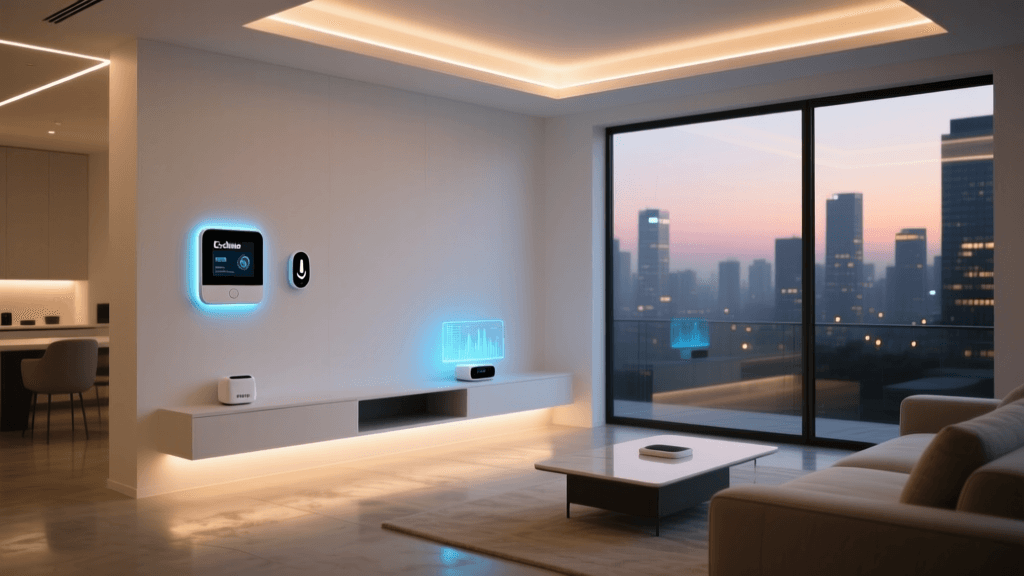
For the past decade, the smart home industry has been dominated by the 'remote control' paradigm. We replaced physical light switches with smartphone apps, and later, we replaced apps with voice assistants. While convenient, these interactions still require active human initiation. You must speak a command, tap a screen, or press a button. However, the true future of smart home technology lies in ambient computing—a concept where technology recedes into the background of everyday life, anticipating needs without explicit commands.
The concept of ambient computing is not entirely new. In 1991, computer scientist Mark Weiser published a seminal essay titled The Computer for the 21st Century, where he envisioned a world where computing is so deeply embedded into our environment that it becomes indistinguishable from everyday life. Today, driven by advancements in edge AI, millimeter-wave radar, and unified protocols like Matter, Weiser's vision is finally becoming a practical reality for modern homeowners.
An ambient smart home does not wait for you to ask it to adjust the thermostat or turn off the lights. Instead, it utilizes a mesh of invisible sensors and predictive machine learning algorithms to understand your context, routines, and physiological state, adjusting the environment seamlessly. This shift from 'active control' to 'passive intelligence' represents the most significant leap in smart home basics and education for the coming decade.
The Core Technologies Powering the Invisible Home
To achieve an ambient environment, the home must possess a nervous system capable of detecting human presence, activity, and environmental changes with extreme precision. Three core technologies are making this possible.
Millimeter-Wave (mmWave) Radar Sensors
Traditional Passive Infrared (PIR) motion sensors have been the backbone of smart home automation for years. However, PIR sensors only detect gross movement. If you sit still on the couch reading a book, a PIR sensor will assume the room is empty and turn off the lights. Millimeter-wave (mmWave) radar solves this by emitting high-frequency radio waves (typically 24GHz or 60GHz) that can detect micro-movements, including the rise and fall of your chest as you breathe.
Products like the Aqara Presence Sensor FP2 (priced around $70) utilize 60GHz mmWave radar to not only detect static presence but also map a room into multiple distinct zones. This allows your home to know if you are sitting at your desk or lying in bed within the same room, triggering entirely different ambient automations based on your exact location.
Wi-Fi Sensing and the 802.11bf Standard
The upcoming IEEE 802.11bf standard is set to turn your existing Wi-Fi network into a giant, home-wide motion sensor. Wi-Fi sensing works by analyzing the disruptions in wireless signals (Channel State Information) caused by human bodies moving through a space. Because Wi-Fi signals penetrate walls, this technology can detect movement and even monitor breathing rates without requiring dedicated hardware in every single room. Companies like Origin and Linksys are already pioneering consumer-grade Wi-Fi sensing meshes, paving the way for truly invisible presence detection.
Edge AI and Local Processing Hubs
Ambient computing requires processing vast amounts of sensor data in real-time. Sending this data to the cloud introduces latency and privacy risks. The solution is Edge AI—processing data locally on a hub within your home. Devices like the Home Assistant Green ($99) or the Hubitat Elevation ($150) act as local brains, running predictive algorithms that learn your daily patterns without ever sending your behavioral data to external servers.
Hardware Comparison: Choosing the Right Presence Sensors
Transitioning to an ambient home requires upgrading your sensor array. Below is a comparison of the primary sensing technologies available to consumers today.
| Technology | Detection Method | Best Use Case | Example Product | Average Cost |
|---|---|---|---|---|
| PIR (Passive Infrared) | Detects changes in infrared heat signatures from gross movement. | Hallways, staircases, and high-traffic transition zones. | Eve Motion (Matter) | $40 - $50 |
| mmWave Radar | Bounces radio waves off objects to detect micro-movements and breathing. | Living rooms, home offices, and bedrooms (static presence). | Aqara FP2 / Everything Presence One | $40 - $70 |
| Thermal Imaging | Low-resolution heat mapping to count people and track location. | Privacy-sensitive areas like bathrooms or bedrooms. | Grid-EYE Sensor (DIY) | $60 - $100 |
| Wi-Fi Sensing | Analyzes RF signal disruptions across a mesh network. | Whole-home occupancy and eldercare fall detection. | Linksys Aware (Subscription) | $10/mo or built-in |
Practical Applications: What Does an Ambient Home Look Like?
How do these technologies translate into daily living? Let us explore three major areas where ambient computing is reshaping the home experience.
Predictive Climate and Energy Management
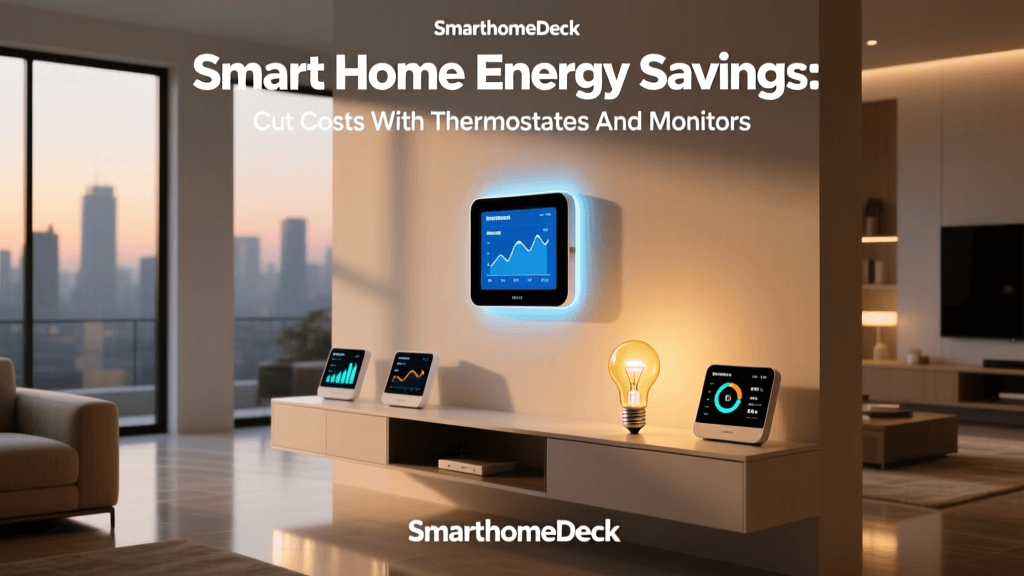
Traditional smart thermostats rely on schedules or basic geofencing. An ambient home takes a granular, room-by-room approach to climate control. By combining mmWave presence sensors with smart vent technology like Flair Smart Vents ($130 each), the home directs HVAC airflow only to occupied rooms. Furthermore, the Ecobee SmartThermostat Premium ($250) utilizes remote room sensors that measure both occupancy and ambient humidity, pre-conditioning rooms before you even enter them based on learned behavioral patterns. According to the U.S. Department of Energy, advanced smart thermostat usage and localized zoning can significantly reduce annual heating and cooling costs, making ambient tech not just a luxury, but an energy-management necessity.
Circadian and Context-Aware Lighting
Ambient lighting goes beyond turning on when you enter a room. It involves tracking the sun's position, the room's natural light levels, and your biological clock. High-end systems like Lutron Caseta with Ketra bulbs dynamically shift color temperature from cool, energizing blues in the morning to warm, melatonin-friendly ambers in the evening. When paired with an ambient hub, the lighting system can detect if you are watching a movie (via TV power state and room occupancy) and automatically dim the lights to 10%, or if you wake up at 2 AM to use the restroom, it will activate a dim, 5% warm-orange floor-level path light to avoid disrupting your sleep cycle.
Non-Invasive Health and Eldercare Monitoring
One of the most profound impacts of ambient computing is in aging-in-place technology. Wearable devices are often forgotten or removed by elderly users. Ambient sensors offer a non-invasive alternative. The Aqara FP2, for instance, includes a built-in fall detection feature that uses its radar to identify sudden drops in height followed by stillness, automatically alerting caregivers. Similarly, Wi-Fi sensing algorithms can monitor sleep quality and breathing rates over time, alerting family members to potential respiratory issues or changes in daily routines that might indicate a health decline.
Market Trends: The Shift Toward Advanced Sensors
The smart home market is rapidly pivoting away from basic PIR sensors toward advanced ambient sensing technologies. As the Connectivity Standards Alliance (CSA) continues to roll out the Matter protocol, interoperability between advanced sensors and local hubs is becoming seamless, accelerating consumer adoption.
Privacy Considerations in a Sensor-Rich Environment
The idea of a home that constantly monitors your presence, breathing, and routines naturally raises privacy concerns. The key to safe ambient computing is localization. When building an ambient smart home, prioritize devices that process data on the edge rather than in the cloud.
The Golden Rule of Ambient Privacy: Sensor data should be translated into simple state changes (e.g., 'Room: Occupied') locally. Raw radar data, thermal maps, or Wi-Fi signal logs should never leave your local network.
Using platforms like Home Assistant allows you to integrate Zigbee and Thread-based mmWave sensors directly into a local hub. The hub executes the automation logic and sends a simple on/off command to your smart bulbs via the local network. By avoiding cloud-dependent ecosystems for your core presence logic, you ensure that your intimate behavioral data remains entirely within the physical walls of your home.
Actionable Steps to Build Your Ambient Setup
Ready to transition from an app-driven home to an ambient one? Follow these foundational steps:
- Audit Your Friction Points: Identify the automations you currently trigger manually via apps or voice. Do you always ask your assistant to turn off the kitchen lights after cooking? Do you manually adjust the blinds? These are your prime candidates for ambient automation.
- Upgrade to mmWave in Static Zones: Replace PIR sensors in your living room, home office, and bedroom with mmWave alternatives like the Everything Presence One or Aqara FP2. Configure them to detect 'static presence' to ensure lights and climate controls remain active while you are resting or working.
- Invest in a Local Hub: Purchase a Home Assistant Green or Hubitat Elevation. These devices will serve as the central nervous system for your ambient logic, allowing for complex, multi-sensor conditional automations without relying on internet connectivity.
- Implement 'Calm Technology' Principles: Design your automations to be subtle. Ambient tech should not announce itself. Use gradual lighting transitions (fading over 30 seconds rather than snapping on instantly) and silent notifications. The best ambient automation is one you never consciously notice.
Conclusion
The future of smart home technology is not about adding more screens, more apps, or more complex voice commands. It is about creating an environment that inherently understands and supports the people living within it. By leveraging millimeter-wave radar, Wi-Fi sensing, and local edge computing, homeowners can build spaces that are deeply responsive, highly energy-efficient, and profoundly unobtrusive. As we move forward, the most advanced smart home will not be the one that demands your attention, but the one that quietly anticipates your needs, allowing you to focus on what truly matters.