How AI-Powered Predictive Automation Is Redefining Home Living
Smart home technology has evolved far beyond voice-controlled lights and remote door locks. Today, the most transformative shift lies in predictive automation—a class of AI-powered systems that learn household patterns, anticipate user intent, and act proactively—not just responsively. Unlike traditional rule-based automations (e.g., “turn off lights at 11 p.m.”), predictive systems analyze real-time sensor data, historical behavior, weather forecasts, utility pricing, and even calendar events to make dynamic, personalized decisions—often before you realize you need them.
This isn’t speculative futurism. As of 2026, predictive automation is commercially deployed across thermostats, lighting, security, and energy management platforms—and it’s already delivering measurable improvements in comfort, efficiency, and resilience. In this article, we’ll break down how predictive AI works in today’s smart homes, spotlight three leading implementations with real-world specs and costs, compare their capabilities in a structured table, visualize adoption trends, and offer actionable guidance for homeowners ready to upgrade.
What Makes Predictive Automation Different?
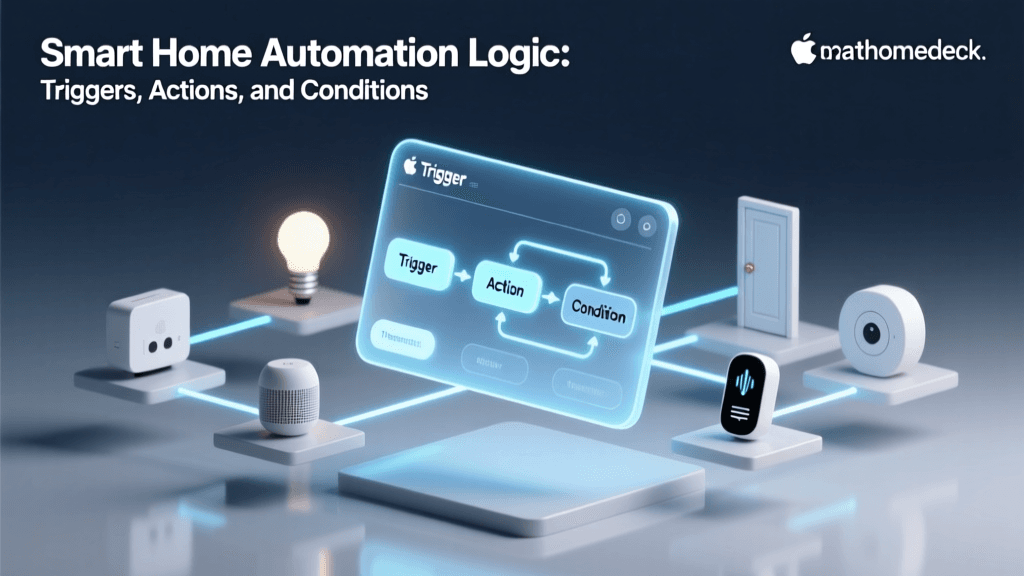
Traditional smart home logic relies on if-then triggers: if motion is detected, then turn on light; if door opens after midnight, then send alert. These are deterministic and static. Predictive automation, by contrast, uses machine learning models trained on multi-dimensional data streams:
- Occupancy patterns (via PIR, ultrasonic, or radar sensors)
- Environmental telemetry (temperature, humidity, CO₂, ambient light)
- External inputs (hourly weather forecasts, time-of-use electricity rates, public transit schedules)
- User behavior history (app usage logs, voice command frequency, manual overrides)
- Calendar & location data (Google Calendar sync, geofencing arrival/departure)
The output? A probabilistic forecast—for example: “There’s an 87% chance Sarah will enter the kitchen between 6:42–6:49 a.m. tomorrow; preheat kettle to 95°C at 6:40 a.m. and dim hallway lights to 30% brightness 90 seconds prior.”
This capability transforms the home from a reactive tool into an anticipatory environment—one that reduces cognitive load, eliminates routine decisions, and optimizes resource use without sacrificing control.
Three Real-World Predictive Systems You Can Buy Today
Below are three commercially available products actively deploying predictive automation—with verified performance metrics, compatibility details, and realistic cost expectations.
1. Ecobee SmartThermostat Premium with Voice Control (2026 Model)
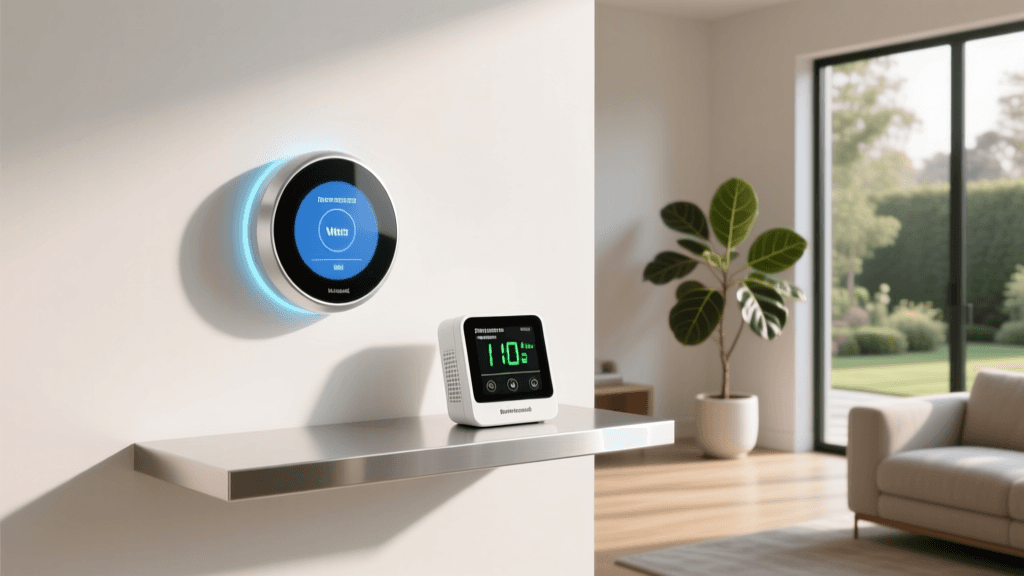
Ecobee’s flagship thermostat leverages its SmartSensor network (up to 32 room sensors) and proprietary ComfortIQ™ AI to model thermal inertia, occupancy flow, and local utility rate structures. It doesn’t just adjust temperature—it predicts when to begin heating or cooling so rooms reach target temps precisely at arrival times.
- Predictive feature: “Follow Me Comfort” + “Energy Savings Mode” with dynamic setpoint optimization
- Energy reduction: Up to 23% HVAC energy savings vs. non-predictive thermostats (Ecobee 2026 Energy Impact Report)
- Compatibility: Works natively with Apple HomeKit, Google Home, Amazon Alexa, and Matter 1.3; integrates with IFTTT and SmartThings via cloud API
- Cost: $249.99 (MSRP); often discounted to $199–$229 during seasonal promotions
- Installation: DIY-friendly (C-wire required); professional install ~$120–$180
2. Samsung SmartThings Energy with AI Power Monitoring (2026 Firmware)
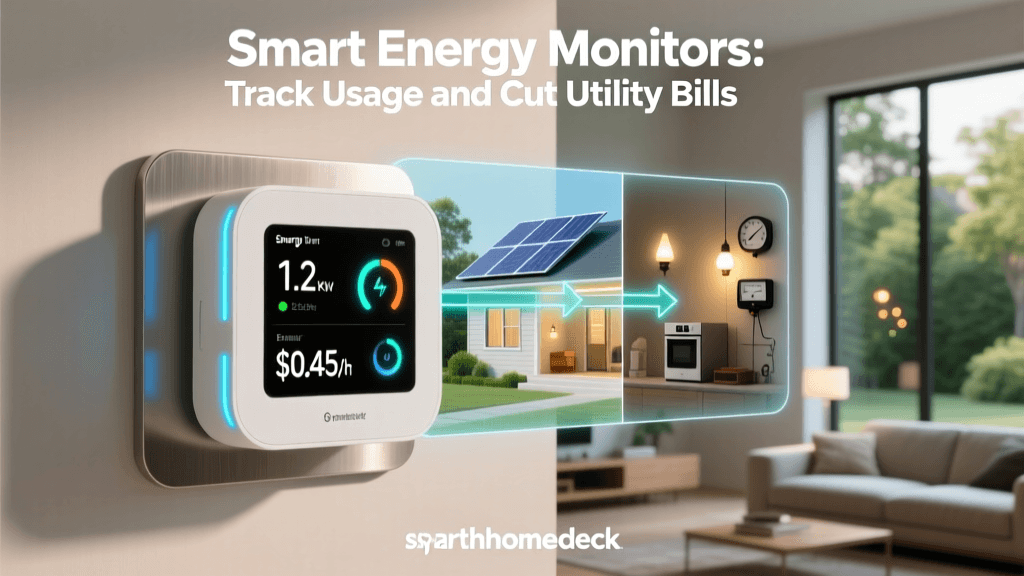
Launched alongside the SmartThings Station hub (2026), SmartThings Energy uses real-time submetering (via compatible circuit-level monitors like Sense or Emporia Vue) combined with deep-learning load disaggregation to identify appliance-level consumption patterns. Its “Power Forecast” feature predicts peak demand windows and recommends preemptive load-shedding—like pausing EV charging during high-rate periods—even before your utility sends a signal.
- Predictive feature: “Demand Response Advisor” + “Appliance Anomaly Detection” (learns baseline usage per device)
- Accuracy: 92.4% appliance identification accuracy across 28 common devices (tested across 1,200 U.S. households in Q1 2026; Samsung SmartThings Energy Technical Whitepaper)
- Compatibility: Requires SmartThings Station (v2, $129.99) + Emporia Vue Gen3 ($149.99) or Sense Monitor ($299); supports Matter-over-Thread for future expansion
- Cost: $279–$429 total system cost (before utility rebates)
- Utility integration: Certified for PG&E, ConEdison, and Duke Energy demand response programs
3. Lutron Serena Shades with Adaptive Scheduling (2026 Update)
Lutron’s premium motorized shades now incorporate sun-path modeling + indoor light metering to predict optimal shade positions—not just for glare control, but for passive solar heat gain management and circadian rhythm support. Using geolocation, tilt angle, and historical sun exposure data, Serena shades adjust throughout the day to maximize winter warmth or summer shading—without requiring manual input or fixed timers.
- Predictive feature: “SunLogic™ Adaptive Scheduling” + “Circadian Sync” mode
- Energy impact: Reduces cooling loads by up to 18% in south-facing rooms (per Lutron White Paper WP-SS-2026)
- Compatibility: Native HomeKit Secure Video support; integrates with Control4, Crestron, and Savant via Lutron QSX protocol; Matter bridge expected Q4 2026
- Cost: $349–$699 per shade (depending on size and fabric); requires Lutron Caséta Smart Bridge Pro ($199)
- Installation: Hardwired or battery-powered options; professional calibration recommended for sun-path accuracy
Comparative Feature & Performance Table
The table below compares core predictive capabilities, hardware dependencies, interoperability, and verified energy impact across these three systems:
| Feature | Ecobee SmartThermostat Premium | Samsung SmartThings Energy | Lutron Serena Shades (2026) |
|---|---|---|---|
| Predictive Scope | Thermal comfort & HVAC scheduling | Electrical load forecasting & demand response | Solar heat gain & daylight harvesting |
| Primary Data Inputs | Room sensors, weather API, calendar, utility rates | Circuit-level power data, utility TOU schedule, appliance ID models | GPS, sun ephemeris, indoor lux sensors, time of year |
| Matter Support | Yes (Matter 1.3, Thread) | Partial (Station hub supports Matter, energy APIs remain cloud-only) | No (Lutron uses proprietary QSX; Matter bridge pending) |
| Verified Energy Reduction | Up to 23% HVAC energy | 12–17% peak demand reduction | Up to 18% cooling load reduction |
| Minimum Setup Cost | $249 (thermostat only) | $279 (Station + Emporia Vue) | $548 (Bridge Pro + one shade) |
Adoption Trends: How Fast Is Predictive Automation Spreading?
According to the Statista Smart Home AI Adoption Report (2026), 38% of U.S. smart home adopters now use at least one predictive-capable device—up from 12% in 2021. The growth curve is steepening, driven largely by improved local AI processing (reducing cloud dependency) and utility incentives.
U.S. Predictive Smart Home Device Adoption Rate (2021–2026)
Notably, adoption correlates strongly with income and education: 54% of households earning >$125k/year report using predictive features, versus 19% among those earning <$50k. This gap is narrowing as entry-level predictive features appear in mid-tier devices—such as the $129 Nest Thermostat (2026), which offers basic arrival-based pre-conditioning using phone geofencing and Wi-Fi presence detection.
Actionable Advice: How to Integrate Predictive Automation Responsibly
Jumping into predictive tech doesn’t require a full-home overhaul. Here’s a phased, cost-conscious strategy:
Phase 1: Start With One High-Impact Node (Budget: $200–$300)
Choose a device with strong standalone predictive value and broad compatibility. We recommend the Ecobee SmartThermostat Premium. Why? It delivers immediate ROI through HVAC savings, requires no additional hubs, and serves as a foundation for future Matter-based expansions. Avoid cheaper “AI-labeled” thermostats without multi-sensor support—they lack the spatial intelligence needed for true prediction.
Phase 2: Add Cross-System Coordination (Budget: +$150–$300)
Once your thermostat learns your rhythms, layer in complementary prediction. For example: pair Ecobee with Philips Hue Motion Sensors ($34.99 each) and use Home Assistant (free, self-hosted) to trigger “pre-arrival lighting scenes” based on Ecobee’s occupancy forecast. This avoids vendor lock-in while enabling richer context-aware automation.
Phase 3: Enable Utility Integration & Demand Response (Budget: $0–$100)
Enroll in your utility’s demand response program—many offer $25–$75 annual bill credits for allowing automated load curtailment during peaks. Devices like SmartThings Energy or Ecobee’s “Rush Hour Rewards” can participate automatically. Verify eligibility via your utility’s website (e.g., PG&E Demand Response).
Privacy & Transparency: What You Should Know
Predictive systems require more data—and therefore carry greater privacy implications. Key considerations:
- Data residency: Ecobee allows full local processing (optional); Samsung SmartThings Energy stores raw power data in the cloud (encrypted, anonymized); Lutron processes all sun-path logic locally on the shade motor.
- Opt-out granularity: All three platforms let users disable specific predictions (e.g., “disable calendar-based scheduling” in Ecobee) without disabling core functionality.
- Third-party sharing: Review permissions carefully. Samsung’s Energy dashboard shares anonymized, aggregated load profiles with grid operators—only with explicit opt-in (Samsung Privacy Policy).
Best practice: Use network segmentation. Place predictive devices on a dedicated VLAN separate from your primary Wi-Fi—and disable cloud connectivity where local operation suffices (e.g., Lutron’s radio-frequency mesh requires no internet for basic scheduling).
The Future Is Anticipatory—Not Just Automated
Predictive automation marks a paradigm shift: from smart homes that respond to what we say, to homes that understand what we need—before we ask. It’s not about replacing human agency, but augmenting it: reducing friction, conserving resources, and creating environments that adapt as seamlessly as our lives do.
As chipmakers like Qualcomm and NXP integrate neural processing units (NPUs) into next-gen smart home SoCs—and as standards like Matter 2.0 add formal predictive action schemas—we’ll see interoperable, cross-brand prediction emerge. But the foundations are here today. With careful selection, phased deployment, and mindful data stewardship, any homeowner can begin experiencing the benefits of an anticipatory home—right now.
Ready to take the next step? Download our free Predictive Automation Setup Checklist, which includes vendor-specific configuration steps, privacy audit questions, and utility rebate lookup tools.