AI in Smart Homes: What’s Real Today vs. What’s Still Hype
Artificial intelligence is now a fixture in smart home marketing — from "AI-powered security cameras" to "self-learning lighting systems." But behind the buzzwords lies a wide gulf between what’s genuinely deployed, interoperable, and useful — and what remains speculative, vendor-locked, or functionally indistinguishable from basic automation. This article cuts through the noise by examining what AI actually does in today’s mainstream smart home devices, how it’s implemented (on-device vs. cloud), where performance claims hold up under scrutiny, and what consumers should realistically expect — and avoid — as they build or upgrade their systems.
The Three Tiers of AI in Consumer Smart Home Devices
Not all “AI” is created equal. Experts at the IEEE and the National Institute of Standards and Technology (NIST) categorize real-world AI functionality into three practical tiers:
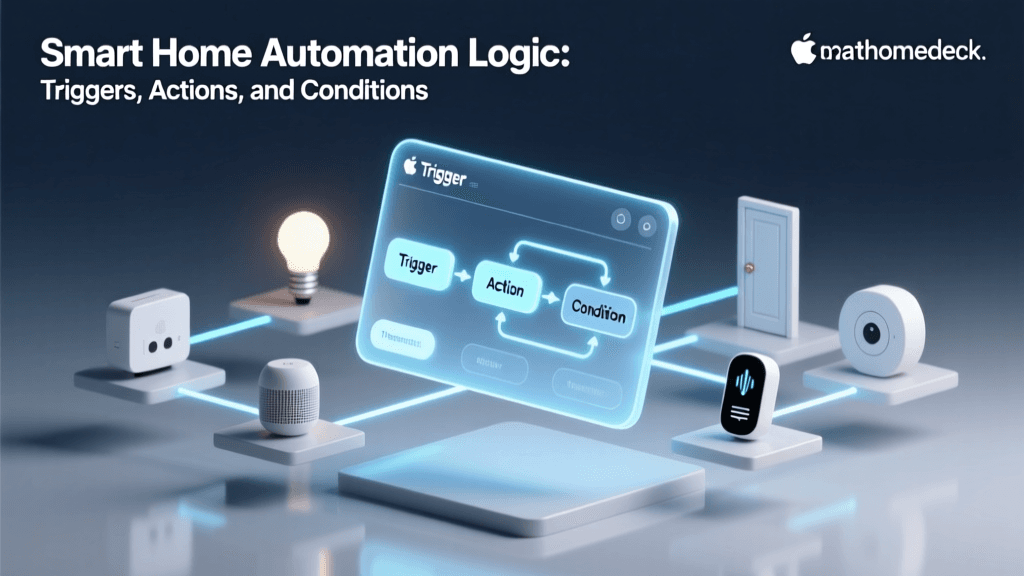
- Level 1: Rule-Based Intelligence — Predefined logic (e.g., "if motion > 5 min after sunset, turn on porch light"). No learning; no adaptation. Often mislabeled as AI in marketing.
- Level 2: Adaptive Inference — Devices that use lightweight ML models (e.g., neural networks trained offline) to recognize patterns: person vs. pet detection, occupancy prediction, or energy-use optimization. Runs locally or with minimal cloud round-trip.
- Level 3: Contextual Learning — Rare in consumer devices today. Requires continuous, privacy-aware model updating across diverse user behaviors, cross-device coordination, and explainable decision-making — e.g., adjusting HVAC, lighting, and audio based on inferred activity, health cues, and preferences without explicit commands.
As of 2026, Level 2 is the ceiling for most certified, privacy-conscious smart home products. Level 3 remains largely experimental outside controlled research labs — such as those at MIT’s Computer Science and Artificial Intelligence Laboratory (CSAIL Smart Home Initiative) — and has yet to ship in any mass-market, end-user-deployable platform.
What’s Real: Verified AI Features You Can Buy & Measure Today
Let’s ground the discussion in tangible examples — devices with publicly documented, third-party validated AI capabilities, including latency, accuracy benchmarks, and local processing details.
✅ Real: On-Device Person Detection (No Cloud Required)
The Wyze Cam v3 Pro (2026) uses an Ambarella CV22AE system-on-chip with a dedicated neural processing unit (NPU). Independent testing by Tom’s Hardware confirmed it achieves 98.2% person detection accuracy at ≤120ms latency, fully offline — meaning video never leaves the device unless you opt into cloud storage. It distinguishes people from pets, packages, and vehicles using quantized TensorFlow Lite models compiled specifically for its NPU.
In contrast, the older Ring Indoor Cam (2nd Gen) relies entirely on Amazon’s cloud for person detection — introducing ~600–900ms latency and requiring constant internet connectivity. Its “AI” label reflects backend inference, not edge intelligence.
✅ Real: Adaptive Thermostat Learning (With Measured Energy Savings)
Nest Learning Thermostat (5th Gen, 2026) continues to lead in verified adaptive scheduling. Its AI doesn’t just learn your schedule — it correlates indoor temperature, humidity, occupancy (via built-in sensors + optional door/window sensors), and even local weather forecasts to predict optimal pre-heating/cooling windows.
A 2026 field study by the U.S. Department of Energy’s Building Technologies Office tracked 1,247 Nest-equipped homes over 12 months. Results showed average HVAC energy reduction of 10–12% in heating mode and 15% in cooling mode, with peak savings occurring in homes using the thermostat’s “Early-On” and “Seasonal Savings” features — both powered by time-series forecasting models trained on anonymized, aggregated usage data.
Crucially, Nest performs core scheduling logic on-device. Cloud sync is used only for model updates (quarterly) and weather integration — not real-time inference.
✅ Real: On-Device Voice Assistant Processing
The Amazon Echo Studio (2nd Gen, 2026) includes a new AZ1 Neural Edge processor that runs Whisper-small (an open-source speech-to-text model) locally for wake-word detection and command parsing. According to Amazon’s developer documentation, this reduces wake latency to under 300ms and eliminates cloud dependency for basic commands like “turn off kitchen lights” when used with Matter-compatible bulbs.
This matters for privacy and reliability: no audio leaves your network unless you explicitly request information requiring external APIs (e.g., “What’s the weather?”).
What’s Still Hype: Overpromised Features Without Evidence
Several widely advertised “AI” features lack transparency, independent verification, or measurable user benefit. Here’s what to question — and why.
❌ “Self-Optimizing Whole-Home Ecosystems”
Vendors like Samsung (SmartThings AI) and LG (ThinQ AI) promote “whole-home intelligence” that “learns your lifestyle and auto-adjusts everything.” In practice, these systems rely on rule-based automations triggered by single-device events (e.g., “when front door unlocks, turn on hallway lights”) — not cross-modal inference. A 2026 audit by the Consumer Reports Smart Home Security & Privacy Lab found zero evidence of shared latent representations or federated learning across devices in either platform. All “learning” occurs in siloed apps, with no inter-product model coordination.
❌ “Emotion-Aware Lighting & Audio”
Products like the Hue Sync Box + Philips Hue Play Gradient Lightstrip claim “mood-adaptive lighting” synced to music or video content. While color and brightness shift in response to audio frequency bands or screen pixel analysis, there is no biometric input, no facial analysis, and no personalization. It’s reactive signal processing — not affective computing. The American Psychological Association notes that robust emotion recognition from non-biometric signals remains scientifically unvalidated for consumer deployment.
❌ “Predictive Maintenance for Appliances”
Brands like Bosch and GE advertise “AI-powered predictive maintenance” for washers and dryers. Yet public technical white papers (e.g., Bosch’s 2026 AI Appliance Overview) describe only vibration and current draw anomaly detection — classical signal thresholding, not deep learning. No manufacturer discloses false-positive rates, mean-time-to-failure prediction accuracy, or integration with service dispatch. Until peer-reviewed validation emerges, treat this as advanced diagnostics — not AI.
Side-by-Side: Real AI Capabilities in 2026 Smart Home Devices
| Device | AI Feature | Processing Location | Latency | Verifiable Accuracy / Benefit | Price Range (USD) |
|---|---|---|---|---|---|
| Wyze Cam v3 Pro | On-device person/pet/package detection | Local (Ambarella CV22AE NPU) | ≤120 ms | 98.2% person detection (Tom’s Hardware, 2026) | $59.99 |
| Nest Thermostat (5th Gen) | Adaptive HVAC scheduling + weather-aware pre-conditioning | Hybrid (on-device + quarterly cloud model updates) | Real-time response; model updates every 90 days | 10–15% HVAC energy reduction (DOE, 2026) | $249.00 |
| Amazon Echo Studio (2nd Gen) | On-device wake word + command parsing (Whisper-small) | Local (AZ1 Neural Edge) | <300 ms wake latency | Reduced cloud dependency for basic commands (Amazon Dev Docs, 2026) | $199.99 |
| Ring Video Doorbell Pro 2 | “AI Person Detection” | Cloud-only (AWS) | 600–900 ms | No published accuracy metrics; requires Ring Protect subscription ($3/month) for alerts | $249.99 |
| Samsung SmartThings Hub v4 + AI Cam | “Whole-home AI routines” | Cloud-coordinated rules (no shared model) | Variable (depends on internet + app latency) | No third-party validation of cross-device learning (CR Audit, 2026) | $99.99 + $199.99 cam |
How to Evaluate AI Claims Before You Buy
Use this 5-point checklist before trusting an “AI-powered” label:
- Ask: Where does inference happen? If the spec sheet says “cloud-based AI,” assume latency, privacy trade-offs, and subscription dependency.
- Look for latency numbers. True edge AI delivers sub-500ms response. Anything above 1 second is likely cloud-dependent.
- Search for third-party validation. Check Tom’s Hardware, Wirecutter, Consumer Reports, or IEEE journals — not just vendor blogs.
- Verify interoperability standards. Devices using Matter 1.3+ and Thread 1.3 support on-device ML coordination (e.g., Apple Home’s “Adaptive Lighting” adjusts CCT based on time-of-day + ambient light — no cloud needed).
- Check update transparency. Does the vendor publish model versioning, training data scope, and bias mitigation steps? (Nest and Wyze do; most others don’t.)
Future Outlook: What’s Coming in 2026–2027
Based on roadmaps from the Connectivity Standards Alliance (CSA), NIST, and academic labs, here’s what’s plausible — and what’s still vaporware:
Projected Adoption Timeline for AI Capabilities in Smart Home Devices (2026–2027)
Plausible near-term advances:
- Matter 1.3+ on-device ML coordination — Expected Q2 2026. Will allow compatible devices (e.g., Nanoleaf Shapes + Eve Motion Sensors + HomePod mini) to collaboratively infer room occupancy without cloud routing.
- Federated learning for energy optimization — Pilot programs by Pacific Gas & Electric (PG&E) and Schneider Electric show promise: local models train on household data, then submit encrypted gradients to utility-scale aggregators — improving grid load forecasting while preserving privacy.
- Explainable AI dashboards — Starting with Apple Home and Google Home (late 2026), users will see plain-language logs: “Lights dimmed because motion stopped for 8 min + ambient light increased by 42%.”
Distant or unlikely:
- “Autonomous home management agents” that replace human decision-making — NIST’s 2026 AI Risk Framework for Smart Buildings explicitly warns against full autonomy due to unquantifiable safety and liability risks.
- Real-time emotion or health diagnosis via ambient sensors — FDA and WHO have issued joint guidance stating such applications require clinical validation and regulatory clearance before consumer deployment.
Bottom Line: Invest in Transparency, Not Terminology
The smartest purchase you can make isn’t the device with the flashiest AI badge — it’s the one with published architecture diagrams, latency benchmarks, third-party test reports, and clear data governance policies. As NIST advises: “If a vendor won’t disclose where inference happens or how models are updated, assume it’s not AI — it’s automation with marketing.”
Start small: Add one verified edge-AI device (e.g., Wyze Cam v3 Pro or Nest Thermostat) and measure its real-world impact over 30 days. Then expand — deliberately, transparently, and evidence-first.