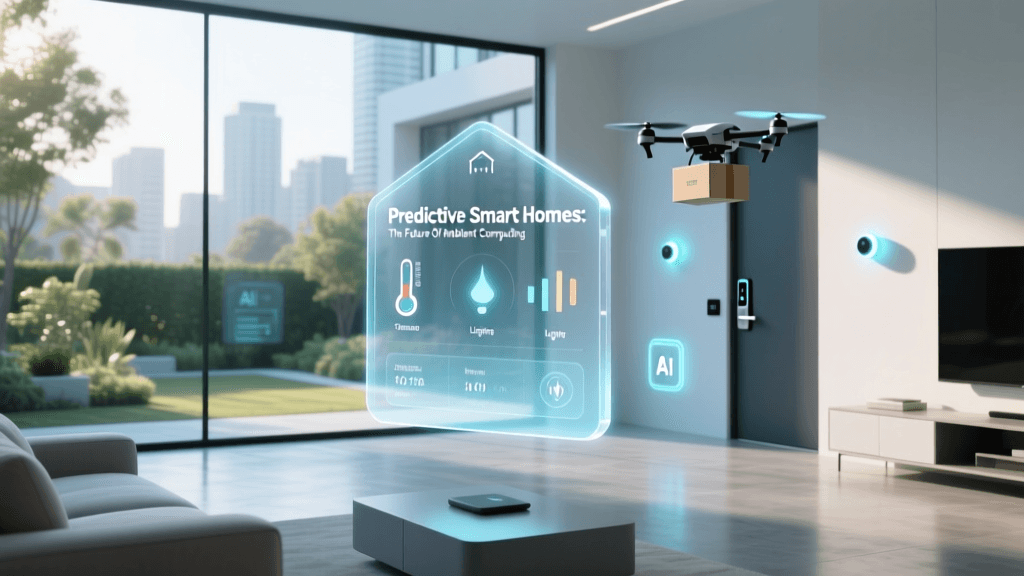
The evolution of the smart home has been defined by distinct eras of interaction. In the 2010s, we relied on clunky smartphone apps to control individual devices. By the mid-2010s, voice assistants like Amazon Alexa and Apple Siri popularized reactive voice commands. While convenient, these systems still require human initiation: you must tell the house what to do. Today, we are standing on the precipice of a new era—ambient computing and predictive AI. In this future state, the smart home transitions from a reactive collection of gadgets into a proactive, intuitive environment that anticipates your needs before you even articulate them.
For homeowners, tech enthusiasts, and real estate professionals, understanding this shift is critical. The future of smart home technology is not about adding more screens or microphones; it is about invisible intelligence, sensor fusion, and edge computing. In this comprehensive guide, we will explore how ambient AI is shaping future living, the core technologies driving this shift, and actionable steps you can take today to future-proof your home.
The Paradigm Shift: From Reactive to Proactive Environments
Ambient computing, a term coined by Mark Weiser in the late 1980s, describes technology that fades into the background of daily life. In the context of the modern smart home, it means the environment responds to context rather than commands. Instead of saying, 'Hey Google, set the thermostat to 70 degrees,' a predictive home uses biometric data, occupancy patterns, and external weather APIs to adjust the climate automatically based on your current physiological state and preferences.
This shift is powered by sensor fusion—the combining of data from disparate sensors to create a highly accurate, real-time model of the home environment. When motion sensors, thermal cameras, millimeter-wave (mmWave) radar, and wearable health trackers communicate seamlessly, the home's AI can make complex, context-aware decisions with zero human intervention.
The Core Technologies Driving Ambient AI
To achieve a truly predictive home, three foundational technologies must work in harmony: advanced sensing, local edge processing, and universal interoperability.
1. Sensor Fusion and mmWave Radar
Traditional Passive Infrared (PIR) motion sensors are fundamentally flawed for ambient living; they only detect changes in heat signatures, meaning if you sit still to read a book, the lights will turn off. The future belongs to millimeter-wave (mmWave) radar. Devices like the Aqara Presence Sensor FP2 (approx. $69) emit high-frequency radio waves that can detect micro-movements, including the subtle rise and fall of human breathing. Furthermore, the FP2 can map a room into distinct 3D zones, allowing the home to know exactly where you are sitting and adjust localized lighting or HVAC vents accordingly.
2. Edge AI and Local Processing
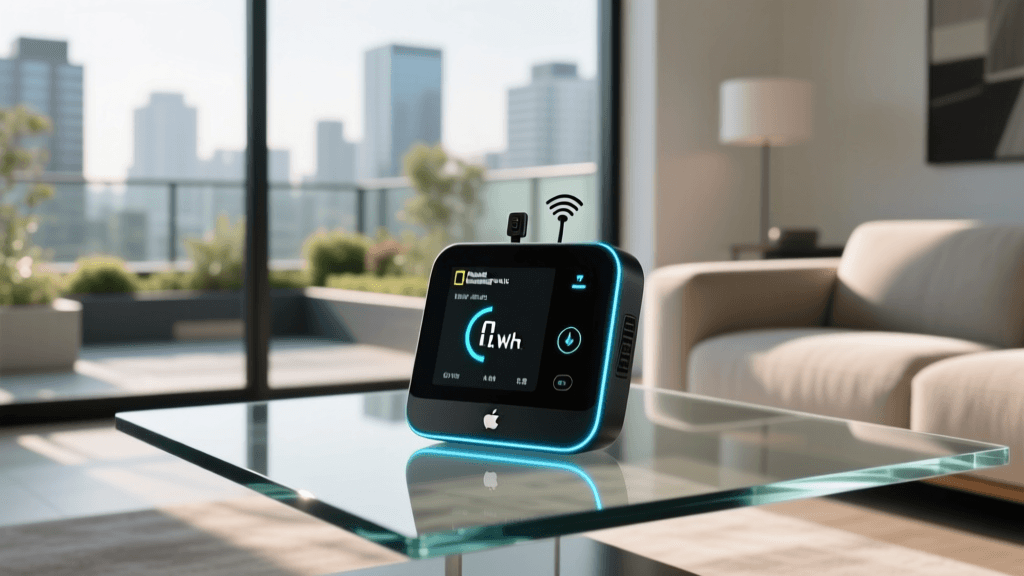
Cloud-dependent AI introduces latency and privacy risks. The future smart home processes data locally via Edge AI. By running localized machine learning models on dedicated hardware—such as the Home Assistant Green ($99) or Apple TV 4K—the home can execute complex automations in milliseconds without sending sensitive video or audio data to external servers. Edge AI enables features like local facial recognition for smart locks and on-device natural language processing (NLP) that understands conversational context without a cloud connection.
3. The Matter Protocol and Thread Networking
Predictive AI requires a massive web of interoperable devices. The Connectivity Standards Alliance (CSA) developed the Matter protocol to solve the fragmentation crisis. Built on the Thread networking protocol—a low-power, self-healing mesh network—Matter ensures that an Aqara sensor can instantly trigger a Philips Hue light and an Ecobee thermostat, regardless of the manufacturer. As Matter evolves to include major appliances and EV chargers, the home's AI will gain holistic control over the entire property's energy and operational footprint.
Practical Applications in Future Living
How does this technology manifest in daily life? Here are three areas where predictive automation is already beginning to reshape the living experience.
Predictive Climate and Energy Management
Future climate control moves beyond simple scheduling. The Ecobee Smart Thermostat Premium ($249) utilizes remote SmartSensors to detect occupancy and ambient room temperatures. When paired with EPA Energy Star certified algorithms, the system learns the thermal mass of your home—how quickly it heats up or cools down based on outdoor weather forecasts. In the near future, this will integrate with smart window films and automated blinds to passively manage solar heat gain, drastically reducing HVAC energy consumption without sacrificing comfort.
Health and Wellness Monitoring
The smart home is becoming a passive health monitor. Devices like the Withings Sleep Tracking Mat ($129) slide under your mattress to analyze sleep cycles, heart rate, and snoring patterns without wearables. In a predictive ecosystem, if the mat detects you have entered deep REM sleep and the room temperature is rising, it will automatically signal the HVAC system to drop the temperature by two degrees and close the smart blinds to block early morning sunlight, optimizing your circadian rhythm.
Adaptive Circadian Lighting
Lighting will no longer be controlled by switches. Using mmWave presence detection and local astronomical clocks, systems like Philips Hue will dynamically shift color temperature and brightness based on your exact location in the room, the time of day, and the amount of natural light entering the windows, promoting natural melatonin production in the evening.
Reactive vs. Predictive Smart Home Tech
To understand the magnitude of this shift, compare the current reactive paradigm with the emerging predictive model:
| Feature | Reactive (Current State) | Predictive (Ambient Future) |
|---|---|---|
| Trigger Mechanism | Voice commands, app taps, basic PIR motion | Sensor fusion, biometric data, behavioral AI |
| Latency | 500ms - 2s (Cloud round-trip) | < 50ms (Local Edge processing) |
| Occupancy Detection | Macro-motion only (fails if sitting still) | Micro-motion & breathing (mmWave radar) |
| Privacy Architecture | Data processed on corporate cloud servers | Data processed locally on home edge hubs |
| Interoperability | Walled gardens (requires specific brand hubs) | Universal Matter/Thread mesh networking |
| Estimated Hub Cost | $50 - $150 (Brand-specific) | $99 - $250 (Local AI servers/Thread border routers) |
Privacy and Security in the Age of Predictive AI
A home that knows when you sleep, where you sit, and what your heart rate is presents profound privacy implications. Relying on cloud-based AI for this level of intimacy is a severe security risk. This is where NIST IoT Cybersecurity Guidelines become essential reading for smart home adopters. NIST emphasizes the necessity of device identity management, network segmentation, and local data processing.
To secure a predictive home, you must implement Network Segmentation via VLANs (Virtual Local Area Networks). IoT devices should never reside on the same network as your personal computers or smartphones. Using advanced consumer firewalls like the Firewalla Purple ($189) or a Ubiquiti UniFi Dream Router, you can isolate smart home traffic, block devices from phoning home to foreign servers, and monitor for anomalous data spikes that indicate a compromised sensor.
Actionable Steps to Future-Proof Your Home Today
You do not need to wait a decade to experience the benefits of ambient computing. Here is a strategic roadmap to transition your home toward a predictive model today:
- Audit and Segment Your Network: Before adding advanced sensors, ensure your router supports VLANs or guest networks. Isolate all existing smart devices to protect your primary data.
- Invest in a Local Automation Engine: Move away from cloud-dependent routines. Purchase a Home Assistant Green or an Apple TV 4K to serve as your local brain. This ensures your automations run even if your internet connection drops.
- Upgrade to mmWave Presence Sensors: Replace aging PIR motion sensors in high-traffic areas (living rooms, home offices, bathrooms) with mmWave alternatives like the Aqara FP2 or the Everything Presence One. This eliminates the 'lights turning off while reading' frustration and enables zone-based automation.
- Prioritize Matter and Thread: When purchasing new hardware, look for the Matter logo and Thread Border Router capabilities. Devices like the Eve Energy smart plugs and Nanoleaf smart bulbs utilize Thread, creating a robust, self-healing mesh that reduces Wi-Fi congestion and improves local response times.
- Implement Circadian Lighting Logic: Use local automation software to tie your smart bulbs to your local solar calendar. Set lights to 4000K (cool white) during peak work hours and gradually fade to 2200K (warm amber) two hours before your typical bedtime.
Conclusion
The transition from reactive smart home gadgets to predictive, ambient environments represents the most significant leap in residential technology since the advent of indoor plumbing. By leveraging mmWave sensor fusion, local Edge AI, and the Matter protocol, the homes of the near future will quietly and intelligently adapt to our biological and emotional needs. By prioritizing local processing and robust network security today, early adopters can build a foundation that is not only immensely convenient but also private, secure, and ready for the ambient AI revolution.