The Paradigm Shift: From Wearables to Ambient Sensing
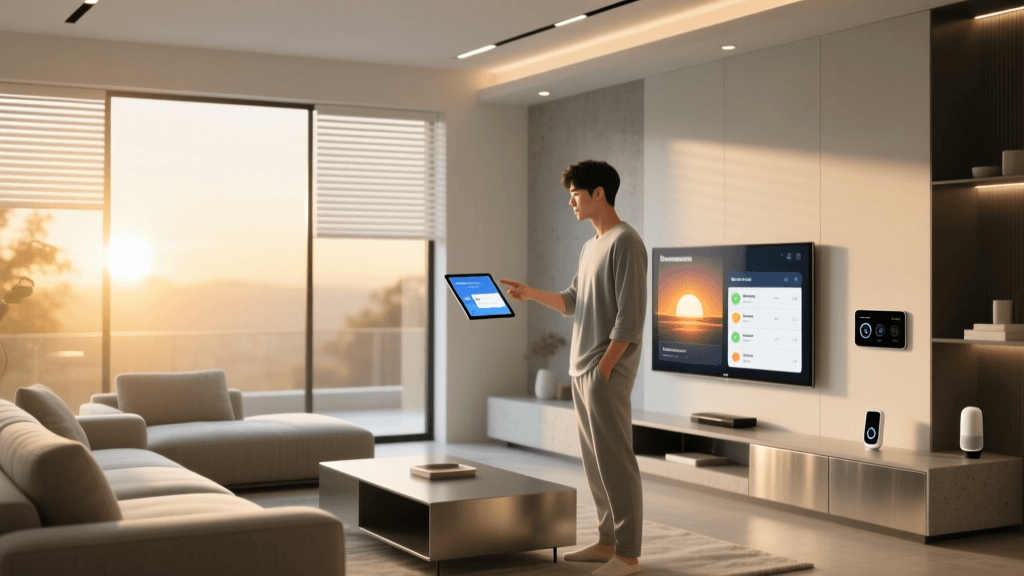
For the past decade, the smart home health narrative has been dominated by wearables. Smartwatches, fitness rings, and chest straps have provided unprecedented insights into our daily activity levels, heart rates, and sleep cycles. However, a significant shift is currently underway in the smart home basics and education space: the transition from active, wearable tracking to passive, ambient health monitoring. Ambient health technology refers to devices integrated seamlessly into the home environment that collect biometric and environmental data without requiring the user to wear, charge, or actively interact with them.
This evolution is driven by consumer fatigue. Many users find sleeping with a bulky smartwatch uncomfortable, and the daily ritual of charging wearables creates gaps in data collection. Ambient devices solve these friction points by embedding sensors into the very infrastructure of our homes—under our mattresses, inside our HVAC systems, and within our bathroom fixtures. As the Internet of Things (IoT) matures, these emerging smart home categories are transforming our living spaces into proactive wellness ecosystems.
Key Categories of Emerging Health Devices
The ambient health market is diversifying rapidly. To understand where the smart home is heading, we must examine the three primary categories of non-wearable health technology currently entering the consumer market.
1. Non-Contact Sleep and Vitals Trackers
Sleep is the foundation of human health, yet traditional sleep tracking requires wearing a device to bed. Emerging non-contact sleep trackers utilize advanced piezoelectric and ballistocardiography sensors to monitor vitals from beneath the mattress. The Withings Sleep Tracking Mat (typically priced around $99 to $129) is a prime example. Slipped under the mattress, it uses highly sensitive pneumatic sensors to detect heart rate, breathing disturbances, and snoring patterns. More importantly, it provides an FDA-cleared Sleep Apnea Indicator, analyzing breathing interruptions to flag potential sleep disorders.
Another notable entrant is the Emfit QS Active (approx. $200), which caters to athletes and biohackers. It measures Heart Rate Variability (HRV) and resting heart rate with clinical-grade accuracy, transmitting data via Wi-Fi to local servers or cloud dashboards. According to the National Sleep Foundation, optimizing the bedroom environment and continuously monitoring sleep architecture without the psychological burden of wearable screens leads to better long-term sleep hygiene and more consistent data collection.
2. Advanced Environmental Quality Monitors
Your health is intrinsically tied to the air you breathe indoors. The EPA notes that indoor air can be two to five times more polluted than outdoor air due to poor ventilation and off-gassing from household materials. Basic smart thermostats only measure temperature and humidity, but emerging ambient health monitors track a comprehensive suite of airborne pathogens and pollutants.
The Airthings View Plus (approx. $299) is a leading device in this space. It continuously monitors Radon (a leading cause of lung cancer), PM2.5 (fine particulate matter), CO2, VOCs (Volatile Organic Compounds), temperature, humidity, and air pressure. By integrating with smart HVAC systems via IFTTT or native APIs, the View Plus can automatically trigger smart vents, air purifiers, or ERV (Energy Recovery Ventilator) systems when CO2 levels exceed 1,000 ppm or when PM2.5 spikes due to cooking. For a deeper understanding of these risks, the Environmental Protection Agency (EPA) provides extensive documentation on how indoor air quality directly impacts respiratory and cardiovascular health.
3. Smart Bathroom and Biometric Fixtures
The bathroom is the most data-rich environment in the human home, yet it has historically been ignored by smart home manufacturers. This is changing with the introduction of smart scales and biometric waste analyzers. The Withings Body Scan scale (approx. $399) uses a retractable handle with built-in electrodes to perform a segmental body composition analysis, measuring fat mass, muscle mass, and water percentage in specific limbs, while also recording a 6-lead ECG.
Even more groundbreaking is the Withings U-Scan (approx. $400+), a puck-shaped device that rests in the toilet bowl. It utilizes microfluidic cartridges to analyze urine daily, tracking biomarkers such as pH, specific gravity, vitamin C, ketones, and luteinizing hormone (for cycle tracking). The U.S. Food and Drug Administration (FDA) categorizes many of these emerging consumer devices as 'general wellness' products, meaning they are designed to maintain or encourage a healthy lifestyle without making strict diagnostic medical claims, though the line between consumer wellness and medical diagnostics is rapidly blurring.
Visualizing the Market Growth
The transition toward ambient health monitoring is not just a niche trend; it represents a massive market expansion. As sensor costs decrease and AI-driven predictive analytics improve, the smart home health sector is experiencing exponential growth. The chart below illustrates the projected market size of smart home health and wellness devices over the next few years.
Projected Growth of Smart Home Health and Wellness Market
Ecosystem Integration: Matter, Thread, and Local Control
For ambient health devices to be truly effective, they cannot exist in isolated silos. A sleep tracker must communicate with a smart thermostat to lower the bedroom temperature when the user enters deep sleep. An air quality monitor must trigger the HVAC fan when VOCs are detected. Historically, proprietary cloud-to-cloud integrations caused latency and reliability issues.
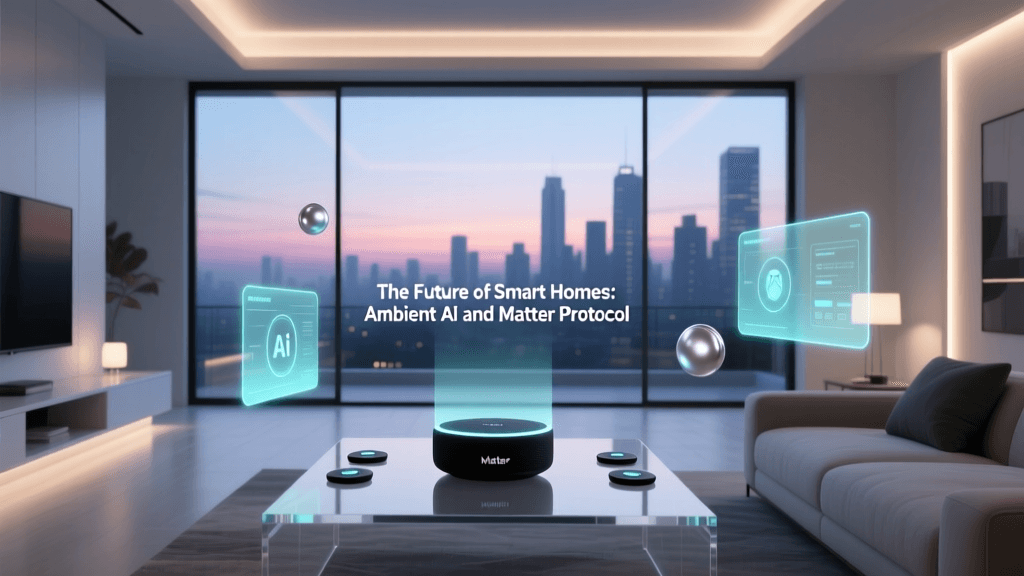
The introduction of the Matter protocol and the underlying Thread mesh network is revolutionizing this space. Thread provides a low-power, self-healing mesh network ideal for battery-operated ambient sensors, while Matter ensures cross-ecosystem compatibility (Apple HomeKit, Amazon Alexa, Google Home). Early adopters should prioritize health devices that support local API access or Matter over Thread. Local control ensures that if your internet connection drops, your smart air purifier will still turn on when your ambient VOC sensor detects a spike. Furthermore, local processing significantly reduces the latency of automated health routines.
The Privacy Conundrum: Health Data in the Smart Home
When discussing smart home basics, privacy is paramount. Health data is the most sensitive category of personal information. Unlike a smart light bulb that only knows when you are in a room, an ambient health monitor knows your resting heart rate, your sleep apnea severity, and your metabolic markers.
Consumers must understand that most consumer smart home devices are not covered by HIPAA (Health Insurance Portability and Accountability Act) in the United States. HIPAA applies to healthcare providers, insurers, and their business associates. When you use a consumer smart scale or sleep mat, your data is governed by the company's standard privacy policy. This means the data could potentially be used for targeted advertising or sold to third-party data brokers unless explicitly prohibited by local privacy laws like GDPR or CCPA.
Pro-Tip for Privacy: Whenever possible, route ambient health devices through a local smart home hub like Home Assistant. By using local integrations, you can aggregate your biometric data on a local server (such as a Raspberry Pi or Intel NUC) and completely block the device's internet access at the router level via firewall rules, ensuring your health metrics never leave your home network.
Comprehensive Device Comparison
To help you navigate the emerging landscape, we have compiled a comparison table of the top ambient health devices currently available or entering the market.
| Device Name | Category | Approx. Cost | Key Metrics Tracked | Connectivity & Ecosystem |
|---|---|---|---|---|
| Withings Sleep Mat | Sleep & Vitals | $99 - $129 | Heart Rate, Snoring, Apnea, Sleep Cycles | Wi-Fi, IFTTT, Apple Health |
| Emfit QS Active | Sleep & Recovery | $199 - $229 | HRV, Resting HR, Respiratory Rate | Wi-Fi, Local API, Sports APIs |
| Airthings View Plus | Environmental | $279 - $299 | Radon, PM2.5, CO2, VOCs, Temp, Humidity | Wi-Fi, Thread, Matter (Beta) |
| uHoo Smart Air Monitor | Environmental | $299 - $329 | NO2, CO, CO2, PM2.5, VOCs, Ozone | Wi-Fi, IFTTT, Alexa, Google |
| Withings Body Scan | Biometric Scale | $399 - $449 | Segmental Fat/Muscle, 6-Lead ECG, Vascular Age | Wi-Fi, Bluetooth, Withings App |
| Withings U-Scan | Biometric Waste | $399+ (plus cartridges) | pH, Ketones, Vitamin C, Specific Gravity | Wi-Fi, Bluetooth, Withings App |
Actionable Advice for Early Adopters
If you are ready to integrate ambient health monitors into your smart home, follow these actionable steps to ensure a secure, reliable, and automated setup:
- Segment Your IoT Network: Before connecting any health device to your home network, set up a dedicated IoT VLAN (Virtual Local Area Network) or a Guest Network. This isolates your health monitors from your primary devices (laptops, phones), preventing potential vulnerabilities in IoT firmware from exposing your personal data.
- Prioritize Local Integrations: Look for devices that support local polling. For example, the Emfit QS and Airthings monitors can be integrated directly into Home Assistant via local IP addresses or community-built add-ons. This reduces cloud dependency and speeds up automation execution.
- Automate Environmental Responses: Don't just collect data; act on it. Create an automation where your Airthings View Plus triggers a smart plug connected to a HEPA air purifier (like the Levoit Core 400S) whenever PM2.5 levels exceed 15 µg/m³. Similarly, link your sleep tracker to your smart thermostat (like an Ecobee or Nest) to drop the bedroom temperature to 65°F (18°C) when the mat detects you have entered deep sleep.
- Manage Subscription Costs: Be aware that some advanced biometric devices, particularly those analyzing waste or providing deep clinical insights (like the U-Scan cartridges or advanced sleep apnea reports), require ongoing subscription fees or replacement parts. Factor these recurring costs into your total cost of ownership (TCO) before purchasing.
Conclusion: The Invisible Health Ecosystem
The future of the smart home is invisible. As ambient health monitors become more sophisticated, the need to actively track our wellness will fade into the background. By leveraging non-contact sleep trackers, advanced environmental sensors, and smart biometric fixtures, we can create living spaces that not only respond to our commands but actively nurture our physical well-being. While privacy and ecosystem fragmentation remain challenges, the shift toward local processing and unified protocols like Matter is paving the way for a healthier, smarter, and more seamless home environment.