The Cognitive Load of the Traditional Morning
For decades, the morning routine has been a masterclass in friction. The blaring alarm, the fumble for the light switch, the shock of a cold floor, and the impatient wait for coffee to brew all contribute to what psychologists call 'decision fatigue' and 'cognitive load.' When you are forced to make dozens of micro-decisions and perform manual tasks while still in a state of sleep inertia, your daily life begins on a foundation of stress. Smart home technology fundamentally changes this paradigm by shifting your environment from reactive to proactive.
By leveraging smart home automation, you are not merely turning on devices; you are programming an invisible concierge that anticipates your biological and logistical needs. An automated morning routine synchronizes lighting, climate control, motorized shades, and kitchen appliances to wake your body naturally and streamline your departure. This transition from manual chores to automated sequences is one of the most profound ways smart home tech improves daily life, reclaiming both time and mental energy.
The Physiology of Waking: Light and Temperature
To understand why automated mornings are so effective, we must look at human biology. Waking up to a sudden, loud noise in a pitch-black room triggers a spike in cortisol, the stress hormone. Conversely, a gradual introduction to light and optimal ambient temperature aligns with your natural circadian rhythm.
According to the Sleep Foundation, exposure to light is the primary cue that influences circadian rhythms, signaling to the brain that it is time to halt melatonin production and increase alertness. Smart lighting systems can mimic a natural sunrise, gradually increasing brightness and shifting color temperature from a warm, candle-like 2200 Kelvin (K) to an energizing, daylight-like 5000K over a 30-minute period.
Similarly, waking up in a freezing room during winter discourages you from leaving the bed. Smart thermostats learn your schedule and begin heating the home 45 minutes before your alarm. The U.S. Department of Energy notes that smart and programmable thermostats not only improve comfort but can significantly reduce energy waste by ensuring you are only heating or cooling the home when you are actively awake and present.
Core Hardware for the Automated Morning
Building a reliable morning routine requires a mix of sensors, actuators, and smart appliances. Here are the foundational devices that drive a seamless start to your day:
1. Circadian Smart Lighting
To achieve a gradual sunrise effect, you need bulbs capable of tuning both brightness and color temperature. The Philips Hue White and Color Ambiance lineup (approximately $50 per bulb) remains the gold standard due to its deep ecosystem integration and smooth dimming curves. For a Wi-Fi-only alternative that doesn't require a hub, LIFX bulbs ($45-$60) offer excellent color accuracy and built-in 'Day & Dusk' automation features.
2. Motorized Blinds and Shades
Natural sunlight is the ultimate wake-up trigger. Motorized blinds can be programmed to open incrementally as your smart lights reach 50% brightness. The SwitchBot Blind Tilt ($60-$80) is a budget-friendly, retrofit solution that clamps onto your existing blind wands. For premium, built-in solutions, Lutron Serena shades ($600+ per window) offer whisper-quiet motors and flawless integration with Apple HomeKit and Lutron's RadioRA ecosystem.
3. Climate and Air Quality
The Ecobee Smart Thermostat Premium ($250) features built-in occupancy sensors and can trigger a 'Wake' scene that adjusts the temperature, turns on the HVAC fan to circulate fresh air, and even plays a soft morning playlist through its built-in speaker.
4. The Smart Kitchen
While fully automated espresso machines exist, they are often prohibitively expensive. A practical workaround is using a heavy-duty smart plug, like the Kasa Smart Plug Slim ($15), paired with a coffee maker or espresso machine that features a physical 'on' switch (such as the Breville Bambino). The smart plug cuts and restores power, triggering the machine's physical switch to begin brewing the moment your feet hit the floor.
Structuring the Automation Sequence
The magic of smart home tech lies in the logic engine of your chosen ecosystem (Apple HomeKit, Google Home, Amazon Alexa, or Home Assistant). A well-designed morning routine relies on triggers, conditions, actions, and delays.
'The best smart home technology is invisible. It shouldn't require you to open an app; it should simply respond to your presence and the time of day.'
Here is a blueprint for a highly effective, low-friction morning sequence:
- The Trigger: Instead of a rigid time-based trigger (which fails on weekends or days off), use a dual-trigger system. Set the automation to fire at 6:30 AM on weekdays, OR when a motion sensor in the hallway detects movement between 5:00 AM and 8:00 AM.
- Action 1 (Lighting): Set bedroom lights to 10% brightness at 2700K. Over the next 20 minutes, use a 'fade' or 'transition' command to reach 80% brightness at 4500K.
- Action 2 (Delay): Insert a 5-minute wait. This gives your eyes time to adjust before introducing movement and sound.
- Action 3 (Environment): Open the motorized blinds to 50%. Adjust the smart thermostat to your preferred daytime occupied setpoint (e.g., 72°F).
- Action 4 (Kitchen & Audio): Turn on the smart plug connected to the coffee maker. Trigger your multi-room audio system (e.g., Sonos or Apple HomePod) to begin playing a 'Morning Briefing' playlist or your favorite news podcast at a low volume (15%).
Ecosystem Compatibility and Cost Breakdown
When selecting devices, ensuring they speak the same language is critical. The table below outlines a recommended starter kit for a morning routine, including estimated costs and ecosystem compatibility.
| Device Category | Recommended Product | Approx. Cost | Ecosystem Support | Daily Life Impact |
|---|---|---|---|---|
| Smart Lighting | Philips Hue White Ambiance (2-Pack) | $100 | Matter, HomeKit, Alexa, Google | Reduces sleep inertia via gradual sunrise |
| Motorized Blinds | SwitchBot Blind Tilt + Hub | $90 | Alexa, Google, IFTTT, SmartThings | Provides natural light cues for waking |
| Climate Control | Ecobee Smart Thermostat Premium | $250 | HomeKit, Alexa, Google | Ensures thermal comfort upon waking |
| Smart Plug | Kasa Smart Plug Slim (EP25) | $15 | HomeKit (via Matter), Alexa, Google | Automates coffee brewing without manual input |
| Audio / Hub | Apple HomePod mini / Echo Dot | $99 | HomeKit / Alexa Native | Delivers news, weather, and audio cues |
Visualizing Your Reclaimed Time
One of the most significant ways smart home technology changes daily life is by giving you back lost minutes. While saving two minutes on a light switch seems trivial, these micro-savings compound dramatically over a week. The chart below visualizes the estimated weekly time reclaimed by automating standard morning tasks.
By reclaiming nearly two hours a week, you gain the equivalent of an extra weekend afternoon over the course of a year—time that can be redirected toward exercise, reading, or simply enjoying your coffee in peace.
Advanced Routines: Local vs. Cloud Processing
As you deepen your smart home education, you will encounter the debate between cloud-based automation (like standard Alexa or Google Home routines) and local automation (via Home Assistant, Hubitat, or Apple HomeKit with a local hub). This distinction is vital for morning routines.
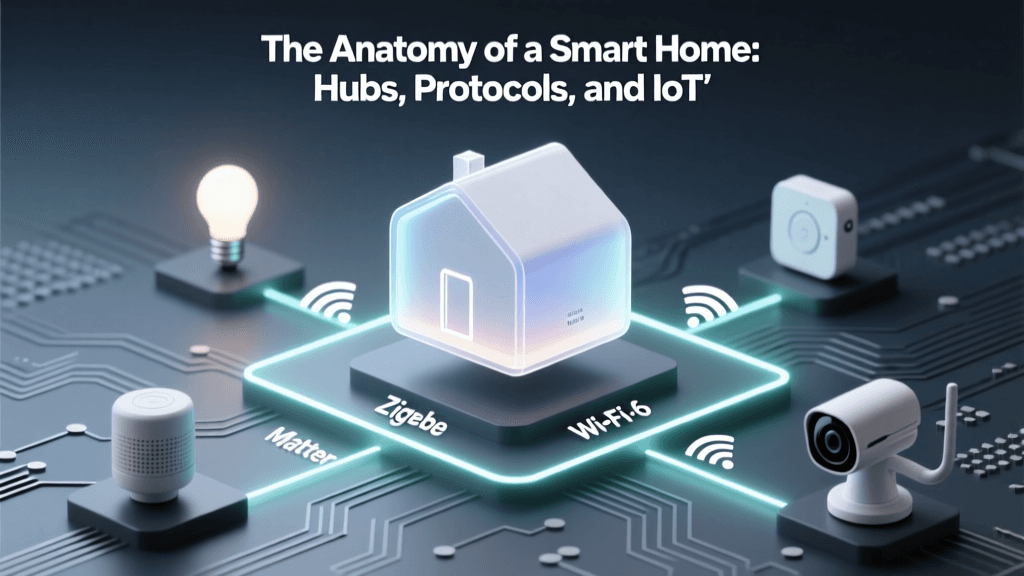
If your internet connection drops at 6:00 AM, a cloud-dependent routine will fail. You will wake up in the dark, the coffee will not brew, and the smart home illusion will shatter. Local processing ensures that your automation logic lives on a physical hub inside your home. When the motion sensor trips, the hub sends a direct Zigbee or Thread signal to the smart bulbs and plugs. This results in sub-100-millisecond latency and 100% reliability, regardless of your ISP's uptime. For those serious about how smart home tech changes daily life, investing in a local hub is the bridge between a 'gimmick' and a true 'smart home.'
Fallback Protocols and Manual Overrides
Technology is imperfect. A robust morning automation setup includes fallback protocols. What if you wake up early before the scheduled trigger? What if a guest is staying over and the motion sensor triggers the routine prematurely?
To solve this, utilize NFC Tags or physical smart buttons. Placing a programmable NFC tag on your nightstand allows you to tap your smartphone before getting out of bed. This tap can send a signal to your hub to trigger the 'Early Riser' scene, bypassing the time-based schedule entirely. Conversely, a physical smart button (like the Philips Hue Dimmer Switch) can be programmed to run a 'Guest Mode' cancellation, instantly halting the morning routine and returning manual control to the wall switches.
Privacy Considerations in the Morning
It is important to acknowledge the privacy trade-offs inherent in automated mornings, particularly those involving smart speakers and voice assistants. Devices that listen for wake words or process morning news briefings are continuously interacting with cloud servers. To maintain privacy while enjoying automation, consider utilizing platforms that prioritize local voice processing (such as Apple's Siri with on-device processing for basic commands) or relying on motion sensors and geofencing rather than voice-activated triggers to start your day.
Conclusion: A New Standard for Daily Life
Smart home automation is often marketed as a luxury, but its true value lies in its ability to remove the mundane friction from our daily lives. By aligning your home's environment with your biological needs—through circadian lighting, optimized climate control, and automated kitchen routines—you eliminate the stress of the morning rush. The transition from a manual, reactive morning to an automated, proactive one is a foundational step in smart home education. It proves that the best technology does not demand your attention; rather, it quietly supports your life, allowing you to step into each day with clarity, comfort, and purpose.