The Dawn of Ambient Intelligence in Smart Homes
For the past decade, the smart home industry has been defined by reactivity. We use our smartphones to turn on lights, shout voice commands at cylindrical speakers to set timers, and rely on rigid, time-based schedules to adjust our thermostats. While these conveniences represent a significant leap forward from analog living, they barely scratch the surface of what connected technology can achieve. The true future of smart home technology is not about giving you more control; it is about requiring less of it. This paradigm shift is known as Ambient Intelligence (AmI).
Ambient Intelligence refers to environments filled with interconnected sensors, processors, and actuators that work together seamlessly to anticipate human needs, adapt to behavioral patterns, and operate entirely in the background. Instead of acting as a remote control for your home, the home itself becomes an active, empathetic participant in your daily life. By leveraging advanced machine learning, local Edge AI processing, and unified communication protocols, the next generation of smart homes will shape future living by becoming virtually invisible, yet profoundly impactful.
The Evolution: Reactive vs. Proactive Living
To understand where we are going, we must first recognize the limitations of where we are. Current smart home setups often suffer from 'app fatigue' and fragmentation. If a sensor loses connection to the cloud, your automation fails. If a family member deviates from their routine, the smart home blindly follows outdated programming. The transition from reactive to proactive living solves these friction points.
| Feature | Current Reactive Smart Home | Future Proactive Smart Home (AmI) |
|---|---|---|
| Lighting Control | Triggered by voice, app, or basic motion sensors. | Adapts to circadian rhythms, local weather, and room occupancy using mmWave radar. |
| Climate Management | Follows a set schedule or geofencing based on a single phone's GPS. | Predicts thermal comfort based on biometric feedback, humidity, and multi-room occupancy. |
| Security & Safety | Sends push notifications when a door opens or a camera detects motion. | Distinguishes between pets, humans, and anomalies; detects falls without cameras. |
| Network & Processing | Relies heavily on cloud servers; high latency and privacy risks. | Processes data locally via Edge AI; zero latency and enhanced privacy. |
Core Technologies Powering the Ambient Future
The transition to Ambient Intelligence is not magic; it is the result of three foundational technologies maturing simultaneously: interoperability protocols, Edge computing, and advanced sensor fusion.
The Matter Protocol and Thread Networking
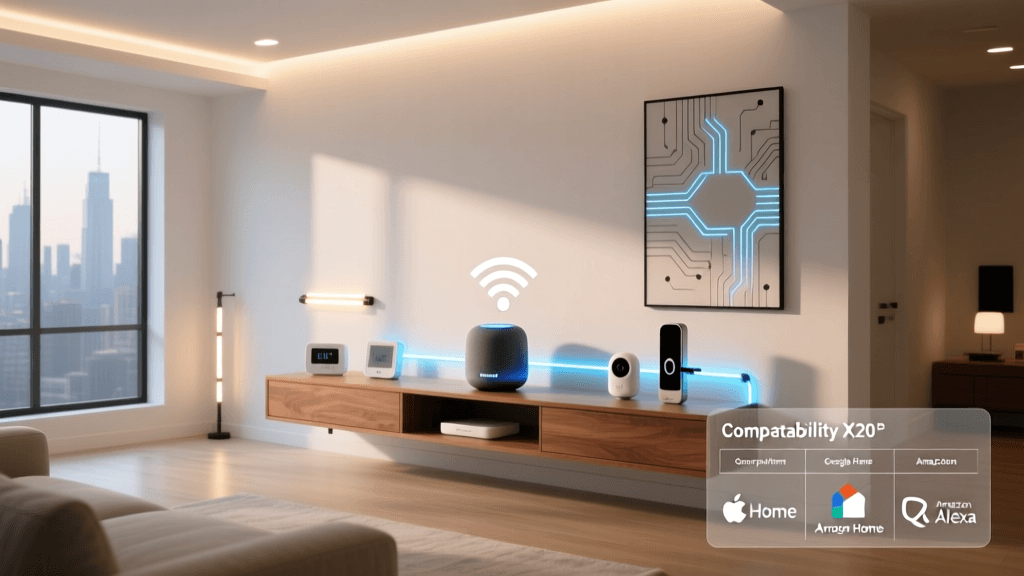
Ambient Intelligence requires devices from different manufacturers to share data instantaneously. The Connectivity Standards Alliance (CSA) developed the Matter protocol to solve the historic fragmentation of the smart home market. Matter operates over IP (Internet Protocol) and utilizes Thread, a low-power, mesh-networking protocol. Unlike Wi-Fi, which can become congested and drain battery life, Thread allows hundreds of sensors to communicate locally with one another and with border routers without touching the cloud. This local mesh is the nervous system of the future smart home, ensuring that when a motion sensor detects you waking up, the coffee maker and window blinds respond in milliseconds, even if your internet connection is down.
Edge AI and Local Processing
Cloud-dependent AI is too slow and privacy-invasive for true Ambient Intelligence. The future relies on Edge AI—processing machine learning algorithms directly on local hubs or within the devices themselves. Local processing means your home learns your habits without sending video feeds or audio recordings to remote servers. Hubs like the Home Assistant Green or the Hubitat Elevation are pioneering this space, allowing complex, multi-variable automations to run entirely on your local network.
Projected Growth of Edge AI in Smart Home Devices (2023-2028)
Sensor Fusion and mmWave Radar
Traditional Passive Infrared (PIR) motion sensors only detect large movements. If you sit still reading a book, the lights turn off. The future belongs to millimeter-wave (mmWave) radar and LiDAR. mmWave sensors can detect micro-movements, such as the rise and fall of your chest while breathing. By fusing data from mmWave, ambient light sensors, and thermal cameras, the home builds a highly accurate, privacy-preserving 3D map of occupancy and activity.
Practical Applications Shaping Future Homes
How does Ambient Intelligence manifest in everyday life? Here are the key areas where predictive technology is already beginning to reshape our living spaces, complete with product examples and cost estimates.
Predictive Climate and Energy Management
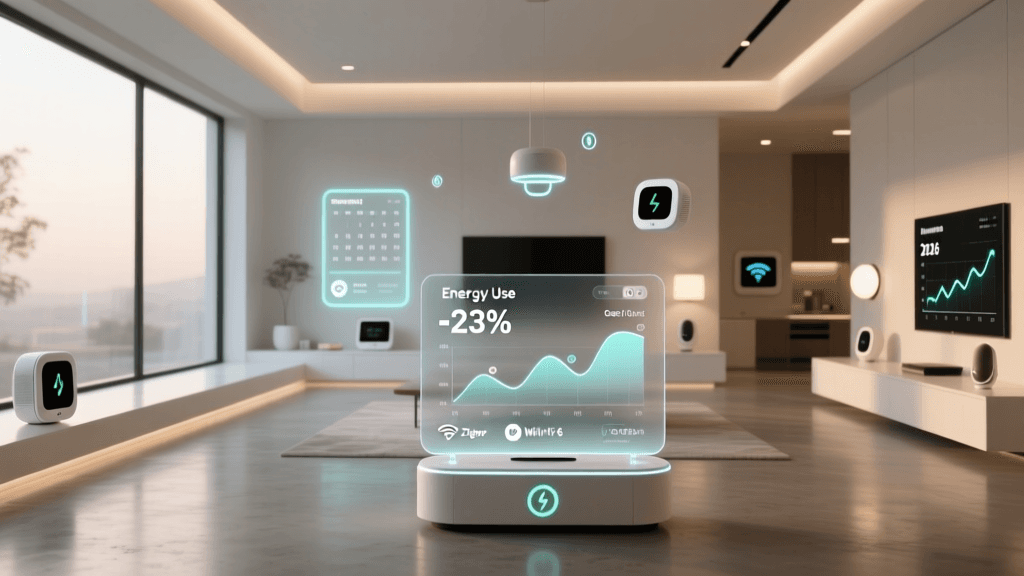
Heating and cooling account for nearly half of a typical home's energy consumption. According to the U.S. Department of Energy, smart home energy management systems can significantly reduce waste by aligning usage with actual occupancy and grid demands. Future thermostats do not just read the air temperature; they read the room. Devices like the Ecobee Smart Thermostat Premium (approx. $249) utilize built-in air quality monitors and remote room sensors to detect not just if someone is home, but which specific rooms are occupied and how many people are in them. By combining this with local weather forecasts and the thermal mass of your home, Edge AI can pre-cool or pre-heat your home during off-peak energy hours, saving money while ensuring perfect comfort the moment you walk through the door.
Invisible Health and Eldercare Monitoring
One of the most profound impacts of Ambient Intelligence will be in healthcare and aging in place. The National Institute on Aging highlights the growing need for technologies that allow older adults to live independently and safely. Wearable panic buttons are often forgotten or refused due to stigma. Ambient sensors solve this. The Aqara Presence Sensor FP2 (approx. $69) uses mmWave radar to map a room and detect exact human positioning. More importantly, it features a built-in fall detection algorithm that alerts caregivers if a person collapses in the bathroom or kitchen, all without using a single camera. In the future, these sensors will track gait speed and sleep quality over months, using AI to predict potential health declines before a catastrophic event occurs.
Circadian and Biophilic Lighting
Lighting in the future home will mimic the natural progression of the sun to support human circadian rhythms. Systems like Lutron Ketra or advanced Philips Hue setups will automatically adjust color temperature and intensity based on the time of day, the amount of natural sunlight entering the window, and the specific activity being performed. If the home's sensors detect you are working at your desk at 8:00 PM, it will shift to a cool, focus-enhancing white. If you transition to the couch to read, it will seamlessly fade to a warm, melatonin-friendly amber.
Privacy, Security, and the Edge Computing Advantage
A home that knows when you sleep, what rooms you occupy, and how your body moves is a treasure trove of sensitive data. The shift toward Ambient Intelligence inherently raises privacy concerns. However, the concurrent rise of Edge AI and the Matter protocol provides a robust defense. Because Thread and Matter prioritize local network communication, the raw data from your mmWave sensors and microphones never needs to leave your house. Only the final, anonymized trigger (e.g., 'Turn on lights') is executed. When shopping for future smart home devices, prioritizing brands that advertise 'local processing' and 'on-device machine learning' will be the most critical step in safeguarding your household's privacy.
How to Future-Proof Your Smart Home Today
You do not need to wait ten years to experience the benefits of Ambient Intelligence. By making strategic purchasing decisions today, you can lay the groundwork for a proactive, predictive home.
- Invest in Thread Border Routers: Ensure your network is ready for low-latency, local mesh communication. Devices like the Apple TV 4K (Wi-Fi + Ethernet model) or the Nest Hub Max act as Thread border routers, bridging your low-power sensors to your main network.
- Prioritize Matter-Certified Devices: Look for the official Matter logo on packaging. This guarantees the device supports local IP-based control and will not become a useless brick if a manufacturer shuts down its cloud servers.
- Adopt a Local Hub Ecosystem: Transition away from purely cloud-based apps. Investing $99 in a Home Assistant Green or $150 in a Hubitat Elevation allows you to write complex, multi-sensor automations that run entirely on your local network, drastically reducing latency and improving reliability.
- Upgrade to mmWave Sensors: Replace aging PIR motion sensors in high-traffic or stationary-occupancy rooms (like home offices and bathrooms) with mmWave presence sensors to eliminate the frustration of lights turning off while you are sitting still.
Conclusion
The era of the 'smartphone-as-remote-control' is drawing to a close. As Ambient Intelligence, Edge AI, and unified protocols like Matter converge, our living spaces will transform into intuitive environments that anticipate our needs, protect our health, and conserve energy without demanding our constant attention. By understanding these foundational shifts and investing in local, interoperable hardware today, you can ensure your home is not just connected, but truly intelligent, ready to shape the future of comfortable, proactive living.