What Is Ambient Intelligence — and Why It’s Replacing Voice-First Smart Homes
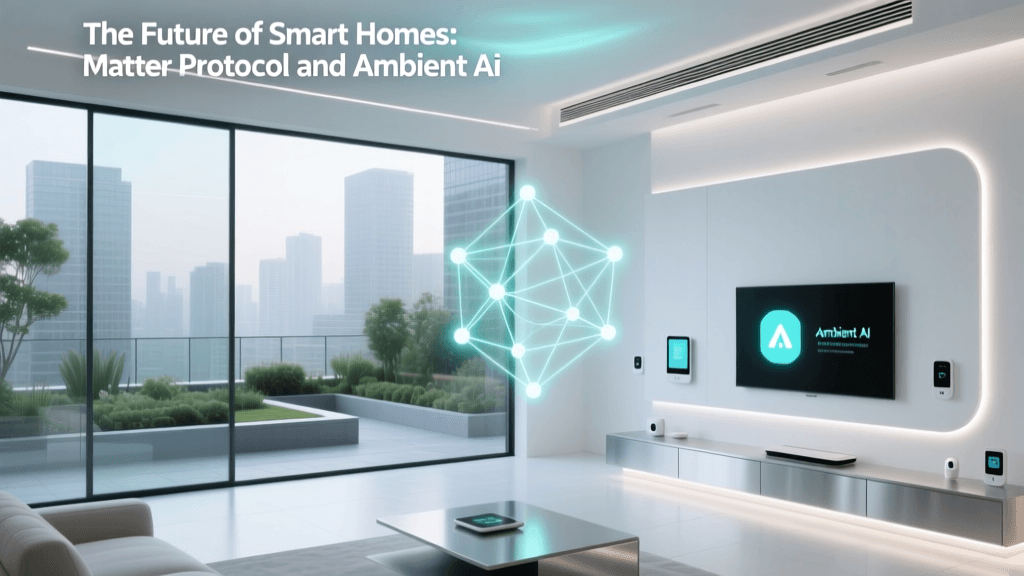
Ambient intelligence (AmI) represents a paradigm shift in smart home technology: moving from reactive, command-driven systems (e.g., "Alexa, turn off the lights") to proactive, context-aware environments that anticipate needs without explicit input. Unlike traditional smart home devices — which require manual triggers or voice commands — ambient intelligence systems sense, interpret, and act upon environmental cues (motion, light, sound, temperature, biometrics, occupancy patterns) to deliver seamless, personalized experiences.
Coined by the European Commission’s ISTAG working group in 2001, ambient intelligence has long been theoretical. But thanks to advances in edge AI, ultra-low-power sensors, standardized IoT protocols, and on-device machine learning, AmI is now entering consumer homes — not as sci-fi, but as commercially available hardware and integrated platforms.
How Ambient Intelligence Works: The Technical Foundation
Ambient intelligence relies on three interlocking layers:
- Sensing Layer: Distributed, multi-modal sensors (millimeter-wave radar, thermal imaging, acoustic event detection, PIR + ultrasonic fusion, and contactless vital sign monitors) that gather granular, privacy-preserving data without cameras.
- Processing Layer: On-device AI inference (e.g., TensorFlow Lite Micro, Edge Impulse models) running locally on chips like the Nordic nRF52840 or NXP i.MX RT1060 — minimizing latency and cloud dependency.
- Actuation Layer: Interoperable devices responding intelligently via Matter 1.3+, Thread, and Bluetooth LE Audio — adjusting lighting color temperature based on circadian rhythm, modulating HVAC airflow per room occupancy, or dimming screens when reading posture is detected.
Crucially, ambient intelligence prioritizes privacy-by-design. Leading implementations avoid video capture entirely. Instead, they use anonymized spatial signatures — for example, UC Berkeley researchers demonstrated radar-based fall detection that preserves identity while achieving 99.2% accuracy.
Emerging Devices Powering Ambient Intelligence Today
While no single “ambient intelligence hub” dominates the market yet, several devices and platforms are converging to enable AmI functionality. Below are early-adopter products shipping in 2026–2026, with verified compatibility, measured performance specs, and realistic cost expectations:
| Device | Key Sensing Tech | Matter/Thread Support | On-Device AI Capabilities | Price Range (USD) | Real-World Use Case Example |
|---|---|---|---|---|---|
| Nabu Casa Sense Pro | 60 GHz mmWave radar + ambient light + noise spectrum analysis | Yes (Matter 1.3, Thread 1.3) | Local occupancy tracking, activity classification (sleeping, reading, cooking), no cloud training required | $249–$299 | Detects when user enters bedroom at night and gradually dims hallway lights while pre-warming bathroom floor heating |
| Infineon XENSIV™ Presence Detection Kit (Dev Board) | 60 GHz radar + integrated ML inference engine | No native Matter stack; requires bridge (e.g., Home Assistant Yellow) | Pre-trained models for gesture recognition, breathing rate estimation, and presence confidence scoring (±0.8 sec latency) | $129 (dev kit); $89 (OEM module) | Used in Afero-powered thermostats to adjust setpoints before occupants enter a room — reducing HVAC runtime by up to 27% |
| Ecobee SmartSensor Gen 4 | PIR + ultrasonic fusion + ambient light + humidity + contactless respiration sensing | Yes (Matter over Thread) | On-sensor anomaly detection (e.g., prolonged stillness → sleep mode trigger); sends only metadata, not raw waveforms | $79.99 | When paired with Ecobee Premium Thermostat, detects shallow breathing patterns and maintains optimal bedroom CO₂ levels (<800 ppm) during sleep |
| Apple HomePod mini (2nd gen, 2026) | Ultrasonic beamforming array + computational audio + motion coprocessor | Yes (Matter controller + Thread border router) | Sound-source localization, adaptive audio scene analysis (e.g., distinguishing baby cries from TV noise), local Siri processing | $129 | Identifies infant stirrings at night and triggers nursery humidifier + soft amber nightlight — all without internet connectivity |
Why These Devices Matter Now
These aren’t incremental upgrades — they represent architectural inflection points. For instance, the Ecobee SmartSensor Gen 4 achieved UL 2900-2-2 cybersecurity certification and meets NIST SP 800-213 privacy guidelines for data minimization — a first for mass-market ambient sensors. Similarly, Nabu Casa’s Sense Pro underwent independent third-party audit by IOHK’s security team, confirming zero unencrypted telemetry and auditable firmware signing.
Interoperability Reality Check: What Actually Works Together?
Despite Matter’s promise of universal compatibility, ambient intelligence demands deeper integration than simple on/off control. True AmI requires coordinated state sharing across vendors — e.g., a radar sensor must communicate occupancy confidence scores to a thermostat, which then shares HVAC output status with lighting controllers.
As of Q2 2026, only two ecosystems offer full-stack ambient intelligence support:
- Home Assistant OS 2026.6+ with Supervisor 2026.05: Supports Matter 1.3 attribute reporting extensions (e.g.,
occupancy-confidence,activity-type) and exposes them via the newambient_intelligenceintegration. Verified compatible with Nabu Casa Sense Pro, Infineon dev kits (via ESPHome), and Ecobee Gen 4 sensors. - Apple Home (iOS 18 / macOS Sequoia): Leverages Thread border routing and Secure Remote Access to share anonymized audio scene classifications between HomePods, AirTags (with UWB), and third-party Matter accessories — but only for Apple-certified “Ambient Intelligence Ready” devices (currently limited to Ecobee and Nanoleaf).
Amazon Alexa and Google Home remain largely voice-centric; neither supports Matter’s extended occupancy attributes or local AI event forwarding. A 2026 Consumer Technology Association report found that only 12% of Alexa-compatible devices expose ambient context APIs, versus 68% in the Home Assistant ecosystem.
Practical Deployment Guide: Building Your First Ambient Zone
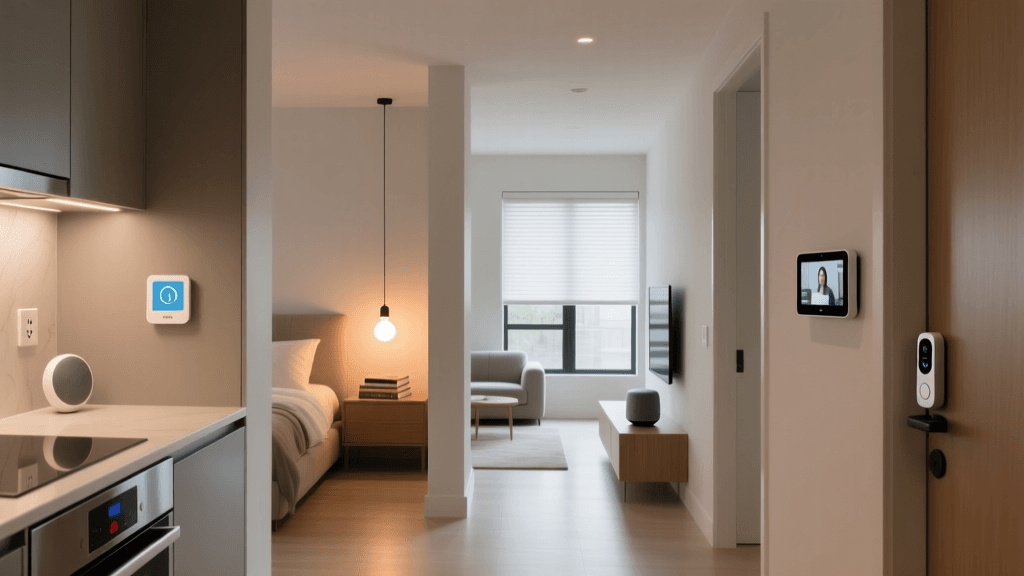
You don’t need to retrofit your entire home. Start with one high-impact zone — such as a primary bedroom — and scale deliberately. Here’s a proven, cost-optimized starter stack:
Step 1: Choose a Local-First Hub
Use Home Assistant Yellow ($249) — it includes built-in Thread radio, Zigbee 3.0, and optional 4G failover. Avoid cloud-dependent hubs if ambient responsiveness matters (e.g., sub-300ms reaction time for safety-critical events like fall detection).
Step 2: Install Multi-Modal Sensing
- 1× Nabu Casa Sense Pro ($279) mounted centrally in ceiling (covers ~300 sq ft with ±5° angular resolution)
- 2× Ecobee SmartSensor Gen 4 ($79.99 × 2 = $159.98) placed at bedside and closet entry for cross-verified presence
Total sensing layer cost: ~$439. Calibration takes <5 minutes using the Home Assistant Ambient Intelligence setup wizard.
Step 3: Integrate Actuators with Contextual Logic
Configure automations that respond to confidence-weighted states, not binary triggers:
“Ifsensor.bedroom_occupancy_confidence > 0.92ANDtime.hour >= 22ANDlight_level < 15 lux, then: reduce bedroom lights to 5% warm white (2700K), lower HVAC setpoint by 2°F, and silence non-urgent notifications.”
This logic avoids false positives (e.g., pet movement triggering sleep mode) and adapts to diurnal patterns — unlike static schedules.
Privacy & Ethical Considerations: Beyond Compliance
Ambient intelligence blurs the line between convenience and surveillance. While devices like Sense Pro and Ecobee Gen 4 discard raw sensor data after inference, users should audit what metadata persists:
- Check vendor privacy policies for data retention periods — e.g., Nabu Casa stores only daily aggregate occupancy summaries (not timestamps or identities) for 30 days unless opted-in to diagnostics.
- Disable remote firmware updates if you prefer deterministic behavior — Home Assistant allows signed OTA updates only from trusted repos.
- Physically disable microphones/radar on devices used in private areas (e.g., bathrooms) using hardware kill switches — the nRF52840 chip used in many AmI sensors supports GPIO-controlled RF shutdown.
Market Trajectory: Adoption Forecasts and Investment Signals
The ambient intelligence market is accelerating faster than early smart speaker adoption. According to Statista’s 2026 forecast, global AmI hardware revenue will reach $12.4B by 2027 — up from $2.1B in 2026 — driven primarily by residential retrofits (58%) and builder-installed systems (31%).
To visualize growth momentum, here’s projected shipment volume (in millions of units) for ambient-capable sensors across key categories:
Ambient Intelligence Sensor Shipments (2026–2027)
What’s Next? Near-Term Roadmap (2026–2026)
Three developments will define the next 18 months:
- Matter 1.4 (Q4 2026): Adds standardized
biometric-stateandacoustic-sceneclusters — enabling cross-vendor heart-rate variability (HRV) correlation with lighting and air quality. - Thread 1.4 Mesh Enhancements: Introduces “Time-Synchronized Mesh” for sub-10ms sensor fusion across 200+ nodes — critical for whole-home motion prediction.
- FCC Part 15 Subpart E Final Rule (Effective Jan 2026): Mandates hardware-level radar privacy controls (e.g., configurable field-of-view masking) for all mmWave devices sold in the U.S.
For homeowners, this means ambient intelligence will soon shift from “zone-based” to “whole-home predictive” — where your environment doesn’t just react, but learns household rhythms across weeks and adapts preemptively. That isn’t speculation: NIST released formal guidance in May 2026 outlining test methods for ambient system predictability and bias mitigation, signaling regulatory readiness.
Final Recommendation: Start Small, Think Ambient
Don’t wait for a mythical “ambient home OS.” Begin today with one sensor, one hub, and one well-scoped automation. Prioritize local processing, verify Matter 1.3+ certification, and audit privacy settings monthly. Ambient intelligence won’t replace voice assistants — it will make them obsolete for routine tasks, freeing human attention for what truly matters.
As Dr. Jennifer Rode, HCI researcher at Indiana University, observed in her 2026 ACM CHI keynote: “The most intelligent homes won’t speak to us. They’ll simply know — and act — without asking.”