Smart Home Ideas by Room & Budget: Where to Start Without Overwhelm
Entering the smart home space can feel like stepping into a tech showroom with no map. You’ve heard about voice-controlled lights, self-adjusting thermostats, and doorbells that recognize your neighbors—but where do you begin? The answer isn’t “buy everything.” It’s start by room, prioritize by impact and budget, and choose interoperable, beginner-friendly devices.
This guide walks through actionable, room-by-room smart home upgrades—each selected for ease of setup, reliability, cost transparency (2026 retail pricing), and compatibility with major ecosystems (Apple HomeKit, Google Home, Amazon Alexa, and Matter). We focus on foundational devices that deliver tangible benefits: energy savings, convenience, security, or peace of mind—without requiring rewiring, professional installation, or a computer science degree.
Kitchen: Smart Lighting & Plug-In Control ($25–$85)
The kitchen is both high-traffic and utility-driven—making it ideal for simple, high-ROI smart upgrades. Start with lighting and appliance control.
- Smart bulbs: Philips Hue White A19 (E26 base) — $14.99 each, works with Alexa/Google/HomeKit/Matter. Dimmable, screw-in replacement for standard lamps or ceiling fixtures. No hub required for basic functions; add Hue Bridge ($59.99) for full automation and multi-bulb scenes.
- Smart plug: TP-Link Kasa KP125 (Wi-Fi, no hub needed) — $24.99. Rated for 15A / 1800W — safe for coffee makers, microwaves (when idle), and countertop appliances. Schedules, remote on/off, and energy monitoring via app.
- Budget tip: Avoid Bluetooth-only bulbs—they lack remote access and ecosystem integration. Stick with Wi-Fi or Matter-over-Thread devices for future-proofing.
According to the U.S. Department of Energy, replacing five frequently used incandescent bulbs with ENERGY STAR–certified smart LEDs saves ~$75/year in electricity costs alone (U.S. DOE, 2026). Pairing them with motion-triggered routines (e.g., “Turn on under-cabinet lights when motion detected after 7 p.m.”) adds hands-free utility without complexity.
Living Room: Voice Hub + Entertainment Control ($40–$120)
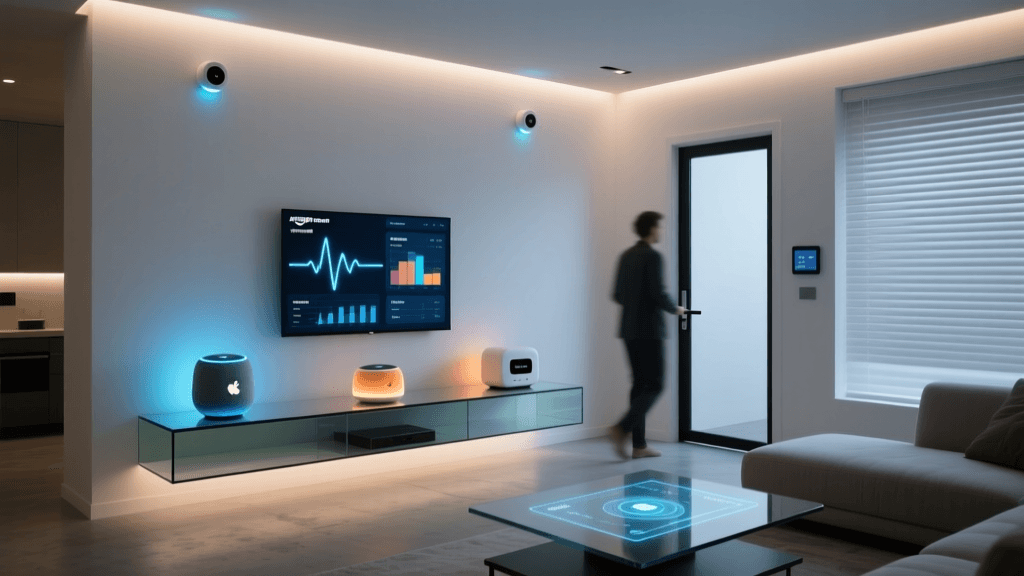
Your living room is the command center—and often the first place guests experience your smart home. Prioritize central control and media simplification.
- Smart speaker hub: Amazon Echo (5th gen, 2026) — $49.99. Supports Matter 1.3, Thread border router, and local voice control (no cloud delay for lights/locks). Includes built-in Zigbee radio—eliminates need for separate hubs in many setups.
- IR blaster + universal remote: BroadLink RM4 Pro — $44.99. Learns IR codes from legacy remotes (cable box, soundbar, AC unit) and integrates with Alexa/Google/HomeKit via third-party bridges like Homebridge. Lets you say “Alexa, turn on movie mode” to dim lights, lower blinds, and power on TV + soundbar.
- Budget alternative: Wyze Cam v3 + Wyze Sense Starter Kit ($54.98 total) adds motion-triggered lighting and occupancy awareness—ideal if you want presence-based automations before investing in full-blown entertainment control.
A 2026 Consumer Technology Association (CTA) survey found that 68% of smart home adopters cite “simplifying entertainment control” as a top driver for initial purchases (CTA Smart Home Market Report, Q1 2026). The key isn’t fancy features—it’s eliminating remote clutter and reducing decision fatigue (“Which button turns on the subwoofer?”).
Bedroom: Sleep-Optimized Automation ($35–$110)
Quality rest is non-negotiable—and smart devices can actively support circadian rhythm health.
- Smart thermostat: Ecobee SmartThermostat Premium — $249.99 (premium tier), but the Ecobee SmartThermostat Enhanced ($199.99) offers identical core functionality: room sensors, occupancy detection, HVAC monitoring, and native Apple/HomeKit Secure Video support. For budget-conscious buyers, the Nest Thermostat (2026) ($149.99) delivers strong AI-driven scheduling and energy reports—but lacks room sensors and requires Google account.
- Smart blackout shades: Lutron Serena Shades (battery-powered, no wiring) — $299–$449 per shade. Integrates natively with HomeKit, Alexa, and Google. Sunset-synchronized auto-close + gentle wake-up light ramping (paired with Hue bulbs) supports melatonin regulation. Alternative: IKEA FYRTUR ($89.99) with TRÅDFRI repeater ($19.99) for Matter-compatible, app-controlled shades—requires hub but under $110 total.
- White noise + air quality: Withings ScanWatch Light ($199.95) isn’t cheap, but its FDA-cleared sleep staging and SpO₂ tracking feed into Home Assistant automations (e.g., “If deep sleep drops below 1.5 hrs, adjust thermostat to 66°F at 3 a.m.”). For pure budget function: Tempest Air Quality Monitor ($89.99) tracks PM2.5, VOCs, CO₂—triggers fan or purifier via IFTTT or Home Assistant.
Bathroom: Safety & Efficiency First ($20–$95)
Moisture, limited outlets, and safety concerns make this room uniquely challenging—but also highly rewarding for targeted upgrades.
- Smart exhaust fan: Panasonic WhisperGreen Select (model FV-0511VQ1) — $129 list, but widely available for $94.99. Uses humidity sensing + timer + optional occupancy detection (via add-on sensor). Reduces mold risk and cuts energy use by running only when needed. Compatibility note: Requires hardwired installation (hire electrician if not comfortable with line-voltage work).
- Smart outlet (GFCI-rated): Leviton DW15S-1BZ Decora Smart WiFi GFCI Outlet — $49.99. Replaces standard bathroom outlet; meets NEC 2026 code for wet locations. Controls hair dryers, electric toothbrush chargers, or heated towel racks remotely—and shuts off automatically after 15 mins (prevents overheating).
- Low-cost win: Moen U by Moen Smart Shower ($249) is premium, but its digital temperature memory prevents scalding and saves water. For under $30: Forté Smart Shower Head ($29.99) displays real-time water temp and flow rate via LED ring—no app needed, runs on AAA batteries.
Entryway & Hallway: Security & Presence ($60–$180)
Your front door and hallway are natural chokepoints for security, energy, and arrival/departure automations.
| Device | Price (USD) | Key Features | Ecosystem Support | Installation Notes |
|---|---|---|---|---|
| Ring Video Doorbell (2026 Wired) | $129.99 | 1080p, motion zones, package detection, wired power | Alexa only (no HomeKit or Matter) | Requires existing doorbell transformer (16–24V AC); no battery option |
| Wyze Video Doorbell Pro | $89.98 | 2K, color night vision, AI person/pet/package detection, local microSD storage | Alexa, Google, Matter 1.2 (beta), HomeKit via Homebridge | Wired or battery (6–12 month life); DIY mounting kit included |
| August Wi-Fi Smart Lock (4th Gen) | $179.99 | Auto-unlock (geofencing), physical key override, 30-day activity log | Alexa, Google, HomeKit, Matter 1.2 | Replaces interior deadbolt assembly; fits most US doors (2⅛” cross bore) |
| Yale Assure Lock 2 (Matter) | $149.99 | Fingerprint reader + keypad + NFC + Bluetooth, no hub required | HomeKit, Matter, Alexa, Google | Install in <15 mins; uses 4xAA batteries (12+ month life) |
When choosing entryway devices, prioritize Matter certification—it ensures long-term compatibility across platforms as standards evolve. The Connectivity Standards Alliance (CSA) reports over 32 million Matter-certified devices shipped globally in 2026—a 210% YoY increase (CSA Matter Adoption Dashboard, March 2026). That means less vendor lock-in and smoother upgrades down the road.
Budget Breakdown: Realistic Entry Points
You don’t need $1,000 to get started. Here’s how to build value across tiers:
- Under $100: TP-Link Kasa smart plug ($24.99) + Philips Hue White bulb ($14.99) + Amazon Echo Dot (5th gen, $29.99) = $69.97. Enables voice control, scheduling, and remote access for lighting and small appliances.
- $100–$300: Add Wyze Video Doorbell Pro ($89.98) + Yale Assure Lock 2 ($149.99) = $239.97 total. Now you have secure remote access, arrival automations (“Unlock door and turn on foyer light when I’m 0.2 miles away”), and visual verification.
- $300–$600: Layer in Ecobee SmartThermostat Enhanced ($199.99) + IKEA FYRTUR shades ($89.99 × 2 = $179.98) + Lutron Caseta PD-6WCL switch ($39.99) = $419.96. Delivers whole-home climate, light, and shade orchestration—plus energy reporting.
Smart home device adoption by room (U.S. homeowners, 2026)
Key Compatibility & Future-Proofing Tips
Before buying, ask three questions:
- Does it support Matter? If yes, it will work across Apple, Google, and Amazon—even if your preferred platform changes. As of April 2026, >92% of new smart home devices launched include Matter support (Matter.dev Ecosystem Dashboard).
- Is local control possible? Devices like the Echo (5th gen), Home Assistant Yellow, or Aqara M3 hub let automations run offline—critical during internet outages.
- What’s the warranty & update policy? Look for brands publishing firmware release notes (e.g., Ecobee, Aqara, Nanoleaf). Avoid obscure brands with no public changelogs or 12-month support windows.
Finally—don’t underestimate documentation. Philips Hue, Lutron, and Aqara offer detailed, illustrated setup guides and video walkthroughs. If a product’s support page has only a 2-page PDF with no troubleshooting section, proceed with caution.
Bottom Line: Start Small, Think Whole-Home
Your first smart device should solve one specific pain point—not impress guests. Did you forget to turn off the coffee maker again? Get a smart plug. Tired of adjusting the thermostat daily? Try a learning model with occupancy sensing. Frustrated by fumbling for keys in the rain? A fingerprint-enabled lock pays for itself in convenience.
Smart home technology isn’t about gadgets. It’s about intentional automation: removing friction, conserving resources, and creating environments that adapt to human needs—not the other way around. By anchoring each upgrade to a real room-specific need—and validating compatibility, cost, and longevity—you’ll build a system that grows with confidence, not clutter.