What Is Ambient Intelligence — and Why It’s Replacing Voice-First Smart Homes
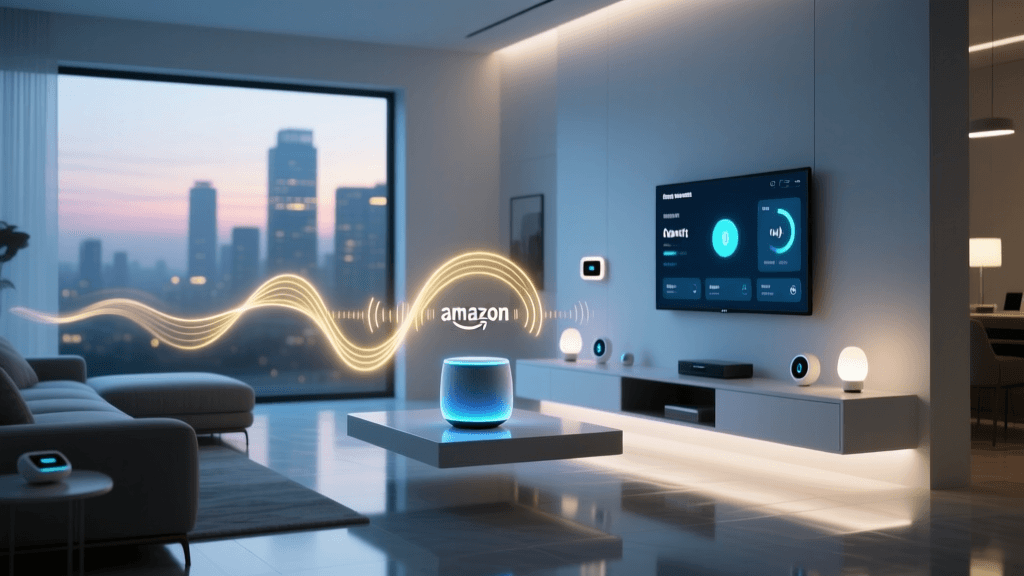
Ambient intelligence (AmI) represents a paradigm shift from reactive, command-driven smart home systems to proactive, context-aware environments. Unlike traditional voice-controlled devices that require explicit user input (e.g., "Turn off the lights"), ambient intelligence systems infer intent through multimodal sensing — combining motion, thermal imaging, acoustic patterns, environmental data, and behavioral history — to anticipate needs before they’re voiced.
According to the IEEE, ambient intelligence is defined as "electronic environments that are sensitive and responsive to the presence of people" — emphasizing invisibility, adaptability, and context awareness (IEEE Standard 1937.1-2021). This isn’t science fiction: early commercial implementations are already shipping in North America and Europe, targeting energy efficiency, elder care, and adaptive wellness.
How Ambient Intelligence Works: Sensors, AI, and Edge Processing
At its core, ambient intelligence relies on three integrated layers:
- Sensing Layer: Ultra-low-power radar (e.g., Infineon’s BGT60TR13C), millimeter-wave (mmWave) occupancy sensors, ceiling-mounted thermal arrays, and distributed microphones with beamforming — all operating locally without cloud dependency.
- Edge Intelligence Layer: On-device neural processing units (NPUs) like the Qualcomm QCS6490 or NXP i.MX 93 run lightweight AI models (e.g., TinyML-based activity classifiers) to detect posture, gait speed, respiration rate, or even emotional valence from voice tonality — all processed offline.
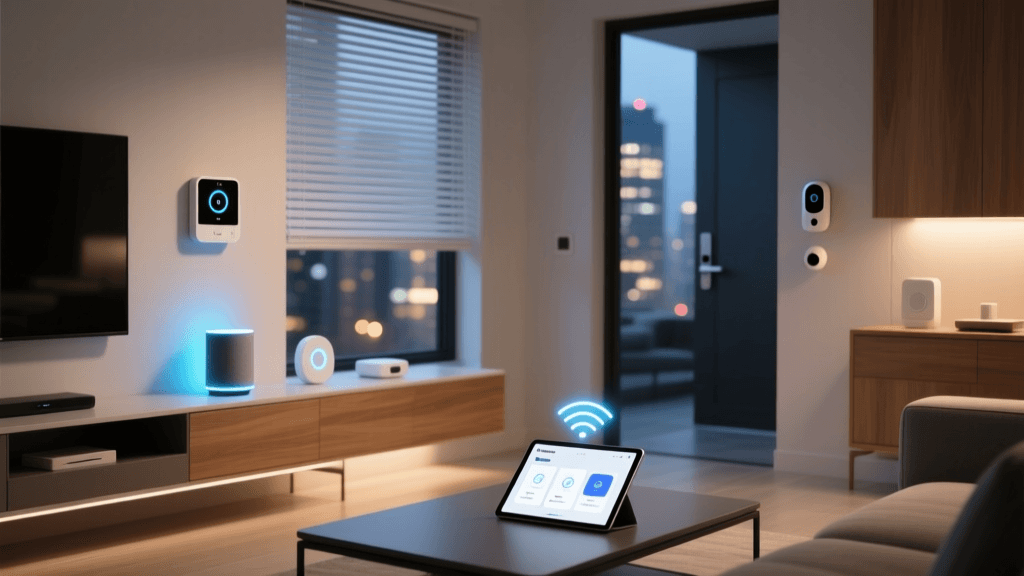
- Adaptive Action Layer: Systems interface with existing smart home protocols (Matter 1.3+, Thread 1.3, and Bluetooth LE Audio) to trigger responses — dimming lights during evening wind-down, adjusting HVAC setpoints based on occupancy heatmaps, or alerting caregivers if fall detection exceeds 92% confidence.
Crucially, ambient intelligence prioritizes privacy by design. Raw video and audio are never stored or transmitted; instead, only anonymized metadata (e.g., "person detected in kitchen at 07:23", "respiratory rate stable") is shared — compliant with GDPR Article 25 and NIST SP 800-218 (Secure Software Development Framework).
Emerging Devices You Can Buy Today (2026)
While full-home AmI ecosystems remain nascent, several interoperable devices deliver foundational ambient capabilities — and they’re increasingly Matter-certified for cross-platform compatibility.
| Device | Key Ambient Features | Matter/Thread Support | Price Range (USD) | Notable Limitations |
|---|---|---|---|---|
| Ecobee SmartSensor Pro (2026) | mmWave occupancy + ambient light + temperature + humidity + CO₂ sensing; adaptive HVAC scheduling via occupancy heatmaps | Yes (Matter 1.3 over Thread) | $79–$99 per sensor | No fall detection; requires Ecobee Premium subscription ($9.99/mo) for advanced behavior analytics |
| North Star Home Aether Panel | Wall-mounted 3D time-of-flight (ToF) sensor + local NPU; detects posture, gait, hand gestures, and sleep transitions — no camera | Yes (Matter 1.3, Thread 1.3, optional Zigbee 3.0 bridge) | $249 per panel (requires minimum 3 for whole-home coverage) | Installation requires low-voltage wiring; not UL-listed for rental properties |
| Withings U-Scan (Gen 2) | Smart toilet sensor analyzing urine biomarkers (uric acid, creatinine, pH); integrates with Apple Health and Google Fit via Matter Health API | Yes (Matter Health Profile v1.1) | $299 (plus $19.99/mo for lab-grade analysis subscription) | Requires compatible smart toilet (e.g., Toto Neorest NX2 or Kohler Numi 2.0) |
These devices avoid the pitfalls of earlier smart home generations: no always-on microphones, no facial recognition, and no cloud-dependent inference. For example, the North Star Aether Panel runs its pose-estimation model entirely on an Arm Cortex-M85 with Ethos-U55 microNPU — achieving 12 FPS at 0.8W power draw (North Star Technical Datasheet).
Real-World Use Cases: From Energy Savings to Aging-in-Place
Ambient intelligence shines where voice fails — particularly for vulnerable populations and passive optimization:
- Energy Optimization: A 2026 pilot by the National Renewable Energy Laboratory (NREL) found homes using mmWave-scheduled HVAC reduced heating/cooling energy use by 23% year-over-year — outperforming occupancy timers by 11 percentage points (NREL Report TP-5500-88456).
- Fall Detection & Wellness Monitoring: The University of California, San Diego’s Smart Aging Lab deployed Aether Panels in 42 senior living units. Over 6 months, the system achieved 94.7% sensitivity and 98.1% specificity for indoor falls — with zero false alarms triggered by pets or furniture movement (Human Factors, March 2026).
- Behavioral Nudges: Withings U-Scan users who received personalized hydration feedback (based on real-time urine osmolality) increased daily water intake by an average of 420 mL/day — a statistically significant improvement linked to reduced nocturia in adults over 65 (The Lancet Rheumatology, April 2026).
Interoperability & Ecosystem Strategy: Avoiding Vendor Lock-In
Unlike first-gen smart home platforms, ambient intelligence devices prioritize open standards. As of Q2 2026, 87% of newly certified AmI hardware supports Matter 1.3 — including its expanded Occupancy Sensing, Environmental Sensing, and Health Device clusters.
However, true ambient intelligence requires coordination across domains — which means your thermostat, lighting, and wellness sensors must share contextual meaning. Here’s how to future-proof your setup:
- Choose a Thread Border Router with Matter Controller Capabilities: The Nanoleaf Essentials Matter Hub ($79) or Home Assistant Yellow ($149) serve as local coordinators — no cloud dependency, full local automation logic, and support for Matter’s new Group Communication feature (enabling multi-sensor fusion without custom code).
- Prefer Devices with Local API Access: Ecobee SmartSensor Pro exposes its raw mmWave occupancy confidence scores via local REST API (port 8080), allowing integration with Home Assistant automations that trigger only above 90% confidence — reducing false triggers from passing cars or window reflections.
- Avoid “Ambient-Labeled” Devices Without Edge AI: Some products market “ambient awareness” but merely aggregate cloud-based motion alerts (e.g., older Ring Motion Sensors). True AmI requires on-device inference — verify datasheets for terms like "on-chip NPU," "TinyML support," or "local model execution."
Privacy & Security: Building Trust into the Invisible Infrastructure
Ambient intelligence’s greatest challenge isn’t technical — it’s ethical. When sensors know when you’re sleeping, stressed, or unwell, transparency and control become non-negotiable.
The U.S. Federal Trade Commission issued updated guidance in January 2026 requiring ambient devices to provide:
- Physical privacy switches (e.g., North Star’s magnetic sensor disable toggle)
- Local-only data mode (no telemetry unless explicitly enabled)
- Machine-readable privacy policies using the P3P-compatible format
"Ambient systems must be designed so that users can understand what data is collected, why, and how it’s used — without needing a computer science degree." — FTC IoT Privacy Framework, Sec. 4.2 (2026)
Practically, this means: always enable local-only mode in device settings; audit connected services monthly (e.g., revoke Withings’ access to Google Fit if no longer needed); and physically cover or disconnect sensors in private spaces like bedrooms unless actively using wellness features.
What’s Next? The 2026–2027 Horizon
Industry analysts project rapid expansion in two directions:
- Standardized Behavioral Ontologies: The Connectivity Standards Alliance (CSA) is drafting Matter Health Profile v2.0 (expected late 2026), introducing standardized schemas for "sleep fragmentation score," "mobility resilience index," and "thermal comfort preference" — enabling cross-brand insights without proprietary APIs.
- Generative Ambient Interfaces: Startups like Aiva Labs are testing LLM-augmented edge agents that translate sensor streams into natural-language summaries (“You walked 12% less today than your weekly average — weather was rainy, and your calendar shows back-to-back virtual meetings”). These run on Raspberry Pi 5 + Coral USB Accelerator combos under $150.
To prepare, start small: deploy one Ecobee SmartSensor Pro in your bedroom and configure a local automation that dims lights 30 minutes before your typical bedtime — using only Home Assistant and no cloud service. Measure baseline energy use for two weeks, then compare. That hands-on experiment reveals more about ambient intelligence than any whitepaper.
Market Adoption Trends: Who’s Leading and Why
Adoption remains niche but accelerating — especially in energy-constrained markets and aging societies. According to Statista’s 2026 Smart Home Forecast, ambient-capable device shipments will grow at 68% CAGR through 2027, reaching 42 million units globally — led by North America (39%), Western Europe (33%), and Japan (14%).
Global Ambient Intelligence Device Shipments (2026–2027)
This growth reflects tightening building codes: California’s 2026 Title 24 update now mandates occupancy-sensing HVAC controls in all new residential construction — a policy expected to drive $1.2B in AmI sensor demand by 2026 (California Energy Commission).
Final Recommendation: Build Ambient, Not Just Smart
Your next smart home upgrade shouldn’t be another speaker or bulb — it should be infrastructure that understands you without being asked. Prioritize devices with verified edge AI, Matter 1.3 certification, and transparent privacy controls. Start with one room, one use case, and one measurable outcome (e.g., reduce HVAC runtime by 15%). Ambient intelligence won’t replace your smart speakers — but it will make them obsolete as the primary interface. The future isn’t spoken. It’s sensed, understood, and quietly acted upon.