The Convergence of Matter and Artificial Intelligence
The smart home industry is currently undergoing its most significant paradigm shift since the introduction of the first Wi-Fi-connected devices. For the past decade, consumers have been forced to navigate a fragmented landscape of proprietary hubs, walled-garden ecosystems, and incompatible communication protocols. However, market analysis indicates that two foundational technologies are actively dismantling these barriers: the Matter interoperability standard and localized Artificial Intelligence (AI). Together, these innovations are transitioning the smart home from a collection of reactive, remote-controlled gadgets into a cohesive, proactive, and predictive environment.
For consumers and investors alike, understanding the intersection of Matter and AI is no longer optional; it is essential for making future-proof purchasing decisions. This comprehensive market analysis explores how these technologies are reshaping device compatibility, driving down long-term costs, and redefining the boundaries of home automation.
The Matter Protocol: Breaking Down Walled Gardens
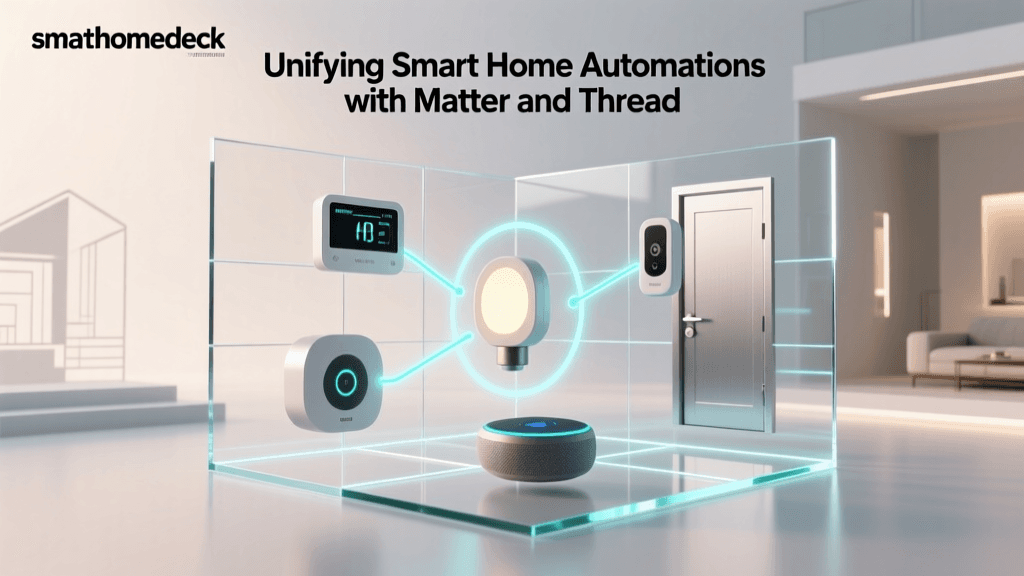
Developed and maintained by the Connectivity Standards Alliance (CSA), Matter is an open-source, royalty-free connectivity protocol built on Internet Protocol (IP). Unlike legacy systems that required brand-specific bridges, Matter allows devices to communicate seamlessly across Apple HomeKit, Google Home, Amazon Alexa, and Samsung SmartThings simultaneously. This multi-admin capability means a single smart lock or lighting fixture can be controlled by different household members using their preferred ecosystem without complex workarounds.
From a market perspective, Matter drastically reduces the barrier to entry for hardware manufacturers. Brands no longer need to engineer separate SKUs for different ecosystems. This consolidation of R&D resources is already resulting in a surge of high-quality, competitively priced devices hitting the market. For example, the Eve Energy Smart Plug (retailing around $39.99) and the SwitchBot Hub 2 (approximately $79) both feature native Matter support, allowing them to integrate into complex routines regardless of the primary voice assistant in use.
The Role of Thread in the Matter Ecosystem
While Matter dictates the language devices use to communicate, it relies on underlying network protocols for transport. For high-bandwidth devices like security cameras, Matter utilizes Wi-Fi. However, for low-power sensors, switches, and locks, Matter relies on Thread, an IPv6-based mesh networking protocol. Thread devices create a self-healing web that eliminates the single-point-of-failure issues common in older Zigbee or Z-Wave networks. According to the Google Home Matter Documentation, leveraging Thread border routers—such as the Apple TV 4K or the Google Nest Hub (2nd Gen)—ensures that local device communication remains instantaneous, even if the home's primary internet connection drops.
AI-Driven Predictive Automation and Edge Computing
While Matter solves the connectivity crisis, Artificial Intelligence is solving the usability crisis. The first generation of smart homes relied on reactive automation (e.g., 'If the door opens, turn on the lights'). The future market is dominated by predictive automation powered by Edge AI—machine learning algorithms that process data locally on the device or a local hub rather than sending it to the cloud.
Edge AI offers two massive market advantages: latency reduction and enhanced privacy. Devices like the Ecobee Smart Thermostat Premium ($249) utilize on-device machine learning to map a home's thermal properties and predict exactly when to start heating or cooling based on historical occupancy patterns and real-time weather data, rather than relying on simple schedules. Similarly, the Aqara Presence Sensor FP2 ($59) uses mmWave radar and localized AI to map distinct zones in a room, distinguishing between a human sitting still and a pet moving around, thereby eliminating the 'false vacancy' issue that plagued older PIR motion sensors.
The Shift Toward Ambient Intelligence
Market trends show a heavy investment in 'ambient intelligence'—the concept that the home should anticipate needs without explicit voice or app commands. AI models are now being trained to recognize the acoustic signatures of breaking glass, running water, or a baby crying, triggering localized alerts via devices like the Amazon Echo Show or Apple HomePod. This shift from active control to passive monitoring represents a multi-billion-dollar growth vector in the smart home security and elder-care markets.
Market Growth and Protocol Adoption Trends
The transition toward Matter-certified and AI-capable devices is fundamentally altering hardware shipment volumes. Industry projections indicate a rapid phase-out of proprietary, cloud-dependent legacy devices in favor of local, IP-based alternatives. The chart below illustrates the projected shift in global smart home device shipments over the next five years.
Protocol Comparison: Legacy vs. Modern Standards
To understand why the market is shifting, it is crucial to compare the technical limitations of older protocols against modern Matter implementations.
| Feature | Legacy Zigbee / Z-Wave | Proprietary Wi-Fi (Cloud) | Matter over Thread |
|---|---|---|---|
| Ecosystem Lock-in | High (Requires specific hub) | High (Brand-specific apps) | None (Multi-admin support) |
| Local Control | Yes (via hub) | No (Cloud-dependent) | Yes (Native IP routing) |
| Mesh Reliability | Moderate | Poor (Congests router) | Excellent (Self-healing) |
| Setup Complexity | High (Pairing modes) | Moderate | Low (QR Code / NFC) |
| Power Efficiency | High | Low | High |
Actionable Guide: Future-Proofing Your Smart Home Purchases
As the market transitions, consumers must be strategic to avoid investing in soon-to-be-obsolete technology. Here is a practical framework for upgrading your home with future-proof devices.
1. Audit Your Border Routers
Before purchasing Thread-based Matter devices, ensure you have a capable Thread Border Router. You do not need to buy a standalone hub; many modern devices already contain the necessary silicon.
- Apple Users: Apple TV 4K (Wi-Fi + Ethernet model, ~$149) or HomePod Mini (~$99).
- Google Users: Nest Hub (2nd Gen, ~$99) or Nest WiFi Pro routers.
- Amazon Users: Echo (4th Gen, ~$99) or Eero 6+ mesh routers.
2. Prioritize Local Processing for Critical Infrastructure
For smart locks, garage door controllers, and leak sensors, cloud latency is unacceptable. Always verify that a device supports local execution. Brands like Yale (e.g., Yale Assure Lock 2 with Matter module) and Shelly (e.g., Shelly Plus 1PM) are currently leading the market in local-first, Matter-compatible hardware. Expect to pay a 15-20% premium for Matter-certified hardware compared to generic Tuya-based Wi-Fi alternatives, but the long-term reliability and ecosystem flexibility justify the cost.
3. Budgeting for an AI-Ready Home
Building a modern, AI-integrated smart home requires a shift in budget allocation away from cheap sensors and toward robust network infrastructure and edge-computing hubs.
- Starter Kit ($200 - $350): One Thread Border Router (e.g., Nest Hub), two Matter smart plugs, and a Matter-over-Thread door/window sensor kit.
- Intermediate Automation ($500 - $900): Upgraded mesh Wi-Fi with Thread capabilities, AI-driven thermostat (Ecobee/Nest), and mmWave presence sensors for primary living spaces.
- Advanced Ecosystem ($1,500+): Comprehensive Shelly or Lutron Matter lighting, AI-acoustic monitoring, smart locks, and automated window treatments with local hub integration (e.g., Samsung SmartThings Station or Home Assistant Green).
Navigating Privacy and Security in the AI Era
As smart homes become more predictive, they inherently require more data. AI-driven automation relies on continuous telemetry regarding occupancy, temperature preferences, and daily routines. This creates significant privacy vectors. According to investigations by Mozilla's Privacy Not Included project, many consumer IoT devices historically lack transparent data retention policies and robust encryption standards.
The Matter protocol addresses a portion of this by mandating robust, standardized encryption (using the same cryptographic standards as modern banking) for device-to-device and device-to-controller communication. Furthermore, the push toward Edge AI means that sensitive data—like audio snippets from voice assistants or video feeds from indoor cameras—can be processed locally on a hub's neural engine rather than being transmitted to corporate servers.
Consumer Action Step: When purchasing AI-enabled devices (especially cameras and microphones), actively seek out brands that advertise 'Local Processing' or 'On-Device AI'. Configure your network using VLANs (Virtual Local Area Networks) or IoT-specific guest networks to isolate smart devices from your primary computers and smartphones, mitigating the risk of lateral network breaches.
Conclusion
The smart home market is maturing from a novelty-driven gadget space into a critical infrastructure sector. The widespread adoption of the Matter protocol is finally delivering on the long-promised dream of true interoperability, while localized AI is transforming passive devices into active, intuitive assistants. By prioritizing Thread-compatible hardware, investing in Edge AI, and maintaining strict local network security, consumers can build resilient, future-proof ecosystems that will adapt and appreciate in utility over the coming decade.