The Shift from Convenience to Proactive Wellness
For the past decade, the smart home industry has been dominated by convenience and security. Smart locks, automated lighting, and video doorbells have become household staples, designed primarily to save time and protect property. However, a profound paradigm shift is currently underway. The next frontier of smart home technology is not about turning off the lights with your voice; it is about passive, continuous health monitoring and environmental wellness. Emerging smart home categories are transforming our living spaces into proactive health ecosystems capable of tracking biometric data, optimizing indoor air quality, and providing privacy-first elder care.
Unlike wearable devices such as smartwatches or fitness rings, which require active user compliance and daily charging, smart home wellness devices operate in the background. They leverage ambient sensing, advanced radar, and sophisticated thermoregulation to monitor health metrics without disrupting daily routines. This guide explores the most promising emerging categories in smart home health, detailing the technology, specific product benchmarks, and practical considerations for integrating them into your living space.
Category 1: Smart Sleep and Recovery Systems
Sleep is the foundation of human health, yet traditional sleep tracking has relied on wrist-based wearables that can be uncomfortable or easily forgotten on a nightstand. Emerging smart sleep systems bypass wearables entirely by embedding biometric sensors directly into the mattress or mattress cover. These devices do not just track sleep; they actively intervene to improve it through dynamic thermoregulation.
How Active Thermoregulation Works
Core body temperature must drop by approximately 2 to 3 degrees Fahrenheit to initiate and maintain deep sleep. Advanced smart beds utilize water-based or air-based micro-climate systems to actively cool the mattress surface during the sleep onset phase, and gently warm it to simulate a natural circadian sunrise in the morning. This process aligns with the body's natural thermoregulatory rhythms, drastically reducing sleep latency and nighttime awakenings.
Market Leaders and Specifications
- Eight Sleep Pod 4: Utilizing a hydro-cooling mesh grid that sits atop your existing mattress, the Pod 4 offers independent temperature control for each side of the bed (ranging from 55°F to 110°F). It uses ballistocardiography (BCG) sensors to track heart rate, heart rate variability (HRV), and respiratory rate without touching the skin. Cost: $2,299 to $4,999 depending on size, plus a mandatory $19/month membership for app access and AI-driven temperature adjustments.
- Sleep Number Climate360: A fully integrated smart bed that uses air chambers for adjustable firmness alongside a thermal regulation system. It features a built-in adjustable base that automatically elevates the head to mitigate snoring and sleep apnea symptoms. Cost: $10,000 to $14,000+, representing a premium, long-term investment in sleep infrastructure.
For consumers, the primary consideration in this category is subscription fatigue. Many advanced sleep algorithms and historical data repositories are locked behind monthly paywalls. When budgeting for a smart sleep system, always calculate the five-year total cost of ownership, including mandatory software subscriptions.
Category 2: Ambient Health and Air Quality Monitors
The air we breathe indoors has a direct, measurable impact on cognitive function, respiratory health, and long-term disease risk. According to the Environmental Protection Agency (EPA), indoor air can be up to five times more polluted than outdoor air due to trapped volatile organic compounds (VOCs), radon, and carbon dioxide. Emerging smart air quality monitors have evolved from simple particulate sensors into comprehensive environmental health hubs.
Next-Generation Sensor Technology
Modern air quality monitors utilize a suite of specialized sensors. Non-Dispersive Infrared (NDIR) sensors provide laboratory-grade accuracy for CO2 tracking, which is critical because elevated indoor CO2 (above 1,000 ppm) has been clinically shown to impair decision-making and cause lethargy. Laser scattering sensors measure PM2.5 and PM10 particulates, while metal-oxide semiconductor (MOS) sensors detect harmful VOCs off-gassing from furniture, paint, and cleaning supplies.
Top Devices for Environmental Wellness
- Airthings View Plus: A premium, multi-sensor hub that tracks Radon, PM2.5, CO2, VOCs, temperature, humidity, and air pressure. It features an E-ink display for zero light pollution in bedrooms and integrates seamlessly with Apple HomeKit and Amazon Alexa to trigger smart HVAC systems or air purifiers when thresholds are breached. Cost: $299.
- Dyson Purifier Big+Quiet Formaldehyde: While primarily an air purifier, this device acts as a sophisticated environmental monitor. It utilizes a solid-state formaldehyde sensor that continuously detects and destroys formaldehyde molecules at a microscopic level, displaying real-time data on an LCD screen and companion app. Cost: $999.
Actionable Advice: Place CO2 and VOC monitors at breathing height (approximately 3 to 5 feet off the ground) and away from direct drafts or open windows to ensure accurate readings of the air you are actually inhaling.
Category 3: mmWave Radar for Privacy-First Elder Care
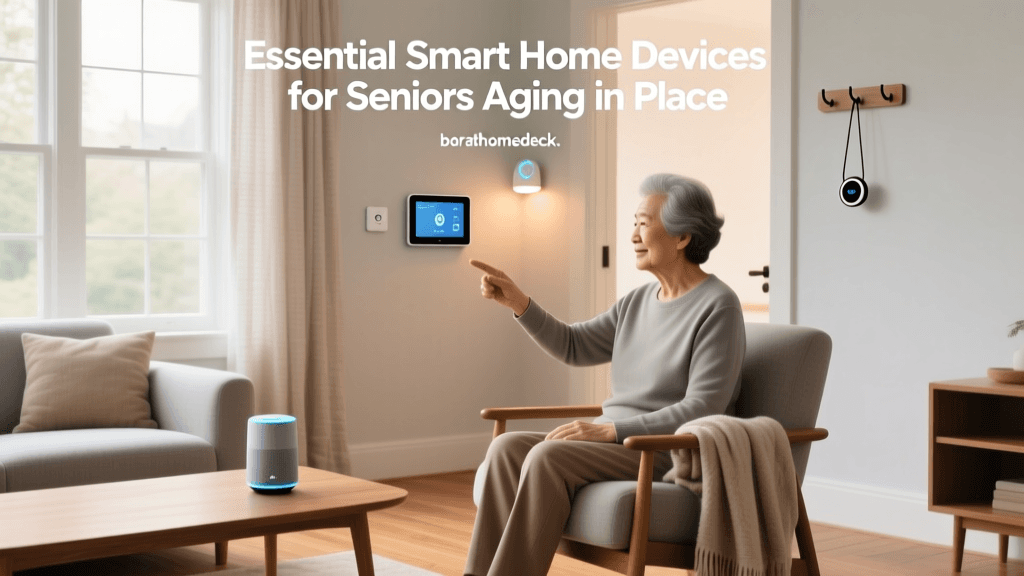
As the global population ages, 'aging in place' has become a critical priority. The National Institute on Aging notes that falls are a leading cause of fatal and non-fatal injuries among older adults. Historically, monitoring elderly relatives required optical cameras, which present severe privacy violations, especially in high-risk areas like bathrooms and bedrooms. Enter millimeter-wave (mmWave) radar.
The Science of mmWave Presence Sensing
Millimeter-wave radar operates by emitting high-frequency electromagnetic waves (typically in the 60GHz range) that bounce off objects and return to the sensor. By analyzing the phase and frequency shifts of the returning waves (Frequency Modulated Continuous Wave, or FMCW), the sensor generates a 3D point cloud of the room. Crucially, mmWave radar is sensitive enough to detect the micro-movements of a human chest cavity expanding and contracting during breathing, even through blankets or shower curtains.
Leading the Market: Aqara FP2
The Aqara Presence Sensor FP2 ($69) is a breakthrough device in this space. Unlike older passive infrared (PIR) sensors that only detect large movements and fail if a person is sitting still, the FP2 uses mmWave to confirm continuous presence. More importantly, it features built-in fall detection algorithms. By mapping the spatial coordinates of a person's center of mass, the FP2 can distinguish between a person lying down in bed versus a sudden, anomalous descent to the floor, instantly triggering an alert to family members or emergency services via Apple HomeKit or Home Assistant.
Because mmWave radar does not capture optical images or audio, it is entirely privacy-compliant, making it the gold standard for bathroom and bedroom monitoring in elder care scenarios.
Category 4: Biometric Scales and Smart Mirrors
The bathroom is evolving into a personal diagnostic clinic. Emerging smart scales and mirrors go far beyond measuring total body weight, utilizing bioelectrical impedance analysis (BIA) and advanced optics to provide deep insights into body composition.
- Withings Body Scan: This device features a retractable handle with electrodes, allowing it to perform a full-body segmental BIA. It measures the fat and muscle mass of individual limbs, assesses arterial stiffness (a marker for cardiovascular health), and tracks visceral fat. It also includes a color screen and Wi-Fi connectivity to push data directly to Apple Health or the Withings app. Cost: $399.
- CareOS Capri Smart Mirror: A high-end smart mirror that integrates body composition tracking, skin analysis, and posture evaluation. Using built-in cameras and AI, it can track changes in skin hydration and blemishes over time, offering personalized wellness routines. Cost: $2,500+.
Ecosystem Integration and The Role of Matter
The greatest challenge in smart home health is data fragmentation. A smart bed tracks HRV, a scale tracks body fat, and a monitor tracks CO2, but historically, these devices lived in isolated, proprietary apps. The future of smart wellness relies on centralized health repositories like Apple HealthKit and Google Fit.
Furthermore, the Connectivity Standards Alliance (CSA) has been instrumental in developing the Matter protocol, which ensures that devices from different manufacturers can communicate locally and securely. While Matter initially focused on lighting and locks, its roadmap heavily emphasizes health and wellness sensors. When purchasing emerging health devices, prioritize those that support native Apple Health/Google Fit exports and Matter-over-Thread connectivity to ensure your hardware will not become obsolete if the manufacturer abandons their proprietary cloud app.
Buyer's Guide: Comparing Emerging Wellness Categories
| Device Category | Top Example | Key Health Metrics | Price Range | Subscription Required? |
|---|---|---|---|---|
| Smart Sleep Systems | Eight Sleep Pod 4 | HRV, Sleep Stages, Core Temp | $2,299 - $5,000+ | Yes ($19/mo) |
| Air Quality Monitors | Airthings View Plus | Radon, CO2, PM2.5, VOCs | $200 - $350 | No (Optional cloud tiers) |
| mmWave Radar | Aqara FP2 | Presence, Breathing, Fall Detection | $60 - $100 | No |
| Biometric Scales | Withings Body Scan | Segmental Fat/Muscle, Vascular Age | $300 - $450 | No (Optional premium app) |
| Smart Mirrors | CareOS Capri | Posture, Skin Analysis, BMI | $2,000 - $4,000 | Varies by brand |
Critical Considerations: Privacy and Data Security
When inviting health-monitoring devices into your home, you are generating highly sensitive biometric data. Unlike a smart bulb, a smart bed knows your heart rate variability, your sleep apnea events, and your restless leg syndrome frequency. Before purchasing, investigate the manufacturer's data retention policy. Do they sell anonymized aggregate data to third parties? Is the data encrypted both in transit and at rest? For maximum privacy, advanced users should consider running local smart home hubs like Home Assistant, which can ingest data from devices like the Aqara FP2 or certain air quality monitors without ever sending that health data to an external cloud server.
Conclusion
The transition of the smart home from a hub of convenience to a sanctuary of health is one of the most exciting developments in consumer technology. By strategically investing in smart sleep systems, ambient air quality monitors, and privacy-preserving mmWave radar, homeowners can create an environment that not only responds to their commands but actively protects and enhances their biological well-being. As sensor technology continues to shrink in size and grow in accuracy, the home of the future will be the most important healthcare provider you never have to visit.