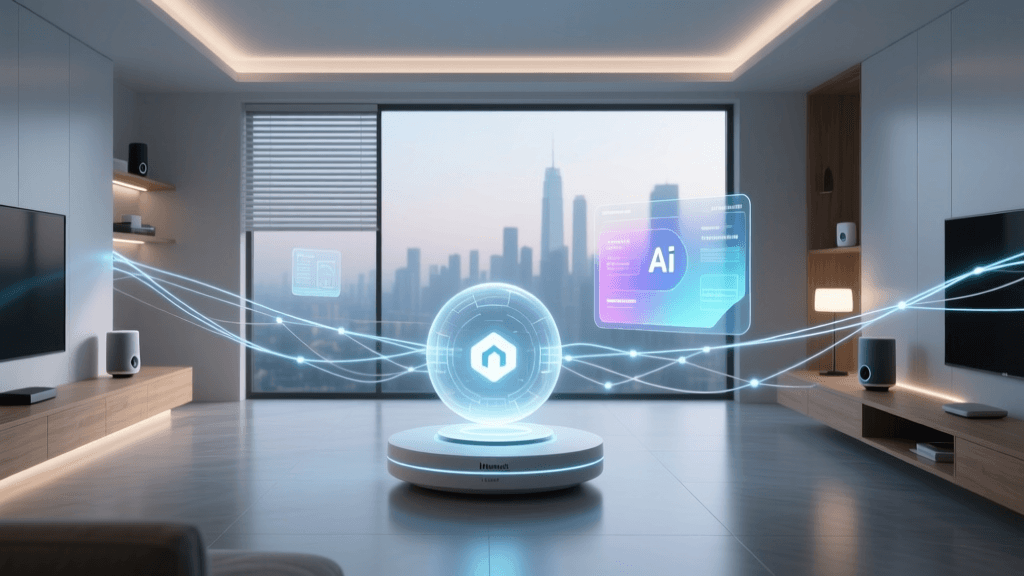
The End of Ecosystem Fragmentation: Enter Matter
For the past decade, the smart home industry has been defined by a frustrating reality: ecosystem fragmentation. Consumers have historically been forced to choose sides—pledging allegiance to Apple HomeKit, Google Home, Amazon Alexa, or Samsung SmartThings—and then purchasing only the devices that display the corresponding badge. This siloed approach has stifled innovation, inflated costs, and created a disjointed user experience. However, the future of smart home technology is rapidly shifting toward a unified, interoperable standard known as Matter.
Developed by the Connectivity Standards Alliance (CSA), Matter is an open-source, royalty-free connectivity protocol built on standard Internet Protocol (IP). Unlike proprietary radio frequencies or closed-cloud APIs, Matter allows devices to communicate locally over your home network, regardless of the voice assistant or app you prefer to use. This means a Matter-certified smart lock from Yale can be controlled simultaneously by an Apple iPhone user and an Android user in the same household, a feature known as 'Multi-Admin'.
From a predictive standpoint, Matter is not just a software update; it is a fundamental rewiring of the smart home market. We are moving away from cloud-dependent command routing, which often results in latency and privacy concerns, toward local IP-based control. When you tap a button to turn off your living room lights, the command is processed locally via your home router, resulting in near-instantaneous execution and continued functionality even if your internet connection drops.
The transition to Matter represents the most significant architectural shift in the smart home space since the introduction of Wi-Fi. It shifts the power from proprietary cloud servers back to the local network and the end-user.
Thread: The Unsung Hero of Next-Gen Connectivity
While Matter acts as the universal language (the application layer) that devices use to understand each other, it still requires a physical transport layer to carry those messages. For high-bandwidth devices like security cameras and smart displays, Wi-Fi remains the standard. However, for the hundreds of low-power sensors, smart bulbs, and smart locks that make up a robust smart home, Wi-Fi is inefficient and congested. Enter Thread.
As outlined by the Thread Group, Thread is an IPv6-based, low-power mesh networking protocol designed specifically for the Internet of Things (IoT). Unlike traditional Zigbee networks that rely on a single, proprietary hub (creating a single point of failure), Thread creates a decentralized, self-healing mesh network. Every Thread-enabled device acts as a router, passing data to its neighbors. If one device loses power or is removed, the network instantly reroutes the data through another path, ensuring rock-solid reliability.
To connect a Thread mesh network to your Wi-Fi and the broader internet, you need a 'Thread Border Router.' Fortunately, you may already own one. Devices like the Apple HomePod mini, Apple TV 4K, Google Nest Hub (2nd Gen), and Amazon Echo (4th Gen) have Thread Border Router capabilities built directly into their hardware, requiring only a simple software toggle to activate.
Protocol Comparison: Wi-Fi vs. Zigbee vs. Thread vs. Matter
Understanding the distinct roles of these protocols is crucial for future-proofing your home. Below is a structured comparison to guide your hardware purchases.
| Protocol | Topology | Power Consumption | Bandwidth | Best Use Case |
|---|---|---|---|---|
| Wi-Fi | Star (Hub-dependent) | High | High | Cameras, Streaming, Hubs |
| Zigbee | Mesh (Hub-dependent) | Low | Low | Legacy Sensors, Bulbs |
| Thread | Mesh (Self-healing) | Very Low | Medium | Sensors, Locks, Matter Devices |
| Matter | Application Layer | Varies (Uses Thread/Wi-Fi) | Varies | Universal Cross-Ecosystem Control |
As detailed in The Verge's comprehensive guide to Matter, the industry is aggressively pivoting toward Thread for all new low-power device releases. Consumers should actively seek out the Thread and Matter logos on packaging, avoiding proprietary Zigbee or Z-Wave hubs that lock them into a single brand's ecosystem.
Ambient AI and the Shift to Predictive Automation
The current paradigm of smart home automation is largely reactive. Users write rigid 'If This, Then That' (IFTTT) routines: If the front door opens, then turn on the hallway light. While useful, this requires constant manual programming and fails to account for context. The next frontier is Ambient AI—a shift toward predictive, context-aware automation that anticipates user needs without explicit commands.
The hardware catalyst for Ambient AI is the transition from traditional Passive Infrared (PIR) motion sensors to millimeter-wave (mmWave) radar technology. PIR sensors only detect significant changes in heat signatures, meaning if you sit perfectly still on the couch reading a book, the lights will turn off, forcing you to wave your arms to restore them. mmWave sensors, on the other hand, detect micro-movements, including the subtle rise and fall of human breathing.
Product Spotlight: mmWave Presence Detection
- Aqara Presence Sensor FP2 ($69): Utilizes mmWave radar to divide a single room into up to 30 distinct zones. It can detect if someone is sleeping in bed versus sitting at a desk, triggering entirely different lighting and HVAC routines based on exact spatial presence, not just generic motion.
- SwitchBot Motion Sensor ($24) & Hub 2 ($79): Combines traditional PIR with localized light sensing and Matter-over-Thread connectivity, allowing for hyper-localized automations that do not rely on cloud processing.
- Wi-Fi Sensing (e.g., Linksys Aware): An emerging software-based approach that uses the existing Wi-Fi waves bouncing off walls and bodies to detect room occupancy without requiring dedicated cameras or radar hardware, preserving visual privacy while enabling predictive climate control.
As the chart above illustrates, the proliferation of Thread Border Routers and Matter-certified devices is expected to grow exponentially over the next few years. This hardware density is the prerequisite for Ambient AI. When your home is blanketed in a self-healing Thread mesh network populated with mmWave sensors, the AI engine has the real-time, high-fidelity data required to make predictive decisions—such as pre-cooling the bedroom exactly 15 minutes before your routine bedtime, based on historical patterns and current ambient temperature.
Edge Computing: Solving the Privacy and Latency Dilemma
With the rise of Ambient AI and predictive automation, the volume of data generated by a smart home is staggering. Sending continuous radar data, audio snippets, and occupancy logs to the cloud for processing is not only a massive privacy risk but also introduces unacceptable latency. The future of smart home AI is Edge Computing—processing data locally on the device or a local hub.
Edge AI ensures that sensitive information, such as voice commands or occupancy patterns, never leaves your home network. For example, modern smart thermostats like the Ecobee Smart Thermostat Premium feature built-in local processing for occupancy and basic voice commands. Similarly, Apple's HomeKit Secure Video processes facial recognition locally on the HomePod or Apple TV before encrypting the video feed, ensuring that even Apple cannot view your camera footage.
Looking ahead, we anticipate the integration of localized Small Language Models (SLMs) directly into smart home hubs. Instead of sending complex, conversational queries to a distant cloud server, a local SLM will understand natural language commands like, 'It feels a bit stuffy in here, can you freshen things up?' and translate that into local actions: adjusting the thermostat, turning on an air purifier, and slightly cracking a smart window actuator—all processed in milliseconds, completely offline.
Actionable Roadmap: Future-Proofing Your Home Today
You do not need to wait for the future to arrive; you can begin building a next-generation smart home infrastructure today. Follow this actionable roadmap to ensure your investments are protected against obsolescence.
Step 1: Audit and Upgrade Your Border Routers
Before buying new sensors, ensure you have the infrastructure to support them. Retire legacy, proprietary Zigbee hubs that rely on cloud polling. Invest in dedicated Thread Border Routers. If you are an Apple user, the Apple HomePod mini ($99) is an excellent, low-profile Thread router. For Google users, the Nest Hub 2nd Gen ($99) serves the same purpose. Place these devices centrally in your home to maximize mesh coverage.
Step 2: Transition to mmWave for Critical Zones
Identify the rooms where you spend the most time sitting still (home offices, living rooms, bedrooms). Replace cheap PIR motion sensors with mmWave presence sensors like the Aqara FP2 ($69). Configure these sensors to use local Matter automations, ensuring your lights and HVAC systems respond to your actual presence, not just your movement.
Step 3: Demand Matter Certification on New Purchases
When replacing end-of-life devices or expanding your system, refuse to buy devices that lack Matter support. Look for the official Matter logo on the packaging. For smart plugs and energy monitoring, the Eve Energy ($39) offers Matter-over-Thread support and high-precision local energy tracking. For lighting, Nanoleaf Shapes ($199+) and Philips Hue (via their Matter-updated bridge) ensure cross-platform compatibility.
Step 4: Secure Your Network Perimeter
As IoT devices multiply, your network attack surface expands. Isolate your smart home devices on a dedicated IoT VLAN (Virtual Local Area Network) or a 'Guest' Wi-Fi network that prevents them from communicating with your personal computers and NAS drives. Utilize a local DNS sinkhole like Pi-hole to block known telemetry and tracking domains from smart device manufacturers.
Conclusion
The smart home is evolving from a collection of disjointed, remote-controlled gadgets into a cohesive, intelligent, and predictive environment. The widespread adoption of the Matter protocol and Thread networking is laying the essential groundwork for true interoperability, ending the era of ecosystem lock-in. Simultaneously, the integration of mmWave sensors and Edge AI is transforming our homes from reactive spaces into ambient environments that intuitively adapt to our needs. By understanding these foundational shifts and strategically investing in open, IP-based hardware today, you can build a smart home that is not only future-proof but genuinely enhances your daily life with unparalleled convenience and privacy.