The Paradigm Shift: From Reactive to Predictive Living
For the past decade, the smart home industry has been defined by reactive technology. You press a button on your phone, the lights turn on. You speak a command to a smart speaker, the thermostat adjusts. While this level of remote control and basic automation was revolutionary in the 2010s, it represents only the infancy of connected living. The future of smart home technology is not about giving you more ways to control your devices; it is about removing the need for you to control them at all.
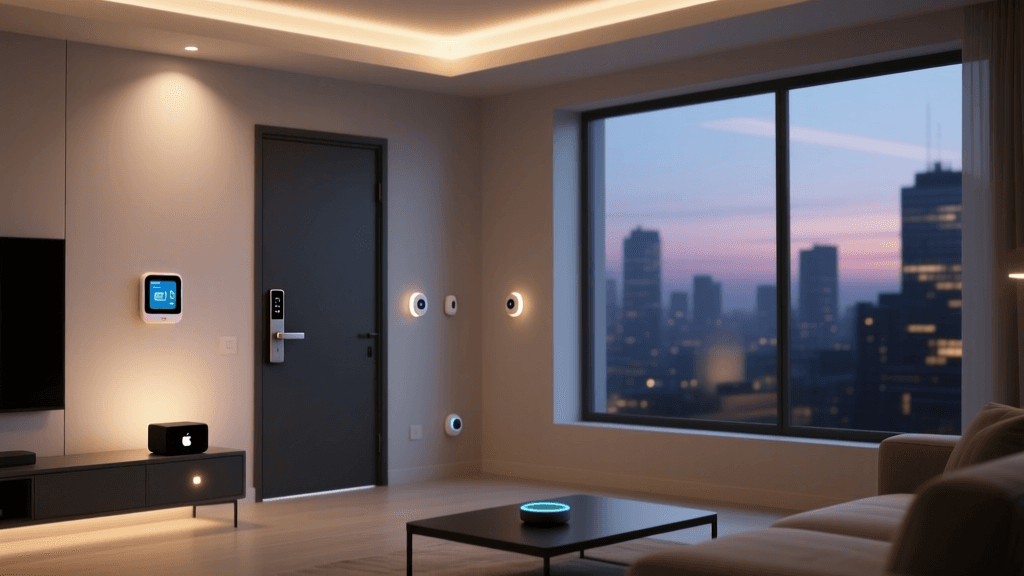
We are currently witnessing a massive paradigm shift toward predictive living. Driven by the universal interoperability of the Matter protocol and the localized processing power of Edge AI, tomorrow's smart home will anticipate your needs, manage its own energy consumption, and adapt to your biometric and behavioral patterns without requiring manual input. This transition from a command-based ecosystem to an intent-based environment is fundamentally reshaping how we interact with our living spaces.
Matter and Thread: The Universal Foundation of Future Homes
To understand where smart homes are going, we must first look at the foundation being laid today. Historically, the smart home market was fractured by walled gardens. An Apple HomeKit user could not easily integrate a Zigbee-based sensor designed for Amazon Alexa without a complex third-party hub. This fragmentation stifled innovation and frustrated consumers.
Enter Matter, an open-source, royalty-free connectivity protocol developed by the Connectivity Standards Alliance (CSA). According to the Connectivity Standards Alliance (CSA), Matter provides a unified application layer that allows smart home devices from different manufacturers to communicate seamlessly, regardless of the underlying ecosystem. If a device is Matter-certified, it will work natively with Apple Home, Amazon Alexa, Google Home, and Samsung SmartThings simultaneously.
However, Matter is only half of the equation. Its true power is unlocked when paired with Thread, a low-power, low-latency mesh networking protocol. Unlike traditional Wi-Fi, which can congest your router and drain battery-operated sensors, Thread devices create a self-healing mesh network. Every plugged-in Thread device acts as a node, extending the network's range and reliability.
Actionable Advice: Building a Thread Border Router Network
To future-proof your home for the Matter/Thread ecosystem, you need Border Routers—devices that bridge the Thread mesh network to your home's Wi-Fi and the broader internet. Instead of buying proprietary hubs, you likely already own devices capable of this:
- Apple TV 4K (3rd Gen, Wi-Fi + Ethernet): Priced around $129, this is one of the most stable Thread border routers available for HomeKit users.
- Google Nest Hub (2nd Gen) or Nest Wifi Pro: Ranging from $99 to $199, these serve as excellent border routers for the Google ecosystem.
- Amazon Echo (4th Gen) or eero 6 Routers: Amazon's integration of Thread into its mesh routers and flagship speakers ensures robust coverage for Alexa-centric homes.
By deploying at least two Thread border routers on opposite sides of your home, you create a resilient mesh that ensures your future Matter devices—from Nanoleaf smart bulbs to Eve Energy plugs—will respond in milliseconds, entirely independent of cloud latency.
Comparison: Legacy Smart Homes vs. Future-Ready Ecosystems
To visualize the technological leap we are making, consider the differences between the legacy smart home architecture and the predictive, Matter-enabled future.
| Feature | Legacy Smart Home (2015-2022) | Future-Ready Ecosystem (2023+) |
|---|---|---|
| Connectivity | Wi-Fi (high power, router congestion) | Matter over Thread (low power, self-healing mesh) |
| Interoperability | Walled gardens, proprietary hubs required | Universal compatibility, multi-admin support |
| Automation Logic | Reactive (IFTTT, time-based, basic geofencing) | Predictive (Machine learning, behavioral adaptation) |
| Presence Sensing | PIR Motion Sensors (requires physical movement) | mmWave Radar (detects micro-movements and breathing) |
| Data Processing | Cloud-dependent (high latency, privacy risks) | Edge AI (local processing, instant response) |
Ambient Computing and mmWave Presence Detection
One of the most significant limitations of legacy smart homes was the reliance on Passive Infrared (PIR) motion sensors. PIR sensors only detect significant changes in heat signatures, meaning if you sit still on the couch reading a book, the lights will eventually turn off, forcing you to wave your arms to reactivate them. This is the opposite of seamless living.
The future relies on millimeter-wave (mmWave) radar sensors. Unlike PIR, mmWave sensors emit high-frequency radio waves that can detect micro-movements, including the subtle rise and fall of a human chest while breathing. This enables true presence detection rather than mere motion detection.
The Aqara Presence Sensor FP2 (retailing around $60) is a prime example of this technology in action. It does not just detect that someone is in the room; it maps the room in 3D space, allowing you to create specific zones. You can program your home so that walking into the kitchen zone turns on the under-cabinet lights, while sitting in the adjacent dining zone triggers a different lighting scene—all without a single voice command or app interaction. Furthermore, the FP2 includes fall detection capabilities, making it an invaluable, non-intrusive tool for aging-in-place and elder care monitoring.
Predictive AI in Climate and Energy Management
As homes become more saturated with connected devices, energy consumption becomes a critical concern. Future smart homes will not just consume energy; they will actively manage, store, and even sell it back to the grid. This concept, known as Grid-Interactive Efficient Buildings (GEBs), relies heavily on predictive AI.
Consider the modern smart thermostat. The Ecobee Smart Thermostat Premium (approximately $249) does far more than allow remote temperature control. It utilizes built-in IAQ (Indoor Air Quality) monitoring, occupancy sensors, and machine learning algorithms to map the thermal dynamics of your specific home. It learns how long it takes to heat your living room based on the outdoor weather forecast, your home's insulation properties, and historical utility rate schedules.
According to the U.S. Environmental Protection Agency (EPA), ENERGY STAR certified smart thermostats save users an average of 8% on heating and cooling bills by intelligently adjusting temperatures when the home is unoccupied. But the future goes further. When paired with a home battery system like the Tesla Powerwall or a smart electrical panel like the Span Smart Panel (starting around $3,500 installed), AI can perform energy arbitrage. It will charge your home battery from the grid when rates are lowest (or from solar panels during the day) and automatically route power to essential circuits during peak-rate hours or grid outages, entirely without user intervention.
Visualizing the Matter Ecosystem Expansion
The transition to Matter is not a distant theory; it is happening right now. As manufacturers update their firmware and release new hardware, the number of certified devices is scaling exponentially. This growth ensures that consumers will soon have universal choices for every category of home automation.
Note: Projections based on initial CSA certification trajectories and industry adoption rates of Thread-enabled silicon.
Edge AI and the Privacy Imperative
With predictive AI analyzing your daily routines, sleep patterns, and physical presence, privacy becomes the paramount concern of the future smart home. In the legacy model, voice recordings and sensor data were routinely beamed to cloud servers for processing. This introduced latency and significant privacy vulnerabilities.
The future standard is Edge AI—the processing of data locally on the device or a local hub, rather than in the cloud. When you speak to a modern smart speaker equipped with local neural engines, the wake-word detection and basic command processing happen entirely within your home's walls. Video feeds from smart doorbells are increasingly analyzed by local NPU (Neural Processing Unit) chips to distinguish between a stray cat, a delivery driver, and a family member, sending only a text alert to your phone rather than streaming raw video to a remote server.
However, local processing does not eliminate the need for robust network security. The Cybersecurity and Infrastructure Security Agency (CISA) strongly recommends segmenting IoT devices from your primary computing network. To achieve this in a future-proof manner, homeowners should invest in advanced local firewalls like the Firewalla Purple (approximately $459). This device allows you to create Virtual LANs (VLANs), isolating your smart home devices from your personal computers and phones, ensuring that a compromised smart bulb cannot be used as a backdoor to access your financial data.
Actionable Steps to Future-Proof Your Home Today
You do not need to wait for the next decade to experience the benefits of predictive, interoperable living. Here is a strategic roadmap to begin your transition:
- Audit and Replace Hubs: Identify your current smart home hubs. If they rely on outdated Zigbee or Z-Wave protocols without a clear Matter update path, begin transitioning to Thread-enabled border routers like the Apple TV 4K or Nest Wifi Pro.
- Upgrade Your Sensing Layer: Replace high-traffic PIR motion sensors with mmWave presence sensors. Start with a single Aqara FP2 in your primary living space or home office to experience the difference between motion and true presence detection.
- Prioritize Local Control: When purchasing new devices, look for the 'Works with Home Assistant' certification or native Matter support. These designations heavily favor local network control over cloud-dependent APIs, ensuring your home continues to function even if your internet connection drops.
- Segment Your Network: Log into your router's admin panel and enable a dedicated 'IoT Network' or Guest Network. Move all smart plugs, bulbs, and appliances to this isolated network to establish a baseline of cybersecurity.
Conclusion: The Invisible Smart Home
The ultimate goal of smart home technology is invisibility. As the Matter protocol eradicates the friction of incompatible ecosystems, and as Edge AI learns the nuanced rhythms of your daily life, the technology will fade into the background. The future of smart living is not about interacting with screens, apps, or voice assistants; it is about a home that inherently understands you. It is a space that lights your path as you walk, breathes fresh air when it senses CO2 buildup, conserves energy when you leave, and protects your digital privacy by keeping your data where it belongs: inside your home. By investing in Thread infrastructure, mmWave sensing, and local AI processing today, you are not just buying gadgets—you are laying the foundation for the autonomous, predictive living spaces of tomorrow.