The End of Walled Gardens
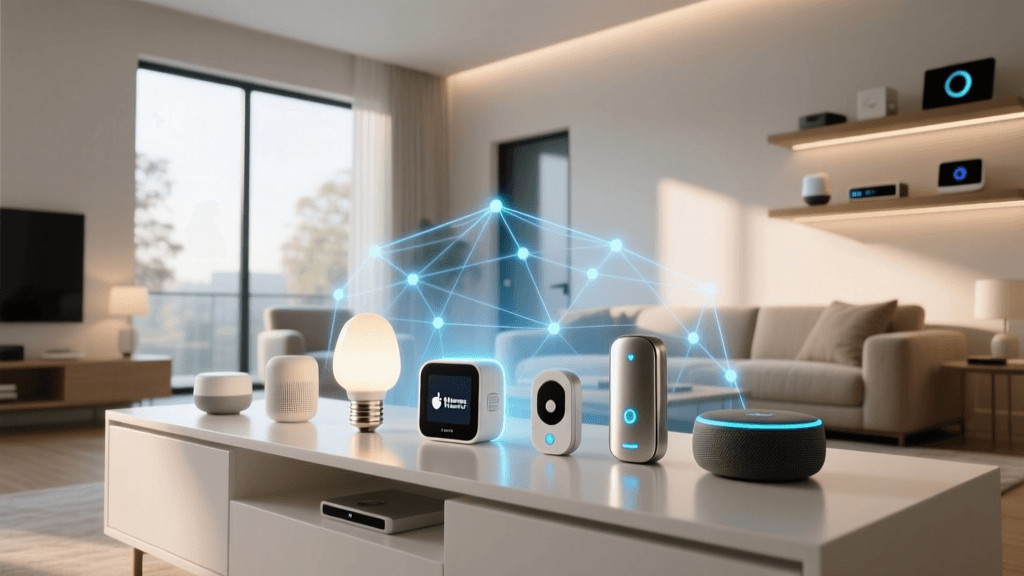
For the past decade, the smart home industry has been plagued by fragmentation. Consumers have been forced to choose sides, locking themselves into walled gardens dictated by Apple, Google, Amazon, or Samsung. If you bought a Ring camera, it played nicely with Alexa but poorly with HomeKit. If you invested in Philips Hue, you were tethered to a proprietary bridge. This era of fragmentation is rapidly coming to an end. As we look toward the future of smart home basics and education, one overarching prediction stands out: the universal adoption of Matter and Thread will fundamentally rewire how our homes operate, communicate, and consume energy.
The shift toward unified protocols is not just a minor software update; it is a complete paradigm shift in residential IoT (Internet of Things) architecture. According to the Connectivity Standards Alliance, the consortium of tech giants behind the Matter standard, the goal is to create a reliable, secure, and seamless ecosystem where devices communicate locally without relying on cloud servers. But what does this actually mean for the average homeowner, and what hardware should you be preparing for?
Demystifying Matter and Thread
To understand the future of smart home connectivity, you must first understand the distinction between Matter and Thread. They are often mentioned in the same breath, but they serve entirely different functions within your home's network architecture.
Matter: The Universal Language
Matter is an application-layer protocol. Think of it as the language that your devices speak. Before Matter, a smart plug from TP-Link and a smart bulb from Sylvania spoke different languages, requiring a cloud-based translator (like IFTTT or a specific hub) to coordinate their actions. Matter standardizes this language. A Matter-certified smart lock will inherently understand the commands sent by a Matter-certified smart display, regardless of who manufactured them. This ensures that when you set up a 'Goodnight' routine, the lights turn off, the doors lock, and the thermostat adjusts simultaneously, with sub-100 millisecond latency and zero reliance on your internet connection.
Thread: The Low-Power Mesh Highway
If Matter is the language, Thread is the highway it travels on. Thread is a low-power, mesh networking protocol built on IPv6. Unlike Wi-Fi, which requires a direct, power-hungry connection to your central router, Thread devices connect to one another, creating a decentralized mesh. The Thread Group highlights that this mesh architecture eliminates single points of failure. If your hallway smart plug loses power, the Thread network automatically reroutes the signal through the living room smart bulb, ensuring your bedroom motion sensor stays online. Thread is specifically designed for low-bandwidth, battery-operated devices like sensors and locks, freeing up your Wi-Fi router to handle high-bandwidth tasks like 4K streaming and security camera feeds.
Predictions: The Next Generation of Smart Hardware
As Matter and Thread mature, we are predicting a massive shift in the types of hardware that will dominate the market. The clunky, cloud-dependent gadgets of the 2010s will be replaced by ambient, hyper-responsive, and locally processed devices.
Ambient mmWave Presence Sensors
Traditional PIR (Passive Infrared) motion sensors are notoriously flawed; they turn off the lights if you sit still while reading or working. The future belongs to mmWave (millimeter-wave) radar sensors. These devices detect micro-movements, including the rise and fall of your chest as you breathe. Expect to see a surge in Thread-enabled mmWave sensors from brands like Aqara and Eve, priced between $40 and $70. These sensors will allow your home to know not just that someone is in the room, but exactly where they are, enabling localized lighting and climate control without a single voice command.
Thread-Enabled Climate and Energy Management
Smart HVAC is moving beyond simple smart thermostats. We predict the widespread adoption of Thread-enabled smart vents and room-by-room climate sensors. Because Thread supports high node density without degrading network performance, homeowners will be able to place a $30 Thread temperature and humidity sensor in every single room. This data will feed into local AI hubs that dynamically adjust smart vents and mini-split systems, optimizing energy usage and reducing HVAC costs by up to 20% annually.
Hardware Comparison: Legacy vs. Future Standards
| Device Category | Legacy Protocol | Future Standard | Estimated Cost | Key Upgrade Benefit |
|---|---|---|---|---|
| Motion Sensors | Zigbee / Wi-Fi | Matter over Thread | $30 - $50 | Sub-100ms latency, 3-year battery life |
| Smart Plugs | Wi-Fi 2.4GHz | Matter over Thread | $25 - $45 | Mesh routing, frees up Wi-Fi router |
| Smart Locks | Bluetooth / Z-Wave | Matter over Thread | $150 - $250 | Remote status without cloud hub |
| Presence Sensors | Proprietary | Matter over Thread | $60 - $90 | mmWave accuracy, local processing |
| Smart Blinds | RF / Bluetooth | Matter over Thread | $100 - $200 | Group syncing without latency |
Charting the Growth of Thread-Certified Devices
The transition to Thread is not a distant theory; it is already underway. Hardware manufacturers are rapidly integrating Thread radios into their flagship products. The chart below illustrates the explosive projected growth of Thread-certified devices in the consumer market over the next few years.
Thread Device Market Growth
Actionable Advice: Future-Proofing Your Home Today
You do not need to rip out your existing smart home setup to prepare for the future. Instead, you can strategically build a Thread mesh network that will serve as the backbone for your upcoming Matter devices. Here is a practical, step-by-step guide to future-proofing your home:
- Upgrade to Thread Border Routers: A Thread mesh requires a 'Border Router' to connect the low-power Thread network to your home's IP network (Wi-Fi/Ethernet). You likely already own one without knowing it. The Apple TV 4K (Ethernet model), HomePod mini, Nest Hub Pro, and Nanoleaf Shapes all contain Thread Border Radios. Ensure you have at least two or three of these distributed throughout your home for redundancy.
- Start with Thread-Enabled Plugs and Bulbs: Devices that are plugged into the wall or hardwired make the best mesh routers because they do not need to conserve battery. Purchase a few Matter-over-Thread smart plugs (like the Eve Energy or SwitchBot Plug Mini Matter) and place them in central locations to strengthen the mesh signal.
- Replace Battery-Heavy Devices First: If you have Wi-Fi smart locks or Wi-Fi motion sensors that require constant battery changes, prioritize replacing them with Thread equivalents. A Thread smart lock will use a fraction of the power, extending battery life from months to years.
- Check for Firmware Updates: Many high-end devices from 2021 and 2022 contain dormant Thread chips. Check the manufacturer's app to see if a firmware update has enabled Thread support on your existing hardware.
The Rise of Ambient Computing and Local AI
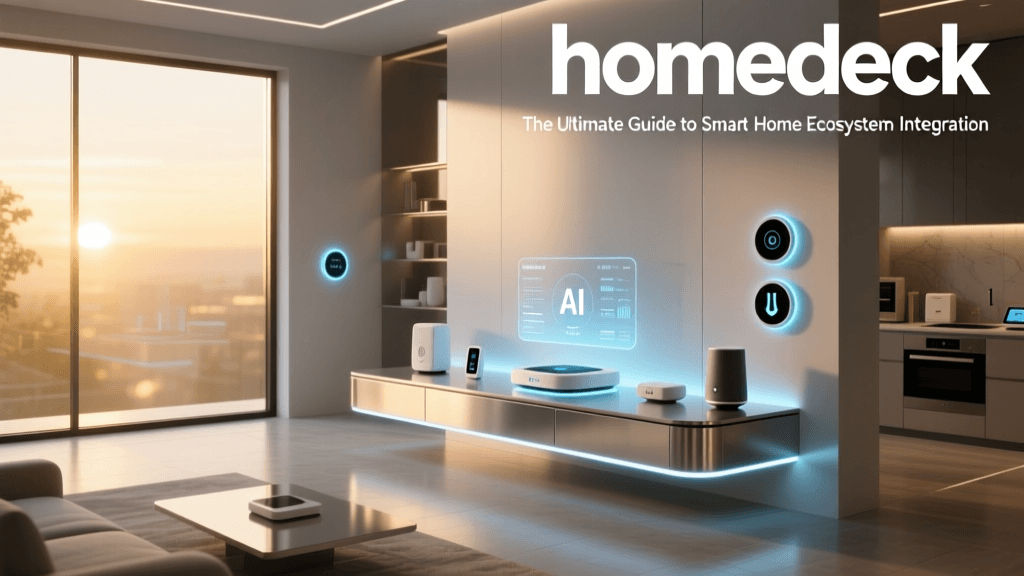
As Matter and Thread solve the connectivity layer, the next frontier is the intelligence layer. The future smart home will transition from 'command-based' automation (where you must explicitly tell the house what to do via voice or app) to 'ambient computing' (where the house anticipates your needs based on context).
With the ultra-low latency of Thread and the local processing capabilities of Matter, smart home hubs will increasingly rely on local AI models. Instead of sending your daily routine data to a cloud server, a local hub (such as a future iteration of the Apple HomePod or a dedicated Home Assistant server) will use machine learning to analyze your Thread sensor data. It will learn that when the mmWave sensor detects you sitting at your desk at 9:00 AM, the smart blinds should adjust to reduce screen glare, and the thermostat should lower the temperature in that specific zone. This intent-based automation removes the friction of managing dozens of individual device routines.
Security, Privacy, and Local Control
One of the most significant predictions for the future of smart home basics is the shift toward local execution and enhanced privacy. Cloud-based smart homes are inherently vulnerable; if the manufacturer's server goes down, your house stops working. Furthermore, sending telemetry data from your bedroom sensors to corporate servers raises valid privacy concerns.
The NIST IoT Cybersecurity Program emphasizes the importance of securing edge devices. Matter addresses this by utilizing blockchain-style distributed ledger technology for device commissioning and end-to-end encryption for all local communications. Because Thread is an IPv6 protocol, every single smart bulb and sensor gets its own IP address, allowing your home router's firewall to isolate IoT traffic from your personal computers and phones. In the coming years, expect to see 'Local-Only' toggles in smart home apps, allowing privacy-conscious users to completely sever their smart home's connection to the cloud while retaining full Matter and Thread functionality via local Wi-Fi and LAN.
The Economics of Upgrading
Is it worth the cost to upgrade to a Matter and Thread ecosystem? From a purely financial perspective, the initial investment is higher than buying cheap, cloud-dependent Wi-Fi gadgets from generic brands. A robust Thread border router setup might cost $150 to $300, and premium Matter sensors average $45 each. However, the long-term economics favor the upgrade. Thread devices eliminate the need for proprietary, brand-specific hubs (saving $50 to $150 per ecosystem). Furthermore, the drastic reduction in battery replacements and the energy savings generated by hyper-accurate, room-by-room climate control can yield a return on investment within three to five years. More importantly, the interoperability of Matter ensures that your hardware investment is protected; you will never be forced to replace your locks or lights simply because you decided to switch from an iPhone to an Android, or from Alexa to Google Home.
Conclusion
The future of the smart home is not about flying robots or holographic displays; it is about invisible, frictionless reliability. Matter and Thread are quietly laying the groundwork for a home that simply works. By understanding these protocols, investing in Thread border routers, and prioritizing local, ambient hardware, you can build a resilient smart home ecosystem that is ready for the next decade of innovation. The walled gardens are falling, and the era of the truly unified, intelligent home has begun.