Introduction: Moving Beyond Reactive Smart Homes
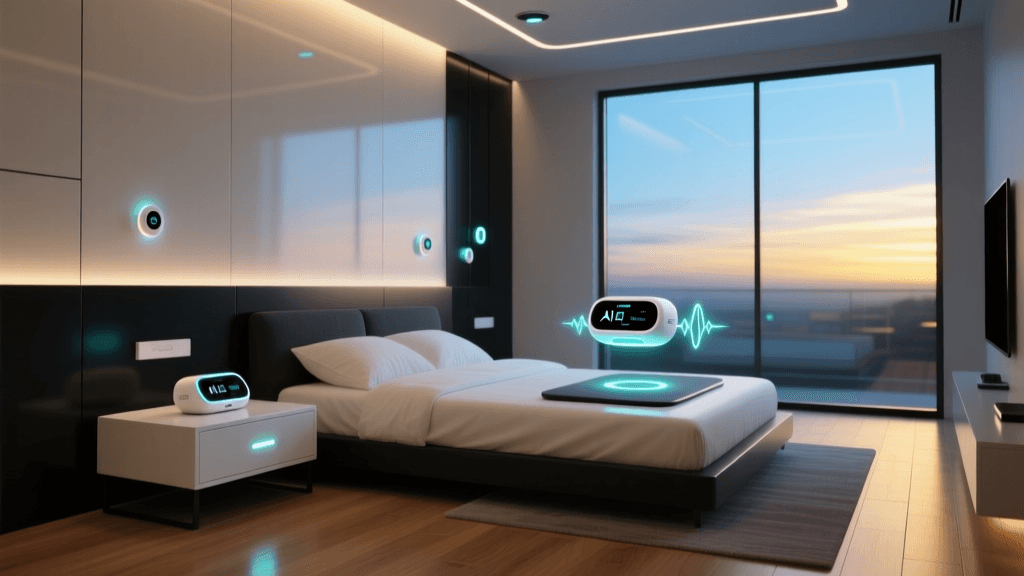
For the past decade, the smart home industry has been defined by reactive automation. We have relied on rudimentary 'if this, then that' logic: if a motion sensor detects movement, turn on the hallway light; if the clock strikes 10 PM, lock the front door. While this level of automation provides convenience, it lacks true intelligence. The home does not understand the context of your life; it merely responds to binary triggers. However, a massive paradigm shift is currently underway. The convergence of the Matter interoperability protocol and localized, predictive Artificial Intelligence (AI) is poised to transform our living spaces from reactive command centers into proactive, intuitive environments.
As we look toward the future of smart home technology, the focus is shifting from remote control to ambient intelligence. Tomorrow's smart home will anticipate your needs before you explicitly state them, adjusting climate, lighting, and security based on learned behavioral patterns, biometric presence, and real-time energy grid conditions. To understand what is coming next, we must examine the two foundational pillars that will make this predictive era possible: the unifying language of Matter and the cognitive power of Edge AI.
The Matter Protocol and Thread: Unifying the Fragmented Ecosystem
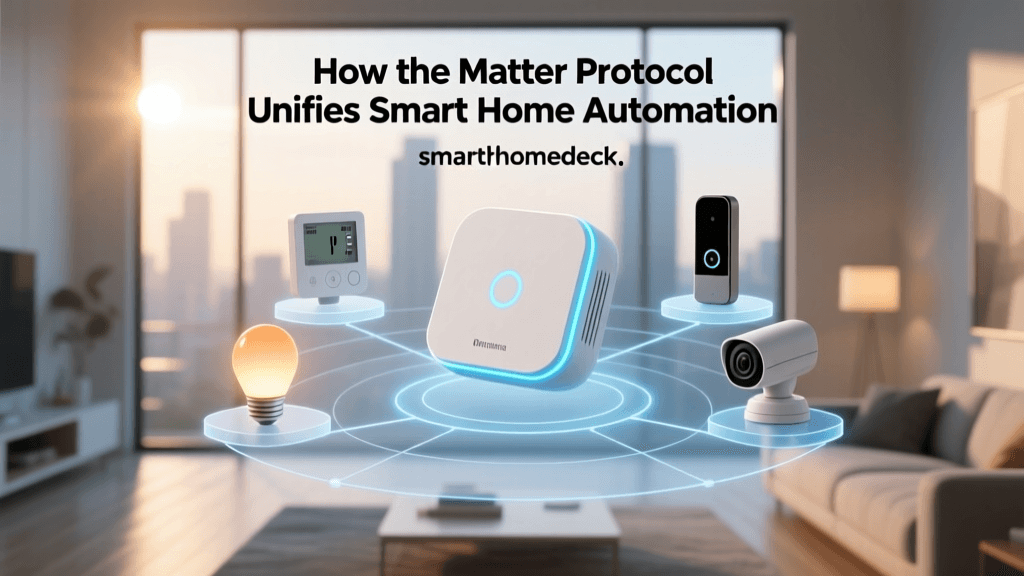
The most significant structural change in the smart home landscape is the widespread adoption of Matter. Developed by the Connectivity Standards Alliance (CSA), Matter is an open-source, IP-based connectivity standard that allows devices from different manufacturers to communicate seamlessly without relying on proprietary cloud bridges. In the past, an Apple HomeKit user might struggle to integrate a specialized Zigbee-based smart lock, while an Amazon Alexa user might find certain Wi-Fi cameras incompatible. Matter eliminates these walled gardens.
Matter operates over existing IP networks, primarily Wi-Fi and Ethernet, but its true superpower is its integration with Thread. Thread is a low-power, mesh networking protocol that uses the 2.4 GHz radio frequency to connect IoT devices. Unlike Wi-Fi, which can become congested and drain the batteries of small sensors, Thread creates a self-healing mesh network. Every Thread-enabled device acts as a node, passing data along to a 'Border Router' (like a smart speaker or hub) that connects the mesh to your home's main internet connection. According to the Thread Group, this architecture drastically reduces latency and ensures that if one node fails, the network automatically reroutes the data, providing unparalleled reliability for critical home infrastructure.
Protocol Comparison: Legacy vs. Future Standards
| Feature | Zigbee / Z-Wave (Legacy) | Wi-Fi (Current Standard) | Matter over Thread (Future) |
|---|---|---|---|
| Interoperability | Low (Requires proprietary hubs) | Medium (Cloud-dependent) | High (Universal, IP-based) |
| Power Consumption | Low | High (Poor for battery sensors) | Ultra-Low (Mesh optimized) |
| Network Topology | Mesh (Fragile without repeaters) | Star (Hub-and-spoke) | Self-Healing Mesh |
| Local Control | Yes (Hub dependent) | Rarely (Cloud latency) | Yes (Native IP local routing) |
| Multi-Admin Support | No | No | Yes (Apple, Google, Amazon simultaneously) |
The Multi-Admin feature of Matter is particularly revolutionary. It allows a single smart device to be controlled by multiple ecosystems simultaneously. For example, a Matter-compatible smart plug can appear in Apple HomeKit for the primary user, while also being accessible via the Google Home app for a guest or family member who prefers a different ecosystem, all without complex workarounds or IFTTT applets.
Predictive AI and Edge Computing: The Brain of the Future Home
While Matter and Thread solve the communication problem, Predictive AI solves the intelligence problem. Current AI in smart homes is largely cloud-based and voice-centric (e.g., asking a smart speaker for the weather). The next generation of AI is moving to the 'Edge'—meaning the processing happens locally on the device or a local hub, rather than being sent to a remote server. Edge AI offers three massive advantages: near-zero latency, continued functionality during internet outages, and vastly superior privacy.
Predictive AI utilizes machine learning algorithms to analyze historical data and real-time sensor inputs to forecast user intent. Consider the evolution of occupancy sensing. Traditional Passive Infrared (PIR) sensors only detect large, warm, moving objects. If you sit still on the couch reading a book, the lights eventually turn off. The future lies in millimeter-wave (mmWave) radar sensors, such as the Aqara Presence Sensor FP2 (priced around $69). This device uses 60GHz radar to detect micro-movements, including the subtle rise and fall of human breathing. When paired with a local AI hub, the system learns that when you are in the living room with micro-movements detected but low ambient light, you are likely reading or watching a movie, and it will proactively adjust the color temperature of your smart bulbs to a warm 2700K without you ever issuing a voice command.
Climate control is another area ripe for predictive disruption. The Ecobee Smart Thermostat Premium (retailing at $249) already utilizes remote SmartSensors to track occupancy and balance temperatures across multiple rooms. However, future iterations of these devices will integrate with local weather prediction models, utility grid demand-response signals, and your personal calendar. If the AI knows you are commuting home (via geofencing) and a cold front is arriving, it will pre-condition the home using off-peak energy rates, optimizing both comfort and cost.
Charting the Growth of AI and Matter Adoption
The transition from legacy, fragmented protocols to unified, AI-driven ecosystems is happening rapidly. Industry projections indicate a massive shift in device manufacturing and consumer adoption over the next five years. The chart below illustrates the projected crossover point where Matter-compatible devices will overtake legacy protocol devices in global smart home deployments.
Projected Global Smart Home Device Adoption by Protocol
As the chart demonstrates, the inflection point is expected around 2026. After this period, purchasing a smart home device that does not support Matter will become as rare as buying a smartphone without Wi-Fi. This critical mass will provide AI algorithms with a vastly larger, unified dataset of local device interactions, accelerating the accuracy of predictive automation models.
Energy Management: AI Meets the Smart Grid
One of the most profound impacts of predictive AI will be in home energy management. As residential solar panels, home batteries, and Electric Vehicles (EVs) become ubiquitous, the home is transforming from a passive energy consumer into an active microgrid. The U.S. Department of Energy highlights that smart grid integration allows homes to communicate with utility providers to balance loads and reduce strain on the power infrastructure.
In the near future, your smart home's AI will act as an autonomous energy broker. Imagine a system where your home's AI predicts a high-heat day based on meteorological data. Knowing that cooling the house will be expensive during peak afternoon hours, the AI proactively super-cools the home in the early morning using cheap, abundant solar or off-peak grid power. It then pre-charges your Tesla Powerwall or EV battery. During the 4 PM to 9 PM peak pricing window, the home seamlessly disconnects from the expensive grid, running entirely on stored battery power while maintaining optimal indoor temperatures. Products like the Span Smart Panel are already laying the groundwork for this by allowing AI to control power at the individual circuit-breaker level, prioritizing critical loads (like refrigerators and medical equipment) while shedding non-essential loads during outages or peak pricing events.
Actionable Steps to Future-Proof Your Home Today
You do not need to wait until 2028 to begin building a predictive, Matter-ready home. By making strategic purchasing decisions today, you can lay the groundwork for the next era of automation. Here is a practical guide to future-proofing your setup:
1. Upgrade Your Border Routers and Hubs
To utilize Thread and Matter locally, you need a capable Border Router. Instead of buying expensive, single-purpose hubs, invest in smart speakers or streaming boxes that double as Thread routers. The Apple TV 4K (Wi-Fi + Ethernet model, $149), the HomePod mini ($99), and the Amazon Echo (4th Gen, $99) all contain Thread radios and act as Matter controllers. Placing two or three of these in opposite corners of your home will create a robust, self-healing mesh network that covers your entire property.
2. Transition to mmWave Presence Sensors
Stop relying on PIR motion sensors for lighting and climate control. Begin replacing them in high-traffic and stationary areas (like living rooms and home offices) with mmWave radar sensors. The Aqara Presence Sensor FP2 ($69) or the Everything Presence One ($55) provide the granular, micro-movement data that predictive AI needs to understand true room occupancy, eliminating the annoyance of lights turning off while you are working at a desk.
3. Prioritize Local Control and Edge AI
When purchasing new smart home hubs, look for systems that emphasize local processing. Home Assistant (running on a local server like the Home Assistant Green for $99) is currently the gold standard for local, predictive automation. It allows you to build complex, AI-driven routines that execute in milliseconds without ever sending your personal data to a cloud server. For those who prefer commercial ecosystems, Apple's HomeKit and Amazon's Alexa are increasingly pushing Edge AI processing to their local hubs to reduce latency and improve privacy.
4. Invest in Smart Plugs with Energy Monitoring
Predictive AI requires data to make accurate forecasts. By outfitting your major appliances with Matter-compatible smart plugs that feature energy monitoring (such as the Eve Energy Smart Plug, $39), you feed your local hub valuable data regarding your energy consumption habits. Over time, the AI will learn exactly how much power your specific refrigerator, coffee maker, or space heater draws, allowing it to optimize your energy usage automatically.
Privacy and Security in an AI-Driven Home
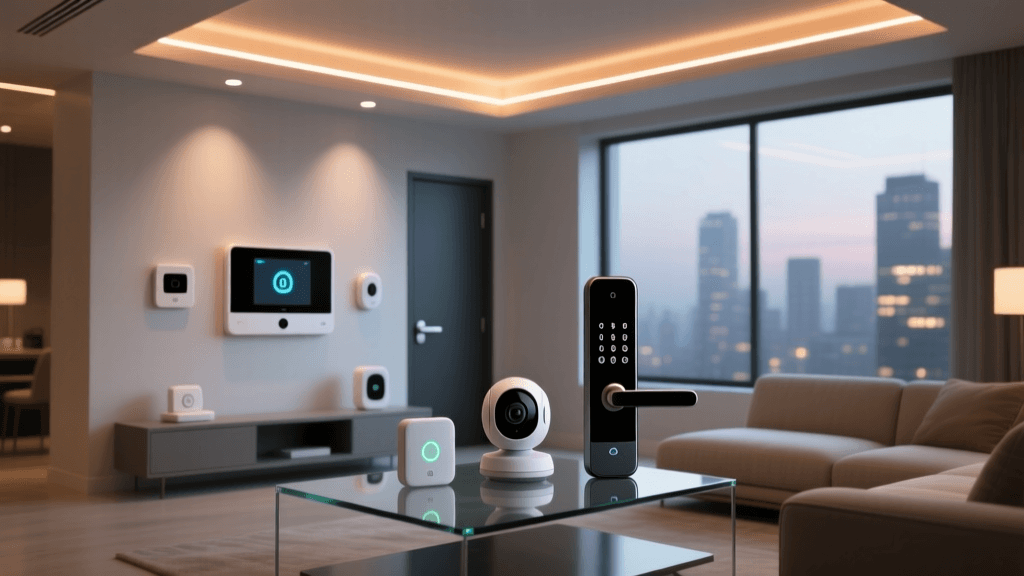
The shift toward predictive AI naturally raises valid privacy concerns. If your home is constantly monitoring your breathing patterns, tracking your energy usage, and learning your daily routines, who owns that data? This is precisely why the industry's pivot to Edge AI and local Matter control is so critical. When AI processing happens on a local hub (like a Home Assistant server or an Apple HomePod), your behavioral data never leaves your physical property. The algorithms learn and adapt using local silicon, ensuring that your intimate daily routines are not packaged, sold, or stored on vulnerable cloud servers.
Furthermore, Matter's security-by-design approach requires every certified device to possess a unique cryptographic certificate. This ensures that devices are authenticated locally, making it exceedingly difficult for malicious actors to intercept commands or inject rogue devices into your Thread mesh network. As smart homes become more autonomous, this localized, encrypted architecture will be the bedrock of consumer trust.
Conclusion: The Ambient Intelligence Era
The future of the smart home is not about having more apps on your phone or shouting more commands at a speaker. It is about the technology fading into the background. The combination of Matter's universal interoperability, Thread's reliable mesh networking, and Edge AI's predictive capabilities will usher in the era of ambient intelligence. Your home will secure itself, light itself, and optimize its own energy consumption based on a deep, localized understanding of your life. By investing in the foundational protocols and local sensors today, you are not just upgrading your home; you are preparing it to think for itself.