The Paradigm Shift: From Reactive Gadgets to Proactive Ecosystems
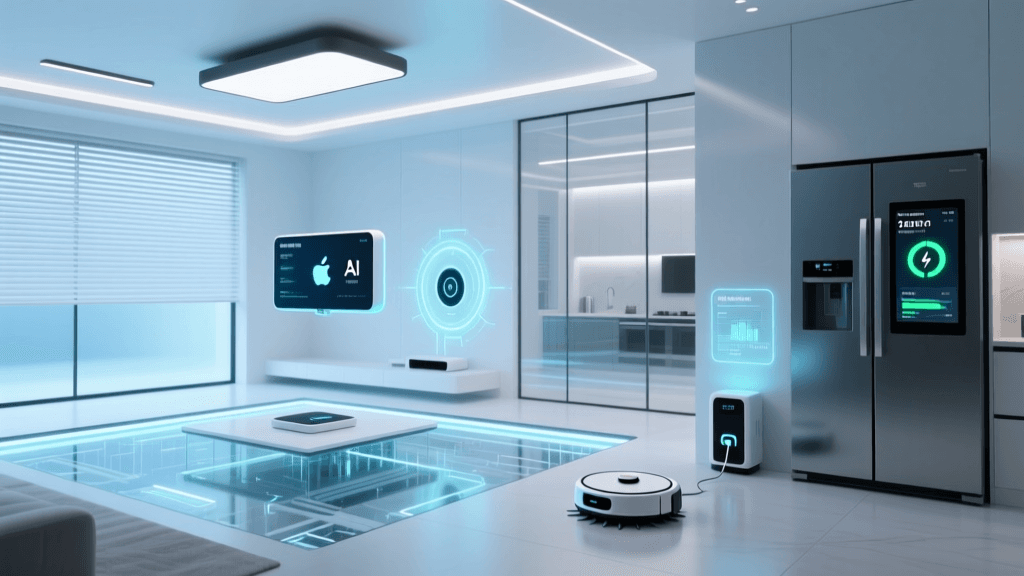
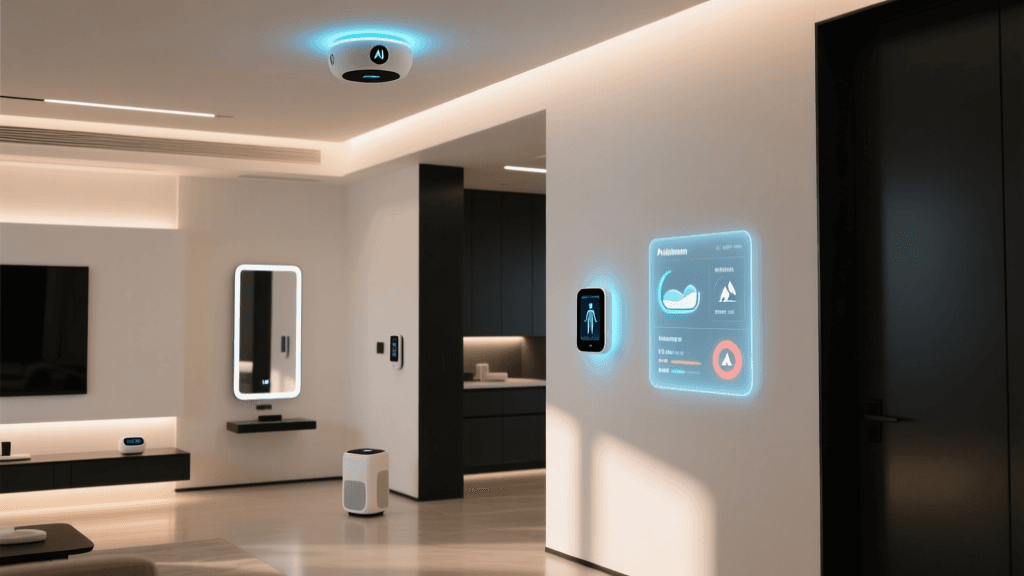
For the past decade, the smart home revolution has been defined by convenience. We have trained our voices to turn off living room lights and programmed our thermostats to drop the temperature when we leave for work. However, as we look toward the next frontier of residential technology, the focus is shifting dramatically from simple convenience to profound, systemic efficiency. The future of the smart home is inextricably linked to energy management, artificial intelligence, and deep integration with the broader electrical grid.
According to the U.S. Energy Information Administration, space heating, cooling, and water heating account for more than half of a typical household's annual energy consumption. Historically, homeowners have been passive consumers of this energy, reacting to monthly utility bills with little visibility into real-time usage. Tomorrow's smart home will flip this dynamic entirely. Through Home Energy Management Systems (HEMS), residences will become active, intelligent nodes on a decentralized smart grid, capable of generating, storing, and intelligently deploying power based on predictive AI models.
The Foundation: Understanding Home Energy Management Systems (HEMS)
A Home Energy Management System is the central nervous system of a future-proofed residence. It aggregates data from solar arrays, battery storage systems, smart appliances, and electric vehicle (EV) chargers, correlating this data with real-time utility pricing and weather forecasts. The ultimate goal of a HEMS is twofold: to minimize the homeowner's carbon footprint and to drastically reduce utility expenses through automated load shifting.
Load shifting involves moving energy-intensive tasks—like running a dishwasher, charging an EV, or pre-cooling a home—to periods when electricity is cheapest or when the home's own solar panels are generating peak power. While early iterations of HEMS required manual programming and constant oversight, the next generation relies on ambient computing and machine learning to execute these optimizations invisibly in the background.
AI and Predictive Load Balancing: The Brains of the Operation
Artificial intelligence is the catalyst transforming basic energy monitors into predictive power managers. Future AI algorithms will not merely react to current conditions; they will anticipate future needs based on historical behavior, localized micro-weather patterns, and grid congestion signals.
Context-Aware HVAC Optimization
Consider the next generation of smart thermostats, such as the advanced ecosystems being developed by Ecobee and Nest. Instead of simply turning on the air conditioning when the indoor temperature hits 74 degrees, an AI-driven system will analyze the approaching weather front, the thermal mass of your specific home, and the time-of-use (TOU) rate schedule from your utility provider. If the system knows that peak grid pricing begins at 4:00 PM, and a heatwave is expected, it will super-cool the home at 2:00 PM using cheaper, off-peak electricity (or stored solar energy), effectively turning your home's physical structure into a thermal battery.
Appliance-Level Machine Learning
AI will also enable appliance-level load balancing without requiring every single device to be 'smart.' By utilizing high-resolution energy monitors that can perform 'energy disaggregation'—a process where AI identifies the unique electrical signature of individual appliances on a circuit—the system can detect when a legacy refrigerator's compressor is failing or when an old water heater is drawing excessive power, alerting the homeowner to maintenance issues before they result in catastrophic failures or inflated bills.
Next-Generation Smart Electrical Panels: The New Nervous System
The traditional electrical breaker box has remained largely unchanged for half a century. It is a dumb, mechanical fail-safe designed only to prevent fires during electrical shorts. The future demands granular, circuit-level visibility and control, giving rise to the Smart Electrical Panel.
Companies like SPAN and Lumin are pioneering this space. The SPAN Smart Panel replaces your traditional breaker box entirely. It features built-in current transformers on every single circuit, providing real-time, app-based visibility into exactly how much power your kitchen outlets, HVAC system, and EV charger are consuming. More importantly, it allows for dynamic circuit prioritization.
In a grid outage scenario, a smart panel can instantly shed non-essential loads—like the guest bedroom outlets or the electric oven—to ensure that your solar battery backup can sustain critical circuits like the refrigerator, medical equipment, and internet router for days rather than hours.
Smart Panel Comparison: What is Available Today and Tomorrow?
| Feature | SPAN Smart Panel | Lumin Smart Panel | Traditional Breaker Box |
|---|---|---|---|
| Installation Type | Full Replacement | Retrofit / Add-on | Standard |
| Circuit-Level Visibility | Yes (Every Circuit) | Yes (Up to 32 Branch Circuits) | No |
| Remote Control / Shutoff | Yes | Limited (Requires smart breakers) | No |
| Battery Integration | Deep Native Integration | Third-party API Integration | None |
| Estimated Hardware Cost | $1,500 - $2,500 | $800 - $1,200 | $200 - $400 |
Vehicle-to-Home (V2H) and Bi-Directional Charging
Perhaps the most disruptive prediction for the future of home energy is the mass adoption of Vehicle-to-Home (V2H) technology. The average electric vehicle battery holds between 60 kWh and 130 kWh of energy. By comparison, a dedicated home battery like the Tesla Powerwall 3 holds roughly 13.5 kWh. Your EV is essentially a massive, rolling home battery.
With bi-directional charging, future smart homes will pull power from the EV during peak grid pricing or evening hours, and recharge the vehicle in the middle of the night when grid electricity is dirt cheap, or during the day using excess solar production. Vehicles like the Ford F-150 Lightning and the Hyundai Ioniq 5 already support V2H and Vehicle-to-Load (V2L) capabilities. As the U.S. Department of Energy's Smart Grid initiative continues to push for modernized grid infrastructure, bi-directional EV chargers (like the Wallbox Quasar 2 or Ford Charge Station Pro) will become standard fixtures in smart garages, effectively eliminating the need for stationary home batteries for many households.
The Role of Matter and Thread in Low-Power Energy Monitoring
For a smart home to truly manage energy, it requires a dense network of sensors—monitoring everything from window states and room occupancy to ambient light and humidity. Historically, Wi-Fi has been too power-hungry for battery-operated sensors, and Zigbee has suffered from limited range and mesh instability in dense environments.
The future of these low-power energy and environmental sensors relies on the Thread protocol, a key component of the Connectivity Standards Alliance (CSA) Matter ecosystem. Thread creates a self-healing, low-latency, low-power mesh network. This means future window sensors can tell the HVAC system to shut off the AC if a window is left open, and occupancy sensors can dim lights and reduce localized heating in empty rooms, all while running on a single coin-cell battery for years. The interoperability guaranteed by Matter ensures that a Thread-based energy sensor from one brand can seamlessly trigger an automation on a smart thermostat from a completely different brand, breaking down the walled gardens that have historically plagued smart home adoption.
Practical Steps to Future-Proof Your Home Energy Setup
Transitioning to a predictive, AI-driven energy ecosystem does not require tearing your home down to the studs. Homeowners can take a phased approach to upgrade their infrastructure, balancing upfront costs with long-term utility savings.
Phase 1: Visibility and Baseline Automation ($200 - $600)
- Energy Monitor: Install a device like the Emporia Vue 2 or Sense Energy Monitor inside your existing breaker panel. These devices ($150-$250) clamp onto your main electrical lines and provide real-time app-based tracking of your home's total consumption, helping you identify 'vampire' power drains.
- Smart Thermostat: Upgrade to a Matter-compatible smart thermostat (e.g., Ecobee SmartThermostat Premium) to enable geofencing and basic time-of-use scheduling.
Phase 2: Granular Control and Storage ($2,000 - $8,000)
- Smart Plugs and Switches: Deploy heavy-duty smart switches for high-draw appliances like water heaters and pool pumps, allowing the system to pause them during peak rate hours.
- Home Battery Backup: Consider installing a Tesla Powerwall 3 or Enphase IQ Battery. While expensive (typically $7,000 to $12,000 fully installed), these systems provide energy security during grid outages and allow for aggressive solar self-consumption.
Phase 3: The Full Ecosystem Overhaul ($10,000+)
- Smart Panel Upgrade: Replace your legacy breaker box with a SPAN Smart Panel to achieve circuit-level control and seamless integration with solar, batteries, and EV chargers.
- Bi-Directional EV Charger: Install a V2H-capable charger to utilize your electric vehicle as a primary backup power source.
Privacy, Security, and the Utility Handshake
As our homes become deeply integrated with the municipal power grid, new questions regarding privacy and cybersecurity inevitably arise. When your smart panel communicates with your utility provider to participate in a 'Virtual Power Plant' (VPP) program—where the utility pays you for the right to briefly throttle your AC or draw from your battery during grid emergencies—data security becomes paramount.
Future smart home ecosystems will require robust, hardware-level encryption and localized processing. Edge computing will play a massive role; instead of sending granular data about your daily routines and appliance usage to the cloud, local smart home hubs (like the upcoming generations of Thread border routers and local AI servers) will process the predictive algorithms on-site. Only anonymized, aggregated load-data will be transmitted to the utility company, ensuring that your personal habits remain private while still allowing your home to support grid stability and earn financial incentives.
Conclusion
The future of the smart home extends far beyond voice-activated lights and automated blinds. It is heading toward a deeply integrated, AI-driven energy ecosystem where the home acts as a proactive participant in the global energy transition. By embracing smart electrical panels, predictive load balancing, bi-directional EV charging, and the unifying standards of Matter and Thread, homeowners can insulate themselves from volatile energy prices, reduce their environmental impact, and achieve true energy independence. The transition from a 'connected' home to an 'intelligent, energy-aware' home is not just a technological upgrade; it is a fundamental reimagining of how we interact with the power that fuels our lives.