The Shift from Reactive to Predictive Smart Homes
The smart home industry is currently undergoing a massive paradigm shift. For the past decade, the market has been dominated by reactive technology: you issue a voice command, and a light turns on; you set a schedule, and the thermostat adjusts. While this foundational layer of automation brought convenience, it failed to deliver true intelligence. Today, we are witnessing the transition from reactive smart homes to proactive, predictive ecosystems driven by Edge AI and unified networking protocols.
From a market analysis perspective, consumer fatigue with fragmented apps and cloud-dependent latency is forcing manufacturers to innovate. According to industry trends, the global smart home market is projected to grow exponentially, but the highest value capture is shifting toward devices that learn user habits, optimize energy consumption autonomously, and operate seamlessly without internet reliance. This evolution is primarily fueled by two technological pillars: the Matter protocol and localized predictive AI.
The Matter Protocol: Unifying a Fragmented Market
Historically, the smart home market has been plagued by walled gardens. Consumers were forced to choose between ecosystems like Apple HomeKit, Google Home, or Amazon Alexa, often resulting in incompatible devices and a cluttered smartphone experience. The introduction of the Matter protocol by the Connectivity Standards Alliance (CSA) represents the most significant market correction in the industry's history.
Matter is an open-source, royalty-free connectivity protocol built on IP (Internet Protocol). It allows smart home devices to communicate seamlessly across different ecosystems and networks, primarily utilizing Wi-Fi for high-bandwidth devices and Thread for low-power mesh networking.
Market Impact and Consumer Benefits
- Reduced Return Rates: By eliminating the 'does this work with my hub?' confusion, retailers are seeing a decrease in customer returns related to incompatibility.
- Thread Mesh Networking: Thread border routers (found in devices like the Apple TV 4K and Amazon Echo 4th Gen) create a self-healing, low-latency mesh network. This reduces Wi-Fi congestion and ensures that a single dropped router does not disable your entire lighting system.
- Local Control: Matter mandates local network communication. This means your smart switches respond instantly, even if your home's internet connection goes down, addressing a major consumer pain point regarding reliability.
For consumers planning a future-proof smart home, prioritizing Matter-over-Thread devices for sensors and switches, and Matter-over-Wi-Fi for high-power appliances, is the most strategic investment available today.
Edge AI and the Rise of Local Processing
While cloud-based AI (like early iterations of Alexa and Siri) relies on sending audio and data to remote servers for processing, the future of the smart home lies in Edge AI. Edge computing processes data locally on the device or a local hub, drastically reducing latency and enhancing privacy.
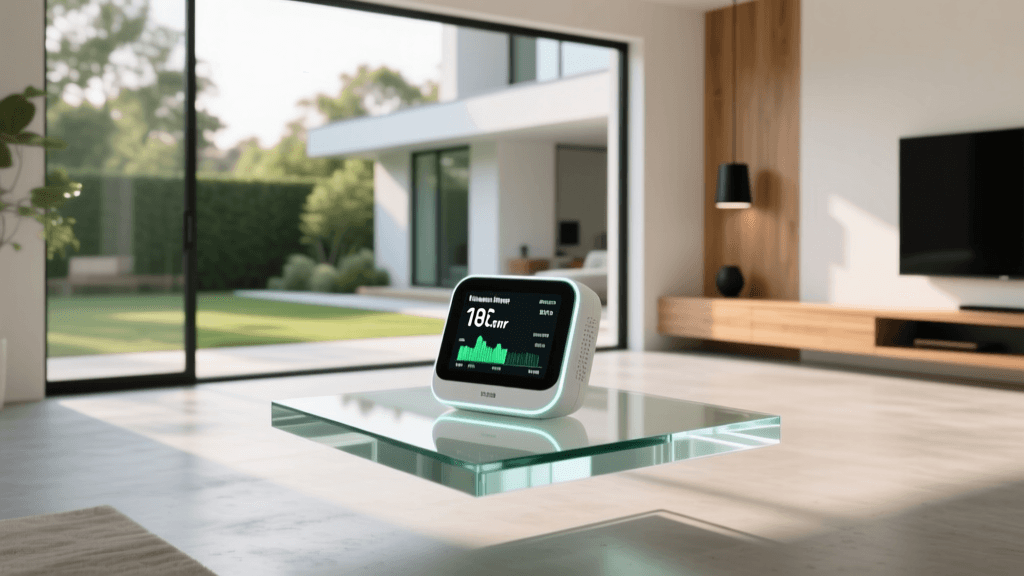
Modern smart home hubs are now equipped with dedicated Neural Processing Units (NPUs). For example, the latest generations of local servers and advanced hubs can process occupancy patterns, ambient light levels, and temperature fluctuations in real-time without sending that data to the cloud.
Predictive HVAC and Lighting
Predictive AI moves beyond simple scheduling. A predictive smart thermostat, such as the Ecobee SmartThermostat Premium (retailing around $249), utilizes local sensors and machine learning algorithms to anticipate when a room will be occupied based on historical data, solar heat gain, and current weather forecasts. It pre-cools or pre-heats the home to optimize grid energy rates, a feature known as pre-conditioning.
Similarly, predictive lighting systems use mmWave (millimeter-wave) radar sensors to detect micro-movements like breathing or typing, ensuring lights remain on only when a space is genuinely occupied, eliminating the 'lights turning off while you are reading' problem common with older PIR (Passive Infrared) sensors.
Grid-Interactive Homes and Predictive Energy Management
The intersection of smart home technology and the electrical grid is creating a new market category: Grid-Interactive Efficient Buildings (GEBs). As research from the National Renewable Energy Laboratory (NREL) highlights, homes are transitioning from passive energy consumers to active grid participants.
Smart electrical panels, such as those developed by SPAN.IO or Schneider Electric's Wiser system, utilize AI to manage bidirectional energy flows. They integrate solar inverters, home battery storage (like the Tesla Powerwall 3), and EV chargers into a single predictive dashboard.
The Economics of Predictive Energy Routing
AI-driven energy management systems monitor Time-of-Use (TOU) electricity rates. If the grid is experiencing peak demand and rates are high, the AI will automatically discharge the home battery to power essential circuits and pause the EV charger. Conversely, when rates drop or solar production peaks, the system will prioritize charging the battery and the EV. This predictive load shifting can reduce a household's energy bill by 20% to 40% annually, providing a clear return on investment for the $2,000 to $5,000 initial hardware cost.
Navigating Privacy and Security in the AI Era
As smart homes become more predictive, they require access to intimate behavioral data: when you wake up, when you leave, and how you move through your home. This raises significant privacy concerns. The market is responding with a strong pivot toward local-only processing and stringent cybersecurity standards.
The National Institute of Standards and Technology (NIST) has established rigorous IoT cybersecurity guidelines that are shaping manufacturer behavior. Key security features to look for in next-generation smart home products include:
- End-to-End Encryption: Ensuring that data transmitted between sensors and local hubs cannot be intercepted.
- Hardware Security Modules (HSM): Dedicated chips within hubs that securely store cryptographic keys, preventing physical tampering.
- Local-Only Modes: Devices like the Home Assistant Green hub allow users to completely sever cloud connections, ensuring that camera feeds and occupancy data never leave the local network.
Market analysis indicates a growing premium segment of consumers willing to pay 15-20% more for smart home devices that guarantee local data processing and open-source transparency.
Actionable Advice: Future-Proofing Your Home Today
For homeowners and tech enthusiasts looking to build a smart home that will remain relevant over the next decade, the strategy must shift from buying isolated 'smart gadgets' to investing in foundational infrastructure. Below is a comparison of the outdated reactive approach versus the modern predictive approach.
| Feature | Reactive Setup (Legacy) | Predictive Setup (Future-Proof) |
|---|---|---|
| Networking | Wi-Fi only (Causes router congestion) | Thread Mesh + Matter (Low latency, self-healing) |
| Processing | Cloud-dependent (Fails without internet) | Edge AI / Local Hub (Instant, offline-capable) |
| Sensors | PIR Motion (Misses stationary users) | mmWave Radar (Detects micro-movements/presence) |
| Energy Mgmt | Manual scheduling via app | AI load-shifting based on TOU rates and solar |
| Estimated Cost | $300 - $800 | $1,500 - $4,500+ |
Steps to Upgrade Your Infrastructure
- Establish a Thread Border Router: Before buying smart sensors, ensure you have a Thread border router. Devices like the Apple TV 4K (Wi-Fi + Ethernet model) or the Amazon Echo (4th Gen) serve this purpose and act as the bridge for Matter devices.
- Invest in a Local Hub: Consider a local processing hub like the Home Assistant Green or a dedicated Samsung SmartThings Station. This centralizes automation logic away from the cloud.
- Upgrade to Smart Panels: If you are planning a solar or EV installation, consult with your electrician about installing a smart electrical panel (e.g., SPAN) to enable circuit-level AI energy management.
- Verify Matter Compatibility: When purchasing new lighting, locks, or thermostats, look for the official Matter logo on the packaging to ensure cross-platform longevity.
Conclusion
The smart home market is maturing from a novelty-driven gadget sector into a critical component of modern residential infrastructure. The convergence of the Matter protocol, Edge AI, and grid-interactive energy management is creating homes that are not just connected, but genuinely intelligent. By understanding these industry trends and prioritizing local processing, open standards, and predictive hardware, consumers can build resilient, energy-efficient ecosystems that will adapt and evolve alongside future technological advancements.