Smart Home Basics: The Ultimate Guide Inspired by Reddit Communities
Building a smart home can feel like stepping into a labyrinth of competing standards, confusing acronyms, and endless product choices. If you have spent any time browsing forums like r/homeautomation or r/smarthome, you already know that the collective wisdom of thousands of enthusiasts is the best resource for cutting through the marketing noise. The Reddit smart home community is famous for its ruthless pragmatism, prioritizing reliability, local control, and scalability over flashy gimmicks.
In this comprehensive guide, we distill the most upvoted advice, foundational principles, and hard-learned lessons from the internet's most active smart home communities. Whether you are installing your first smart plug or planning a whole-house automation overhaul, these Reddit-tested smart home basics will save you time, money, and frustration.
1. Choosing Your Core Ecosystem (The Great Reddit Debate)
The most fiercely debated topic on any smart home subreddit is the choice of a central ecosystem. Your ecosystem acts as the brain of your operation, dictating which devices you can buy and how they communicate. According to community consensus, there is no single 'best' ecosystem, but rather the right tool for your specific technical comfort level and privacy requirements.
Home Assistant: The Power User's Darling
If you want to know what Reddit truly loves, the answer is Home Assistant. This open-source platform runs locally on your network, meaning your automations continue to work even if your internet connection drops. It supports virtually every protocol and brand in existence, breaking down the walled gardens of proprietary ecosystems. The trade-off? It requires a bit of technical tinkering, though recent updates have made it vastly more user-friendly for beginners.
Apple HomeKit, Google Home, and Amazon Alexa
For those who prefer a plug-and-play experience, the big three commercial ecosystems remain popular. Apple HomeKit is frequently praised on Reddit for its strict privacy standards and seamless integration for iPhone users, though it historically suffers from a smaller, more expensive device pool. Google Home and Amazon Alexa offer the widest compatibility and best voice recognition, but privacy-conscious Redditors often warn about the data-harvesting nature of cloud-dependent systems. To mitigate this, many users opt for a hybrid approach, using commercial voice assistants strictly for voice commands while routing the actual automation logic through a local hub.
2. Network Infrastructure: The Unsung Hero
Before buying a single smart bulb, veteran Reddit users will invariably tell you to fix your network. The most common point of failure in a smart home is not the devices themselves, but the router trying to manage them. Standard ISP-provided routers are designed to handle a dozen phones and laptops, not fifty smart switches, sensors, and plugs constantly pinging the network.
Upgrading to a Robust Mesh System
Investing in a high-quality mesh Wi-Fi system or a prosumer access point setup is considered mandatory. You need a system capable of handling high concurrent client limits and managing broadcast traffic efficiently. Consumer routers often have a default DHCP lease limit of 30 to 50 devices. Once your smart home grows past this, new devices will fail to connect, leading to immense frustration. Prosumer routers allow you to increase this limit and set up IP reservations. For a deeper dive into hardware, check out our network setup guide.
The Magic of VLANs and IoT Isolation
Security and stability are paramount. Redditors strongly advocate for creating a Virtual Local Area Network (VLAN) specifically for IoT devices. By isolating your smart home gadgets from your personal computers and smartphones, you protect your sensitive data from potentially vulnerable smart devices. Furthermore, placing all IoT devices on a dedicated 2.4GHz SSID prevents connection drops caused by devices struggling to switch between 2.4GHz and 5GHz bands.
3. Understanding Wireless Protocols (Zigbee, Z-Wave, Thread, and Wi-Fi)
A recurring theme in Reddit beginner threads is the misunderstanding of wireless protocols. Just because a device connects to your home network does not mean it should use Wi-Fi. Relying entirely on Wi-Fi for smart home devices will quickly congest your router and drain the batteries of wireless sensors.
- Wi-Fi: Best for high-bandwidth devices like security cameras and smart displays. Avoid it for battery-powered sensors.
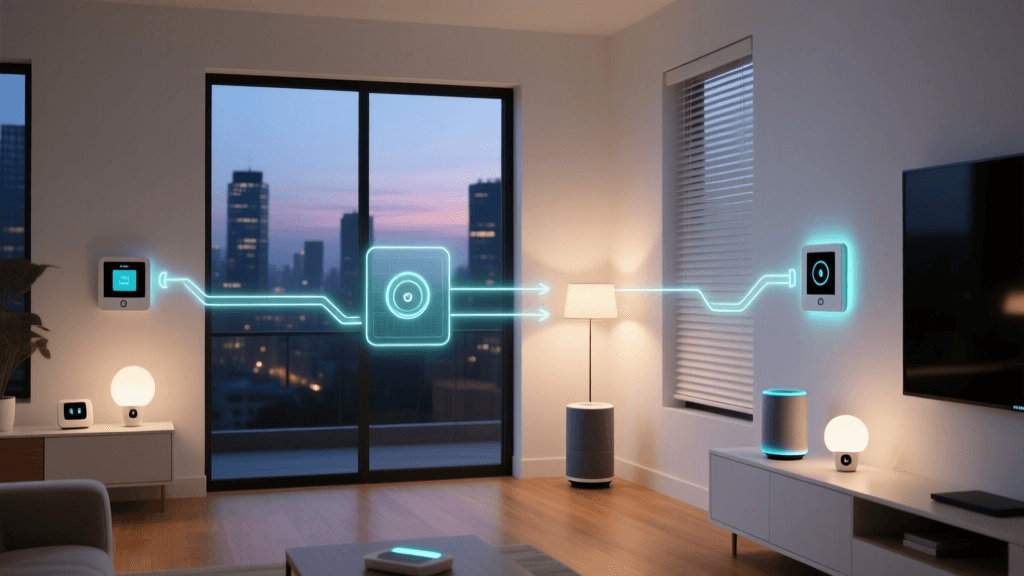
- Zigbee & Z-Wave: The traditional kings of smart home mesh networking. They operate on different frequencies than Wi-Fi, meaning they do not interfere with your internet traffic. They are low-power, highly reliable, and create a mesh network where every plugged-in device acts as a repeater.
- Thread & Matter: The modern evolution. Thread is a low-power mesh networking protocol (similar to Zigbee but built on IP), while Matter is the universal application layer that sits on top of it. According to the Connectivity Standards Alliance (CSA), Matter ensures devices from different brands can communicate seamlessly, a concept heavily championed by the Reddit community to end vendor lock-in.
When shopping for devices, Reddit users highly recommend investing in a dedicated USB dongle or hub for Zigbee and Z-Wave, keeping that traffic entirely off your primary Wi-Fi router. Browse our curated list of the best smart hubs to find the perfect bridge for your setup.
4. The Golden Rule: Prioritize Local Control
If there is one mantra that unites the r/homeautomation community, it is the demand for local control. Cloud-dependent devices require an active internet connection to function. If your ISP goes down, or if the manufacturer decides to shut down their servers (a common occurrence with budget smart home brands), your expensive smart home becomes a dumb home.
Local control means the command processing happens inside your house, typically via a local hub or server. When you press a smart switch, the signal goes directly to the hub and then to the light, bypassing the cloud entirely. This results in instant latency, zero dependency on external servers, and vastly improved privacy. When researching products, Redditors always advise checking the r/homeautomation community wiki to verify if a device supports local APIs or protocols like HomeKit, Zigbee, or local Matter.
5. Automation vs. Remote Control: Thinking Like a Power User
Beginners often confuse remote control with automation. Opening an app on your phone to turn on a light is remote control. The light turning on automatically because a sensor detected you walking into the room at sunset is automation. Reddit veterans argue that a true smart home should require zero daily interaction.
The Partner Acceptance Factor
A famous concept on smart home forums is the Partner Acceptance Factor (sometimes abbreviated in older threads). If your smart home requires your family members to open an app or remember a specific voice command to perform a basic task, the system has failed. Physical smart switches, automated presence detection, and intuitive motion sensors are highly recommended to ensure the home remains functional and comfortable for everyone, regardless of their technical expertise.
Sensor-Driven Logic and Presence Detection
Instead of relying on schedules, which fail when your routine changes, Redditors advocate for sensor-driven logic. Utilize door/window sensors, mmWave presence sensors, and lux (light level) sensors to trigger actions based on the actual state of your home. Geofencing uses your smartphone's location to trigger actions, like turning off the HVAC when the last person leaves the house. However, Redditors warn that GPS-based geofencing can be unreliable in dense urban areas. The community alternative is local presence detection using Wi-Fi ping, Bluetooth beacons, or mmWave radar sensors to know exactly who is home without relying on cloud-based GPS tracking.
Frequently Asked Questions
What is the best smart home hub according to Reddit?
The consensus heavily favors Home Assistant for its unmatched local control, privacy, and compatibility. For users seeking a more commercial, out-of-the-box experience, the Apple HomePod mini or Apple TV 4K are top recommendations for HomeKit users, while the Hubitat Elevation hub is frequently praised for its robust local Zigbee and Z-Wave processing without requiring a DIY server setup.
Is Wi-Fi bad for smart home devices?
Wi-Fi is not inherently bad, but it is the wrong tool for low-power, battery-operated sensors. Wi-Fi consumes too much power for small batteries and generates excessive network chatter that can crash consumer-grade routers. Reserve Wi-Fi for high-bandwidth devices like cameras, thermostats, and smart displays, and use Zigbee, Z-Wave, or Thread for everything else.
How do I keep my smart home private and secure?
The Reddit community recommends a multi-layered approach: use a local hub (like Home Assistant or Hubitat) to avoid cloud dependencies, isolate your IoT devices on a separate guest network or VLAN, change all default passwords, and disable remote access features on devices that do not strictly require them. Additionally, prefer brands that support local protocols over those that mandate cloud accounts.
Should I wait for Matter before buying smart home devices?
While Matter is the future of smart home interoperability, you do not need to wait to start building your system. Mature protocols like Zigbee and Z-Wave offer incredible reliability today. Furthermore, most modern hubs and ecosystems are rolling out Matter support, meaning devices you buy today will likely be bridgeable into the Matter ecosystem tomorrow. The best approach is to buy devices that support local control and open standards, ensuring they remain relevant as the industry evolves.
Conclusion
Building a smart home is a marathon, not a sprint. By adopting the foundational principles championed by the Reddit smart home communities—prioritizing network stability, embracing local control, choosing the right wireless protocols, and focusing on true automation—you will create a system that is robust, private, and genuinely useful. Start small, document your progress, and do not be afraid to tinker. The perfect smart home is the one that works seamlessly for you and your family, operating quietly in the background to make everyday life just a little bit easier.