The Complete Guide to Smart Home Systems: Architecture, Protocols, and Automation
Transforming a traditional house into an intelligent, responsive environment is no longer a futuristic concept—it is a practical reality for millions of homeowners. A well-designed smart home system seamlessly blends technology into your daily life, offering unparalleled convenience, enhanced security, and significant energy savings. However, navigating the vast landscape of connected devices, wireless protocols, and automation platforms can feel overwhelming for both beginners and seasoned tech enthusiasts.
Whether you are looking to install your first smart bulb or architect a whole-home automation network, understanding the foundational elements of smart home systems is crucial. This comprehensive guide breaks down the anatomy of connected homes, explores the wireless protocols that keep devices communicating, and provides actionable strategies for building a secure, automated, and truly intelligent living space.
The Anatomy of a Smart Home System
At its core, a smart home system is an ecosystem of interconnected devices that collect data, communicate with one another, and execute actions based on predefined rules or user inputs. To understand how these systems function, it helps to break them down into four primary components:
1. The Hub (The Brain)
The central hub or controller acts as the brain of your smart home. It processes commands, translates different wireless protocols, and stores automation routines. While many modern devices connect directly to the cloud, a dedicated local hub ensures that your automations run reliably, even if your internet connection drops. When selecting a central brain for your setup, exploring our guide to smart home hubs can help you determine whether a cloud-based ecosystem or a local processor best fits your needs.
2. The Network Infrastructure (The Nervous System)
Your home network is the invisible nervous system that carries data between devices. A robust smart home requires more than just a standard Wi-Fi router. High device counts can congest standard networks, leading to latency and dropped connections. Advanced systems often utilize dedicated mesh networks or specialized low-power protocols to keep smart traffic separate from your primary internet usage.
3. Endpoints (The Senses and Muscles)
Endpoints are the physical devices interacting with your environment. They fall into two main categories:
- Sensors: These devices gather data. Examples include motion detectors, temperature sensors, door/window contact sensors, and leak detectors.
- Actuators: These devices perform physical actions based on sensor data or user commands. Examples include smart locks, motorized blinds, smart plugs, and lighting relays.
4. The User Interface (The Voice and Touch)
The interface is how you interact with your system. This includes smartphone applications, wall-mounted touch panels, and voice assistants. A well-designed system offers multiple ways to control your home, ensuring that turning off the lights is just as easy via a voice command as it is through a physical smart switch.
Navigating Wireless Protocols and Ecosystems
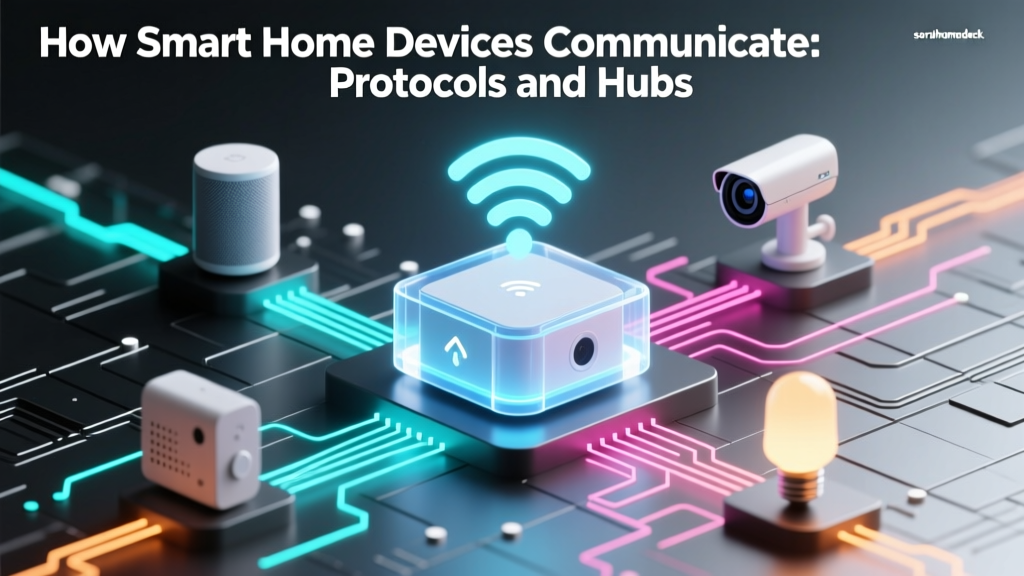
One of the most common hurdles in building a smart home system is ensuring that devices from different manufacturers can communicate effectively. This is where wireless protocols come into play. Understanding these standards is essential for creating a cohesive ecosystem.
Wi-Fi and Bluetooth
Wi-Fi is ubiquitous and offers high bandwidth, making it ideal for data-heavy devices like security cameras and smart displays. However, Wi-Fi consumes a significant amount of power and can suffer from network congestion if dozens of smart bulbs and plugs are connected to a single router. Bluetooth, particularly Bluetooth Low Energy (BLE), is excellent for short-range, direct-to-phone connections but lacks the range required for whole-home coverage without a mesh network.
Zigbee and Z-Wave
For years, Zigbee and Z-Wave have been the gold standards for smart home sensors and low-power devices. Both utilize mesh networking, meaning every plugged-in device acts as a repeater, extending the range and reliability of the network. Z-Wave operates on a sub-gigahertz frequency, allowing it to penetrate walls more effectively than Wi-Fi, while Zigbee offers higher data rates and supports a larger number of nodes on a single network.
Thread and Matter: The Future of Interoperability
The smart home industry has historically been fragmented, with devices locked into proprietary ecosystems. The introduction of the Matter standard, developed by the Connectivity Standards Alliance (CSA), has revolutionized the landscape. Matter is an application layer that runs over existing protocols like Wi-Fi and Thread (a low-power, IP-based mesh network). Matter ensures that a smart lock from one brand can seamlessly integrate with a hub from another, promising a future of true plug-and-play interoperability.
Essential Device Categories for Every Home
Building a smart home system does not require automating every single appliance on day one. The most successful installations start with high-impact categories that offer immediate improvements to comfort, security, and efficiency.
Climate Control
Smart thermostats are arguably the most financially rewarding smart home investment. By learning your schedule, utilizing geofencing to adjust temperatures when you leave, and optimizing HVAC run times, these devices drastically reduce energy waste. According to the U.S. Department of Energy, properly programming and utilizing smart thermostats can yield significant annual savings on heating and cooling costs. To compare top models and features, read our roundup of the best smart thermostats.
Lighting and Ambiance
Smart lighting goes far beyond turning bulbs on and off with your phone. It involves tuning color temperatures to match your circadian rhythm, creating cinematic scenes for movie nights, and simulating occupancy when you are on vacation. For a deeper dive into illuminating your spaces, check out our comprehensive smart lighting guide, which covers the differences between smart bulbs, smart switches, and smart relays.
Security and Access Control
A connected security system provides peace of mind through real-time monitoring and automated responses. Modern smart home security integrates video doorbells, indoor and outdoor cameras, and smart locks into a single unified dashboard. When a camera detects a person, the system can automatically trigger porch lights, lock the doors, and send a push notification to your phone. Learn more about protecting your property in our smart home security primer.
Smart Plugs and Appliances
Smart plugs are the most accessible entry point into home automation. They allow you to control