Imagine coming home on a freezing winter evening to a perfectly warmed living room — without having lifted a finger all day. Or waking up in the middle of summer to a bedroom that's cool and comfortable, adjusted automatically while you slept. This isn't a scene from a futuristic movie; it's the everyday reality of owning a smart home thermostat.
Smart thermostats have become one of the most popular entry points into home automation, and for good reason. They combine convenience, energy efficiency, and intelligent learning in a single device that replaces the outdated dial or programmable unit on your wall. Whether you're a homeowner looking to cut energy bills, a renter wanting more control over comfort, or a tech enthusiast building out a connected home ecosystem, understanding smart thermostats is essential.
In this comprehensive guide, we'll explore everything you need to know about smart home thermostats — how they work, why they matter, what features to prioritize, and how to choose the right model for your space. If you're just getting started with smart home technology, check out our smart home basics guide for foundational knowledge before diving in.
What Is a Smart Home Thermostat?
A smart home thermostat is a Wi-Fi-enabled device that controls your home's heating, ventilation, and air conditioning (HVAC) system with far greater intelligence than traditional thermostats. Unlike basic programmable thermostats that follow a fixed schedule you set manually, smart thermostats learn your habits, adapt to your routines, and can be controlled remotely from anywhere using a smartphone app.
At their core, smart thermostats perform the same fundamental job as any thermostat: they measure the ambient temperature and signal your HVAC system to heat or cool your home to reach a target temperature. But the "smart" designation comes from a suite of advanced capabilities layered on top of this basic function.
Smart vs. Programmable vs. Manual Thermostats
Understanding the evolution of thermostat technology helps clarify what makes smart models special:
- Manual thermostats require you to physically adjust the temperature every time you want a change. They're simple but wasteful, as people often forget to adjust them when leaving home or going to bed.
- Programmable thermostats let you set schedules — for example, lowering the heat at night or when you're at work. However, studies have shown that most people never program them correctly or override the settings frequently, negating their efficiency benefits.
- Smart thermostats take automation further by learning your patterns, using sensors and geofencing to detect occupancy, integrating with weather forecasts, and allowing remote control. They actively work to save energy without requiring constant attention from you.
The transition from manual to smart is one of the most impactful upgrades you can make in a smart home automation setup, offering both immediate comfort improvements and long-term financial returns.
How Smart Thermostats Work
Smart thermostats combine hardware sensors, software algorithms, and internet connectivity to deliver intelligent climate control. Here's a breakdown of the key mechanisms at play:
Sensors and Data Collection
Modern smart thermostats are packed with sensors that go well beyond simple temperature measurement. Common sensors include:
- Temperature sensors — The baseline input, measuring ambient room temperature with high precision.
- Humidity sensors — Monitoring moisture levels to optimize comfort and prevent issues like mold growth or overly dry air.
- Occupancy sensors — Using infrared or motion detection to determine whether someone is home, allowing the system to adjust settings when the house is empty.
- Ambient light sensors — Detecting when rooms are dark (suggesting nighttime or vacancy) to inform scheduling decisions.
- Remote room sensors — Optional accessories placed in different rooms to balance temperature across the entire home rather than just the hallway where the thermostat is mounted.
Learning Algorithms and Adaptive Scheduling
One of the most celebrated features of smart thermostats is their ability to learn. When you first install a smart thermostat, you typically set your preferred temperatures for different times of day. Over the following days and weeks, the device observes when you manually adjust the temperature, when you leave and return home, and what settings you prefer under different conditions.
Using this data, the thermostat builds a personalized schedule that reflects your actual behavior rather than a generic template. If you consistently turn down the heat at 10 PM, the thermostat will start doing it automatically. If you tend to crank up the AC on particularly hot afternoons, it learns to anticipate that need.
Geofencing and Location Awareness
Many smart thermostats use geofencing — a feature that tracks the location of your smartphone to determine whether you're home, away, or approaching. When the last person leaves the house, the thermostat can automatically switch to an energy-saving mode. When you're within a certain distance of home, it begins pre-conditioning the space so it's comfortable by the time you walk through the door.
This approach eliminates the common problem with programmable thermostats where rigid schedules don't account for variations in your daily routine. Your thermostat adapts to your life, not the other way around.
Wi-Fi Connectivity and Cloud Integration
The internet connection is what transforms a good thermostat into a smart one. Through Wi-Fi, your thermostat can:
- Receive firmware updates that add new features and improve performance over time
- Access local weather data to anticipate temperature swings and adjust proactively
- Sync with your smartphone app for remote control from anywhere in the world
- Integrate with voice assistants like Amazon Alexa, Google Assistant, and Apple HomeKit
- Share data with energy providers for demand-response programs that can earn you rebates
For a deeper look at how devices communicate in a connected home, explore our guide on smart home connectivity options.
Energy Savings and Environmental Impact
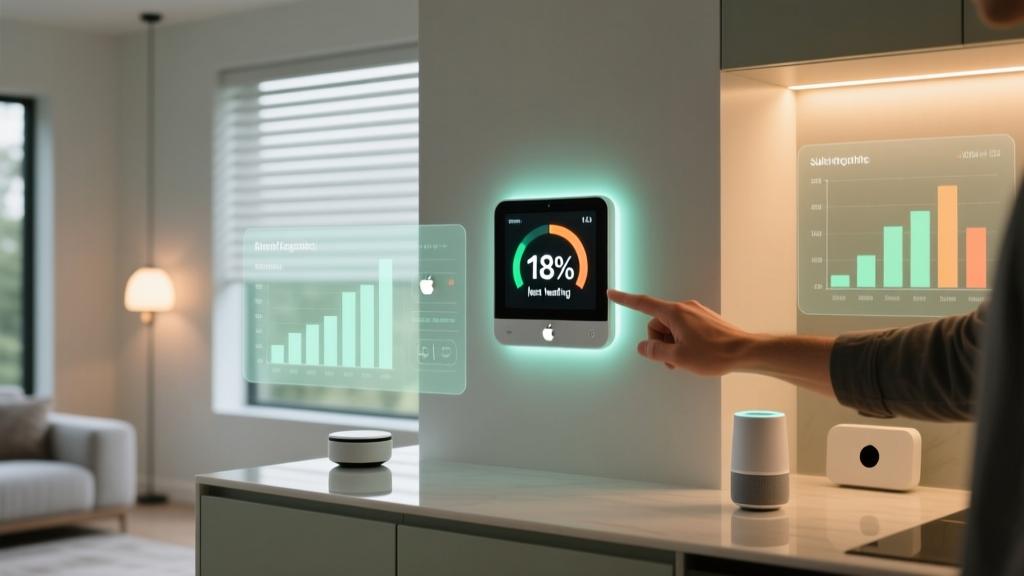
The most compelling argument for smart thermostats — beyond pure convenience — is their potential to significantly reduce energy consumption and lower utility bills. Heating and cooling account for roughly 48% of the energy use in a typical home, making the thermostat one of the most impactful devices you can upgrade.
According to the U.S. Department of Energy, you can save as much as 10% a year on heating and cooling by simply turning your thermostat back 7°–10°F for eight hours a day from its normal setting. Smart thermostats automate this process entirely, ensuring savings happen consistently without relying on human memory or discipline.
Studies conducted by major smart thermostat manufacturers and independent researchers have found that these devices typically save homeowners between 10% and 15% on heating bills and around 15% on cooling costs. When combined with remote room sensors that optimize multi-zone heating and cooling, savings can climb even higher.
Utility Rebates and Incentives
Many utility companies recognize the grid-level benefits of smart thermostats and offer rebates or incentives to encourage adoption. These programs can offset a significant portion of the purchase price — sometimes covering the entire cost. Some utilities also offer demand-response programs where your thermostat participates in peak-load reduction events in exchange for credits on your bill.
The ENERGY STAR program certifies smart thermostats that meet rigorous efficiency criteria. According to ENERGY STAR, certified smart thermostats save an average of 8% on heating and 10% on cooling bills. Always check whether a model carries the ENERGY STAR label before purchasing.
Environmental Benefits
Reduced energy consumption translates directly into lower carbon emissions. If every household in the United States switched to a smart thermostat, the collective reduction in energy use would eliminate millions of tons of greenhouse gas emissions annually. For environmentally conscious homeowners, a smart thermostat is one of the simplest and most effective steps toward a smaller carbon footprint.
Key Features to Look For
Not all smart thermostats are created equal. The market offers a wide range of models at various price points, and understanding which features matter most will help you make an informed decision. Here are the most important capabilities to evaluate:
Learning and Automation
The hallmark of a premium smart thermostat is its ability to learn your schedule and preferences automatically. Look for devices that advertise adaptive learning, auto-scheduling, or similar features. The best models require minimal setup and get smarter over time, reducing the need for manual programming.
Remote Room Sensors
If your home has rooms that are consistently too hot or too cold compared to where the thermostat is mounted, remote sensors are invaluable. These small devices communicate temperature and occupancy data back to the main thermostat, enabling more balanced comfort throughout the home. Some systems support multiple sensors and can prioritize different rooms at different times of day.
Voice Assistant Compatibility
For hands-free control, ensure your thermostat works with your preferred voice assistant. Most leading models support Amazon Alexa and Google Assistant, while Apple HomeKit compatibility is somewhat less common but growing. Voice commands like "Set the temperature to 72 degrees" or "What's the current temperature?" add a layer of convenience that becomes second nature quickly.
If you're building a voice-controlled home, our voice control guide covers how to integrate multiple devices seamlessly.
Geofencing Capabilities
As discussed earlier, geofencing uses your phone's location to automate temperature adjustments. This feature is particularly valuable for people with irregular schedules who can't rely on fixed programming. Check whether the thermostat's app supports multi-user geofencing so it accounts for everyone in the household.
Energy Usage Reports
The best smart thermostats provide detailed energy reports that show how much energy you're using, when you're using it, and how your consumption compares to similar homes. These insights help you identify wasteful patterns and make informed adjustments. Some apps even offer personalized tips for further optimization.
Smart Home Ecosystem Integration
A smart thermostat shouldn't exist in isolation. Look for models that integrate with your broader smart home ecosystem — whether that's through direct compatibility with platforms like SmartThings, IFTTT, or Home Assistant, or through native integrations with other devices you own. A thermostat that works with your smart blinds, for example, can coordinate to keep rooms cool by closing shades during peak sun hours.
C-Wire Requirements and Power Options
Many smart thermostats require a C-wire (common wire) for continuous power. Before purchasing, check your existing thermostat wiring to determine whether a C-wire is present. If not, some models offer alternative power solutions like power extender kits or battery options, while others require professional installation to run a new wire.
Installation, Setup, and Compatibility
One of the most common questions prospective buyers have is whether they can install a smart thermostat themselves. The answer depends on your HVAC system, your comfort with basic wiring, and the specific model you choose.
DIY Installation
Most smart thermostats are designed for DIY installation and come with detailed instructions, wiring labels, and step-by-step app guidance. The typical process involves:
- Turning off power to your HVAC system at the circuit breaker
- Removing your old thermostat and photographing the wiring configuration
- Labeling each wire according to the included stickers
- Installing the new thermostat's baseplate and connecting wires
- Attaching the display unit and restoring power
- Following the app's setup wizard to configure Wi-Fi, schedules, and preferences
For most standard forced-air systems with conventional wiring, this process takes 20 to 30 minutes. However, if you have a heat pump, multi-stage system, radiant heating, or whole-home humidifier, the wiring may be more complex.
When to Hire a Professional
Consider professional installation if:
- Your current thermostat wiring doesn't include a C-wire and you're not comfortable running one
- You have a complex HVAC system with multiple zones, dual fuel, or proprietary controls
- Your home uses high-voltage heating systems (like electric baseboard heaters), which require specialized smart thermostats
- You simply prefer the peace of mind that comes with expert installation
HVAC System Compatibility
Before purchasing any smart thermostat, verify compatibility with your HVAC system. Most manufacturers offer online compatibility checkers where you can input your system type and wiring configuration. Pay particular attention to:
- System type: Forced air, heat pump, radiant, boiler, or dual fuel
- Stages: Single-stage, multi-stage, or variable-speed
- Voltage: Low voltage (24V, most common) vs. line voltage (120V/240V)
- Wiring: Number of wires and presence of a C-wire
The U.S. Department of Energy provides excellent resources on thermostat selection and energy savings that can help you understand your system's requirements.
Optimizing After Installation
Once your smart thermostat is installed and connected, take time to explore all its features. Set up remote sensors if you have them, configure geofencing for all household members, enable energy reports, and integrate with your voice assistants. The more you leverage the device's capabilities, the greater your comfort and savings will be.
For tips on connecting your thermostat to a broader smart home network, visit our smart home setup guide.
Frequently Asked Questions
Are smart thermostats worth the investment?
For most homeowners, smart thermostats are absolutely worth the investment. With typical costs ranging from $100 to $250 and average annual energy savings of 10% to 15% on heating and cooling, most units pay for themselves within one to two years. Beyond financial savings, the convenience of remote control, automated scheduling, and integration with other smart devices adds significant quality-of-life value. If your utility company offers a rebate, the payback period can be even shorter.
Do smart thermostats work without Wi-Fi?
Yes, smart thermostats continue to function as basic thermostats even without an active Wi-Fi connection. They maintain their programmed schedules and respond to manual adjustments on the device itself. However, you'll lose access to remote control via smartphone, automatic software updates, weather-based adjustments, energy reports, and cloud-based learning features until connectivity is restored. Most devices store their schedules locally and resume full functionality once Wi-Fi is available again.
Can a smart thermostat control multiple zones in my home?
Many smart thermostat systems support multi-zone control, but the approach varies by manufacturer. Some brands offer remote room sensors that allow the thermostat to monitor and prioritize different areas of the home. Others support multiple thermostat units connected to a single account, each controlling a separate HVAC zone. If your home has a zoned HVAC system with dampers, you may need one smart thermostat per zone. Check with the manufacturer or an HVAC professional to determine the best configuration for your setup.
How do smart thermostats handle power outages?
Smart thermostats are designed to retain their settings and schedules in non-volatile memory, meaning they won't lose their programming during a power outage. Once power is restored, the thermostat will reboot, reconnect to Wi-Fi, and resume normal operation with all your settings intact. Some models also include backup batteries that keep the display and basic functions running during brief outages. However, your HVAC system itself also requires power, so neither heating nor cooling will function during an extended outage regardless of the thermostat.
What should I do with my old thermostat?
If your old thermostat contains mercury (common in older dial-style models), it must be disposed of as hazardous waste. Many communities have household hazardous waste collection programs, and some HVAC contractors will handle disposal for you. Never throw a mercury thermostat in regular trash. For non-mercury thermostats, check with your local electronics recycling center. Some smart thermostat manufacturers also offer trade-in or recycling programs. If your old thermostat is still functional, consider donating it to a habitat restoration organization or keeping it as a backup.
Final Thoughts
A smart home thermostat represents one of the most practical, impactful, and accessible upgrades you can make to your home. It sits at the intersection of comfort, convenience, energy efficiency, and environmental responsibility — delivering value every single day through automated intelligence that works quietly in the background.
Whether you choose a budget-friendly model with essential smart features or a premium unit with advanced learning algorithms and room sensors, the upgrade from a manual or basic programmable thermostat is almost always worthwhile. The energy savings alone justify the investment, and the daily convenience of remote control, voice commands, and automatic scheduling makes you wonder how you ever lived without one.
Ready to explore specific models and compare options? Browse our smart home devices guide for curated recommendations across every category of connected home technology.