Matter Adoption Timeline: A Complete Guide to the Smart Home Standard's Rollout & Future
The smart home industry has long been fragmented by competing protocols, proprietary ecosystems, and frustrating compatibility walls. Enter Matter — the unified connectivity standard developed by the Connectivity Standards Alliance (CSA) that promises to bridge the gap between Apple, Google, Amazon, Samsung, and hundreds of other smart home brands. Understanding the Matter adoption timeline is essential for homeowners, developers, and technology enthusiasts who want to make informed decisions about their connected ecosystems.
This comprehensive guide walks you through every phase of Matter's development and rollout, explains how the protocol works under the hood, examines device compatibility across major platforms, evaluates performance and security, and highlights the best Matter-certified devices you can buy today. Whether you're building a new smart home from scratch or upgrading an existing setup, this article gives you the technical depth and practical insight you need.
Protocol Overview: What Is Matter & Why Does It Matter?
Matter is an open-source, royalty-free smart home connectivity protocol built on Internet Protocol (IP). It operates at the application layer, sitting above existing network technologies like Wi-Fi, Thread, and Ethernet. Originally known as Project CHIP (Connected Home over IP), Matter was conceived to solve one of the most persistent problems in the smart home space: interoperability.
Before Matter, consumers had to navigate a labyrinth of incompatible ecosystems. An Apple HomeKit user couldn't easily control a device designed for Google Home. Amazon Alexa users found themselves locked into specific product lines. Smart home hubs from different manufacturers refused to communicate with each other. This fragmentation stifled innovation and frustrated consumers who simply wanted their devices to work together seamlessly.
The Connectivity Standards Alliance — formerly known as the Zigbee Alliance — launched Project CHIP in late 2019 with backing from Apple, Google, Amazon, and Samsung. The goal was ambitious: create a single, universal protocol that would allow any certified device to work with any major smart home platform, regardless of the underlying wireless technology or the manufacturer's ecosystem allegiance.
Matter achieves this through several key design principles:
- IP-based communication: Matter uses standard Internet Protocol, making it compatible with existing network infrastructure and enabling direct device-to-device and device-to-cloud communication.
- Multi-admin support: A single Matter device can be controlled by multiple platforms simultaneously. Your smart lock can respond to commands from Apple Home, Google Home, and Amazon Alexa at the same time.
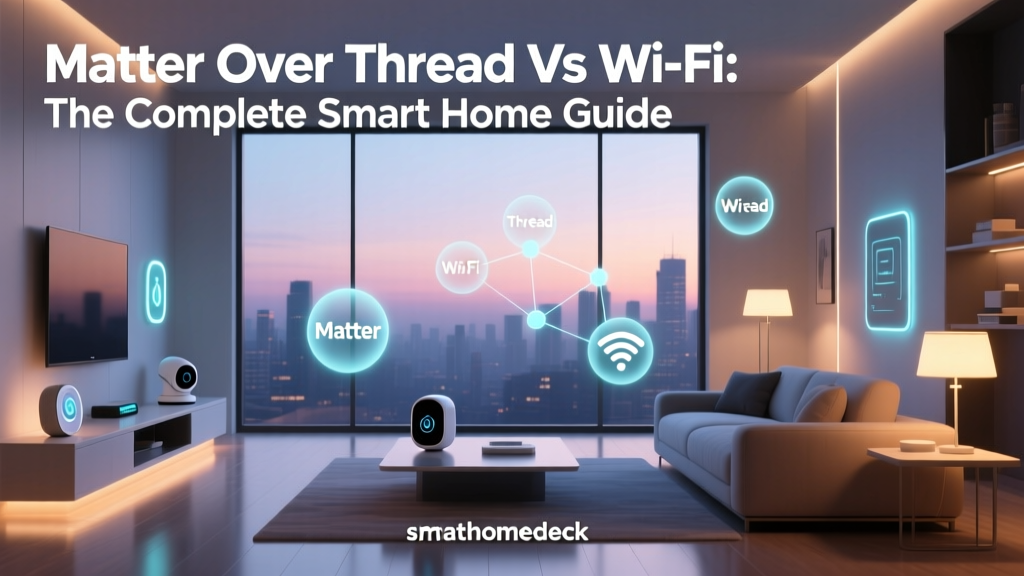
- Thread and Wi-Fi support: Matter leverages Thread (a low-power mesh networking protocol) for battery-operated devices and Wi-Fi for devices with continuous power, with Ethernet as an additional option.
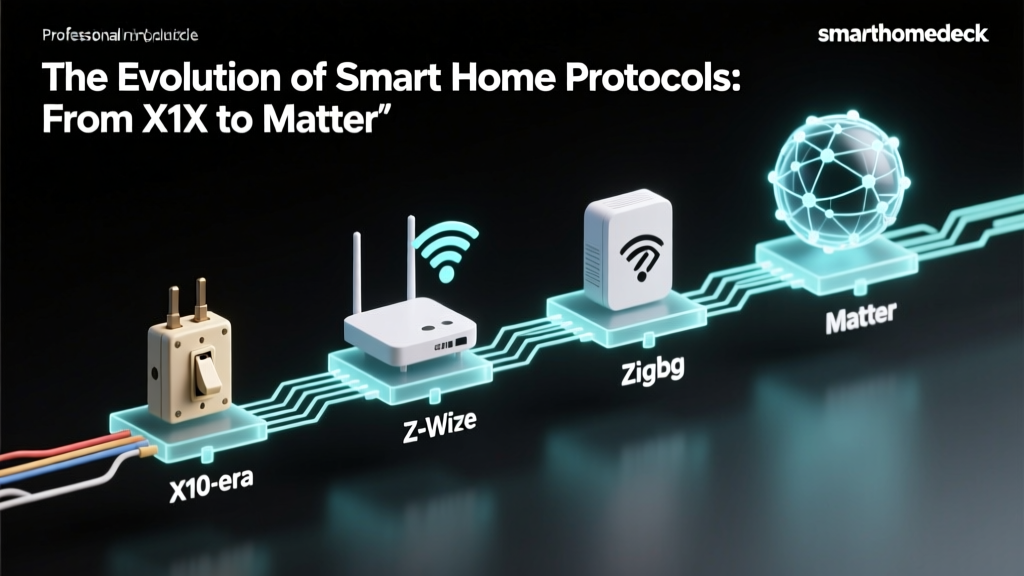
- Bridge compatibility: Existing Zigbee, Z-Wave, and Bluetooth Mesh devices can be integrated into a Matter ecosystem through certified bridges, protecting prior investments in smart home hardware.
- Open-source development: The Matter SDK is publicly available on GitHub, encouraging widespread adoption and community-driven innovation.
For a deeper dive into how smart home protocols compare, check out our complete protocol comparison guide to see how Matter stacks up against Zigbee, Z-Wave, and other standards.
The Matter Adoption Timeline: From Concept to Global Standard
The journey from Project CHIP's announcement to Matter's widespread adoption has been one of the most closely watched developments in the smart home industry. Here is a detailed breakdown of every major milestone in the Matter adoption timeline.
Phase 1: Conception & Development (2019–2021)
In December 2019, Apple, Google, Amazon, and the Zigbee Alliance jointly announced Project CHIP, sending shockwaves through the smart home industry. The announcement was unprecedented — four of the biggest technology companies in the world agreeing to collaborate on a single standard rather than competing with proprietary solutions.
Throughout 2020, the working group expanded rapidly. Companies like Samsung SmartThings, IKEA, Signify (Philips Hue), Schneider Electric, and Silicon Labs joined the effort. The technical architecture began taking shape, with engineers from competing companies collaborating on the core protocol specification.
By mid-2021, the project was renamed from Project CHIP to Matter, and the Zigbee Alliance rebranded as the Connectivity Standards Alliance (CSA). The name change reflected the protocol's broader scope and ambition. The CSA also launched the Matter logo and certification program, establishing the visual identity that consumers would come to recognize on product packaging.
The first developer previews and SDK releases occurred during this period, allowing hardware manufacturers to begin prototyping Matter-compatible devices. Early testing focused on lighting, locks, thermostats, and garage door controllers — the foundational device categories that would define Matter's initial launch.
Phase 2: Specification Release & Certification Launch (2022)
The year 2022 marked Matter's transition from concept to reality. In early 2022, the CSA released Matter Specification 1.0, the definitive technical document that manufacturers would use to build certified products. This was followed by the opening of the certification program, allowing companies to submit their devices for official Matter testing.
The certification process was rigorous. Devices had to pass interoperability testing across multiple platforms, demonstrate secure commissioning (the process of adding a device to a network), and prove reliable operation under various network conditions. The CSA established authorized test labs around the world to handle the certification workload.
In October 2022, the CSA officially announced that Matter 1.0 was live, and the first wave of certified products began appearing on store shelves. Apple released iOS 16.1 with native Matter support. Google updated its Nest hubs and Android devices. Amazon rolled out Matter compatibility to Echo devices. Samsung updated SmartThings to serve as a Matter controller.
The initial device categories supported by Matter 1.0 included:
- Light bulbs, switches, and plugs
- Door locks
- Thermostats and HVAC controllers
- Garage door controllers
- Window coverings (blinds and shades)
- Occupancy and motion sensors
- Contact sensors (door/window)
- Bridges for connecting legacy devices
Phase 3: Expansion & Refinement (2023)
The year 2023 saw Matter evolve rapidly through incremental specification updates. Matter 1.1, released in the first half of the year, focused on bug fixes, performance improvements, and enhanced developer tools. It addressed many of the early adoption pain points that manufacturers and consumers had reported.
Matter 1.2, released later in the year, was a more significant update that expanded the protocol's device category support. New device types added included:
- Refrigerators, dishwashers, and laundry appliances
- Robotic vacuum cleaners
- Air quality sensors and purifiers
- Fans
- Water leak detectors and freeze detectors
- Rain sensors
- Smoke and CO alarms
Throughout 2023, the number of Matter-certified products grew steadily. Major manufacturers like Eve Systems, Nanoleaf, Aqara, and TP-Link released entire product lines with Matter support. Retailers began featuring Matter compatibility as a key selling point on product packaging and online listings.
Platform updates from Apple, Google, and Amazon also improved the user experience. Multi-admin commissioning became more reliable, device setup processes were streamlined, and the overall stability of Matter networks improved significantly. Smart home enthusiasts who had been early adopters reported that the protocol was maturing quickly.
Phase 4: Maturation & Mainstream Adoption (2024 and Beyond)
Matter 1.3 brought further refinements, including support for energy management features, electric vehicle chargers, and enhanced water management devices. The specification also introduced improved support for device diagnostics, allowing users and platforms to better monitor the health of their Matter networks.
The adoption curve accelerated as more consumers became aware of the Matter logo and what it represented. Retail education campaigns, tech media coverage, and word-of-mouth from early adopters all contributed to growing consumer demand for Matter-certified products.
Looking forward, the CSA has outlined a roadmap that includes support for even more device categories, improved mesh networking capabilities, enhanced security features, and deeper integration with energy management and sustainability initiatives. The goal is for Matter to become the default standard for every connected device in the home, from the smallest sensor to the largest appliance.
For homeowners planning a smart home build or renovation, understanding this timeline helps inform purchasing decisions. Devices bought today with Matter certification will continue to receive updates and remain compatible as the standard evolves. Explore our smart home setup guide for tips on building a future-proof connected home.
How Matter Works: Technical Architecture & Compatibility
Understanding how Matter works at a technical level reveals why it has the potential to become the dominant smart home standard. The protocol's architecture is designed for reliability, security, and seamless interoperability across diverse hardware and software platforms.
The Matter Stack
The Matter protocol stack consists of several layers, each responsible for a specific function:
- Application Layer: This is where device-specific functionality lives. A smart light's on/off commands, brightness levels, and color controls are all defined at this layer using Matter's standardized data model.
- Security Layer: All Matter communications are encrypted using proven cryptographic standards. This layer handles key management, message encryption, and authentication.
- Message Layer: This layer manages reliable message delivery, handling retransmissions, acknowledgments, and message fragmentation for larger payloads.
- Interaction Model: Matter defines a standardized way for devices to expose their capabilities. Each device has a set of "clusters" that represent functional groups (e.g., OnOff, LevelControl, ColorControl for a smart bulb). Each cluster contains attributes (readable/writable values), commands (actions that can be invoked), and events (notifications the device can send).
- Transport Layer: Matter supports multiple transport protocols. For Wi-Fi and Ethernet devices, it uses UDP over IPv6. For Thread devices, it uses the same UDP/IPv6 stack over the Thread mesh network.
Commissioning: How Devices Join a Matter Network
One of Matter's most important innovations is its standardized commissioning process. When you add a new Matter device to your smart home, the process works like this:
- Discovery: The device advertises itself as available for commissioning using DNS-SD (DNS Service Discovery) over your local network or via Bluetooth Low Energy (BLE) for initial setup.
- Authentication: You scan a QR code or enter a setup code printed on the device. This code contains cryptographic information that establishes a secure channel between your phone (or hub) and the new device.
- Secure Channel Establishment: Using the PASE (Passcode-Authenticated Session Establishment) protocol, your phone and the device create an encrypted communication channel.
- Network Configuration: Your phone sends the device your Wi-Fi credentials or Thread network credentials, allowing it to join your home network.
- Fabric Joining: The device is added to your Matter "fabric" — the logical network that connects all your Matter devices. A fabric is identified by a unique fabric ID and managed by one or more administrators (like Apple Home or Google Home).
- Multi-Admin Setup: If you want to control the device from multiple platforms, additional administrators can be granted access through a process called "multi-admin commissioning." This allows, for example, both Apple Home and Google Home to control the same device without conflicts.
Compatibility Across Platforms
Matter's compatibility story is one of its strongest selling points. Here is how the major platforms support Matter:
- Apple Home: Matter support is built into iOS, iPadOS, macOS, and tvOS. Apple TV and HomePod devices serve as Matter controllers and Thread border routers. Any Matter-certified device can be added to Apple Home alongside existing HomeKit devices.
- Google Home: Matter support is integrated into the Google Home app and Android OS. Nest Hub, Nest Hub Max, Nest WiFi Pro, and newer Nest devices serve as Matter controllers and Thread border routers.
- Amazon Alexa: Echo devices (4th generation and newer), Echo Show, and Echo Studio serve as Matter controllers. The Alexa app supports Matter device commissioning and control.
- Samsung SmartThings: SmartThings Station and newer SmartThings hubs serve as Matter controllers. The SmartThings platform acts as a bridge between Matter devices and Samsung's broader ecosystem.
- Home Assistant: The open-source Home Assistant platform added Matter support early, allowing power users to integrate Matter devices into their self-hosted smart home setups.
For Thread border router compatibility, you need at least one device that bridges your Thread mesh network to your Wi-Fi/Ethernet network. Many modern smart speakers and hubs from Apple, Google, and Amazon serve double duty as Thread border routers. Learn more about building a robust Thread network in our Thread network setup guide.
Bridges: Connecting Legacy Devices
One of Matter's most practical features is its support for bridges. A Matter bridge is a device that translates between Matter and legacy protocols like Zigbee, Z-Wave, or Bluetooth Mesh. This means your existing Philips Hue bulbs (Zigbee), Aeotec sensors (Z-Wave), or other devices can appear as Matter devices in your ecosystem.
Manufacturers like Philips Hue, Aqara, and IKEA have released Matter-compatible bridges that expose their existing device ecosystems to the Matter standard. This approach protects your investment in existing hardware while allowing you to gradually transition to native Matter devices over time.
Performance: Speed, Reliability & Network Efficiency
Performance is where Matter truly shines compared to cloud-dependent smart home solutions. Because Matter prioritizes local communication, devices respond almost instantly to commands without the latency introduced by cloud round-trips.
Local Control & Latency
One of Matter's core design principles is local-first communication. When you toggle a Matter-connected light switch, the command travels directly from the controller (your phone or hub) to the device over your local network. There is no need for the signal to travel to a cloud server and back.
In real-world testing, Matter devices typically respond to commands within 50 to 200 milliseconds over Wi-Fi and 100 to 300 milliseconds over Thread. These response times are comparable to or better than most proprietary smart home systems and significantly faster than cloud-dependent alternatives, which often exhibit delays of 500 milliseconds to several seconds.
Local control also means your smart home continues to function even when your internet connection goes down. Your Matter devices can still communicate with each other and respond to commands from local controllers like smart speakers and hubs.
Thread Mesh Networking Performance
Thread is Matter's preferred transport for low-power devices like sensors, switches, and battery-operated products. Thread creates a self-healing mesh network where each powered device acts as a router, extending the network's range and reliability.
Key performance characteristics of Thread in a Matter deployment include:
- Self-healing: If one Thread router goes offline, the mesh automatically reroutes traffic through alternative paths, maintaining network connectivity.
- Low power consumption: Thread end devices (like sensors) can run on coin cell batteries for months or even years, waking periodically to report data and then returning to sleep.
- Scalability: A Thread mesh network can support hundreds of devices, with each powered device extending the network's coverage area.
- No single point of failure: Thread networks can have multiple border routers. If one fails, another takes over seamlessly.
Wi-Fi Performance Considerations
For devices that use Wi-Fi as their Matter transport, performance depends on your home network's quality. Matter devices communicate using multicast DNS (mDNS) for discovery and UDP for data transfer, which can be sensitive to network congestion and configuration.
Best practices for optimizing Matter-over-Wi-Fi performance include:
- Ensure your Wi-Fi router supports IGMP snooping to efficiently handle multicast traffic
- Place Matter devices within strong Wi-Fi signal range
- Consider a mesh Wi-Fi system for larger homes to ensure consistent coverage
- Keep your router's firmware updated to ensure optimal mDNS handling
- Use a 2.4 GHz network for Matter devices, as most smart home products only support this band
Network Traffic & Bandwidth
Matter is designed to be bandwidth-efficient. Unlike streaming devices or security cameras, smart home devices transmit small amounts of data infrequently. A typical Matter device generates only a few kilobytes of network traffic per day under normal operation. Even in a home with 100+ Matter devices, the total bandwidth consumption is negligible compared to video streaming or web browsing.
However, the discovery and commissioning processes do generate bursts of multicast traffic. On poorly configured networks, this can cause temporary congestion. Modern routers and network switches handle this traffic well, but older equipment may struggle with large Matter deployments.
Security: How Matter Protects Your Smart Home
Security was a foundational concern in Matter's design. The protocol incorporates multiple layers of protection to ensure that your smart home devices cannot be easily compromised, your data remains private, and unauthorized users cannot gain control of your devices.
Cryptographic Foundations
Matter uses industry-standard cryptographic algorithms to secure all communications:
- AES-128-CCM: All Matter messages are encrypted using AES-128 in CCM mode, providing both confidentiality and integrity protection.
- ECDH (Elliptic Curve Diffie-Hellman): Used for key exchange during commissioning and session establishment, ensuring that encryption keys are never transmitted in the clear.
- ECDSA (Elliptic Curve Digital Signature Algorithm): Used for device attestation, proving that a device is genuinely certified by the CSA and has not been tampered with.
- HKDF (HMAC-based Key Derivation Function): Used to derive session keys from shared secrets, ensuring that each communication session uses unique encryption keys.
Device Attestation
Every Matter-certified device contains a Device Attestation Certificate (DAC) issued by the manufacturer and rooted in the CSA's Product Attestation Authority (PAA). When a device is commissioned, the controller verifies this certificate chain to confirm that:
- The device is a genuine, CSA-certified product
- The device's firmware has not been tampered with
- The manufacturer is authorized to produce Matter devices
This attestation system helps prevent counterfeit devices from joining your Matter fabric and protects against supply chain attacks.
Secure Commissioning
The commissioning process — adding a new device to your Matter network — is designed to be both user-friendly and secure. The setup code (typically presented as a QR code) contains a unique passcode that is used to establish an encrypted session between the commissioner and the device. This passcode is device-specific and cannot be reused.
During commissioning, the following security measures are enforced:
- All communication between the commissioner and the device is encrypted from the first message
- The device's attestation certificate is verified before any sensitive information (like network credentials) is shared
- Network credentials are transmitted only over the encrypted channel
- The device's identity is cryptographically bound to the Matter fabric it joins
Access Control & Permissions
Matter includes a granular access control system that allows administrators to define exactly who can do what with each device. Access Control Lists (ACLs) specify:
- Which administrators or users can read device attributes
- Which administrators or users can write (change) device attributes
- Which administrators or users can invoke device commands
- Which administrators or users can modify the device's access control settings
This system enables scenarios like allowing a family member to control lights but not door locks, or granting a house sitter temporary access to specific devices. Platform implementations (Apple Home, Google Home, etc.) expose these access control features through their respective user interfaces.
Over-the-Air (OTA) Updates
Matter supports secure OTA firmware updates, ensuring that devices can receive security patches and feature improvements after deployment. All OTA updates are cryptographically signed by the device manufacturer and verified by the device before installation. This prevents malicious actors from pushing compromised firmware to your devices.
The OTA update mechanism also supports rollback, allowing devices to revert to a previous firmware version if an update fails or causes issues. This ensures that your devices remain functional even if an update encounters problems.
For more on keeping your smart home secure, visit our smart home security best practices guide.
Best Matter Devices: Top Picks for Every Category
As the Matter ecosystem has matured, a growing number of high-quality certified devices have hit the market. Here are the top Matter-compatible devices across the most popular smart home categories, selected based on build quality, reliability, feature set, and value.
Smart Lighting
Nanoleaf Essentials Matter Bulbs & Lightstrips: Nanoleaf was among the first manufacturers to embrace Matter, and their Essentials line remains a top choice. These bulbs support both Thread and Bluetooth, offering excellent color accuracy, smooth dimming, and responsive performance. The Thread connectivity means they integrate seamlessly into your mesh network without adding Wi-Fi congestion.
Philips Hue (via Matter Bridge): While Philips Hue bulbs use Zigbee natively, the Hue Bridge's Matter support allows the entire Hue ecosystem — hundreds of bulb styles, lightstrips, and accessories — to appear as Matter devices. This is an excellent option for users who already have a Hue setup or want access to the widest variety of lighting form factors.
Eve Energy Strip: Eve's Matter-over-Thread lighting and power products are known for their premium build quality and privacy-focused design. Eve devices never require a cloud connection and work entirely locally.
Smart Locks
Aqara U200 Retrofit Lock: This Matter-over-Thread lock retrofit kit converts your existing deadbolt into a smart lock. It supports Matter natively, works with all major platforms, and includes features like auto-lock, door sensor integration, and detailed access logs.
Yale Assure Lock 2: Yale's latest smart lock offers Matter support through an optional module. It features a sleek keypad design, reliable performance, and the backing of one of the most trusted names in physical security.
Sensors
Eve Motion Sensor: This Thread-based motion sensor offers fast response times, excellent battery life, and Matter-native compatibility. It also includes an ambient light sensor for more nuanced automation triggers.
Aqara Door & Window Sensor P2: One of the first Matter-native contact sensors, the P2 uses Thread for reliable, low-power communication. Its compact design and long battery life make it ideal for monitoring doors, windows, and cabinets throughout your home.
Eve Room: This indoor air quality monitor tracks temperature, humidity, and volatile organic compounds (VOCs). With Matter support, it can trigger automations based on air quality readings across any compatible platform.
Thermostats & Climate Control
Eve Thermo: This smart radiator valve uses Thread and Matter to provide room-by-room heating control. It features a built-in display, supports schedules and automations, and integrates with all major smart home platforms.
Sensibo Air (with Matter bridge): For homes with ductless mini-split systems, Sensibo's smart AC controllers offer Matter compatibility through their bridge, enabling voice control and automation of existing HVAC equipment.
Smart Plugs & Switches
Eve Energy Smart Plug: A Matter-over-Thread smart plug with built-in energy monitoring. The Eve Energy plug tracks power consumption in real-time, helping you identify energy-hungry devices and optimize your electricity usage.
TP-Link Tapo Matter Plugs: TP-Link's Tapo line offers affordable Matter-over-Wi-Fi smart plugs that work reliably with all major platforms. They're an excellent entry point for users looking to add Matter devices without investing in a Thread network.
Hubs & Controllers
Apple TV 4K (3rd Generation): Serves as both a Matter controller and a Thread border router. If you're in the Apple ecosystem, this is an essential hub that enables local control and extends your Thread mesh network.
Google Nest Hub (2nd Gen) & Nest WiFi Pro: Both serve as Matter controllers and Thread border routers within the Google Home ecosystem. The Nest WiFi Pro is particularly valuable as it combines mesh Wi-Fi with smart home hub functionality.
Samsung SmartThings Station: An affordable Matter controller and Thread border router that integrates with Samsung's SmartThings platform. It also supports SmartThings Find for locating Galaxy devices.
Browse our complete device directory for an up-to-date list of all Matter-certified products with detailed specifications, reviews, and compatibility information.
Frequently Asked Questions
Is Matter backward compatible with my existing smart home devices?
Yes, Matter supports backward compatibility through bridges. If you have existing Zigbee, Z-Wave, or Bluetooth Mesh devices, you can use a Matter-certified bridge to bring them into the Matter ecosystem. For example, a Philips Hue Bridge can expose all your Hue bulbs as Matter devices, and an Aqara hub can bridge its Zigbee sensors into Matter. However, devices that rely on proprietary, non-standard protocols may not be bridgeable. The key advantage is that you don't need to replace your existing hardware — you can transition gradually as you upgrade or expand your smart home.
Do I need a hub to use Matter devices?
It depends on your setup. Matter devices communicate over Wi-Fi, Thread, or Ethernet. Wi-Fi and Ethernet Matter devices can connect directly to your router without a dedicated hub. However, Thread devices require a Thread border router to bridge the Thread mesh network to your IP network. Fortunately, many popular smart speakers and hubs — including Apple TV, HomePod, Google Nest Hub, and Amazon Echo (4th Gen) — already serve as Thread border routers. Additionally, having a hub or controller (like Apple HomePod, Google Nest Hub, or Amazon Echo) is necessary if you want to use automations, schedules, or remote access features, as these require an always-on device to manage them.
Will Matter replace Zigbee and Z-Wave entirely?
Not necessarily, at least not in the near term. Zigbee and Z-Wave are mature, proven protocols with thousands of certified devices already deployed in homes worldwide. Matter complements these protocols by providing a universal application layer that can bridge to them. Over time, new devices are increasingly likely to ship with native Matter support (over Thread or Wi-Fi) rather than Zigbee or Z-Wave. However, the installed base of Zigbee and Z-Wave devices is enormous, and bridge support ensures these devices remain useful for years to come. Think of Matter as the "universal translator" that sits above the underlying wireless technology rather than a direct replacement for every existing protocol.
How does Matter affect my smart home's privacy?
Matter was designed with privacy as a core principle. All device communication happens locally on your network by default — there is no requirement for data to pass through a cloud server. The protocol does not collect or transmit personal data to the CSA or any third party. Device attestation certificates contain only the information needed to verify the device's authenticity (manufacturer ID, product ID, etc.), not personal user data. Individual platform implementations (Apple Home, Google Home, etc.) may have their own privacy policies regarding how they handle automation data, but the Matter protocol itself is privacy-neutral. This local-first approach means your smart home data stays in your home, reducing exposure to cloud breaches and unauthorized data collection.
What should I look for when buying Matter devices?
When shopping for Matter devices, look for the official Matter logo on the product packaging or listing. This logo certifies that the device has passed the CSA's interoperability and security testing. Beyond certification, consider the following factors: Transport protocol — Thread devices are generally preferable for battery-operated products and for building a robust mesh network, while Wi-Fi devices are fine for plugged-in products in homes with strong Wi-Fi coverage. Platform compatibility — while all Matter devices work with all major platforms, some may offer enhanced features on specific platforms (e.g., Siri shortcuts on Apple Home or Google Assistant routines). Build quality & reviews — as with any product, check user reviews and professional evaluations for reliability, customer support, and real-world performance. Update commitment — choose manufacturers with a track record of providing regular firmware updates to ensure long-term security and compatibility.
Conclusion: The Future of Smart Home Connectivity
The Matter adoption timeline tells the story of an industry coming together to solve one of the most frustrating problems in smart home technology. From its origins as Project CHIP to its current status as a rapidly growing global standard, Matter has demonstrated that competing companies can collaborate to create something that benefits everyone — manufacturers, developers, and most importantly, consumers.
As the protocol continues to evolve with new device categories, improved performance, and enhanced features, Matter is well on its way to becoming the default standard for smart home connectivity. The growing library of certified devices, robust security architecture, and cross-platform compatibility make it an investment worth making today.
Whether you're just starting your smart home journey or looking to consolidate an existing multi-platform setup, Matter provides the foundation for a more connected, reliable, and user-friendly smart home. Start exploring our device directory and setup guides to build the smart home you've always wanted — one that just works, regardless of which ecosystem you choose.