The Dawn of the Unified Smart Home
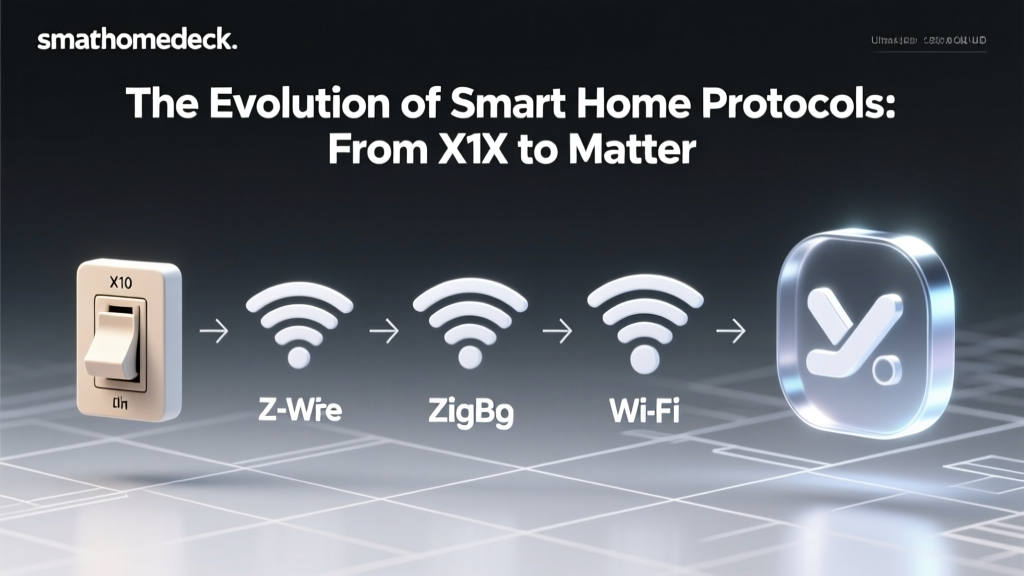
For over a decade, the smart home industry has been plagued by fragmentation. Consumers were forced to choose between competing ecosystems like Apple HomeKit, Google Home, Amazon Alexa, and Samsung SmartThings. If you bought a smart bulb for one platform, it likely would not work with another. This era of walled gardens is finally ending, thanks to a revolutionary new standard known as Matter. Developed by the Connectivity Standards Alliance (CSA), Matter is an open-source, IP-based connectivity protocol designed to unify the smart home landscape. However, Matter is not a wireless radio technology itself; rather, it is an application layer that runs on top of existing transport protocols. The two primary transport layers for Matter are Thread and Wi-Fi. Understanding the architectural differences, use cases, and hardware requirements of Matter over Thread versus Matter over Wi-Fi is essential for building a reliable, future-proof smart home. In this complete guide, we will break down the technical specifications, compare performance metrics, and recommend the best Matter-compatible devices available today.
What Exactly is the Matter Protocol?
Before diving into the transport layers, it is crucial to understand what Matter actually does. Matter operates on the application layer of the OSI model, utilizing IPv6 to ensure that every smart device has its own unique IP address on your local network. This IP-based architecture enables several key benefits:
- Local Control: Matter devices communicate locally over your LAN. This means your smart switches and sensors will continue to function even if your internet connection goes down, drastically reducing latency and reliance on cloud servers.
- Multi-Admin Capability: A single Matter device can be paired to multiple ecosystems simultaneously. You can scan a single QR code to add a smart plug to both Apple Home and Google Home, allowing different family members to use their preferred voice assistants without conflict.
- Device Attestation Certificates (DAC): Security is baked into the silicon. Every certified Matter device contains a DAC, a cryptographic certificate that proves the device is genuine and securely authenticated on your network, protecting against spoofing and unauthorized access.
While Matter defines the language the devices speak, it relies on underlying wireless protocols to transmit the data. The CSA selected Thread and Wi-Fi as the primary wireless transports for Matter, with Ethernet and Bluetooth (used strictly for initial provisioning) rounding out the supported list.
The Transport Layer Dilemma: Thread vs. Wi-Fi
The decision to support both Thread and Wi-Fi was intentional. Smart home devices have vastly different requirements regarding power consumption, bandwidth, and range. A smart camera requires high bandwidth and continuous power, while a door sensor runs on a coin-cell battery and transmits tiny packets of data. Matter utilizes both protocols to cover the entire spectrum of smart home needs.
Matter Over Thread: The Low-Power Mesh
Thread is a low-power, low-bandwidth mesh networking protocol based on the IEEE 802.15.4 radio standard (the same underlying radio used by Zigbee). According to the Thread Group, Thread was designed specifically for IoT devices that need to run on batteries for months or years. In a Thread network, devices do not connect directly to a central hub; instead, they connect to each other, creating a self-healing mesh. If one device loses power or is removed, the network automatically reroutes the data through neighboring nodes. Thread uses IPv6 natively, making it a perfect, seamless match for the Matter protocol. Thread is the ideal transport layer for sensors, smart locks, motorized blinds, and light switches.
Matter Over Wi-Fi: The High-Bandwidth Workhorse
Wi-Fi (IEEE 802.11) is ubiquitous, offering massive bandwidth and high-speed data transfer. Matter over Wi-Fi is designed for devices that are permanently plugged into wall power and require high data throughput or rapid, continuous communication. Examples include smart plugs, smart displays, lighting hubs, and eventually, smart cameras and video doorbells. Unlike Thread, Wi-Fi devices connect directly to your home's wireless router in a star topology. While Wi-Fi offers superior range from the central router and higher bandwidth, it is far too power-hungry for battery-operated sensors.
Feature Comparison: Thread vs. Wi-Fi for Matter
To help you decide which devices to prioritize for your smart home, here is a detailed technical comparison of Matter over Thread and Matter over Wi-Fi.
| Feature | Matter over Thread | Matter over Wi-Fi |
|---|---|---|
| Topology | Mesh (Self-healing) | Star (Router-centric) |
| Power Consumption | Ultra-low (Battery operated) | High (Mains power required) |
| Bandwidth | Low (250 kbps) | High (Up to gigabit speeds) |
| Network Congestion | Offloads traffic from Wi-Fi | Can congest home Wi-Fi networks |
| Best Device Types | Sensors, Locks, Switches, Blinds | Plugs, Hubs, Displays, Cameras |
| Hardware Requirement | Thread Border Router required | Standard Wi-Fi Router |
The Critical Role of Border Routers
One of the most common points of confusion for consumers adopting Matter is the concept of the Border Router. Because Thread devices use a different radio frequency (2.4 GHz 802.15.4) than your home network's IP infrastructure, they require a bridge to translate Thread mesh traffic into standard IP traffic that your phone and cloud services can understand. This bridge is called a Thread Border Router (TBR).
Fortunately, you likely already own one. Many modern smart home hubs and mesh Wi-Fi systems double as Thread Border Routers. When you introduce a Matter over Thread device to your home, it will automatically route through any compatible TBR on your network. Notable Thread Border Routers include:
- Apple: HomePod Mini, HomePod (2nd Gen), Apple TV 4K (Wi-Fi + Ethernet)
- Google: Nest Hub (2nd Gen), Nest Hub Max, Nest Wifi Pro
- Amazon: Echo (4th Gen), eero 6 / 6+ / Pro 6 Mesh Routers
- Third-Party: Aqara M2 Hub, SwitchBot Hub 2, Nanoleaf Smart Multisensor
Pro Tip: If you have multiple Thread Border Routers from different brands (e.g., an Apple HomePod and a Google Nest Hub), they will actively cooperate to form a single, unified Thread mesh network, further enhancing reliability and range.
Top Matter-Compatible Devices to Consider
As the standard matures, more manufacturers are releasing native Matter devices. Here are three highly rated products that showcase the versatility of the protocol.
1. Eve Energy Smart Plug (Matter over Thread)
Cost: $25 - $35
Specs: 15A, 120V, Energy Monitoring, IP20
Use Case: The Eve Energy plug is a staple in the Matter ecosystem. It utilizes Thread, meaning it helps extend your mesh network while providing real-time energy consumption data. Because it is Matter-certified, you can view its power graphs in Apple Home, Google Home, or the Eve app simultaneously.
2. Aqara Door and Window Sensor P2
Cost: $29.99
Specs: CR2032 Battery (up to 2 years life), Zigbee/Thread/Matter, 0.79 x 2.16 x 0.43 inches
Use Case: This sensor connects directly to your Thread mesh without requiring an Aqara-specific hub. It offers incredibly low latency, triggering automations (like turning on hallway lights) in milliseconds. Its compact design and reliable magnetic reed switch make it a top choice for home security and automation.
3. Philips Hue Bridge (Matter over Wi-Fi/Ethernet)
Cost: $59.99
Specs: Ethernet connection, supports up to 50 Hue lights, Matter Controller & Device
Use Case: While the Hue bulbs themselves use Zigbee, the updated Hue Bridge acts as a Matter device over your LAN. This allows you to expose your entire Hue lighting setup to Google Home or Apple Home via Matter, bypassing the need for native Hue integrations and ensuring local, instant control.
Visualizing Protocol Performance
When building a smart home, latency and network overhead are critical factors. The chart below illustrates the average command latency (in milliseconds) across popular smart home protocols, demonstrating why Thread and Wi-Fi are the preferred transports for the low-latency Matter standard.
As visualized, Thread offers the lowest latency for small data packets, making it incredibly responsive for lighting and sensor automations. Wi-Fi is slightly higher due to standard network overhead but remains well within the threshold for instantaneous human perception.
Security and Multi-Admin: The True Game Changers
Beyond convenience, Matter introduces enterprise-grade security to the consumer smart home. The Device Attestation Certificate (DAC) ensures that when you scan a Matter QR code, your network cryptographically verifies the manufacturer and the device's integrity. This prevents rogue devices from intercepting network traffic.
Furthermore, the Multi-Admin feature solves the 'household ecosystem war.' Previously, if a home had both iOS and Android users, the smart home setup was heavily compromised. With Matter, a single device can hold multiple administrative credentials. During setup, you scan the QR code with your iPhone to add it to Apple Home. Your partner can then scan the exact same QR code with their Android phone to add it to Google Home. Both platforms have equal, local control over the device, and neither platform holds exclusive ownership over the hardware.
How to Migrate Your Existing Setup
You do not need to throw away your existing smart home gear to adopt Matter. Many major brands have released firmware updates to bridge older devices into the new standard. According to extensive industry coverage by The Verge, companies like Amazon, Google, and Apple have pushed over-the-air (OTA) updates to their hubs to act as Matter Controllers. This means your existing hub can automatically translate your legacy Zigbee or proprietary Wi-Fi devices into Matter devices, exposing them to other platforms. To migrate:
- Ensure your primary smart home hubs (Apple TV, Google Nest Hub, Amazon Echo) are updated to the latest firmware.
- Check the companion apps for your existing bridges (like Philips Hue, Aqara, or Nanoleaf) for 'Matter Beta' or 'Matter Release' toggles.
- Enable the Matter integration and follow the on-screen prompts to generate a pairing code for your secondary ecosystems.
Final Thoughts
The transition to Matter over Thread and Wi-Fi represents the most significant shift in smart home technology since the invention of the wireless router. By offloading low-power sensors to a dedicated Thread mesh, you not only gain incredible reliability and battery life but also free up your home's Wi-Fi bandwidth for laptops, phones, and streaming devices. Whether you are starting from scratch with native Thread sensors or bridging your existing Wi-Fi smart plugs, Matter guarantees that your hardware investments are protected, secure, and universally compatible. As more devices receive certification, the dream of a truly interoperable, local-first smart home is finally becoming a reality.