The Complete Guide to Matter Bridged Devices & Legacy Smart Home Integration
The smart home landscape has historically been defined by fragmentation. For years, consumers and installers alike have navigated a maze of competing wireless protocols, proprietary hubs, and walled-garden ecosystems. The introduction of the Matter protocol promised to solve this by creating a universal language for smart home devices. However, a major question immediately arose: what happens to the millions of existing, non-Matter devices already installed in homes worldwide? Replacing an entire smart home ecosystem is neither economically viable nor environmentally sustainable.
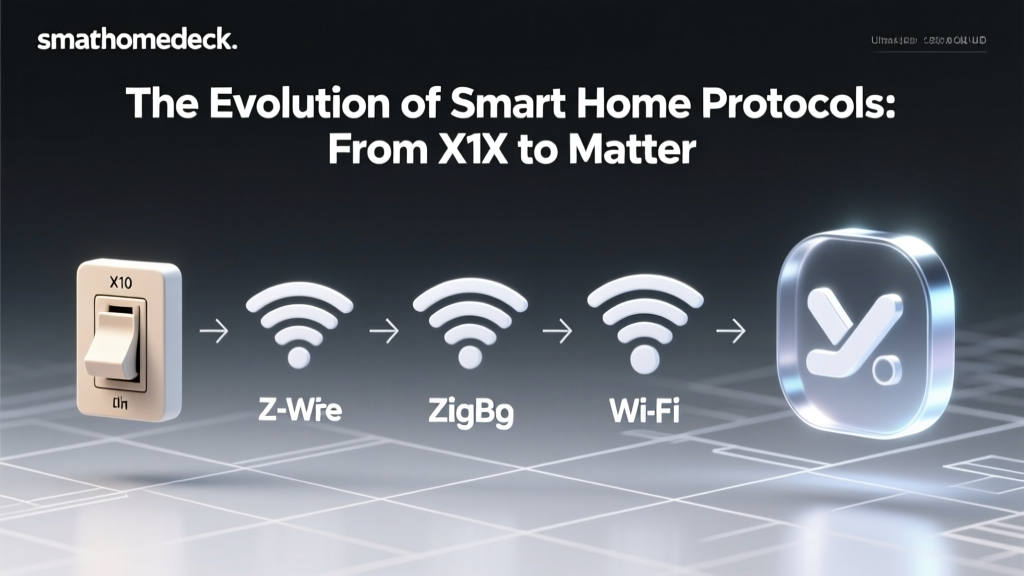
The solution lies in Matter bridged devices. Bridging is a core architectural feature of the Matter specification designed specifically to facilitate legacy smart home integration. By allowing existing hubs and gateways to act as translators, Matter ensures that your investments in Zigbee, Z-Wave, Bluetooth, and proprietary RF devices are not left behind. This comprehensive technical guide explores the mechanics, compatibility, performance, and security implications of Matter bridged devices, providing you with the knowledge to seamlessly integrate your legacy hardware into a modern, unified smart home fabric.
What Are Matter Bridged Devices? The Architecture of the Aggregator
To understand how legacy integration works, we must look at the Matter Core Specification. In the Matter architecture, a bridge is not merely a simple pass-through or a basic network repeater. It is a formally defined node type known as an Aggregator.
Every device on a Matter network (the 'fabric') is represented as a Node, which contains one or more Endpoints. Endpoint 0 is reserved for the Node's core utility functions (like network commissioning and basic device information). For a standard native Matter device, Endpoint 1 might be a smart bulb, and Endpoint 2 might be a built-in sensor.
A Matter Bridge utilizes a specific device type called the Aggregator (Device Type 0x000E), typically hosted on Endpoint 1. The Aggregator acts as a parent container. The legacy devices connected to the bridge's underlying network (e.g., a Zigbee mesh or a proprietary RF network) are exposed to the Matter fabric as virtual child endpoints (Endpoints 2, 3, 4, etc.) beneath the Aggregator.
When a Matter controller (like Apple Home, Google Home, or Home Assistant) queries the network, it sees the Bridge Node. It then queries the Aggregator endpoint and discovers a list of child endpoints. The bridge dynamically maps the legacy device's capabilities to standard Matter Clusters. For example, if a legacy Zigbee bulb supports dimming and color temperature, the bridge maps those hardware capabilities to the Matter Level Control and Color Temperature Light clusters. To the Matter controller, the legacy bulb appears and behaves exactly like a native Matter device, completely abstracting the underlying legacy protocol.
Compatibility: Connecting Legacy Ecosystems to Matter
The true power of Matter bridged devices is their ability to ingest a vast array of legacy protocols. Because the bridge handles the heavy lifting of translation, the Matter fabric remains agnostic to the underlying physical layer. Here is how different legacy protocols integrate via bridging:
Zigbee & Z-Wave Integration
Zigbee and Z-Wave are the most common targets for Matter bridging. Because both are mesh networking protocols that require a central coordinator or hub, the hardware that acts as the coordinator is perfectly positioned to become a Matter Bridge. Manufacturers like Aqara, Philips Hue, and Aeotec have released firmware updates for their existing smart home hubs, transforming them into Matter Aggregators. The hub maintains the local Zigbee or Z-Wave mesh network while simultaneously maintaining a Wi-Fi or Thread connection to the Matter fabric.
Bluetooth & BLE Mesh
Bluetooth Low Energy (BLE) is frequently used in battery-operated sensors, smart locks, and localized lighting systems. Because BLE has limited range and relies on point-to-point or localized mesh connections, a bridge is required to connect these devices to the broader IP-based Matter fabric. Hubs equipped with both Bluetooth and Thread/Wi-Fi radios act as the gateway, translating BLE GATT (Generic Attribute Profile) commands into Matter clusters.
Proprietary RF & Sub-GHz Protocols
Many high-end or specialized smart home systems use proprietary sub-GHz radio frequencies to maximize range and wall penetration. Lutron's Clear Connect, Somfy's RTS/io-homecontrol, and SwitchBot's proprietary BLE/RF variants are prime examples. These ecosystems require their specific proprietary hubs to act as the Matter bridge. The hub translates the proprietary RF signals into Matter commands, allowing high-end lighting and motorized shades to be controlled alongside standard Matter devices.
Legacy Wi-Fi & Cloud-to-Cloud Bridging
Older Wi-Fi smart devices often lack the processing power or security architecture to support native Matter. In these cases, manufacturers utilize 'Cloud-to-Cloud' bridging. The manufacturer's cloud server acts as the virtual Aggregator, syncing device states between the legacy Wi-Fi device's cloud API and the Matter fabric. While this enables compatibility, it introduces different performance and reliability characteristics compared to local bridging.
Performance & Latency: Bridged vs. Native Matter Devices
One of the most critical considerations for smart home enthusiasts is latency and state synchronization. How does a bridged legacy device compare to a native Matter device running on Thread or Wi-Fi?
The performance of a bridged device is dictated by the 'Hub Tax'—the processing time required for the bridge to receive a Matter command, translate it into the legacy protocol, transmit it over the legacy network, and route the response back.
Local Bridging (The Gold Standard)
When a local hub (like a Zigbee coordinator) acts as a Matter bridge, the entire translation process happens on your local area network (LAN). The latency added by the bridge's processor is typically negligible (often under 20 milliseconds). The total latency is simply the native latency of the Matter network plus the native latency of the Zigbee/Z-Wave network. For local bridged devices, state synchronization is near-instantaneous, and push notifications from the legacy device (e.g., a Zigbee motion sensor triggering) are forwarded to the Matter fabric in real-time.
Cloud Bridging (The Bottleneck)
Cloud-to-cloud bridges introduce significant latency. A command must travel from your phone to the Matter controller, to the manufacturer's cloud server, to the legacy device's cloud server, and finally down to the device. This round-trip can easily exceed 400-500 milliseconds. Furthermore, state synchronization often relies on polling or delayed webhooks, meaning a device turned on via a physical switch might take several seconds to update its state in your Matter dashboard.
Security Considerations for Bridged Integrations
Security is a foundational pillar of the Matter protocol, relying on Certificate-Based Authentication and end-to-end encryption. Every native Matter device possesses a Device Attestation Certificate (DAC) burned into its silicon or firmware, proving its identity to the network. This raises a complex technical question: How does Matter secure a legacy Zigbee bulb that lacks a Matter DAC?
The Bridge as the Security Proxy
In a bridged topology, the legacy child devices do not have their own Matter certificates. Instead, the Matter Bridge itself holds the DAC and acts as a security proxy. When the bridge exposes the legacy bulb to the Matter fabric, it essentially vouches for the security and identity of that child endpoint. The end-to-end encryption secures the traffic between the Matter controller and the Bridge. However, the 'last mile' of the communication—from the Bridge to the legacy Zigbee or Z-Wave device—is secured only by the legacy protocol's native encryption (e.g., the Zigbee network key).
The Shared Vulnerability Model
This architecture means the security boundary shifts from the individual endpoint to the bridge itself. If a bridge is compromised, or if its local legacy network key is extracted, all child devices behind that bridge are vulnerable. Therefore, it is paramount to ensure that the physical bridge hub is kept up-to-date with firmware patches, secured behind a robust network firewall, and purchased from a reputable manufacturer that adheres to the Connectivity Standards Alliance (CSA) security requirements.
Cloud Bridge API Security
For cloud-bridged devices, security relies heavily on OAuth tokens and API key management. The Matter controller must securely store the API tokens required to communicate with the manufacturer's cloud. Users should regularly audit their connected cloud services and revoke access tokens for any legacy ecosystems they no longer use to prevent unauthorized cloud-to-cloud access.
Best Ecosystems & Devices for Matter Bridging
While the Matter specification is open, the quality of a bridged experience depends entirely on the manufacturer's implementation of the Aggregator endpoint and their local API architecture. Below are the premier ecosystems currently leading the charge in legacy Matter integration.
Philips Hue (Zigbee to Matter)
Philips Hue is widely considered the gold standard for local Matter bridging. The Hue Bridge (both the square V2 and the newer cylindrical models) acts as a highly efficient Aggregator. Because Hue maintains a robust local API and processes commands locally, Hue lights, switches, and motion sensors appear in Matter controllers with near-zero latency. The mapping of Hue's advanced color and scene clusters to Matter is exceptionally well-implemented, preserving the premium feel of the ecosystem.
Aqara (Zigbee to Matter)
Aqara has aggressively adopted Matter, utilizing their M2 and M3 hubs to bridge their extensive lineup of Zigbee sensors, smart plugs, and curtain controllers. Aqara's implementation is notable for its exposure of complex sensor data. For instance, their presence sensors and water leak detectors map cleanly to standard Matter boolean and numeric clusters, allowing for highly reliable local automations in platforms like Home Assistant and Apple Home.
Lutron (Proprietary RF to Matter)
Lutron's Caseta and RadioRA 3 systems utilize the proprietary Clear Connect RF protocol, known for its unparalleled reliability and speed. Through firmware updates to the Lutron Smart Bridge, Lutron exposes its dimmers, switches, and shades to Matter. Because Lutron handles the complex physics of LED dimming and shade grouping internally, the Matter controller simply sends high-level commands (e.g., 'Set Light to 50%'), and the Lutron bridge executes the proprietary RF fade seamlessly.
SwitchBot (Bluetooth/RF to Matter)
SwitchBot's Hub 2 serves as a vital bridge for their unique ecosystem of BLE and RF devices, including retrofit blind motors, smart locks, and infrared blasters. SwitchBot's Matter implementation is particularly impressive for its inclusion of IR-controlled devices. The Hub 2 can expose virtual Matter endpoints for legacy infrared air conditioners and TVs, allowing you to control non-smart appliances via Matter-compatible thermostats and switches.
Frequently Asked Questions
Do I need to replace my existing smart home devices to use Matter?
No, you do not need to replace your existing devices. The primary purpose of Matter bridged devices is to protect your hardware investment. As long as your legacy devices are connected to a hub or gateway that supports Matter Aggregator functionality (via a firmware update or a new hub model), those legacy devices will be exposed to your Matter controllers. You can mix and match native Matter devices with bridged Zigbee, Z-Wave, and proprietary devices within the same automations and dashboards.
Will bridged devices work if my internet connection goes down?
This depends entirely on the type of bridge. If you are using a local bridge (such as a Philips Hue Bridge, Aqara Hub, or Lutron Caseta Bridge), the translation between the legacy protocol and Matter happens locally on your LAN. Your automations, scenes, and voice commands (if processed locally by the hub) will continue to function perfectly without an internet connection. However, if you are relying on a cloud-to-cloud bridge for older Wi-Fi devices, an internet outage will break the connection between the Matter controller and the legacy device, rendering them uncontrollable until the internet is restored.
Can a single Matter hub bridge devices from multiple different brands?
A single physical hub can only bridge devices that operate on its specific native protocol and ecosystem. For example, a Philips Hue Bridge can only bridge Zigbee devices that are paired to the Hue ecosystem; it cannot natively bridge a Z-Wave lock or a Lutron dimmer. To integrate multiple legacy ecosystems into a single Matter fabric, you will need multiple bridges (e.g., a Hue Bridge for lights, an Aeotec hub for Z-Wave locks, and a SwitchBot hub for BLE motors). The Matter controller (like Apple Home or Home Assistant) will see all these separate bridges and unify their child endpoints into one cohesive interface.
Do bridged devices support Matter automations and scenes?
Yes. Because the Matter Bridge abstracts the legacy protocol and presents the devices using standard Matter Clusters, your Matter controller treats them exactly like native devices. You can include bridged Zigbee lights in a Matter 'Movie Time' scene alongside native Thread smart plugs. You can also use bridged legacy motion sensors as triggers for automations involving native Matter locks. The controller does not know or care that the underlying hardware is legacy; it only interacts with the standardized Matter endpoints provided by the Aggregator.
How do I know if my current smart home hub supports Matter bridging?
To determine if your hub supports Matter bridging, check the manufacturer's official support pages for 'Matter Aggregator' or 'Matter Bridge' firmware updates. Additionally, look for the official Matter logo on the product packaging or the Connectivity Standards Alliance (CSA) certified products database. Major brands like Aqara, Philips Hue, Eve, and Nanoleaf have published detailed guides on how to enable Matter bridging within their respective mobile applications, usually found under 'Hub Settings' or 'Advanced Network Settings'.