The Dawn of Matter: Ending Smart Home Fragmentation
For over a decade, the smart home industry has been plagued by a frustrating reality: ecosystem fragmentation. Consumers were forced to choose between Apple HomeKit, Amazon Alexa, Google Home, or Samsung SmartThings, often buying devices that were locked into a single proprietary platform. If you wanted to mix and match brands, you relied on third-party cloud bridges or complex IFTTT routines that introduced latency and reliability issues. Enter Matter, the industry-wide unifier that promises to make the smart home truly interoperable, secure, and responsive.
Developed by the Connectivity Standards Alliance (CSA)—formerly the Zigbee Alliance—Matter is not just another wireless protocol. It is an open-source, royalty-free connectivity standard built on Internet Protocol (IP). It allows smart home devices to communicate locally, regardless of the brand on the box or the voice assistant you prefer. Whether you are upgrading a single smart bulb or wiring a multi-story home with dozens of sensors, understanding Matter is essential for future-proofing your investment.
How Matter Works Under the Hood
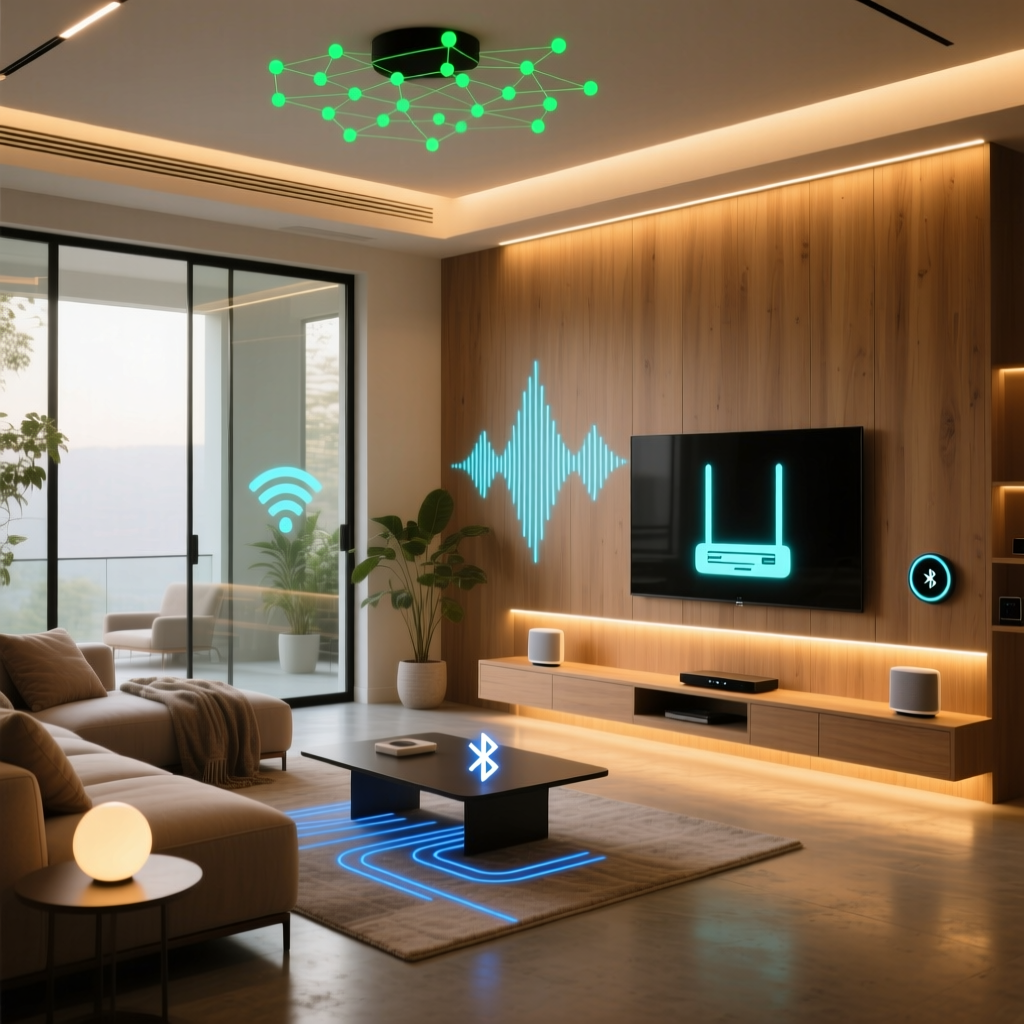
Matter is an application layer protocol, meaning it sits on top of existing networking technologies. It does not replace your Wi-Fi or mesh networks; rather, it provides a universal language that devices use to talk to one another over those networks. Matter currently supports three primary transport layers:
- Thread: A low-power, IPv6-based mesh networking protocol designed specifically for IoT. Thread devices create a decentralized mesh, meaning there is no single point of failure. It is ideal for battery-operated sensors, smart locks, and lighting.
- Wi-Fi: Used for high-bandwidth, mains-powered devices like smart TVs, streaming sticks, and advanced appliance controllers. Matter over Wi-Fi leverages your existing home router but operates locally to ensure instant response times.
- Ethernet: Utilized for stationary, high-reliability hubs and bridges that require a hardwired backbone.
Additionally, Matter uses Bluetooth Low Energy (BLE) exclusively for the initial setup process, known as "commissioning." When you unbox a new Matter device, your smartphone uses BLE to securely transfer your Wi-Fi credentials or Thread network keys to the device, eliminating the need for devices to broadcast their own temporary setup networks.
The Killer Feature: Multi-Admin
Before Matter, linking a smart plug to both Apple Home and Google Home simultaneously was virtually impossible. Matter introduces Multi-Admin, a feature that allows a single device to be controlled by multiple ecosystems at the exact same time. You can pair a Nanoleaf LED strip to Apple HomeKit so you can use Siri, while simultaneously pairing it to Google Home so your partner can use the Nest Hub. Both platforms have equal, local control over the device without conflicting with one another.
Matter vs. Legacy Protocols: A Technical Comparison
How does Matter stack up against the legacy protocols that have dominated the market? Below is a technical comparison of the leading smart home standards.
| Protocol | Topology | Typical Range | Power Draw | Best Use Case |
|---|---|---|---|---|
| Matter (over Thread) | IPv6 Mesh | 100ft+ (Mesh extends) | Ultra-Low | Sensors, Locks, Lighting |
| Zigbee | Mesh | 30-60ft (Mesh extends) | Low | Legacy Lighting, Sensors |
| Z-Wave | Mesh | 30-100ft (Mesh extends) | Low | Security, Locks, Reliability |
| Wi-Fi | Star (Hub/Router) | 100-150ft | High | Cameras, Plugs, Appliances |
According to The Thread Group, Thread's self-healing mesh network ensures that if one router-eligible device loses power, the network automatically reroutes data through neighboring nodes, guaranteeing uptime for critical Matter devices like smart locks and leak sensors.
Essential Matter Hubs and Border Routers
Because Matter relies on local network communication, you need a "hub" or "border router" to bridge the gap between your phone, the cloud, and the local devices. If you are building a Thread-based Matter network, you specifically need a Thread Border Router. Here are the top hubs available today:
Apple HomePod (2nd Gen) & Apple TV 4K
Apple has been a leading champion of Matter. The HomePod ($299) and Apple TV 4K ($129) act as robust Thread Border Routers and Matter controllers. They offer some of the fastest local processing times and seamless integration with iOS widgets and Siri.
Amazon Echo (4th Gen)
Unlike the smaller Echo Dots, the full-sized Echo 4th Gen ($99) contains a built-in Zigbee hub, a Thread Border Router, and Matter controller capabilities. It is an excellent all-in-one gateway for users transitioning from legacy Alexa devices to the Matter standard.
Google Nest Hub (2nd Gen)
Google's Nest Hub ($99) serves as a Thread Border Router and Matter controller, integrating deeply with Google Home routines and Nest thermostats. It provides a visual dashboard for your Matter ecosystem.
Top Matter-Compatible Devices to Buy Today
The Matter ecosystem has grown exponentially since its launch. Here are some of the most reliable, high-performing Matter devices currently on the market, complete with pricing and use cases:
- Eve Energy ($39.95): A premium smart plug that not only toggles power but provides real-time energy monitoring and voltage tracking. It connects via Thread, ensuring it doesn't clog your Wi-Fi network.
- Philips Hue Bridge ($59.99):While Hue bulbs natively use Zigbee, the updated Hue Bridge acts as a Matter bridge, exposing your entire Hue lighting system (up to 50 bulbs) to Apple, Google, and Amazon simultaneously via Matter.
- Nanoleaf Essentials LED Strip ($49.99): A vibrant, high-density LED light strip that supports both Thread and Matter, offering adaptive lighting features that sync with your circadian rhythm.
- Aqara Door and Window Sensor ($29.99): An ultra-compact, highly responsive contact sensor that utilizes Thread to deliver instantaneous alerts to your phone and trigger local automations without cloud latency.
Visualizing the Matter Ecosystem Costs
One common concern among consumers is the cost of upgrading to Matter-certified devices. Because manufacturers must pay for rigorous CSA certification and implement secure hardware elements, Matter devices can carry a slight premium. Below is a visualization of the current market pricing across major device categories.
Average Price Range by Matter Device Category
As the chart illustrates, entry-level lighting and sensors are highly accessible, often costing less than a standard dinner out. However, complex mechanical devices like smart locks and motorized window coverings require significant hardware investments, pushing their price ranges higher.
Security Architecture: Why Matter is Inherently Safer
Security is not an afterthought in Matter; it is the foundation. Every single Matter-certified device must contain a Device Attestation Certificate (DAC). This is a unique, hardware-level cryptographic key installed during manufacturing. When you attempt to add a device to your home, the Matter controller verifies this certificate against a secure, blockchain-like distributed ledger maintained by the CSA. This ensures that the device is authentic, has not been tampered with, and is running certified, secure firmware.
Furthermore, because Matter prioritizes local LAN communication, your smart home commands do not need to travel to a remote server in another country and back. When you tap "Lights Off" on your phone, the command travels directly from your phone, to your Wi-Fi router, to the smart bulb. This local execution drastically reduces latency to under 50 milliseconds and eliminates the risk of cloud server outages leaving you stranded in the dark.
Practical Setup Guide: Adding Matter to Your Home
Commissioning a Matter device is a standardized process, regardless of whether you are using an iPhone or an Android device. Here is the step-by-step workflow:
- Locate the QR Code: Find the Matter QR code printed on the device, the packaging, or the included setup card. This code contains the device's vendor ID, product ID, and a unique setup pin.
- Open Your Preferred App: Open Apple Home, Google Home, Amazon Alexa, or Samsung SmartThings. Tap the "+" or "Add Device" button.
- Scan and Connect: Use your phone's camera to scan the QR code. Your phone will temporarily connect to the device via Bluetooth Low Energy (BLE).
- Network Transfer: The app will securely transfer your Thread network credentials or Wi-Fi password to the device. The device will then join your home network.
- Multi-Admin Prompt: Once added, the app may ask if you want to enable "Multi-Admin" or share the device with other platforms. Approve this to generate a secondary QR code or digital token, allowing family members using different ecosystems to pair the device to their own accounts.
Limitations and the Road Ahead
While Matter is a monumental leap forward, it is not without its current limitations. As of the latest specification updates, Matter fully supports lighting, plugs, sensors, locks, thermostats, and window coverings. However, high-bandwidth, complex devices like security cameras, robot vacuums, and major appliances are still being integrated into the standard. The CSA is actively working on Matter 1.3 and beyond, which aim to bring EV chargers, solar inverters, and advanced camera feeds into the unified ecosystem.
Another consideration is network congestion. If you are adding dozens of Wi-Fi-based Matter devices, you may overwhelm older, budget-tier Wi-Fi routers. For homes with more than 15 smart devices, investing in a robust mesh Wi-Fi system (like Eero, Orbi, or Asus ZenWiFi) or prioritizing Thread-based devices is highly recommended to maintain network stability.
Conclusion: Is It Time to Switch?
The transition to Matter is not an overnight flip of a switch; it is a multi-year evolution. You do not need to throw away your existing Zigbee or Z-Wave devices. Instead, use Matter as your standard for all new purchases. By looking for the distinctive Matter logo on product packaging, you ensure that your smart home will remain compatible, secure, and responsive, no matter which voice assistant or smartphone you decide to use in the years to come. As noted by industry experts at The Verge, Matter finally shifts the power away from proprietary walled gardens and places it firmly back into the hands of the consumer.