The Shift to Smart Multi-Dwelling Units (MDUs)
The deployment of smart home technology in Multi-Dwelling Units (MDUs) and commercial buildings presents a unique set of challenges that single-family residential setups rarely encounter. Property managers, commercial real estate developers, and system integrators must navigate high-density wireless environments, stringent tenant privacy requirements, and the need for centralized management systems. In a 200-unit apartment complex, the 2.4 GHz spectrum is incredibly congested. Hundreds of Wi-Fi routers, Bluetooth devices, microwaves, and neighboring smart home gadgets create a chaotic RF environment that can easily degrade network performance.
While Wi-Fi 6 offers high bandwidth, it is fundamentally unsuited for massive IoT sensor deployments due to its high power consumption and router-client limits. Bluetooth LE is excellent for proximity-based access control but lacks the range and mesh routing capabilities required for whole-building automation. This leaves mesh networking protocols as the undisputed champions for commercial and multi-family smart building deployments. Specifically, the industry is currently caught in a transitional phase between the legacy powerhouse, Zigbee PRO, and the modern, IP-native challenger, Matter over Thread. Understanding the technical nuances, deployment costs, and long-term viability of these protocols is critical for any large-scale smart building project.
Understanding the Contenders: Matter over Thread vs. Zigbee PRO
Thread: The IP-Based Mesh Powerhouse
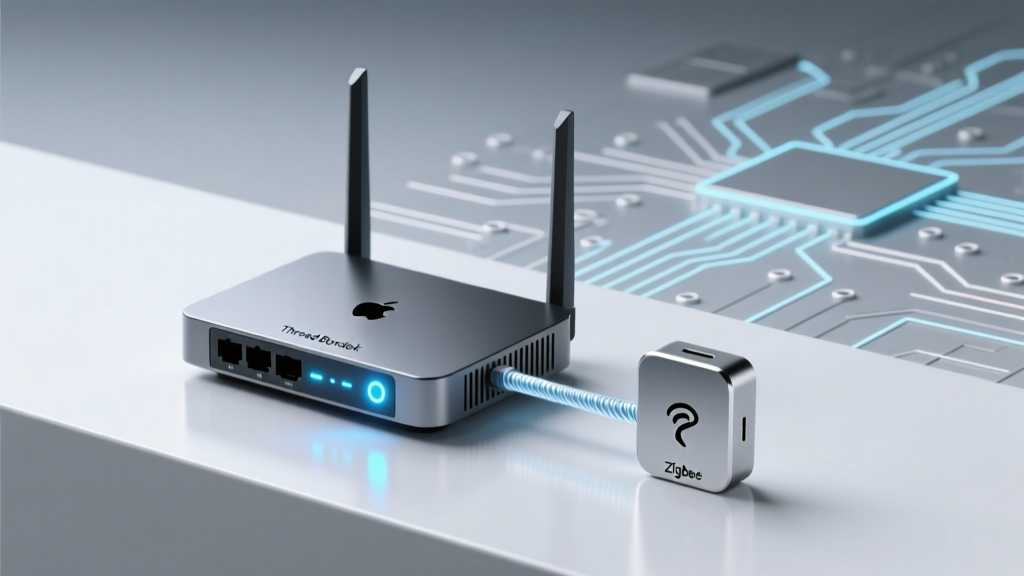
Thread is a low-power, wireless mesh networking protocol built on the IEEE 802.15.4 standard, operating on the 2.4 GHz spectrum. Unlike traditional IoT protocols, Thread is inherently IPv6-native. This means every Thread node has its own IP address, allowing it to communicate directly with cloud services, local servers, and other IP-based networks without the need for complex proprietary translation gateways. Thread utilizes 6LoWPAN (IPv6 over Low-Power Wireless Personal Area Networks) to compress IP headers, making it highly efficient for battery-operated sensors.
According to the Thread Group, the protocol's self-healing mesh architecture ensures there is no single point of failure. If a Thread Border Router goes offline, the network dynamically reroutes traffic through other powered nodes. When paired with the Matter application layer, Thread becomes a highly interoperable, secure, and scalable solution for MDUs, allowing property managers to deploy devices that natively integrate with Apple Home, Google Home, and Amazon Alexa ecosystems without vendor lock-in.
Zigbee PRO: The Legacy Commercial Standard
Zigbee PRO (specifically Zigbee 3.0) has been the backbone of commercial smart buildings and large-scale residential deployments for over a decade. Also based on IEEE 802.15.4, Zigbee relies on a structured network topology consisting of a Coordinator (the central hub), Routers (mains-powered devices that extend the mesh), and End Devices (battery-powered sensors that sleep to conserve energy). The Connectivity Standards Alliance (CSA) notes that Zigbee PRO's Green Power feature allows for energy-harvesting switches and sensors that require zero battery maintenance, a massive advantage for commercial spaces.
However, Zigbee's reliance on a central coordinator can be a bottleneck in massive MDU deployments. If the coordinator fails, the entire network segment can drop. Furthermore, Zigbee is not natively IP-based; it requires a gateway to translate Zigbee commands into MQTT or HTTP for cloud-based property management software (PMS). Despite these architectural limitations, Zigbee PRO boasts a massive catalog of certified, commercial-grade hardware, including specialized HVAC controllers, industrial lighting relays, and sub-metering devices that Thread/Matter ecosystems are still developing.
Protocol Comparison Matrix for Commercial Deployments
When planning a smart building retrofit or new construction, system integrators must weigh the technical specifications of each protocol against the physical realities of concrete walls, steel framing, and high-density RF interference.
| Feature | Matter over Thread | Zigbee PRO 3.0 | Wi-Fi 6 (Direct IoT) |
|---|---|---|---|
| Network Topology | IPv6 Mesh (No single point of failure) | Star/Tree/Mesh (Coordinator dependent) | Star (Router dependent) |
| Max Nodes per Network | 250+ (Practically limited by Border Routers) | 65,000+ (Theoretical), ~200 practical per coordinator | 50-100 per commercial Access Point |
| IP Compatibility | Native IPv6 (Direct cloud/local routing) | Requires Gateway/Hub translation | Native IPv4/IPv6 |
| Power Consumption | Ultra-Low (Years on coin cell) | Ultra-Low (Green Power supports energy harvesting) | High (Requires mains or large batteries) |
| Interference Mitigation | Channel hopping, dynamic routing | Channel selection, install codes | OFDMA, BSS Coloring (Wi-Fi 6 specific) |
| Commissioning Security | DTLS, QR Code, NFC, BLE fallback | Install Codes, Touchlink Commissioning | WPA3 Enterprise, 802.1X |
Network Topology and Border Router Placement in Large Buildings
In a multi-family building, concrete floors and steel reinforcement act as massive Faraday cages, severely attenuating 2.4 GHz signals. You cannot rely on a single central hub to cover an entire floor, let alone a multi-story complex.
Thread Border Router Density
Thread requires Border Routers to bridge the 802.15.4 mesh network to the building's IP network (Wi-Fi or Ethernet). For commercial deployments, the rule of thumb is one Thread Border Router per 1,500 to 2,000 square feet, or roughly one per apartment unit. Devices like the Aqara Hub M3 (approx. $130) or the Samsung SmartThings Station Pro (approx. $100) serve as excellent, cost-effective Border Routers. By placing a Border Router inside each unit, you create a micro-mesh that respects tenant privacy while allowing building management to monitor aggregate energy data via IP routing.
Zigbee Coordinator and Router Strategy
For Zigbee PRO, integrators typically deploy commercial-grade coordinators in telecommunications closets on each floor, connected via Ethernet. To ensure mesh stability, every mains-powered device (smart thermostats, in-wall relays, smart blinds) acts as a router. In a 100-unit building, deploying a Zigbee coordinator per floor with a backbone of Ethernet-connected Zigbee gateways (like the Hubitat Elevation or commercial Digi XBee gateways) ensures that a single apartment's network failure does not cascade to neighboring units.
Security, VLANs, and Tenant Privacy
Security in MDUs is twofold: protecting the building's infrastructure from external cyber threats and protecting individual tenant privacy from neighbors and property management overreach.
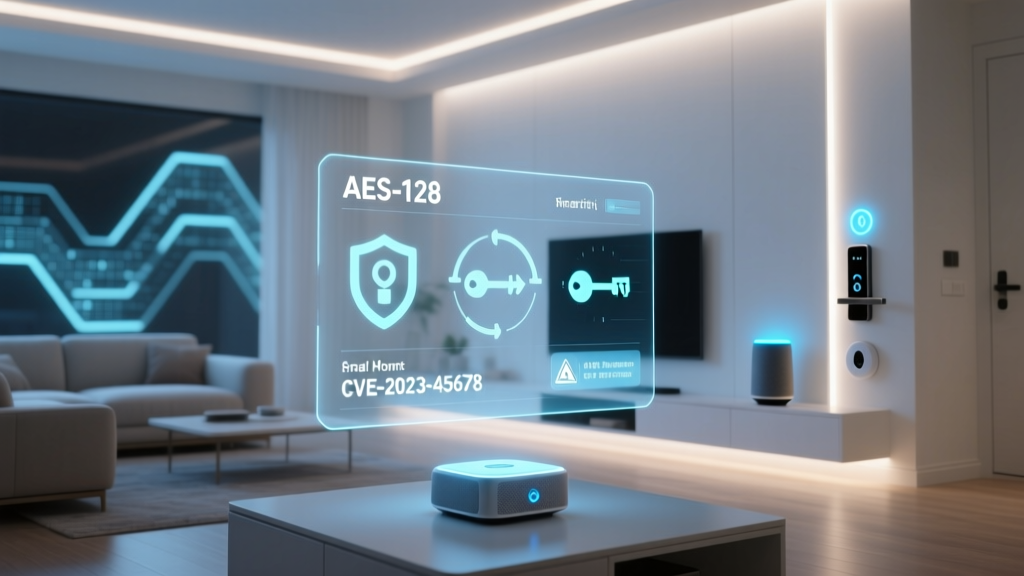
Thread and Matter Security: Thread utilizes AES-128 encryption at the MAC layer and DTLS (Datagram Transport Layer Security) for secure commissioning. When a tenant moves into an MDU, they can claim the Thread network credentials via a secure QR code or NFC tap using their smartphone. Because Matter over Thread is IP-based, building managers can place the Thread Border Routers on a segregated IoT VLAN. The firewall can be configured to allow outbound MQTT traffic to the property management dashboard (for leak detection and HVAC monitoring) while blocking any inbound traffic from the building's main network, ensuring the property manager cannot access the tenant's private smart home routines or cameras.
Zigbee Security: Zigbee 3.0 mandates the use of Install Codes for network joining, preventing unauthorized devices from sniffing the network key. However, because all devices on a Zigbee network share the same network key, a compromised end-device could theoretically expose the local mesh. In an MDU, it is highly recommended to run separate Zigbee PANs (Personal Area Networks) per unit, utilizing commercial gateways that support multi-PAN hosting via USB dongles like the Sonoff Zigbee 3.0 USB Dongle Plus or the Home Assistant Connect ZBT-1.
Cost Analysis: CapEx and OpEx for 100-Unit MDUs
When pitching a smart building upgrade to stakeholders, the total cost of ownership (TCO) over a 5-year period is the most critical metric. While Wi-Fi seems cheap initially (no hubs required), the cost of enterprise-grade Wi-Fi 6 access points capable of handling 500+ IoT devices, combined with the IT maintenance required to manage IP conflicts and firmware updates, drives OpEx through the roof.
Below is a comparative analysis of the projected costs per unit for a 100-unit MDU deployment, including hardware (CapEx) and 5-year maintenance, network management, and device replacement (OpEx).
5-Year Cost Projection per MDU Unit
As visualized above, Matter over Thread presents a slightly higher initial CapEx than Zigbee due to the current premium on Thread-certified Border Routers and smart plugs. However, the 5-year OpEx is significantly lower. Thread's self-healing nature drastically reduces IT truck rolls for network troubleshooting, and its native IP compatibility eliminates the need to replace proprietary translation gateways when upgrading property management software.
Recommended Commercial-Grade Devices and Ecosystems
For multi-family and commercial deployments, consumer-grade gadgets often fail under the stress of high-density environments. System integrators should prioritize devices with external antennas, robust thermal management, and commercial certifications.
- Aqara Hub M3 ($130): A premier gateway for MDUs. It supports Matter over Thread, Zigbee 3.0, and features an Ethernet port for hardwired connectivity, ensuring the Border Router remains online even if the unit's Wi-Fi drops. It also supports local IR blasting for legacy HVAC control.
- Eve Energy Smart Plug ($40): Utilizing Thread natively, this plug provides highly accurate energy monitoring. Property managers can use these in common areas or provided appliances to track energy usage and detect anomalies indicative of failing appliances.
- Nanoleaf Essentials A19 Bulb ($25): Supports both Thread and Bluetooth. In commercial hallways and common areas, these bulbs can form a dense Thread mesh, acting as routers to extend the network backbone throughout the building's corridors.
- Schlage Encode Plus ($300+): While primarily utilizing Thread for smart home integration, its robust commercial-grade deadbolt mechanics make it ideal for MDU unit entry doors, allowing property managers to issue temporary digital keys via Apple Home Key or Matter-compatible locks.
According to the Connectivity Standards Alliance (CSA), the Matter standard ensures that a Schlage lock, an Eve plug, and an Aqara sensor can all operate on the same Thread mesh network seamlessly, regardless of the manufacturer, which is vital for future-proofing commercial real estate.
Integration with BACnet and Legacy Commercial Systems
Many commercial buildings and large MDUs already rely on BACnet (Building Automation and Control Networks) for central HVAC, elevator management, and fire safety systems. Neither Thread nor Zigbee is designed to replace BACnet; rather, they serve as the edge network for tenant-facing and unit-level IoT devices.
Integration is achieved via IP gateways. Because Thread is IPv6-native, a local server running an MQTT-to-BACnet bridge (such as Node-RED or commercial systems like Control4 or Crestron) can ingest Thread sensor data (e.g., occupancy sensors, window contact sensors) and translate it into BACnet objects. For example, if a Thread-based window sensor in a commercial office detects that a window has been left open for more than 10 minutes, the IP gateway triggers a BACnet command to shut off the VAV (Variable Air Volume) box in that specific zone, saving the building thousands of dollars in annual HVAC waste. Zigbee can achieve this as well, but requires an extra layer of proprietary hub translation before the data reaches the IP network.
Conclusion: Which Protocol Wins for Large-Scale Deployments?
The choice between Matter over Thread and Zigbee PRO for multi-family and commercial buildings ultimately depends on the project's timeline and existing infrastructure. Zigbee PRO remains the undisputed king of available, specialized commercial hardware, particularly for energy-harvesting switches, heavy-duty lighting relays, and specialized sub-metering. If your project requires immediate deployment of niche commercial sensors, Zigbee 3.0 is the safer, more mature bet.
However, Matter over Thread is the clear winner for future-proofing, tenant satisfaction, and long-term OpEx reduction. Its native IPv6 architecture eliminates gateway bottlenecks, its self-healing mesh reduces IT maintenance, and its inherent compatibility with consumer ecosystems allows tenants to bring their own smart home devices without conflicting with the building's core network. As the CSA continues to expand the Matter device library to include commercial HVAC and access control profiles, Thread is rapidly positioning itself as the definitive edge protocol for the next generation of smart multi-family and commercial real estate.