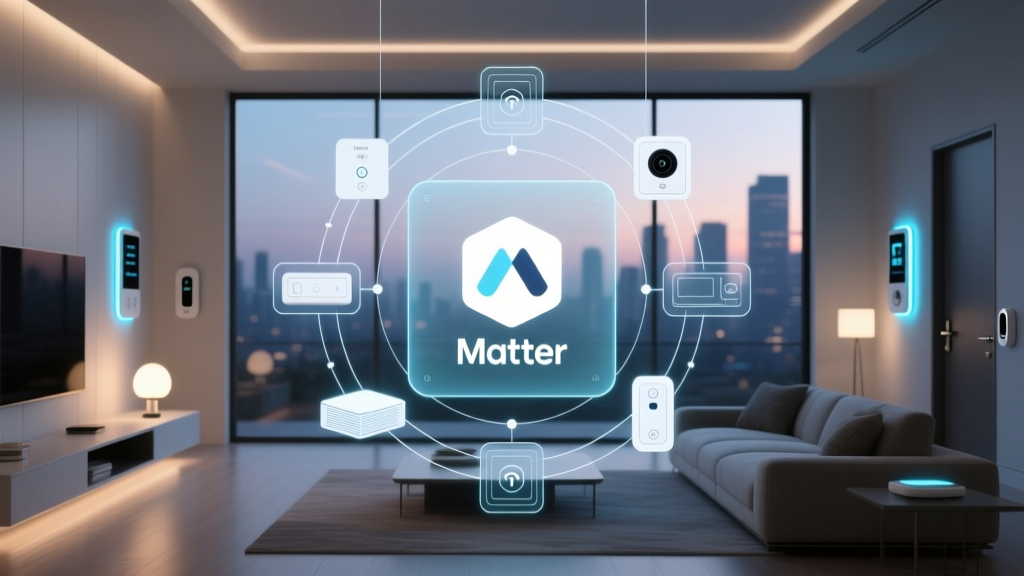
The smart home landscape was once a fragmented mess of walled gardens, proprietary hubs, and incompatible ecosystems. For years, consumers were forced to choose a single platform and purchase devices exclusively within that ecosystem, or rely on clunky third-party workarounds to make different brands communicate. The promise of a truly interconnected, intelligent home was held back by a lack of a universal language. Enter Matter, the revolutionary smart home protocol designed to dismantle these barriers and establish a unified, secure, and reliable standard for connected devices.
Developed and maintained by the Connectivity Standards Alliance (CSA)—an industry consortium comprising hundreds of tech giants including Apple, Amazon, Google, Samsung, and countless smart home manufacturers—Matter represents a fundamental shift in how IoT (Internet of Things) devices communicate. Originally known as Project CHIP (Connected Home over IP), the protocol was built from the ground up to prioritize local control, robust security, and seamless interoperability. Whether you are deeply embedded in the Apple HomeKit ecosystem, rely on Amazon Alexa for voice commands, or prefer Google Home, Matter ensures that your devices will work together harmoniously.
In this comprehensive technical guide, we will explore the architecture of the Matter protocol, examine how it handles network traffic, analyze its security frameworks, and discuss the best device categories to integrate into your modern smart home setup & configuration.
The Architecture: How the Matter Protocol Works
Unlike legacy protocols that rely on proprietary radio frequencies or cloud-dependent translation servers, Matter is built on a universally recognized foundation: Internet Protocol (IP). Specifically, Matter utilizes IPv6, ensuring that every single smart home device on your network is assigned its own unique IP address. This IP-based architecture is the secret to Matter's unparalleled interoperability, as it allows devices to communicate directly with one another and with your local network router without needing a proprietary bridge to translate signals.
The Matter protocol operates primarily across three distinct network layers, each serving a specific purpose in the setup & configuration process:
- Wi-Fi: Used for high-bandwidth devices that require substantial data transfer or continuous power, such as smart displays, security cameras, and advanced smart home hubs. Wi-Fi provides the backbone for heavy lifting within the Matter ecosystem.
- Thread: A low-power, mesh-networking protocol based on the IEEE 802.15.4 standard. Thread is utilized for battery-operated devices like smart sensors, smart locks, and wireless switches. Unlike traditional mesh networks, Thread is IP-native, meaning Thread devices can seamlessly route data to your Wi-Fi network via a Thread Border Router without protocol translation.
- Bluetooth Low Energy (BLE): BLE is not used for ongoing device communication in Matter. Instead, it is strictly reserved for the initial commissioning (setup) process. When you unbox a new Matter device, your smartphone uses BLE to securely transfer your Wi-Fi or Thread network credentials to the device, after which BLE is turned off to save power.
At the application layer, Matter utilizes a standardized data model consisting of Endpoints and Clusters. An endpoint represents a specific function of a device (e.g., a smart plug with two outlets will have two endpoints). Clusters define the specific commands & routines a device can understand, such as the 'On/Off' cluster or the 'Color Control' cluster. Because these clusters are strictly standardized by the CSA, a Matter-certified smart bulb from one manufacturer will perfectly understand the color-dimming commands sent by a smart switch from a completely different brand.
Ecosystem Compatibility and the Multi-Admin Feature
The most significant consumer benefit of the Matter protocol is the death of the walled garden. Historically, a device branded as 'Works with Apple HomeKit' might not function natively with Amazon Alexa or Google Home without relying on cloud-based skill integrations that introduce latency and points of failure. Matter solves this through native, cross-platform compatibility.
When you purchase a Matter-certified device, it carries the official Matter logo, guaranteeing that it will integrate natively with all major smart home platforms. This includes Apple Home, Amazon Alexa, Google Home, and Samsung SmartThings. You no longer need to research & development forums to find out if a specific smart plug will work with your preferred voice assistant; the Matter certification guarantees it.
The crown jewel of Matter's compatibility framework is the Multi-Admin feature. In the past, a smart device could typically only be bonded to a single primary ecosystem. If you wanted to share control with a family member who used a different smartphone ecosystem, you had to rely on shared cloud accounts or complex IFTTT routines. Multi-Admin allows a single Matter device to be simultaneously bonded to multiple ecosystems. For example, you can add a Matter smart lock to your Apple Home app, while simultaneously adding the exact same lock to your partner's Google Home app. Both platforms act as equal administrators, capable of executing local control, setting up automations, and receiving status updates without conflicting with one another.
Furthermore, Matter supports bridging for legacy devices. If you have an existing network of Zigbee or Z-Wave devices, manufacturers can release software updates or dedicated hardware bridges that translate those legacy signals into Matter, allowing your older investments to appear natively in modern Matter-compatible apps.
Performance, Local Control, and Network Reliability
One of the most frustrating aspects of early smart home technology was the reliance on cloud servers. If your internet connection dropped, or if a manufacturer's cloud server experienced downtime, your smart home became remarkably dumb. Light switches failed to respond, and automations ceased to trigger. Matter fundamentally shifts the paradigm back to Local Control.
Because Matter operates over your local area network (LAN) via IP, commands sent from your smartphone or a local smart speaker are routed directly to the device through your home router. The data does not need to travel to a remote server, be processed, and bounce back to your home. This local execution results in near-instantaneous latency, making smart switches feel as responsive as traditional wired electrical switches.
When combined with Thread, Matter's performance and reliability scale exponentially. Thread creates a self-healing mesh network. Every mains-powered Thread device (like a smart plug or a wired light switch) acts as a router, extending the range and strength of the network. If one pathway becomes blocked or a device loses power, the Thread mesh dynamically reroutes the data packets through alternative nodes to ensure the signal reaches its destination. To connect this Thread mesh to your broader Wi-Fi network, a Thread Border Router is required. Many modern smart speakers, Wi-Fi routers, and dedicated smart home hubs now include built-in Thread Border Router capabilities, seamlessly bridging the low-power mesh with your high-bandwidth home network.
This local-first architecture also means that your core automations—such as motion sensors triggering hallway lights—will continue to function flawlessly even during a complete internet outage, provided your local network infrastructure remains powered.
Uncompromising Security and Privacy Standards
Security was not an afterthought in Matter; it is the foundational bedrock of the protocol. The CSA implemented a rigorous, multi-layered security architecture designed to protect consumer privacy and prevent unauthorized access to local networks.
The first line of defense is the Device Attestation Certificate (DAC). Every single Matter-certified device is manufactured with a unique, cryptographically secure certificate embedded in its hardware. When you attempt to add a device to your network, the controller (your smartphone or hub) verifies this certificate against a secure database to ensure the device is genuine, has not been tampered with, and has not been revoked due to a security vulnerability. This prevents malicious actors from introducing counterfeit or compromised hardware into your smart home ecosystem.
To manage these certificates, the CSA utilizes a Distributed Compliance Ledger. Similar to blockchain technology, this decentralized ledger records the certification status of every Matter device. If a manufacturer discovers a critical firmware vulnerability, they can revoke the DAC on the ledger, instantly preventing compromised devices from joining new networks until a security patch is applied.
Furthermore, all Matter communications are protected by End-to-End Encryption (E2EE). Data packets traveling between your smartphone, your hub, and your devices are encrypted using robust cryptographic standards. Even if a bad actor intercepts your local Wi-Fi traffic, the commands & routines remain completely illegible. The initial commissioning process is also highly secure, utilizing QR codes or NFC taps to establish a secure, encrypted handshake between your phone and the new device, ensuring that network credentials are never broadcasted in plain text.
Best Matter-Compatible Device Categories
As the protocol matures, manufacturers are rapidly releasing Matter-certified hardware across all major smart home categories. Here are the best device types to look for when upgrading your home:
- Smart Lighting: Matter excels at handling the complex clusters required for smart lighting. From tunable white bulbs to full-color RGBW LED strips, Matter ensures that color synchronization and dimming commands are executed locally with zero lag.
- Smart Plugs and Relays: For simple on/off control and energy monitoring, smart plugs are the easiest entry point into the Matter ecosystem. They are highly reliable, inexpensive, and benefit greatly from Thread mesh networking if placed far from your primary router.
- Environmental and Security Sensors: Battery life is critical for sensors. Matter over Thread allows smart sensors (motion, door/window contact, temperature, and humidity) to operate for years on a single coin-cell battery while maintaining instant, local responsiveness.
- Smart Thermostats and HVAC: Climate control requires complex data modeling. Matter's standardized HVAC clusters allow smart thermostats to integrate seamlessly with local weather data and occupancy sensors to optimize your home's energy efficiency without relying on cloud processing.
- Smart Locks: Security is paramount for entryways. Matter's robust encryption and local execution ensure that your smart lock responds instantly to your smartphone or keypad, even if your home's internet connection is down.
Frequently Asked Questions (FAQ)
Do I need a new hub to use Matter devices?
Not necessarily, but it depends on your current hardware. To use Matter over Thread, you need a Thread Border Router. Many modern smart speakers (like the latest Amazon Echo and Apple HomePod models) and high-end Wi-Fi routers already have Thread Border Routers built-in. If your current ecosystem lacks a Thread Border Router, you may need to purchase a dedicated Matter hub or a smart speaker that supports the protocol to unlock the full benefits of low-power mesh networking. However, for Matter over Wi-Fi devices, your existing home router is sufficient.
Will my existing smart home devices work with Matter?
Existing devices will not magically become Matter-native, as Matter requires specific hardware security modules and IP-based networking capabilities. However, the protocol supports 'bridging'. Manufacturers of legacy Zigbee and Z-Wave hubs are releasing software updates that allow their hubs to act as Matter bridges. This means your older devices can be exposed to the Matter ecosystem via the hub, allowing you to control them alongside native Matter devices in your preferred smart home app.
Does Matter require an internet connection to function?
No. One of the primary advantages of Matter is its emphasis on local control. Once your devices are commissioned and connected to your local network, they communicate directly with your hubs, switches, and smartphones via your local router. Automations, voice commands (if processed locally by your hub), and manual switch controls will continue to function perfectly even during a complete internet outage. An internet connection is only required for initial setup, remote access while away from home, and firmware updates.
How does Matter handle firmware updates and security patches?
Matter includes a standardized Over-The-Air (OTA) update cluster. This allows your smart home platform (Apple, Google, Amazon, etc.) to securely push firmware updates directly to your devices over the local network. Because the protocol enforces strict Device Attestation Certificates (DAC), the device will only accept firmware updates that are cryptographically signed by the manufacturer and verified against the CSA's distributed ledger, ensuring that malicious firmware cannot be installed.
Is Matter replacing Zigbee and Z-Wave entirely?
While Matter is the future of the smart home application layer, it is not entirely replacing the physical radio layers of Zigbee and Z-Wave immediately. Matter uses Thread (which shares the same 802.15.4 radio frequency as Zigbee) for low-power mesh networking. Over time, Thread is expected to become the dominant mesh standard for new devices due to its native IP support. However, Z-Wave remains a highly reliable, interference-free protocol operating on sub-GHz frequencies, and will likely coexist with Matter for years, especially in complex, large-scale custom installations where bridging is preferred over native replacement.
Ultimately, the Matter protocol represents the most significant advancement in smart home technology in the last decade. By prioritizing local execution, rigorous security, and true cross-platform compatibility, Matter finally delivers on the original promise of the connected home: a seamless, intelligent environment that works for you, regardless of the brand names on the boxes.