The End of Smart Home Fragmentation
For over a decade, the smart home industry has been plagued by a frustrating reality: fragmented ecosystems. Consumers were forced to choose between Zigbee, Z-Wave, proprietary Wi-Fi implementations, and walled gardens like Apple HomeKit or Samsung SmartThings. If you bought a smart bulb for one ecosystem, it rarely worked seamlessly with another. Enter Matter, the industry-unifying, IP-based connectivity standard developed by the Connectivity Standards Alliance (CSA). Matter operates over existing wireless protocols—primarily Thread and Wi-Fi—and uses Bluetooth Low Energy (BLE) for device commissioning.
In this comprehensive roundup, we explore the best Matter-compatible devices currently on the market. We evaluate their underlying transport protocols, interoperability, range, security features, and practical use cases to help you build a future-proof, cross-platform smart home.
How Matter Works Under the Hood
Before diving into specific products, it is crucial to understand the technical foundation of Matter. Unlike legacy protocols that rely on proprietary cloud translations, Matter is built on standard IPv6 networking. This means every Matter device has its own IP address on your local network, enabling direct, low-latency, local-to-local communication without requiring an active internet connection.
Thread vs. Wi-Fi Transport Layers
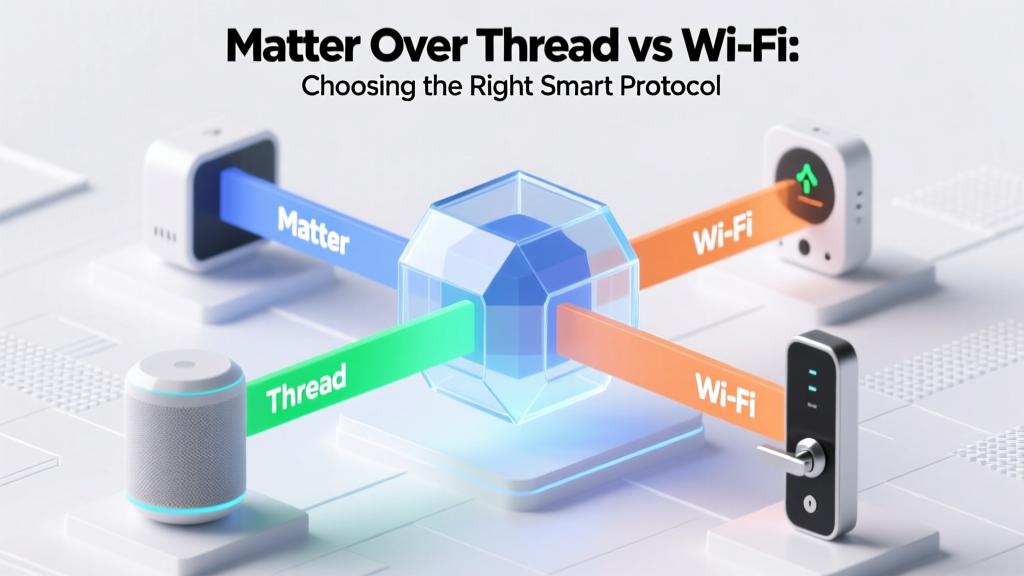
Matter does not replace Wi-Fi or Thread; it runs on top of them. According to the Thread Group, Thread is an IPv6-based, low-power mesh networking protocol built on the IEEE 802.15.4 standard. It is ideal for battery-operated sensors, smart locks, and lighting because it consumes minimal power and self-heals if a node drops offline. Wi-Fi, on the other hand, is utilized for high-bandwidth Matter devices like smart thermostats, cameras, and smart displays. The Wi-Fi Alliance ensures that Matter over Wi-Fi maintains strict security and interoperability standards across different router brands.
Multi-Admin and Security
The killer feature of Matter is Multi-Admin. This allows a single device to be simultaneously controlled by Apple Home, Google Home, Amazon Alexa, and Samsung SmartThings without complex workarounds. Furthermore, Matter employs a robust security model utilizing Device Attestation Certificates (DAC) and elliptic curve cryptography (P384) to ensure that only verified, authentic hardware can join your network.
Top Matter-Compatible Devices Roundup
Below is our curated list of the best Matter-native and Matter-bridged devices available today, categorized by their primary function and underlying transport protocol.
1. Eve Energy (Smart Plug)
Protocol: Matter over Thread
Price Range: $35 - $45
Best For: Energy monitoring and lamp automation
The Eve Energy smart plug is a pioneer in the Thread ecosystem. It features native Matter support, meaning it can be commissioned directly into Apple Home, Google Home, or Alexa via a QR code scan. Because it uses Thread, it requires a Thread Border Router (like an Apple TV 4K or Nest Hub Max) to function. The plug offers highly accurate local energy monitoring, measuring voltage, current, and wattage without sending your consumption data to the cloud. Its compact design ensures it will not block adjacent outlets, a common flaw in older Wi-Fi smart plugs.
2. Nanoleaf Essentials A19 Bulb
Protocol: Matter over Thread
Price Range: $15 - $25
Best For: Adaptive lighting and mesh network extension
Nanoleaf was among the first to market with Thread-enabled Matter bulbs. The Essentials A19 supports adaptive lighting, automatically adjusting its color temperature from warm white (2700K) to cool daylight (6500K) based on the time of day. As a constantly powered device, it acts as a Thread routing node, actively strengthening and extending the range of your Thread mesh network. Setup via Matter is nearly instantaneous compared to legacy Bluetooth mesh pairing.
3. Philips Hue Bridge (Matter Update)
Protocol: Matter Bridge (Zigbee to Matter)
Price Range: $50 - $60 (Bridge only)
Best For: Legacy smart lighting integration
Signify (the maker of Philips Hue) took a brilliant approach to Matter. Rather than forcing consumers to replace their existing Zigbee bulbs, they released a firmware update for the Hue Bridge that turns it into a Matter Bridge. This exposes all connected Hue bulbs, light strips, and switches to the Matter fabric. While the Bridge itself connects to your router via Ethernet, it translates local Matter commands into Zigbee signals for the end devices. This is the most reliable way to bring complex lighting scenes into a multi-admin environment.
4. Ecobee Smart Thermostat Premium
Protocol: Matter over Wi-Fi
Price Range: $240 - $260
Best For: Whole-home climate control and air quality monitoring
Thermostats require constant power and high bandwidth for firmware updates and complex scheduling, making Wi-Fi the logical transport layer. The Ecobee Smart Thermostat Premium supports Matter over Wi-Fi, allowing seamless integration into any major ecosystem. Beyond basic temperature control, it features a built-in air quality monitor (VOC and CO2 detection) and acts as a smart speaker. Its local Matter control ensures that your automated climate routines execute instantly, even if your ISP experiences an outage.
5. Aqara Door and Window Sensor P2
Protocol: Matter over Thread
Price Range: $35 - $45
Best For: Security triggers and HVAC automation
The Aqara P2 is a native Thread/Matter sensor that boasts an impressive battery life of up to two years. It features a tamper alert and can trigger complex automations, such as turning off your Ecobee thermostat when a window is left open for more than five minutes. Because it relies on Thread, its latency is exceptionally low (sub-100ms), making it ideal for security automations where every millisecond counts. Note that it requires a compatible Thread Border Router to bridge the 802.15.4 signal to your IP network.
Feature and Pricing Comparison
To help you visualize the investment required for a Matter-based ecosystem, we have compiled a comparison table of the devices reviewed above.
| Device | Category | Transport Protocol | Approx. Price | Border Router Required? |
|---|---|---|---|---|
| Eve Energy | Smart Plug | Thread | $40 | Yes |
| Nanoleaf A19 | Smart Bulb | Thread | $20 | Yes |
| Philips Hue Bridge | Lighting Bridge | Ethernet (Zigbee) | $60 | No |
| Ecobee Premium | Thermostat | Wi-Fi | $250 | No |
| Aqara Sensor P2 | Contact Sensor | Thread | $40 | Yes |
The Crucial Role of Thread Border Routers
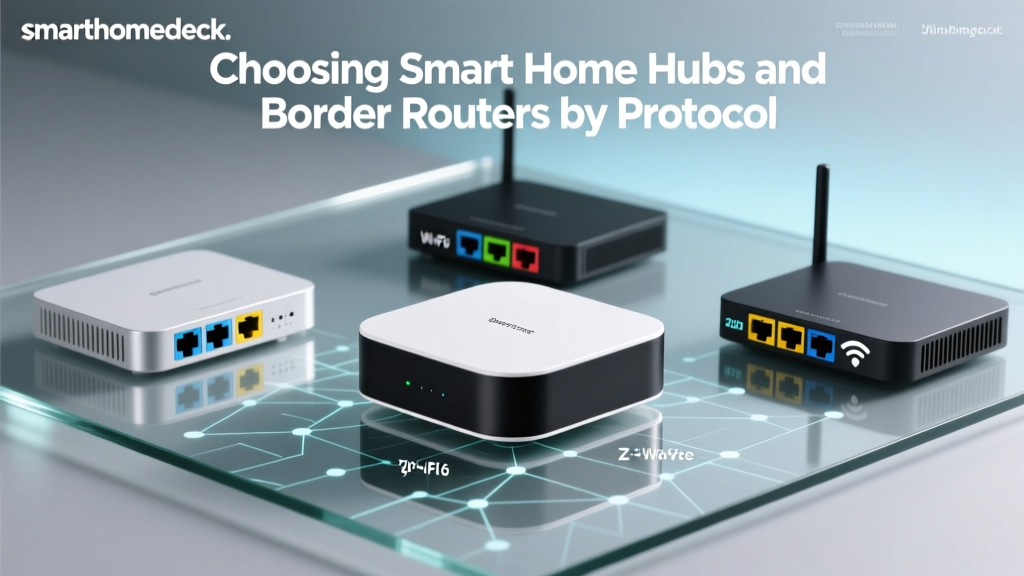
A common stumbling block for consumers adopting Matter is the misunderstanding of Thread Border Routers. Thread devices (like the Eve Energy plug and Aqara P2 sensor) cannot communicate directly with your Wi-Fi router. They require a Border Router to translate the Thread mesh network (IEEE 802.15.4) into standard IPv6 traffic on your local area network.
Pro Tip: You likely already own a Thread Border Router without realizing it. The Apple TV 4K (Ethernet model), Apple HomePod mini, Amazon Echo (4th Gen), and Google Nest Hub Max all contain Thread radios and act as Border routers. If you use a mix of ecosystems, Matter's multi-admin feature allows these different Border Routers to seamlessly share the Thread mesh network credentials.
If you do not own a compatible smart speaker or hub, you will need to purchase a dedicated Thread Border Router or start with Matter-over-Wi-Fi devices (like the Ecobee thermostat) and bridged systems (like Philips Hue) until you build out your Thread infrastructure.
Troubleshooting Matter Commissioning
While Matter promises a 'works everywhere' experience, the initial commissioning process can occasionally be finicky due to the reliance on Bluetooth Low Energy (BLE) for credential exchange. Here are actionable tips to ensure a smooth setup:
- Keep Devices Close: During the initial BLE pairing phase, keep your smartphone within 3 feet of the Matter device and your primary Wi-Fi router.
- 2.4GHz Networks: Most Matter-over-Wi-Fi devices only support 2.4GHz networks due to better wall penetration. Ensure your smartphone is connected to your router's 2.4GHz band during setup to pass the correct network credentials.
- Update Hub Firmware: Matter is an evolving standard. Ensure your Apple TV, Nest Hub, or Echo device is running the absolute latest firmware, as early Matter 1.0 implementations had bugs that were patched in subsequent 1.1 and 1.2 updates.
- QR Code Scanning: Always use the physical QR code on the device or its packaging. If the code is lost, the device usually has a numeric pairing code printed on it that can be entered manually in your smart home app.
Final Verdict: Is Matter Ready for Prime Time?
The transition to Matter is no longer a future promise; it is a present reality. Devices like the Nanoleaf Essentials and Eve Energy prove that Thread-based Matter devices offer superior latency and local reliability compared to legacy cloud-dependent Wi-Fi gadgets. Meanwhile, the Philips Hue Bridge update demonstrates how the industry is protecting consumer investments by bridging older Zigbee networks into the new IP-based fabric.
For new smart home adopters, buying Matter-native hardware is an absolute must. It guarantees that the devices you purchase today will not become obsolete if you decide to switch from an iPhone to an Android, or from Google Home to Apple HomeKit tomorrow. By prioritizing Thread for low-power sensors and plugs, and Wi-Fi for high-bandwidth appliances, Matter provides a robust, secure, and universally compatible foundation for the modern smart home.