The Smart Home Crossroads: Legacy Reliability vs. Modern Unification
Building a smart home today feels like standing at a technological crossroads. On one side, you have Z-Wave, the battle-tested, sub-GHz veteran that has powered millions of reliable home automations for over two decades. On the other side, you have Matter, the shiny, industry-backed unifier promising to break down the walled gardens of Apple, Google, and Amazon. But which protocol actually deserves a spot in your home's infrastructure?
Choosing between Z-Wave and Matter is not just about picking a brand; it is about understanding radio frequencies, network topologies, ecosystem compatibility, and long-term device support. In this comprehensive guide, we break down the technical realities, real-world performance, and practical use cases for both protocols to help you make an informed decision for your smart home setup.
Understanding Z-Wave: The Proven Workhorse
Z-Wave is a proprietary, low-power, wireless mesh networking protocol primarily designed for home automation. Developed and tightly controlled by Silicon Labs, Z-Wave operates in the sub-GHz frequency band (specifically 908.42 MHz in the United States and 868.42 MHz in Europe). Because it avoids the crowded 2.4 GHz spectrum used by Wi-Fi, Bluetooth, and microwaves, Z-Wave is incredibly resistant to interference.
According to the Z-Wave Alliance, the protocol boasts over 4,000 certified interoperable devices. The strict certification process means that a Z-Wave smart lock from Yale will seamlessly communicate with a Z-Wave hub from Samsung SmartThings or Hubitat, regardless of the manufacturer. Furthermore, Z-Wave's mesh topology means every mains-powered device (like a smart switch or plug) acts as a signal repeater, extending the network's range and reliability with every node added.
Understanding Matter: The Great Unifier
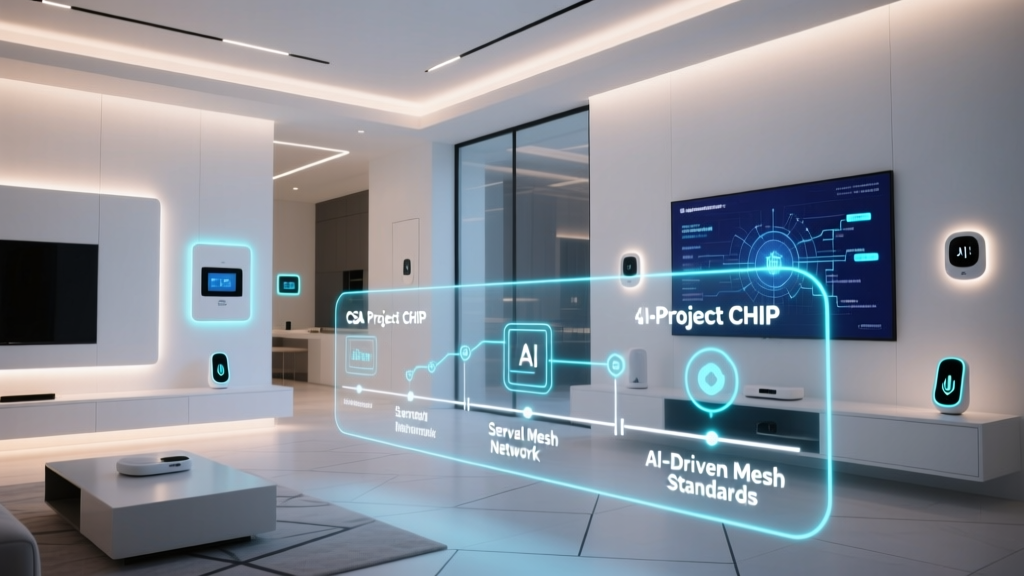
Matter is fundamentally different from Z-Wave because it is not a radio protocol itself. Instead, it is an open-source application layer standard developed by the Connectivity Standards Alliance (CSA). Matter runs on top of existing transport protocols, primarily Wi-Fi, Ethernet, and Thread (a low-power mesh networking protocol that operates on the 2.4 GHz band).
The primary goal of Matter is interoperability at the application level. It allows a single device to be controlled simultaneously by multiple ecosystems—a feature known as "Multi-Admin." This means a Matter-enabled smart plug can be controlled by an Apple HomePod, a Google Nest Hub, and an Amazon Echo at the exact same time, without needing complex cloud-to-cloud linking or third-party server workarounds.
Head-to-Head Technical Comparison
To understand how these protocols stack up, we must look at their underlying architecture. Below is a technical breakdown of Z-Wave versus Matter (over Thread and Wi-Fi).
| Feature | Z-Wave (Standard & Long Range) | Matter over Thread | Matter over Wi-Fi |
|---|---|---|---|
| Frequency Band | Sub-GHz (900 MHz) | 2.4 GHz | 2.4 GHz / 5 GHz |
| Network Topology | Mesh (Self-healing) | Mesh (Self-healing IPv6) | Star (Router dependent) |
| Interference Risk | Very Low | Moderate to High | High |
| Bandwidth | Low (100 kbps - 100 kbps LR) | Low (250 kbps) | High (Mbps to Gbps) |
| Power Consumption | Ultra-Low (Battery devices last 1-3 years) | Ultra-Low (Battery devices last 1-2 years) | High (Requires mains power) |
| Max Nodes per Network | 232 (Standard) / 4000+ (Long Range) | 250+ (Theoretical) | Limited by Router (Usually 30-50) |
Range, Penetration, and the Physics of Smart Homes
One of the most significant advantages of Z-Wave lies in the physics of radio waves. Lower frequency waves have longer wavelengths, which allows them to penetrate solid objects like drywall, brick, and concrete far more effectively than higher frequency waves. A standard Z-Wave signal can easily jump 30 to 100 meters between indoor nodes, passing through multiple walls without dropping packets.
Matter over Thread, operating on the 2.4 GHz band, struggles with physical obstructions. While Thread forms a mesh network similar to Z-Wave, the signal degradation through walls is much more pronounced. If you live in a multi-story home with dense materials like plaster, lath, or concrete, a Thread network will require significantly more border routers and repeater devices to achieve the same dead-zone-free coverage as a Z-Wave network.
Silicon Labs has also introduced Z-Wave Long Range (ZWLR), which utilizes a star topology and specialized antennas to achieve ranges of over a mile in open air, making it ideal for smart gates, detached garages, and outdoor sensors. You can explore more about the underlying hardware capabilities via Silicon Labs Z-Wave Technology.
Protocol Reliability and Wall Penetration Comparison
Security Architecture: S2 vs. Device Attestation
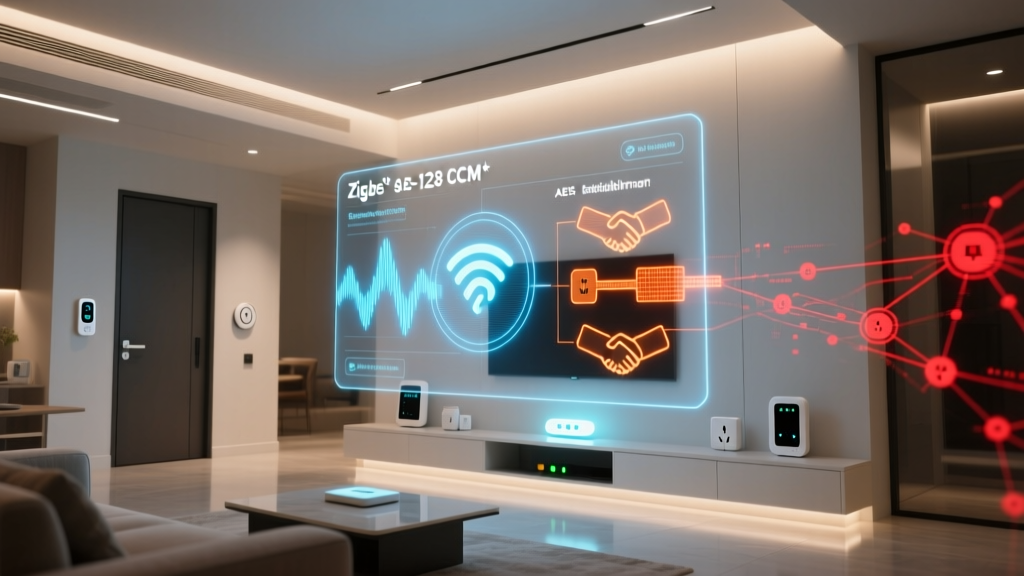
Security is paramount when connecting smart locks, garage doors, and security sensors to your network. Z-Wave utilizes S2 (Security 2) encryption, which is based on AES-128 bit encryption. S2 requires physical confirmation (like pressing a button on the device or entering a PIN) during the pairing process, effectively preventing man-in-the-middle attacks and ensuring that only authorized hubs can join the mesh.
Matter takes a different, highly robust approach using Device Attestation Certificates (DAC). Every certified Matter device contains a unique cryptographic certificate baked into its hardware at the factory. When you pair a Matter device, the hub verifies this certificate against the CSA's cloud database to ensure the device is genuine and has not been tampered with. While Matter's security model is technically superior for preventing counterfeit hardware, Z-Wave's S2 framework remains virtually unbreached in real-world residential deployments.
Ecosystem Compatibility and Multi-Admin
This is where Matter completely changes the landscape. Historically, if you bought a Z-Wave hub from SmartThings, your devices were tied to the SmartThings ecosystem. If your partner preferred Apple HomeKit, you were out of luck unless you used complex cloud bridging tools.
Matter's Multi-Admin feature solves this permanently. A single Matter device can be paired to an Apple TV, a Google Nest Hub, and a Home Assistant server simultaneously. Each ecosystem has equal, local control over the device. If you have a mixed-device household where some family members use iPhones and others use Androids, Matter is the undisputed champion of harmony.
Device Availability and Real-World Costs
While Matter is the future, Z-Wave is the present. Because Z-Wave has been around for over 20 years, you can find a Z-Wave device for virtually any niche application. Need a smart water shut-off valve? A Z-Wave one exists. Need a specialized tilt sensor for a garage door or a recessed door/window sensor? Z-Wave has dozens of options.
Z-Wave Cost Estimates:
- Smart Switches/Dimmers (e.g., Zooz ZEN72, Inovelli): $40 - $65
- Door/Window Sensors (e.g., Aeotec Recessed): $35 - $50
- Smart Locks (e.g., Yale Assure Lock 2 with Z-Wave module): $180 - $250
Matter, conversely, is still in its growth phase. The market is currently flooded with Matter-over-Thread smart plugs, lighting (like Nanoleaf Essentials), and basic environmental sensors. Complex devices like smart locks and motorized valves are slower to adopt Matter due to the strict certification and battery-life optimization requirements of the Thread protocol.
Matter Cost Estimates:
- Smart Plugs (e.g., Eve Energy, SwitchBot): $25 - $40
- Smart Lighting (e.g., Nanoleaf Essentials Bulbs): $20 - $30
- Thread Border Routers (Required for infrastructure): $90 - $150 (e.g., Apple TV 4K, Nest Hub Max)
Which Should You Choose? Practical Use Cases
Choose Z-Wave If:
- You prioritize security and complex automations: Z-Wave's local processing on hubs like Hubitat Elevation or Home Assistant is lightning-fast and does not rely on the cloud.
- You have a large or dense home: Sub-GHz frequencies will penetrate thick walls and reach detached structures much more reliably than 2.4 GHz Thread networks.
- You need niche devices: If you are automating water valves, gas detectors, or specialized HVAC controls, Z-Wave's massive catalog is unmatched.
- You want to avoid the "Border Router" headache: Any Z-Wave hub works out of the box. Matter over Thread requires you to ensure you have compatible Thread Border Routers from the exact same ecosystem to prevent network fragmentation.
Choose Matter If:
- You have a mixed-ecosystem household: Multi-admin is a lifesaver for families sharing Apple, Google, and Amazon devices.
- You are building a new smart home from scratch: Starting fresh with Matter-over-Thread lighting and Wi-Fi appliances ensures future-proofing and easy replacement of devices.
- You prefer off-the-shelf simplicity: Matter's QR-code pairing process is generally more user-friendly for average consumers than Z-Wave's inclusion modes and network healing routines.
The Hybrid Approach: Bridging the Gap
The smartest approach for most enthusiasts is not to choose one over the other, but to use a hub that supports both. Platforms like Home Assistant (via the Connect ZWA-2 and SkyConnect dongles) and Hubitat Elevation act as universal translators. You can use Z-Wave for your critical infrastructure—locks, leak sensors, and perimeter security—while using Matter for your living room lighting, smart plugs, and media controls. Furthermore, many existing hubs, like the Philips Hue Bridge and SwitchBot Hub 2, now receive firmware updates that expose their connected proprietary devices to your Matter network, bridging the gap between legacy hardware and modern standards.
Final Verdict
Z-Wave remains the undisputed king of reliability, range, and device variety for serious home automation enthusiasts who demand local control and rock-solid mesh networking. Matter, however, represents the inevitable future of consumer smart homes, offering unprecedented cross-platform compatibility and a unified app experience. For the best results in 2024 and beyond, leverage Z-Wave for your home's critical, low-bandwidth sensors and security layers, and embrace Matter for your high-bandwidth, cross-ecosystem lighting and appliance controls.