The Matter Hype vs. The Zigbee Reality
When the smart home industry began transitioning toward the unified Matter standard, a common question echoed through tech forums and review sites alike: Is Zigbee dead? With major tech giants like Apple, Google, and Amazon backing Matter, it was easy to assume that legacy protocols would quickly fade into obsolescence. However, the reality of the smart home market is far more nuanced. Zigbee, a low-power, low-bandwidth wireless mesh network standard based on the IEEE 802.15.4 specification, has a massive, twenty-year head start. It boasts an installed base of hundreds of millions of devices, a deeply mature manufacturing supply chain, and unparalleled reliability in dense mesh environments.
According to the Connectivity Standards Alliance (CSA), the very same body that governs Matter, Zigbee remains a foundational pillar of the IoT ecosystem. Rather than being replaced by Matter, Zigbee is actively being integrated into it via bridging. Understanding why Zigbee refuses to fade away requires a deep dive into its technical merits, economic advantages, and the practical realities of deploying a hybrid smart home network today.
Technical Showdown: Zigbee 3.0 vs. Matter over Thread
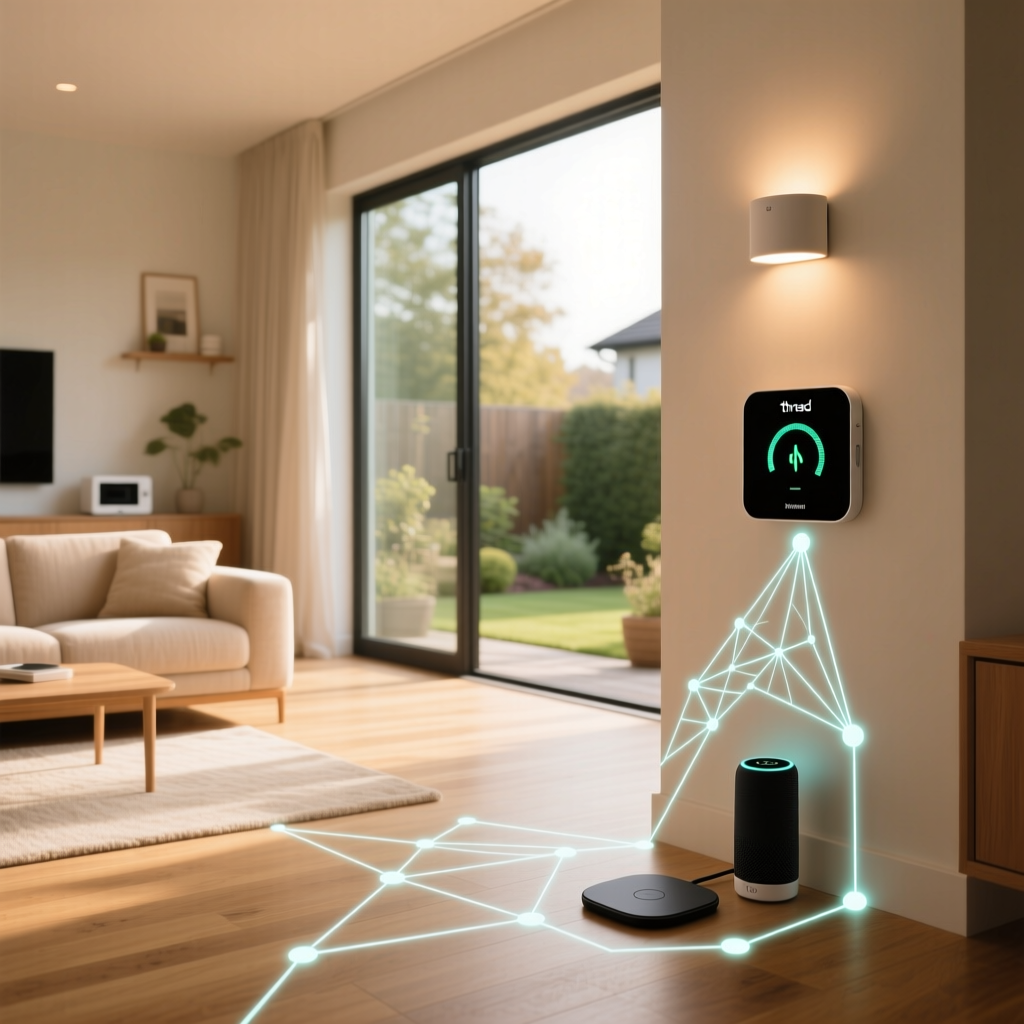
Matter is not a wireless protocol itself; it is an application layer that runs over existing transport protocols like Wi-Fi, Ethernet, and Thread. When comparing Zigbee to Matter's low-power mesh alternative (Thread), we are essentially comparing two protocols built on the exact same physical radio standard (IEEE 802.15.4). However, their network layers, routing mechanisms, and ecosystem maturity differ significantly.
| Feature | Zigbee 3.0 | Matter (over Thread) | Wi-Fi |
|---|---|---|---|
| Frequency Band | 2.4 GHz | 2.4 GHz (Thread) | 2.4 / 5 / 6 GHz |
| Network Topology | Mesh | Mesh | Star |
| Max Data Rate | 250 kbps | 250 kbps | Up to 9.6 Gbps |
| Power Consumption | Ultra-Low | Ultra-Low | High |
| Local Control | Yes (requires Hub) | Yes (native/border router) | Varies (often cloud-dependent) |
| Ecosystem Maturity | Extremely High | Growing / Early Stage | Ubiquitous |
While Thread offers modern IP-based routing (IPv6) which makes local network integration seamless, Zigbee's proprietary network layer has been battle-tested for over a decade. Zigbee handles message retries, route discovery, and mesh healing with a predictability that newer Thread networks are still striving to perfect in consumer environments. Furthermore, as noted by semiconductor giant Silicon Labs, modern multi-protocol SoCs (Systems on Chip) allow hubs to run Zigbee and Thread concurrently on a single antenna, meaning the two protocols can coexist harmoniously rather than competing for hardware dominance.
The Economics of Smart Home Sensors
One of the most compelling reasons for Zigbee's ongoing relevance is simple economics. The smart home market is highly price-sensitive, particularly when it comes to ambient sensors. A standard Zigbee door/window contact sensor or temperature/humidity monitor can be manufactured at a fraction of the cost of a Matter-certified equivalent.
Currently, you can purchase a highly reliable Zigbee temperature sensor from brands like Sonoff or Third Reality for $10 to $15. Comparable Matter over Thread sensors often retail between $25 and $40. This price disparity is driven by the cost of Matter certification, the requirement for more complex IPv6-capable silicon, and the economies of scale that Zigbee has enjoyed for years. For a user looking to deploy 20 leak sensors across a large property, Zigbee remains the undisputed champion of cost-efficiency.
Battery Life and Power Consumption Analysis
Power efficiency is critical for devices hidden behind walls or tucked into door frames. While both Zigbee and Thread are designed for ultra-low power consumption, real-world battery life often favors Zigbee due to its highly optimized, lightweight application layer. Wi-Fi, by contrast, requires constant high-power radio bursts to maintain associations with access points, making it unsuitable for battery-operated sensors.
Battery life comparison of smart home door sensors across Zigbee, Matter over Thread, and Wi-Fi protocols.
As the data illustrates, a standard CR2032 coin-cell battery in a Zigbee door sensor will routinely last 24 months or more. Matter over Thread devices are catching up, averaging around 18 months, but early firmware inefficiencies and IPv6 overhead still give Zigbee a slight edge in sleep-state power management. Wi-Fi sensors, even those utilizing target wake time (TWT), rarely exceed 6 months without requiring a recharge or battery swap.
Mesh Networking: Zigbee's Proven Reliability
The true magic of Zigbee lies in its mesh networking capabilities. In a Zigbee network, mains-powered devices (like smart plugs, light bulbs, and switches) act as "routers." They repeat the signal from battery-powered "end devices" (like motion sensors) back to the central coordinator (the hub). This means that the more powered devices you add to your network, the stronger and wider your coverage becomes.
Thread operates on a similar mesh principle, but Zigbee's router implementation is famously robust. A Philips Hue bulb or an Aeotec smart plug will reliably route hundreds of Zigbee messages a day without dropping packets. The Thread Group has made incredible strides in IP-based mesh routing, but Thread border routers (like the Apple TV 4K or Nest Hub) are still maturing in how they handle complex, multi-hop mesh healing when a router node is unplugged. If you live in a 3,000-square-foot home with concrete walls, a dense Zigbee mesh is currently the most foolproof way to ensure a basement leak sensor communicates with your hub.
Pro Tip: To optimize a Zigbee mesh, avoid placing your hub near your Wi-Fi router. Zigbee and Wi-Fi both operate on the 2.4 GHz spectrum. Set your Zigbee network to Channel 15, 20, or 25, and ensure your Wi-Fi is set to non-overlapping channels (1, 6, or 11) to prevent signal degradation.
Top Zigbee Hubs That Bridge the Matter Gap
You do not need to abandon Zigbee to embrace Matter. The smartest approach to modern home automation is using a "bridge" hub. These hubs maintain a local Zigbee network but expose those devices to your Matter-compatible controllers (like Apple Home, Google Home, or Home Assistant) via the Matter protocol. Here are the top hubs for this hybrid approach:
1. Hubitat Elevation (Model C-8)
- Price: ~$149
- Best For: Advanced automations and strict local processing.
- Details: Hubitat is a powerhouse for local control. It features an internal Zigbee 3.0 radio and a Z-Wave radio. With its recent firmware updates, Hubitat acts as a Matter bridge, allowing you to expose your entire Zigbee sensor network to Apple Home or Google Home securely, while keeping the complex automation logic running locally on the hub itself.
2. Homey Pro (Early 2023 Edition)
- Price: ~$399
- Best For: Users who want support for every protocol in a single, beautiful puck.
- Details: Homey Pro includes Zigbee, Z-Wave, Thread, Matter, Wi-Fi, Bluetooth, and Infrared. It is arguably the most comprehensive hub on the market. Its Zigbee antenna is exceptionally strong, and its native Matter bridging capabilities make it a future-proof investment for mixed-protocol homes.
3. Aeotec Smart Home Hub
- Price: ~$139
- Best For: Samsung SmartThings users and budget-conscious bridge builders.
- Details: Built on the SmartThings platform, this hub features a custom-engineered Zigbee antenna that provides excellent range. While its native Matter support is still rolling out via SmartThings firmware updates, it remains one of the most reliable and affordable ways to manage a massive Zigbee network.
4. Sonoff Zigbee 3.0 USB Dongle Plus (P Version)
- Price: ~$25
- Best For: Home Assistant enthusiasts.
- Details: If you run a Home Assistant server (like a Raspberry Pi or Intel NUC), this USB dongle is the gold standard. It uses the CC2652P chip, offering massive signal amplification. Paired with Zigbee2MQTT, it supports hundreds of Zigbee devices and can bridge them directly to Home Assistant's native Matter server integration.
Best Zigbee Devices to Buy Today
If you are building or expanding a Zigbee network, focus on devices that offer high reliability, open compatibility, and excellent mesh routing. Here are the top recommendations:
- Philips Hue Lighting System: While expensive, Hue bulbs and light strips are the most reliable Zigbee routers on the market. They rarely drop off the mesh and handle network traffic with zero latency. (Cost: $25 - $60 per bulb)
- Aqara T1 Door & Window Sensors: Aqara dominates the budget sensor market. The T1 line is compact, features a long-lasting CR1632 battery, and reports open/close states in milliseconds. Note that some Aqara devices require a specific hub or Zigbee2MQTT to unlock all features. (Cost: $15 - $20)
- Third Reality Zigbee Smart Plugs: Essential for mesh expansion. These plugs act as routers and include energy monitoring features. They are natively compatible with almost all Zigbee hubs, including SmartThings and Hubitat. (Cost: $18 for a 2-pack)
- Sonoff SNZB-04P Door Sensor: An upgraded version of their classic sensor, featuring a longer battery life and a more robust antenna design, making it perfect for far-flung corners of the house. (Cost: $12)
Security in the Modern Era
A common misconception is that Zigbee is less secure than Matter. This is false. Zigbee 3.0 utilizes AES-128 encryption for network layer security and application layer security. When a device joins a Zigbee network, it undergoes a secure key exchange. The primary vulnerability in older Zigbee implementations was the "install code" process, which manufacturers sometimes bypassed for ease of use. Today, reputable brands enforce strict touchlink commissioning and install codes.
Matter does introduce a more modern, blockchain-inspired Device Attestation Certificate (DAC) system, which ensures that a device is genuinely certified and hasn't been tampered with at the factory level. However, for the actual payload data traveling across your local mesh network, Zigbee's AES-128 encryption remains virtually impenetrable to local attackers. As long as you purchase Zigbee devices from established brands and avoid unbranded, ultra-cheap clones, your network's security posture is excellent.
The Verdict: How to Build a Hybrid Network
Zigbee is not merely surviving the Matter era; it is acting as its vital foundation. The transition to a fully native Matter-over-Thread smart home will take years, perhaps a decade, due to the sheer volume of existing hardware and the current cost of Thread silicon. For the modern smart home enthusiast, the optimal strategy is not to rip and replace, but to bridge.
Invest in a high-quality local hub like the Hubitat Elevation or Homey Pro. Populate your home with affordable, ultra-low-power Zigbee sensors and robust Zigbee mesh routers. Then, use your hub's Matter bridge functionality to expose those devices to your preferred voice assistants and ecosystem dashboards. By doing so, you get the best of both worlds: the proven reliability, range, and affordability of Zigbee, combined with the unified, cross-platform elegance of Matter. Zigbee isn't going anywhere, and your smart home will be better for it.