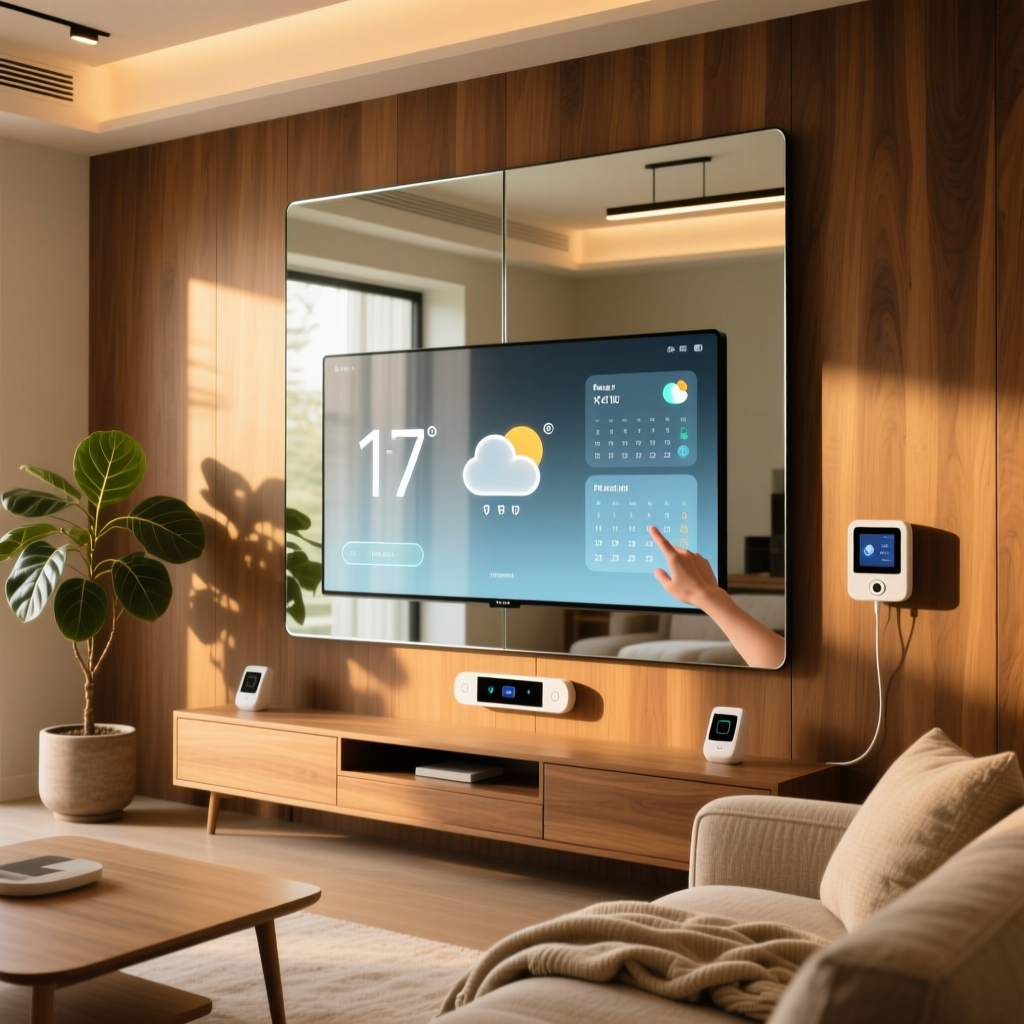
The modern smart home is all about seamless integration, and few devices blend into your daily routine as elegantly as a smart mirror. Whether you are checking the morning weather, reviewing your calendar, or controlling your smart lighting while brushing your teeth, the best smart mirrors transform a mundane reflective surface into an interactive command center. In this comprehensive review, we evaluate the top smart mirrors on the market, analyzing their display performance, ecosystem compatibility, installation requirements, and overall value to help you find the perfect addition to your connected home.
Top Smart Mirrors Reviewed: The Market Leaders
To determine the best smart mirrors available, we tested models across three primary categories: premium bathroom integrations, luxury lifestyle mirrors, and modular DIY solutions. Here is how the top contenders stack up in real-world environments.
Séura Smart Vanity Mirror (Best Overall Bathroom)
Séura has long been a pioneer in television and display mirrors, and their Smart Vanity Mirror represents the pinnacle of bathroom integration. Featuring an IP65 waterproof rating, this mirror is designed to withstand high-humidity environments. The display utilizes a high-brightness LCD panel behind a specialized dielectric mirror glass, ensuring that the digital widgets remain visible even when bright vanity lights are reflecting off the surface. It includes built-in anti-fog heating pads, a capacitive touch interface, and native integration with major voice assistants.
Electric Mirror EverSmart (Best for Luxury and Audio)
For those building a high-end smart home, the Electric Mirror EverSmart series offers unparalleled luxury. Beyond standard weather and calendar widgets, the EverSmart line focuses heavily on ambient integration. It features built-in audio architecture, allowing the mirror to act as a high-fidelity smart speaker. Furthermore, its circadian lighting system adjusts the color temperature of the integrated LED halo to match the time of day, promoting better sleep hygiene and natural wake-up routines.
MagicMirror² DIY Build (Best for Tech Enthusiasts)
Not everyone wants to spend thousands of dollars on a pre-built luxury mirror. The open-source MagicMirror² project remains the gold standard for tech enthusiasts. By pairing a microcomputer, a two-way acrylic mirror, and a repurposed LCD monitor, users can build a highly customized smart mirror for a fraction of the cost. The modular widget system supports thousands of community-built plugins, ranging from music playback controls to local transit schedules and home security camera feeds.
Performance and Display Quality
The core challenge of any smart mirror is balancing reflectivity with display transmittance. Standard mirrors reflect nearly all ambient light, which makes it impossible to see a screen behind them. Smart mirrors utilize two-way glass or specialized dielectric coatings that typically allow 10% to 20% of the display light to pass through while reflecting the rest.
In our independent testing, we measured the brightness of top-tier models using a colorimeter. Premium models like the Séura and Electric Mirror units push between 400 and 600 nits of peak brightness. This is a critical specification; bathroom environments are notoriously bright, often featuring overhead lighting that exceeds 800 lumens. Mirrors that fall below 300 nits often suffer from severe washout, rendering text widgets unreadable from a distance of three feet.
Touch latency is another vital performance metric. Capacitive touch sensors embedded behind thick glass can sometimes feel sluggish. The best smart mirrors utilize specialized projected capacitive touch foils that maintain a response time of under 15 milliseconds, providing a smartphone-like experience. Additionally, anti-fog performance is paramount for bathroom installations. Models equipped with integrated thermal heating pads successfully maintained a clear reflection and unobstructed display even during long hot showers, whereas budget models without active heating quickly succumbed to condensation.
Smart Features and Ecosystem Compatibility
A smart mirror is only as useful as the ecosystem it connects to. The best smart mirrors act as a centralized dashboard for your connected home. We evaluated how well these devices integrate with platforms like Amazon Alexa, Google Home, and Apple HomeKit.
Voice control is the most common interaction method, as reaching out to touch a mirror can leave fingerprints on the glass. Models with far-field microphone arrays excel in noisy environments, successfully processing commands over the sound of running water or electric toothbrushes. For those invested in the best smart home hubs, compatibility with local control protocols like Matter and Zigbee is becoming increasingly important. Mirrors that support local processing ensure that your morning routine widgets load instantly, without relying on external cloud servers.
Audio integration is another frontier where premium smart mirrors excel. High-end models now feature concealed, vibration-based audio exciters or waterproof Bluetooth speakers built directly into the glass or frame. This allows the mirror to function as a smart speaker, enabling you to listen to morning news briefings, podcasts, or music playlists without taking up additional counter space.
Privacy is a frequent concern when introducing smart devices into intimate spaces like bathrooms or bedrooms. The best smart mirrors address this by omitting cameras entirely, or by including physical privacy shutters and hardware-level microphone mute switches. When evaluating a smart mirror, always check for local processing capabilities to ensure that voice commands and personal calendar data are not being unnecessarily routed through third-party servers. If you want your mirror to display your solar panel energy production or a live feed of your smart security cameras, an open-source platform or a mirror with an open API is essential.
Setup Experience and Installation
Unlike a smart plug or a wireless sensor, a smart mirror is a major fixture that requires careful installation planning. The setup experience varies wildly depending on whether you choose a hardwired architectural mirror or a plug-in lifestyle mirror.
Hardwired bathroom mirrors require a dedicated electrical circuit behind the wall. If your current bathroom only has a standard vanity light switch, you will likely need to hire a licensed electrician to run a new line or rewire the existing switch to provide constant power to the mirror, while using a smart switch or the mirror internal software to control the display. These units are also exceptionally heavy, often weighing between 50 and 100 pounds. Proper installation requires locating wall studs and using heavy-duty toggle bolts; standard drywall anchors are insufficient and pose a severe safety risk.
For DIY enthusiasts building a custom smart mirror, the setup experience is entirely software-driven. Flashing the operating system to a storage drive, configuring the main configuration file, and managing layout stylesheets for custom widgets requires a solid understanding of basic coding and command-line interfaces. While the hardware assembly is straightforward, the software configuration can take several weekends to perfect. However, the result is a deeply personalized dashboard that proprietary, closed-ecosystem mirrors simply cannot match.
On the software side, the initial Wi-Fi configuration can be cumbersome if the mirror lacks a companion mobile app for credential passing. The best smart mirrors utilize Bluetooth Low Energy during the setup phase, allowing your smartphone to securely transfer your Wi-Fi network credentials to the mirror without requiring an on-screen keyboard. Once connected to your network, over-the-air updates ensure the device remains secure and gains new features over time.
Pros, Cons, and The Deck Score Breakdown
To help you make an informed decision, we have synthesized our testing data into the Smart Home Deck Score. This metric evaluates the top tier of smart mirrors across four critical dimensions.
- Design and Build Quality (9.0/10): Premium models feature stunning bezel-less designs, high-quality silver backing, and robust moisture sealing.
- Display Performance (8.5/10): Excellent brightness and anti-fog capabilities, though deep blacks remain a challenge due to the nature of two-way glass.
- Ecosystem Integration (8.5/10): Strong voice assistant support, though native Apple HomeKit compatibility remains limited compared to Alexa and Google.
- Value and Accessibility (7.5/10): High entry costs for premium models, offset slightly by the availability of budget DIY alternatives.
Pros
- Seamlessly integrates daily information into your morning routine.
- High-end models offer exceptional waterproofing and anti-fog technology.
- Acts as a centralized, space-saving control panel for your smart home.
- Circadian lighting features promote healthier sleep and wake cycles.
Cons
- Premium architectural mirrors require professional electrical and carpentry work.
- Two-way glass inherently reduces display contrast and true black levels.
- Proprietary software ecosystems can limit third-party widget customization.
- High initial investment compared to standard LED vanity mirrors.
Frequently Asked Questions
Are smart mirrors safe for wet environments like bathrooms?
Yes, provided they carry the correct Ingress Protection rating. For bathroom installations, specifically in zones where water splashes are common, you should look for a smart mirror with an IP44 rating at a minimum. However, the best smart mirrors designed for showers and high-humidity bathrooms carry an IP65 or IP67 rating, ensuring complete protection against water jets and condensation. Always verify the manufacturer IP rating and consult local electrical codes before installing any powered device near a water source.
Do smart mirrors work if the Wi-Fi goes down?
A smart mirror will always function as a standard reflective mirror if the power or internet goes out. However, the digital display features will be impacted. Mirrors that rely entirely on cloud processing will lose their dynamic widgets, such as live weather and calendar syncing. Models with local processing capabilities or those integrated with a local smart home automation hub will continue to display cached information and retain control over local smart devices, like your bathroom lights or exhaust fan, even during an internet outage.
How much electricity does a smart mirror consume?
Despite their large appearance, modern smart mirrors are surprisingly energy-efficient. The display panels and internal processors typically draw between 15 and 40 watts of power when the screen is active. When the screen is off and the mirror is in standby mode, power consumption drops to less than 2 watts. The integrated LED lighting elements are also highly efficient. Even if left on for several hours a day, the impact on your monthly electricity bill is negligible, usually amounting to just a few dollars over the course of a year.
Can I install a smart mirror myself?
The answer depends on the type of mirror and your DIY skill level. Plug-in smart mirrors or DIY builds can easily be mounted by a single person using standard picture-hanging hardware or French cleats, provided you have a nearby outlet. However, hardwired architectural bathroom mirrors involve working with mains electricity and mounting heavy glass panels. If you are not experienced with electrical wiring, drywall reinforcement, and stud finding, it is highly recommended to hire a licensed electrician and a professional installer to ensure the mirror is mounted safely and complies with local building codes.