When it comes to upgrading your home's climate control, the transition from a basic programmable dial to a fully intelligent smart home hub is one of the most impactful changes you can make. Among the myriad of options on the market, the Ecobee smart thermostat lineup has consistently stood out as a pioneer in the industry. But with premium price tags and a heavy reliance on external sensors, is it the right choice for your household? In this comprehensive Ecobee thermostat review, we break down the hardware, software, installation process, and real-world energy savings to help you determine if this device deserves a spot on your wall.
Whether you are browsing our extensive catalog of smart thermostats or looking to integrate your HVAC system into a broader smart home hub ecosystem, understanding the nuances of Ecobee's technology is crucial. Let us dive into the details.
Product Overview: The Ecobee Ecosystem
Ecobee has built its reputation not just on the thermostat itself, but on the ecosystem of remote sensors that accompany it. Unlike traditional thermostats that measure the temperature in a single hallway or living room, Ecobee utilizes a network of wireless room sensors to detect occupancy and ambient temperatures throughout your entire house. This multi-point data collection allows the system to eliminate hot and cold spots, ensuring that the rooms you are actually using are the ones receiving optimal climate control.
The current flagship models offer a sleek, glass-fronted interface, built-in voice assistants, and advanced HVAC monitoring. Ecobee positions its products not merely as temperature dials, but as central command centers for the smart home. With native support for Apple HomeKit, Amazon Alexa, and Google Assistant, the Ecobee thermostat bridges the gap between environmental control and whole-home automation. Furthermore, independent energy audits and ENERGY STAR certifications consistently highlight Ecobee's ability to reduce heating and cooling costs by up to 26%, making it a device that can theoretically pay for itself over time.
Design, Display, and Hardware Features
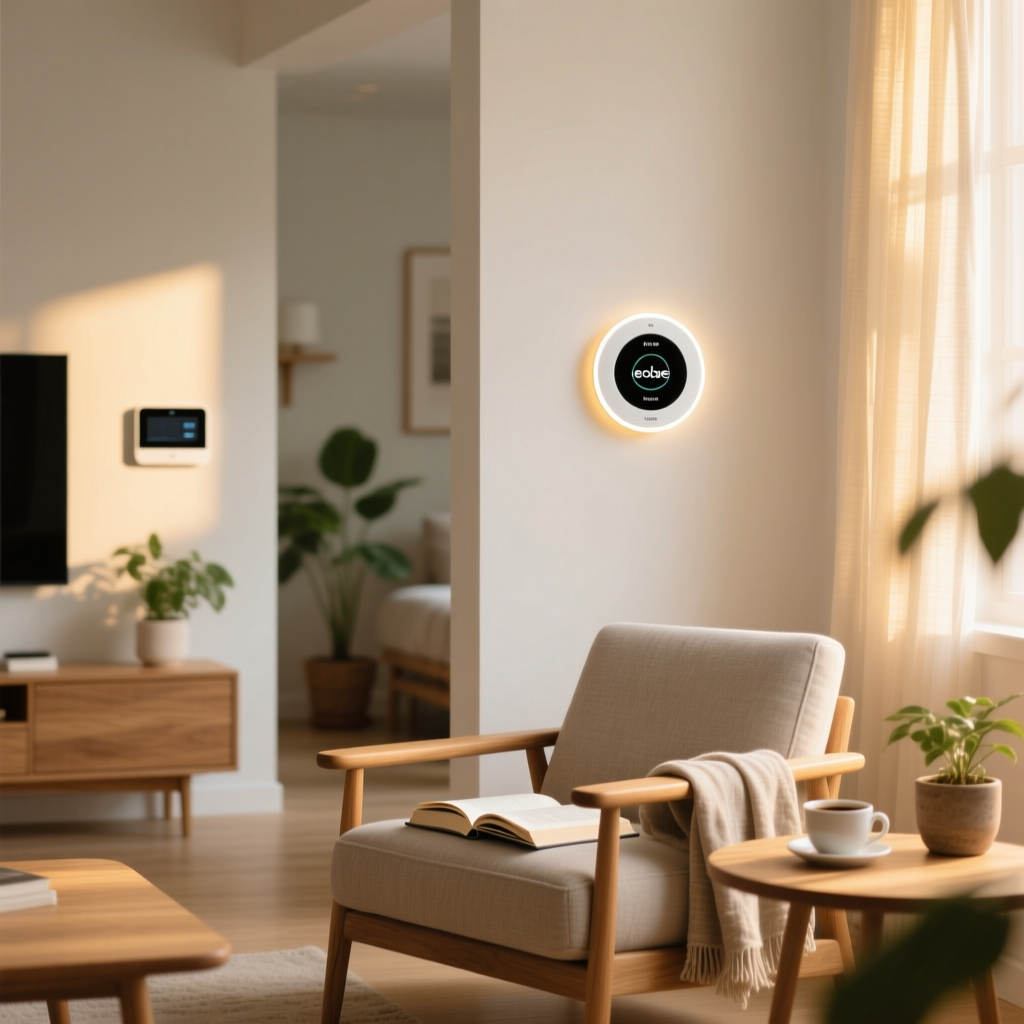
Aesthetically, the latest generation of Ecobee thermostats is a masterpiece of modern industrial design. The device features a glossy, black glass faceplate that blends seamlessly into most modern interiors. The capacitive touchscreen is highly responsive, offering a vibrant, full-color display that is easily readable from across the room. An integrated ambient light sensor ensures the screen brightness adjusts automatically, dimming in the evening to avoid casting a harsh glare in dark hallways.
Beneath the glass lies a robust array of hardware. The thermostat is equipped with far-field microphones and a high-quality speaker, allowing it to function as a standalone smart speaker for voice commands and music playback. A built-in proximity sensor wakes the display as you approach, revealing the current temperature, weather conditions, and active routines.
However, the true hardware marvel lies in the SmartSensors. These small, pebble-shaped devices utilize passive infrared (PIR) technology to detect motion and occupancy, alongside precision thermistors to measure room temperature. The newer SmartSensor models boast a battery life that can stretch up to five years, a massive improvement over earlier iterations that required frequent battery swaps. The sensors communicate with the main thermostat via a dedicated, low-energy radio frequency, ensuring they do not congest your home's Wi-Fi network.
Performance, Sensors, and Energy Savings
The core promise of any smart thermostat is energy efficiency, and Ecobee delivers on this front with impressive algorithmic precision. The proprietary eco+ software is the brain behind the operation. It continuously analyzes local weather patterns, your home's thermal characteristics, and your historical usage data to optimize HVAC runtimes. For instance, the Smart Recovery feature learns exactly how long it takes your specific furnace or air conditioner to reach the desired temperature, ensuring your home is comfortable exactly when you wake up or arrive, without running the system prematurely.
Independent testing and manufacturer data suggest that users can save an average of 23% to 26% on their annual heating and cooling bills. These savings are primarily driven by the Smart Home & Away feature. By combining geofencing from your smartphone with the occupancy data from the remote sensors, the Ecobee thermostat knows when the house is empty and automatically adjusts the setpoint to an eco-friendly temperature. When it detects that you have returned, or when a sensor picks up motion, it seamlessly resumes your comfort schedule.
Another standout performance feature is the Follow Me function. If you are working in a home office during the day, the thermostat prioritizes the temperature reading from the sensor in that specific room, ignoring the rest of the house. At night, it shifts focus to the bedroom sensors. This targeted approach prevents the HVAC system from overworking to condition unoccupied spaces, a common flaw in single-point traditional thermostats.
Additionally, Ecobee offers advanced HVAC health monitoring. The system tracks the runtime of your heating and cooling equipment, alerting you via the mobile app if it detects anomalies, such as an air conditioner that is running constantly but failing to drop the temperature. It also provides intelligent filter replacement reminders based on actual system runtime rather than an arbitrary calendar schedule, helping to maintain peak HVAC efficiency and indoor air quality.
Setup Experience and App Interface
One of the most common anxieties surrounding smart home upgrades is the installation process. Fortunately, Ecobee has refined its setup wizard to be incredibly user-friendly. The mobile app provides step-by-step, illustrated instructions that guide you through turning off the breaker, labeling wires, and mounting the backplate.
A major hurdle for many older homes is the lack of a C-wire (common wire), which is required to provide continuous power to a smart thermostat. Ecobee addresses this brilliantly by including a Power Extender Kit (PEK) in the box. The PEK allows you to multiplex your existing wires at the HVAC control board, delivering reliable power to the thermostat without the need to run new wiring through your walls. While accessing the furnace control board can be slightly intimidating for novice DIYers, the app's visual guides make the process manageable.
Once the hardware is mounted, the on-screen setup wizard walks you through connecting to your dual-band Wi-Fi network (supporting both 2.4GHz and 5GHz bands), pairing the remote sensors, and configuring your basic comfort schedules. The entire process, from unboxing to final calibration, typically takes between 45 and 60 minutes.
The Ecobee mobile app is widely regarded as one of the best in the smart home industry. It is intuitive, visually clean, and logically organized. The dashboard provides an at-a-glance view of your current indoor temperature, humidity levels, outdoor weather, and active sensors. The settings menu is deep but accessible, allowing you to tweak installation parameters, set up vacation hold schedules, and configure smart home integrations without feeling overwhelmed. For those who want granular control, the app also provides detailed runtime reports, showing exactly how many hours your furnace or AC ran each day, which is invaluable for tracking energy consumption.
Ecosystem Compatibility and Smart Home Integration
Where Ecobee truly outshines many of its competitors is its open-armed approach to ecosystem compatibility. While some brands attempt to lock users into proprietary walled gardens, Ecobee plays exceptionally well with others, earning a perfect score in our compatibility metrics.
- Apple HomeKit: Ecobee remains one of the few premium thermostats that offers native, out-of-the-box support for Apple HomeKit. This means Siri voice commands, integration into Apple Home routines, and the ability to use the thermostat as a trigger for other HomeKit accessories.
- Amazon Alexa: Higher-end Ecobee models feature built-in Alexa. You can use the thermostat exactly like an Echo Dot, asking for the weather, controlling other smart devices, or setting timers, all without needing a separate smart speaker in the hallway.
- Google Assistant: Full integration with Google Home allows for seamless voice control and inclusion in Google Assistant routines.
- Samsung SmartThings & IFTTT: For the advanced automation enthusiast, Ecobee integrates flawlessly with SmartThings and IFTTT (If This Then That). You can create complex applets, such as triggering your Ecobee to lower the temperature when your smart lock is engaged and the house is set to 'Away' mode.
Furthermore, Ecobee has expanded its own ecosystem to include smart locks, cameras, and doorbell cameras. The thermostat can act as a hub for these devices, unifying your security and climate control into a single, cohesive interface. If you are building a comprehensive smart home from the ground up, exploring our product reviews for compatible Ecobee accessories is highly recommended.
Pros and Cons
To summarize our findings, here is a quick breakdown of the strengths and weaknesses of the Ecobee smart thermostat lineup.
Pros
- Superior Room Sensors: The included SmartSensors effectively eliminate hot and cold spots by prioritizing occupied rooms.
- Unmatched Compatibility: Native support for Apple HomeKit, Amazon Alexa, Google Assistant, and SmartThings.
- Energy Savings: Proven eco+ algorithms and geofencing significantly reduce HVAC runtime and utility bills.
- Power Extender Kit Included: Solves the C-wire problem for older homes without requiring an electrician.
- Beautiful App Interface: Detailed runtime reports and intuitive scheduling tools.
Cons
- Premium Price Point: The flagship models are more expensive than basic smart thermostats, though the included sensor helps justify the cost.
- PEK Installation: While the Power Extender Kit is a lifesaver, installing it requires opening your HVAC control board, which may deter some users.
- Proprietary Sensor Protocol: The remote sensors use a proprietary radio frequency, meaning you cannot use third-party Zigbee or Z-Wave temperature sensors directly with the Ecobee hub.
Frequently Asked Questions
Does the Ecobee thermostat work without a C-wire?
Yes, but it requires the use of the included Power Extender Kit (PEK). The PEK is installed at your HVAC system's control board and multiplexes the existing wires to provide a continuous stream of power to the thermostat. If you are uncomfortable working with your furnace wiring, you may need to hire an HVAC technician or an electrician to install a dedicated C-wire or set up the PEK for you. Alternatively, some users opt for a 24V plug-in transformer, though this is generally considered a less elegant solution than using the PEK.
How do the room sensors actually save energy?
Traditional thermostats only read the temperature in the immediate vicinity of the device, which is often a hallway that doesn't accurately reflect the comfort level of your living spaces. By placing Ecobee SmartSensors in the rooms you use most, the thermostat can utilize the 'Follow Me' feature to adjust the HVAC output based on the temperature of occupied rooms. Furthermore, the occupancy detection allows the system to trigger eco-friendly setpoints when the house is empty, preventing the system from heating or cooling an unoccupied home, thereby drastically reducing energy waste.
Is Ecobee better than Nest?
The choice between Ecobee and Google Nest largely depends on your specific smart home ecosystem and home layout. Ecobee is generally considered superior for homes with multiple stories or uneven heating and cooling, thanks to its robust remote sensor network and native Apple HomeKit support. Nest, on the other hand, relies heavily on machine learning to auto-program your schedule based on your manual adjustments and features a more minimalist, dial-based aesthetic. If you are deeply embedded in the Apple ecosystem or require precise multi-room temperature balancing, Ecobee is usually the better choice. If you prefer a hands-off, auto-learning approach and use Google services exclusively, Nest may be more appealing.
Do I need a subscription to use Ecobee features?
No, you do not need a subscription to access the core features of the Ecobee smart thermostat. All climate control functions, scheduling, remote sensor integration, eco+ energy-saving algorithms, and smart home integrations are completely free and included with the purchase of the hardware. Ecobee does offer an optional premium subscription called 'ecobee Haven,' which provides advanced security features, professional monitoring, and extended data history, but this is entirely optional and only relevant if you are using Ecobee's line of smart security cameras and doorbells.
Upgrading your home's climate control is a significant step toward a more efficient and comfortable living environment. As highlighted in our guides on saving energy, the right smart thermostat is an investment that yields daily dividends in both comfort and cost savings. With its industry-leading sensor technology, broad ecosystem compatibility, and intelligent software, the Ecobee smart thermostat remains a top-tier recommendation for any smart home enthusiast.