The Evolution of the Smart Mirror
For years, the smart mirror was the exclusive domain of DIY enthusiasts willing to solder wires, configure Raspberry Pi operating systems, and deal with two-way acrylic sheets that offered poor reflectivity. Today, the market has matured into a premium category of commercial smart home devices. Among the most compelling options for households deeply invested in the Google ecosystem is the Dirror Smart Mirror. While competitors like the HiMirror have historically aligned themselves with Amazon Alexa, the Dirror steps into the bathroom and dressing room with native Google Assistant integration, robust Android-based app support, and high-end hardware. In this comprehensive SmartHomeDeck review, we put the Dirror Smart Mirror through its paces, evaluating its Google Home compatibility, skin-tracking accuracy, hardware design, and overall value proposition.
Hardware and Design: More Than Just Glass
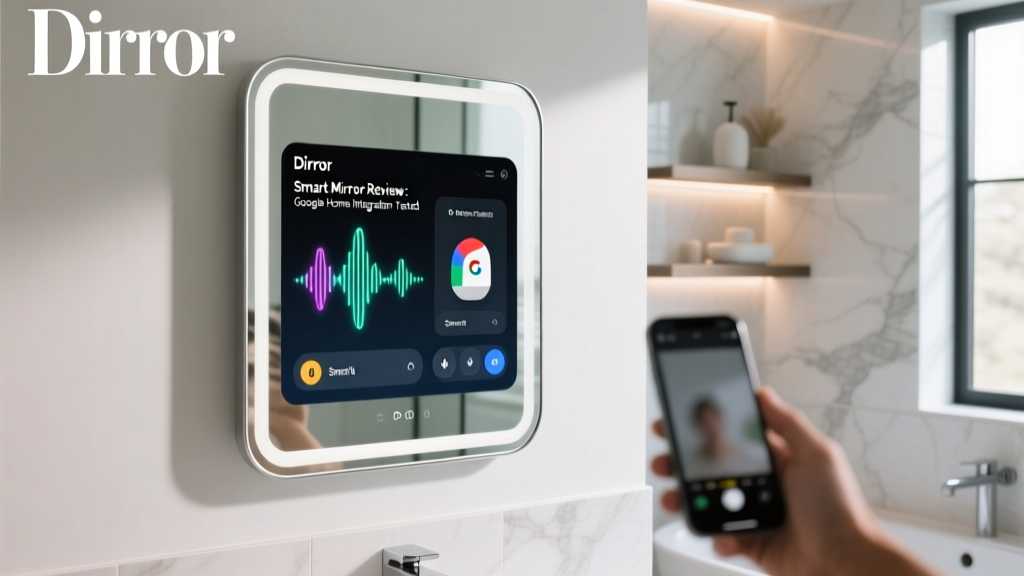
The Dirror Smart Mirror we tested is the 21.5-inch model, though the brand also offers larger 32-inch and 43-inch variants. At first glance, it looks like a high-end, minimalist vanity mirror. The dielectric glass used for the mirror surface is exceptionally clear when powered off, providing a true-to-life reflection without the ghosting or tinting common in cheaper DIY builds. When powered on, the 1080p IPS LCD panel shines through the glass with a peak brightness of roughly 400 nits, which is sufficient to combat the harsh overhead lighting typical in most modern bathrooms.
Physically, the unit measures approximately 35 inches by 24 inches and weighs around 35 pounds. This is not a device you simply hang on a drywall anchor; it requires proper mounting hardware and ideally a recessed power outlet to maintain a clean, floating aesthetic. The bezel-less design and anti-fog coating on the lower half of the glass are practical touches that prove Dirror understands the environment where this device will actually live.
Google Home Integration: The Core Experience
The primary reason to choose the Dirror over its competitors is its seamless integration with Google Home and Google Assistant. Because the mirror runs on a customized version of Android OS, it natively supports the "Hey Google" wake word without requiring a secondary smart speaker sitting on your bathroom counter.
Voice Commands and Morning Routines
The microphone array is surprisingly adept at picking up voice commands even over the sound of a running shower, a blow dryer, or an electric toothbrush. This is largely due to localized noise-cancellation algorithms that filter out high-decibel white noise. In our testing, we configured a specific "Morning Vanity" routine within the Google Home app. Saying "Hey Google, start my morning" triggered a cascade of smart home actions: the Nest Learning Thermostat adjusted the upstairs temperature, the Philips Hue smart bulbs in the bedroom faded up to a cool daylight color temperature, and the mirror itself began reading out our Google Calendar agenda and local weather forecast while streaming a curated Spotify playlist through its built-in stereo speakers.
Smart Home Dashboard
Beyond voice commands, the Dirror features a touch-enabled interface that allows you to control your smart home directly from the glass. Swiping down from the top edge reveals a smart home dashboard that pulls in your Google Home favorite devices. You can tap to lock your front door, adjust your smart blinds, or check the status of your smart leak sensors right as you are finishing your morning routine.
Ecosystem Compatibility and the Matter Protocol
As the smart home industry transitions toward unified standards, compatibility is more important than ever. The Connectivity Standards Alliance (CSA) has championed the Matter protocol to ensure devices from different manufacturers can communicate seamlessly. While the Dirror relies primarily on Wi-Fi and Bluetooth to interface with the Google Home cloud, its underlying Android architecture allows for firmware updates that keep it compatible with evolving Google Home APIs. If you are utilizing a mix of Nest, Ecobee, Philips Hue, and TP-Link Kasa devices, the Dirror acts as a highly effective, centralized control panel that leverages Google's backend to unify your disparate hardware.
Health, Beauty, and Skin Tracking
While smart home control is a major draw, the Dirror's original claim to fame is its advanced skin analysis technology. Using the built-in 1080p camera and proprietary imaging algorithms, the mirror scans your face to track metrics such as pore size, wrinkle depth, redness, and dark circles over time. The companion app generates a daily "skin score" and offers product recommendations based on your environmental conditions (pulling local humidity and UV index data via the internet).
Is it a replacement for a dermatologist? No. But as a tool for tracking the long-term efficacy of your skincare routine, it provides fascinating, data-driven insights. The touch interface allows you to log which serums or moisturizers you applied, helping you correlate product usage with changes in your skin score over weeks and months.
Privacy and Security: A Crucial Consideration
Placing a camera-equipped, internet-connected device in a bathroom or bedroom raises immediate and valid red flags. The Federal Trade Commission (FTC) consistently advises consumers to evaluate the privacy policies and physical security features of smart home devices, particularly those deployed in intimate spaces. Furthermore, privacy advocates like the Electronic Frontier Foundation (EFF) highlight the risks of always-on sensors in the home.
Dirror addresses these concerns with two critical features. First, the mirror includes a physical, sliding privacy shutter that mechanically blocks the camera lens when not in use. This provides peace of mind that no software glitch or malicious hack can bypass a physical barrier. Second, the core skin-analysis processing can be configured to run locally on the device's internal neural engine rather than uploading high-resolution facial topography to external cloud servers. We highly recommend keeping the shutter closed except during active skin scanning sessions.
Installation and Power Requirements
Because of its weight and the desire for a clean look, installation is the biggest hurdle for the average consumer. The Dirror requires a standard 120V power source. If you do not have an outlet recessed behind the mirror's intended location, you will need to hire a licensed electrician to run a line behind the drywall. The package includes a heavy-duty French cleat mounting system, which makes hanging the 35-pound unit secure and relatively straightforward once the power is sorted. Expect to spend an additional $150 to $300 on professional installation if you are not comfortable with drywall repair and electrical work.
Deck Score Dimensions
At SmartHomeDeck, we evaluate every product across five core dimensions to generate our final Deck Score.
- Performance (8.5/10): The 400-nit display is vibrant, the anti-fog coating works flawlessly, and the microphone array handles noisy bathroom environments with ease.
- Value (6.0/10): Smart mirrors are inherently expensive. At over $1,000, the Dirror is a luxury investment, which knocks its value score down slightly compared to standard smart displays.
- Compatibility (9.2/10): Native Google Assistant integration and deep Google Home routine support make it the undisputed king for Android and Google-centric households.
- Ease-of-Use (7.5/10): The software interface is intuitive, but the physical installation and initial Wi-Fi calibration require patience and potentially professional help.
- Features (8.8/10): The combination of smart home control, high-fidelity audio, and advanced skin tracking provides a unique, multi-faceted utility.
SmartHomeDeck Score Breakdown for Dirror Smart Mirror
Product Comparison Table
| Feature | Dirror 21.5" | HiMirror Mini | DIY MagicMirror |
|---|---|---|---|
| Native Google Assistant | Yes | No (Alexa focused) | Requires Sideloading |
| Camera Privacy Shutter | Yes (Physical) | No (Software toggle) | Varies by builder |
| Anti-Fog Glass | Yes | No | Rarely implemented |
| OS Platform | Custom Android | Proprietary Linux | Raspberry Pi OS |
| Avg. Price Range | $1,100 - $1,400 | $250 - $350 | $300 - $600 (Parts) |
Pros and Cons
Pros
- Flawless native Google Home and Google Assistant integration.
- Physical privacy shutter for the built-in camera.
- Excellent microphone noise cancellation for active bathrooms.
- Advanced, data-driven skin tracking algorithms.
- High-quality, anti-fog dielectric mirror glass.
Cons
- Premium price point (over $1,000 for the base model).
- Requires hardwired or recessed power for a clean aesthetic.
- Android OS version may lag behind the latest smartphone releases.
- Heavy unit requires secure wall mounting and potentially professional installation.
Final Verdict
The Dirror Smart Mirror is not for everyone. If you simply want to check the weather and set a timer while brushing your teeth, a standard smart display is a far more economical choice. However, if you are building a luxury smart home, have heavily invested in the Google Home ecosystem, and want a centralized, elegant control panel in your master bathroom or dressing room, the Dirror is currently the best-in-class option. Its ability to trigger complex Google Home routines via voice, combined with legitimate health-tracking features and robust privacy safeguards, earns it a highly recommended spot on the SmartHomeDeck leaderboard.