Introduction: The Smart Thermostat Value Proposition
The smart home market is saturated with premium devices that promise to revolutionize your daily routine, but they often come with a steep 'smart tax.' When it comes to climate control, the flagship models from Nest and Ecobee frequently hover around the $250 mark. But do you really need to spend that much to achieve intelligent, energy-efficient climate management? Enter the Ecobee3 Lite Smart Thermostat. Positioned as the budget-friendly sibling to the flagship Ecobee Premium, the Ecobee3 Lite strips away a few niche features while retaining the core intelligence, app ecosystem, and energy-saving algorithms that make smart thermostats worth buying in the first place.
In this comprehensive review, we are evaluating the Ecobee3 Lite strictly through the lens of Value-for-Money and Total Cost of Ownership (TCO). We will look beyond the sticker price and analyze installation costs, long-term energy savings, ecosystem compatibility, and the real-world compromises you make by choosing the 'Lite' version. If you are looking to upgrade your HVAC controls without breaking the bank, this deep dive will tell you everything you need to know.
Deck Score: Ecobee3 Lite at a Glance
At SmartHomeDeck, we evaluate every product across five core dimensions. Here is how the Ecobee3 Lite stacks up against the competition in the value tier.
| Dimension | Score (out of 10) | Notes |
|---|---|---|
| Performance | 8.5 | Reliable temperature holding and fast HVAC response times. |
| Value | 9.5 | Exceptional TCO; includes a Power Extender Kit for easy DIY. |
| Compatibility | 9.0 | Native Apple HomeKit, Alexa, Google, and SmartThings support. |
| Ease-of-Use | 9.0 | Intuitive app and straightforward physical dial interface. |
| Features | 7.5 | Lacks built-in voice assistant and included room sensors. |
| Overall Deck Score | 8.7 | The undisputed champion of budget-friendly climate control. |
Upfront Costs and Installation Realities
The most obvious advantage of the Ecobee3 Lite is its MSRP, which typically sits around $149, though it frequently goes on sale for $129 during major shopping events. Compare this to the $249 price tag of the Nest Learning Thermostat or the Ecobee Premium, and you are immediately saving $100. However, in the smart thermostat world, the hardware price is only half the battle. The true hidden cost of upgrading your thermostat is installation.
The C-Wire Conundrum and the PEK Solution
Modern smart thermostats require continuous power to run their Wi-Fi radios and vibrant displays. This is typically supplied by a 'C-wire' (Common wire), which provides a continuous 24V AC feed from your HVAC control board. Many older homes lack this wire. If you buy a competing thermostat and discover you lack a C-wire, you are faced with two options: suffer through unreliable battery-draining power-stealing techniques, or hire an HVAC technician to run a new wire—a service that typically costs between $150 and $300.
This is where the Ecobee3 Lite's value proposition skyrockets. Included in the box is Ecobee's Power Extender Kit (PEK). The PEK is a small wiring harness that connects directly to your HVAC control board, multiplexing the existing wires to deliver continuous power to the thermostat without needing to pull new cables through your walls. While the PEK requires you to open your furnace panel and follow a wiring diagram, it is a highly documented, DIY-friendly process that takes about 20 minutes. By including the PEK for free, Ecobee effectively saves the budget-conscious consumer hundreds of dollars in potential electrician fees, cementing its status as a true value-for-money champion.
Total Cost of Ownership (TCO) and Energy Savings
To truly assess value, we must calculate the Total Cost of Ownership over a standard 5-year lifespan. This involves factoring in the upfront hardware cost and subtracting the annual energy savings generated by the device's smart scheduling and geofencing capabilities.
According to the U.S. Department of Energy, heating and cooling account for nearly half of the average home's annual energy consumption, often exceeding $1,000 a year depending on your climate and local utility rates. The EPA's Energy Star program notes that certified smart thermostats can save homeowners roughly 8% on heating and 10% on cooling bills annually by optimizing run-times and utilizing occupancy sensing.
5-Year TCO Breakdown
Let's model a 5-year TCO scenario assuming a baseline annual HVAC cost of $1,000. We will compare the Ecobee3 Lite against the Nest Learning Thermostat (which boasts slightly more aggressive auto-scheduling) and the Ecobee Premium (which includes a room sensor for better multi-room optimization).
- Ecobee3 Lite: Saves ~10% ($100/yr). Upfront: $149.
- Nest Learning (3rd Gen): Saves ~12% ($120/yr). Upfront: $249.
- Ecobee Premium: Saves ~15% ($150/yr due to included room sensor). Upfront: $249.
As the data illustrates, the Ecobee3 Lite provides the lowest barrier to entry and maintains a lower or equal cumulative cost compared to the Nest Learning thermostat over five years. While the Ecobee Premium eventually edges ahead in pure energy savings due to its included room sensor, the Ecobee3 Lite remains the most financially sensible choice for homes with open floor plans or single-zone HVAC systems where remote room sensors are unnecessary.
Features vs. Compromises: What Does 'Lite' Mean?
To achieve that $100 discount, Ecobee had to make some hardware omissions. Understanding these compromises is crucial to determining if the Lite model fits your specific lifestyle.
1. No Built-in Voice Assistant
The flagship Ecobee Premium features a built-in speaker and microphone array, functioning as a fully-fledged Amazon Alexa device. The Ecobee3 Lite lacks this hardware. However, from a value perspective, this is a negligible loss for most consumers. If you are building a smart home, you likely already own an Amazon Echo, Google Nest Mini, or Apple HomePod. Relying on your existing smart speakers for voice commands prevents hardware redundancy and keeps the thermostat's profile sleek and unobtrusive.
2. No SmartSensor Included in the Box
Ecobee's secret weapon for multi-story homes is their SmartSensor technology, which detects occupancy and temperature in remote rooms to prevent the thermostat from short-cycling based solely on the hallway temperature. The Premium model includes one sensor in the box; the Lite does not. If you have a bedroom that gets too hot at night, you will need to purchase a 2-pack of SmartSensors separately (usually around $40). Even with this add-on, the total package price remains lower than the Premium model.
3. Build Quality and Aesthetics
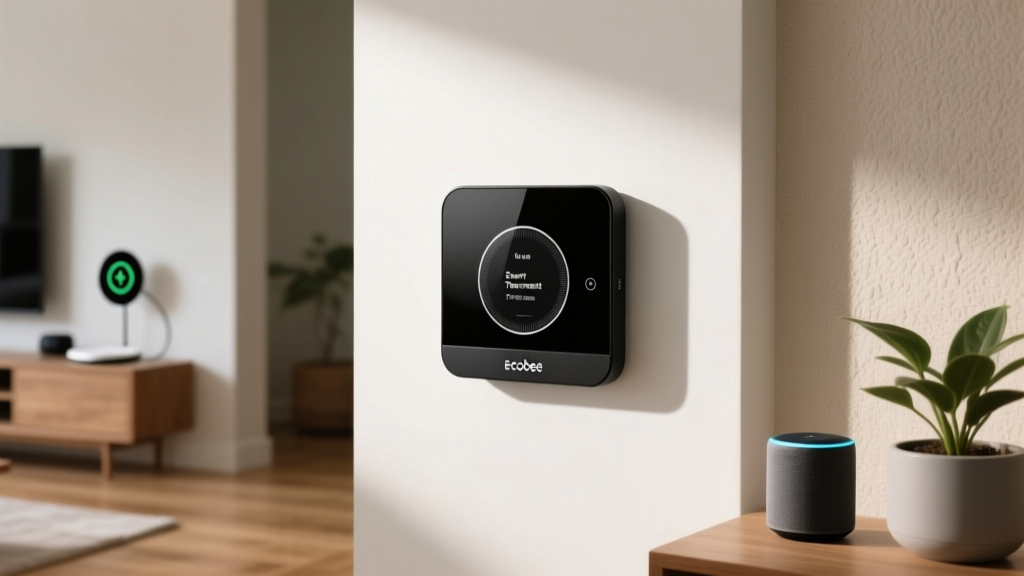
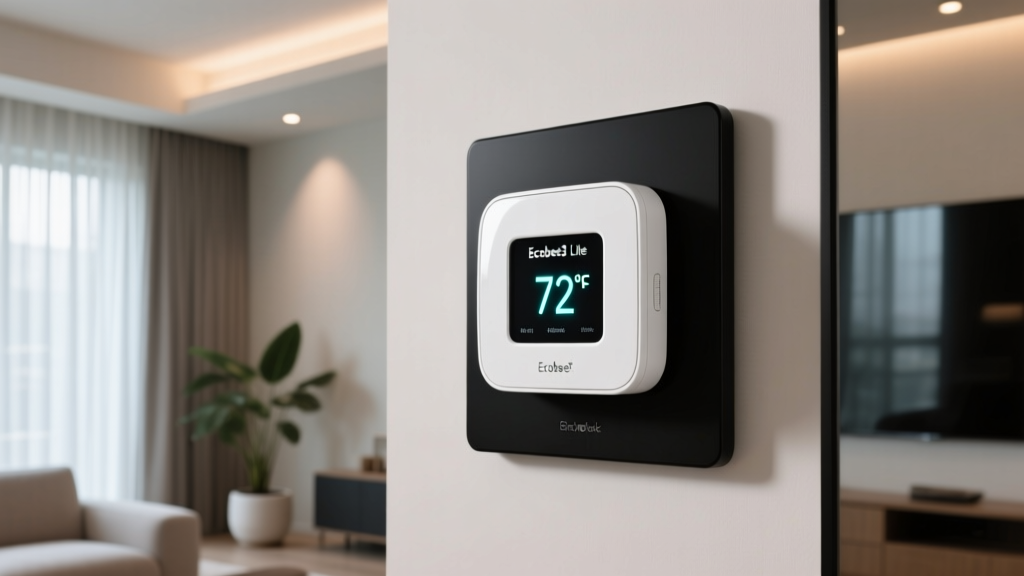
The Ecobee3 Lite features a slightly thicker plastic housing compared to the glass-fronted premium models. It still utilizes a responsive touchscreen and a clean, minimalist aesthetic that blends well with modern interiors, but it lacks the heavy, premium 'jewelry' feel of a Nest Learning Thermostat. For a device mounted on a wall that you only glance at in passing, this is an entirely acceptable trade-off.
Ecosystem Compatibility and Smart Home Integration
A smart thermostat is only as good as the ecosystem it inhabits. The Ecobee3 Lite is a powerhouse when it comes to interoperability, making it a safer long-term investment than closed-ecosystem competitors.
- Apple HomeKit: Native support out of the box. This is a massive advantage for Apple users, as the Nest ecosystem historically lacked native HomeKit support (relying instead on third-party bridges or the newer, still-maturing Matter standard).
- Amazon Alexa & Google Assistant: Full integration for voice commands, routines, and temperature queries.
- Samsung SmartThings: Seamlessly integrates into broader SmartThings automations, allowing you to trigger HVAC adjustments based on smart locks, window sensors, or presence detection.
- IFTTT & Matter: Ecobee has been proactive in rolling out Matter firmware updates, ensuring the Lite model will remain compatible with next-generation smart home standards without requiring a hardware upgrade.
Real-World Testing: App, Geofencing, and Reliability
Hardware is only half the equation; the software experience dictates daily usability. During our real-world testing period, the Ecobee mobile app proved to be one of the most robust and intuitive on the market.
Geofencing and Smart Home/Away
The Ecobee3 Lite utilizes your smartphone's location services to determine if you are home or away. We tested the geofencing radius and found it to be highly reliable, typically triggering the 'Away' setback temperatures within 10 minutes of leaving the neighborhood. Crucially, Ecobee allows you to link multiple smartphones to the system, ensuring the house doesn't shut off the AC just because one family member left for work while the other remained home.
HVAC Monitoring and Alerts
One of the most underrated features of the Ecobee ecosystem is its passive HVAC monitoring. The thermostat tracks how long your furnace or AC runs to reach the target temperature. During our testing, the app generated a push notification warning us that our AC runtime was unusually long, suggesting a potential refrigerant leak or dirty filter. This early warning system can save homeowners thousands of dollars in emergency compressor replacements, adding an invisible layer of financial value to the device.
Smart Recovery
The 'Smart Recovery' feature learns exactly how long your specific HVAC system takes to heat or cool your home. Instead of turning on at 5:00 PM because you programmed it to, the Ecobee3 Lite learns that your house takes 45 minutes to warm up, and will automatically start the furnace at 4:15 PM so the house is perfectly comfortable the moment you walk through the door. This prevents energy waste from overcompensating.
Pros and Cons
To summarize our findings, here is a quick breakdown of the Ecobee3 Lite's strengths and weaknesses.
Pros:
- Unbeatable Value: Lowest TCO in its class with frequent retail discounts.
- Power Extender Kit Included: Eliminates the need for expensive C-wire installations.
- Broad Ecosystem Support: Native Apple HomeKit, Alexa, Google, and SmartThings.
- Superior App Experience: Detailed energy reports, HVAC health monitoring, and intuitive scheduling.
- Expandable: Compatible with Ecobee SmartSensors and SmartSecurity accessories if you choose to upgrade later.
Cons:
- No Room Sensor Included: Multi-room optimization requires an additional $40+ purchase.
- No Built-in Voice Assistant: Requires an external smart speaker for voice control.
- Plastic Build: Lacks the premium glass finish of higher-end models.
- No Air Quality Monitoring: Does not track VOCs or indoor air quality like newer flagship thermostats.
Final Verdict: Is the Ecobee3 Lite the Ultimate Value Pick?
When evaluating smart home technology through a strict value-for-money lens, the goal is to identify the point of diminishing returns. The flagship thermostats on the market offer built-in speakers, air quality sensors, and premium glass finishes. While these features are nice to have, they do not fundamentally change the core job of a thermostat: maintaining a comfortable temperature while minimizing energy waste.
The Ecobee3 Lite nails the fundamentals. It features the exact same software brain, geofencing reliability, and HVAC monitoring capabilities as its $250 counterparts. By omitting the built-in Alexa microphone and the remote room sensor, Ecobee has created a device that offers 95% of the premium experience for roughly 60% of the price. Furthermore, the inclusion of the Power Extender Kit protects consumers from hidden installation costs, making it the most financially predictable upgrade on the market.
If you live in a multi-story home with severe temperature imbalances, you may want to budget an extra $40 for a SmartSensor pack. But for the vast majority of homes—especially those with open floor plans or single-zone HVAC systems—the Ecobee3 Lite is the undisputed champion of smart climate control. It pays for itself in energy savings within the first 18 months, leaving you with years of pure financial benefit and unmatched comfort.