The Evolution of the Smart Display
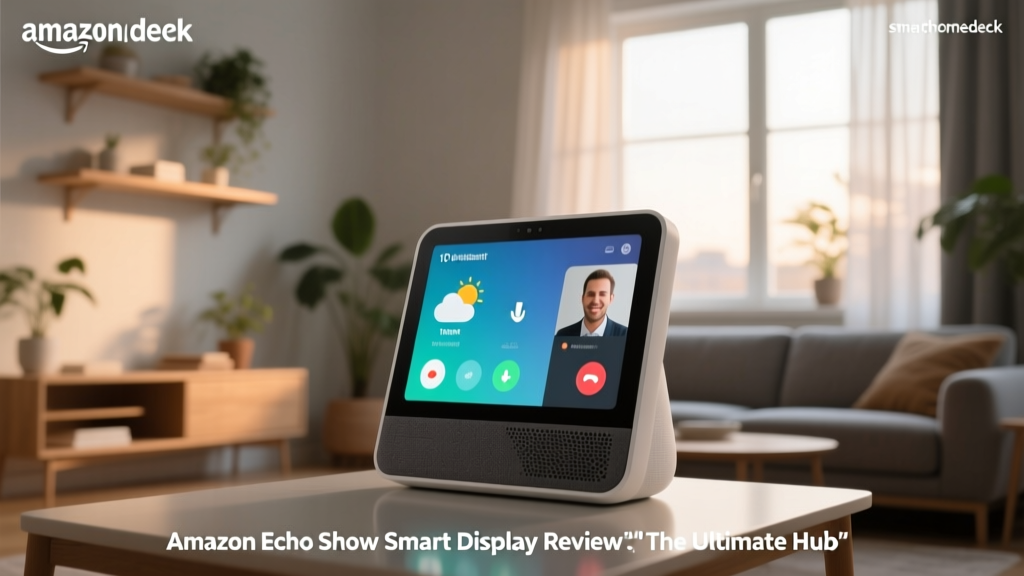
When smart speakers first entered the consumer market, they were primarily audio-first devices designed to answer trivia questions, play music, and set basic timers. However, the integration of high-resolution touchscreens has fundamentally shifted the paradigm, transforming these cylindrical pucks into visual command centers. In this comprehensive SmartHomeDeck review, we are taking an in-depth look at the Amazon Echo Show lineup, specifically focusing on the flagship Echo Show 15 and the highly versatile Echo Show 8 (3rd Generation). Over a rigorous 30-day testing period, we installed these devices in various environments—including kitchens, home offices, and living rooms—to evaluate their real-world performance, smart home hub capabilities, and overall ecosystem integration.
The modern smart display is no longer just a speaker with a screen; it is the central nervous system of the connected home. Whether you are looking for a digital bulletin board for your family or a dedicated smart home controller, understanding the nuances of Amazon's display technology, audio engineering, and software ecosystem is crucial before making a purchase. Below, we break down every aspect of the Echo Show experience, from hardware design to Matter protocol compatibility.
Design, Hardware, and Aesthetics
Amazon has taken a bifurcated approach to the design of its Echo Show lineup, catering to two distinct use cases. The Echo Show 15 is designed to be a permanent fixture on your wall or a prominent countertop centerpiece. Featuring a massive 15.6-inch 1080p Full HD display, it mimics the aesthetic of a high-end digital picture frame. The bezels are relatively thin, and the included tilt stand allows for flexible placement, though it truly shines when mounted using the included VESA-compatible wall bracket. The sheer scale of the Show 15 makes it an unparalleled digital bulletin board, capable of displaying multiple widgets, family calendars, and sticky notes simultaneously without feeling cluttered.
Conversely, the Echo Show 8 is optimized for versatility and portability. Its 8-inch HD touchscreen is housed in a sleek, fabric-wrapped base that blends seamlessly into nightstands, desks, and kitchen counters. The adaptive color sensor on the Show 8 is a standout hardware feature; it continuously monitors the ambient lighting and color temperature of the room, adjusting the screen's white balance to match. This means the display looks natural whether it is bathed in the cool blue light of early morning or the warm incandescent glow of the evening. Both devices feature physical camera shutters, a critical hardware-level privacy control that physically disconnects the lens when engaged.
Visual and Audio Performance
A smart display is only as good as its ability to present media and communicate clearly. The Echo Show 15's 1080p panel offers vibrant colors and excellent viewing angles, making it ideal for watching Fire TV content from across the room. While it lacks the deep blacks of an OLED panel, the IPS LCD is more than bright enough to combat the harsh overhead lighting of a modern kitchen. The Echo Show 8's 720p screen, while lower in resolution, is incredibly sharp for its size and benefits from the aforementioned adaptive color technology, making it a superior choice for bedside reading or viewing recipes up close.
Audio performance has seen a massive generational leap. The Echo Show 15 utilizes a dual-tweeter, dual-woofer configuration that delivers room-filling sound with surprisingly punchy bass and clear vocal reproduction. It supports Dolby Atmos spatial audio when streaming compatible content from Fire TV, creating a wide soundstage that defies the device's slim profile. The Echo Show 8 also features spatial audio processing and improved driver alignment. During our testing, we found that the Show 8 easily overpowered the ambient noise of a running dishwasher and a simmering stove, ensuring that podcast dialogue and step-by-step recipe instructions remained crystal clear. Neither device will replace a dedicated audiophile soundbar, but for casual listening, video calls, and smart home voice feedback, the acoustic performance is top-tier.
Smart Home Hub Capabilities and Matter Support
Where the Echo Show lineup truly justifies its place in a modern smart home is in its role as a central hub. Both the Echo Show 15 and the latest Echo Show 8 feature built-in Zigbee radios and Thread border router capabilities. This eliminates the need for separate, unsightly hub pucks for brands like Philips Hue, Yale, and Aqara. You can pair devices directly to the Echo Show via voice commands or the touchscreen dashboard.
More importantly, Amazon has fully embraced the Connectivity Standards Alliance's Matter protocol. Matter is the industry-wide unifying standard that allows devices from competing ecosystems (Apple, Google, Amazon, Samsung) to communicate locally without relying on cloud servers. As outlined by the CSA, Matter ensures faster response times, enhanced local reliability, and simplified setup. During our testing, we successfully paired Matter-over-Thread smart plugs and lighting switches directly to the Echo Show 8. The local execution meant that toggling lights via the Echo Show's touchscreen dashboard happened instantaneously, with zero perceptible latency, even when our home's internet connection was temporarily throttled.
The visual dashboard on the screen is highly customizable. You can pin your most-used scenes (e.g., "Movie Time," "Goodnight," "Cooking Mode") to the home screen. The integration of the Alexa app's dashboard directly onto the glass means you can see which doors are locked, check the thermostat temperature, and view live feeds from your Ring or Blink cameras without ever reaching for your smartphone.
Software Experience and Fire TV Integration
Amazon's software experience on the Echo Show is built on a heavily modified version of Fire OS. The interface is widget-heavy, which some users might find slightly cluttered compared to the minimalist approach of competing displays. However, the functionality is undeniable. The "Visual ID" feature uses the built-in camera to recognize who is standing in front of the device and instantly customizes the dashboard to show their specific calendar, commute times, and personalized music recommendations.
Fire TV integration is a massive value-add, particularly on the Echo Show 15. By linking your Amazon account, the display essentially becomes a smart television. You can stream Netflix, Prime Video, and YouTube directly to the screen. According to the Amazon Alexa Developer Documentation, the integration of Alexa Voice Service (AVS) with Fire TV allows for seamless cross-device routines. For example, you can set a routine where turning on your living room smart lights via the Echo Show automatically triggers a Fire TV stick in another room to wake from sleep mode.
For families, the "Family Hub" features are exceptional. The shared calendar syncs with Outlook, Google, and Apple calendars. The sticky notes feature allows family members to leave digital handwriting on the screen, which can also be sent as push notifications to the Alexa mobile app. Furthermore, the device serves as a fantastic digital photo frame, pulling high-resolution images directly from your Amazon Photos cloud storage.
Real-World Testing: Kitchen, Office, and Nursery
To truly evaluate these devices, we deployed them in three distinct environments:
- The Kitchen (Echo Show 15): Mounted on a backsplash, the 15-inch screen was a revelation for cooking. The sheer size allowed us to have a recipe on one half of the screen and a YouTube tutorial playing on the other. The far-field microphones easily picked up voice commands over the sound of a running blender.
- The Home Office (Echo Show 8): Placed on a desk, the Show 8 excelled as a communication tool. The "Drop In" feature acted as an instant intercom, and the auto-framing camera kept us centered during Zoom and Alexa video calls, even when we paced around the room.
- The Nursery (Echo Show 8): Utilizing the device as a baby monitor via the Drop In feature (set to auto-accept) provided peace of mind. We also utilized the built-in white noise sounds and the adaptive color screen, which shifted to a warm, dim amber tone at night to avoid disrupting the baby's circadian rhythm.
Security and privacy are paramount in these intimate spaces. The National Institute of Standards and Technology (NIST) emphasizes the importance of secure IoT frameworks and user-controlled privacy mechanisms in connected homes. Amazon addresses this with physical microphone mute buttons, physical camera shutters, and on-device processing for wake-word detection, ensuring that audio is only streamed to the cloud after the "Alexa" trigger is heard.
Specifications Comparison
| Feature | Echo Show 15 | Echo Show 8 (3rd Gen) |
|---|---|---|
| Display Size | 15.6 inches (1080p) | 8.0 inches (720p) |
| Audio System | Dual Tweeters, Dual Woofers | Dual Tweeters, Dual Passive Radiators |
| Smart Home Hub | Zigbee, Thread, Matter | Zigbee, Thread, Matter |
| Camera | 13 MP with Auto-Framing | 13 MP with Auto-Framing |
| Fire TV Built-in | Yes | Yes |
| Ideal Placement | Wall-mount, Large Kitchen Island | Nightstand, Desk, Small Counter |
SmartHomeDeck Scoring and Verdict
To provide a quantifiable assessment, we have broken down the performance of both devices across our five core Deck Score dimensions. The Echo Show 15 dominates in features and compatibility due to its massive screen real estate and premium audio, while the Echo Show 8 takes the lead in value and ease-of-use due to its lower price point and flexible footprint.
SmartHomeDeck Score Comparison
Pros and Cons
Echo Show 15 Pros:
- Stunning 15.6-inch 1080p display perfect for family dashboards.
- Excellent acoustic performance with Dolby Atmos support.
- Seamless wall-mounting hardware included in the box.
Echo Show 15 Cons:
- Premium price tag may be prohibitive for multi-room deployments.
- Requires significant wall or counter space.
Echo Show 8 Pros:
- Adaptive color technology makes the screen easy on the eyes day and night.
- Incredible value proposition with full hub and Matter capabilities.
- Auto-framing camera is excellent for video calls.
Echo Show 8 Cons:
- 720p resolution shows its age when watching video content up close.
- UI can feel slightly cramped when trying to view multiple widgets at once.
Final Verdict
The Amazon Echo Show lineup represents the pinnacle of Alexa-integrated smart displays. If you are looking to create a centralized family command center, a kitchen recipe hub, or a dedicated wall-mounted smart home dashboard, the Echo Show 15 is an unmatched piece of hardware that justifies its premium cost through sheer utility and aesthetic brilliance. However, for the vast majority of consumers looking to add visual smart home control to bedrooms, offices, and smaller kitchens, the Echo Show 8 is the undisputed champion. Its combination of Matter support, Thread border routing, adaptive display technology, and spatial audio makes it the most well-rounded smart display on the market today. Both devices earn the SmartHomeDeck seal of approval for their robust ecosystem integration and reliable daily performance.