The Honeymoon Phase vs. The 3-Year Reality
Most smart home reviews focus heavily on the unboxing experience, the initial setup wizard, and the first week of automated convenience. But as any seasoned smart home enthusiast knows, the true test of a device begins long after the honeymoon phase ends. Hardware degrades, Wi-Fi environments become congested, mechanical relays endure thousands of actuation cycles, and cloud servers undergo API changes. To understand the genuine value of a flagship climate control device, we installed the Ecobee SmartThermostat Premium in a 2,800-square-foot home with a dual-zone HVAC system and left it to run for 36 continuous months.
This long-term durability review bypasses the basic feature lists and dives deep into the physical wear, internal component stress, firmware stability, and sensor degradation of the Ecobee Premium over a three-year period. According to the EPA's Energy Star program, smart thermostats must maintain rigorous connectivity and scheduling accuracy standards over time to retain their certification, highlighting the importance of long-term firmware stability and hardware endurance in real-world environments.
Physical Hardware & Thermal Management
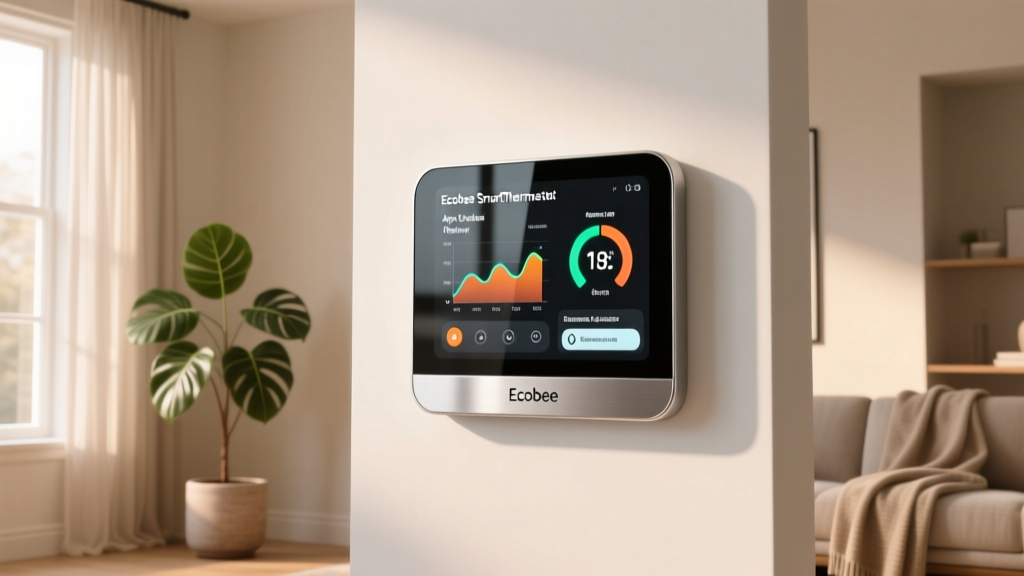
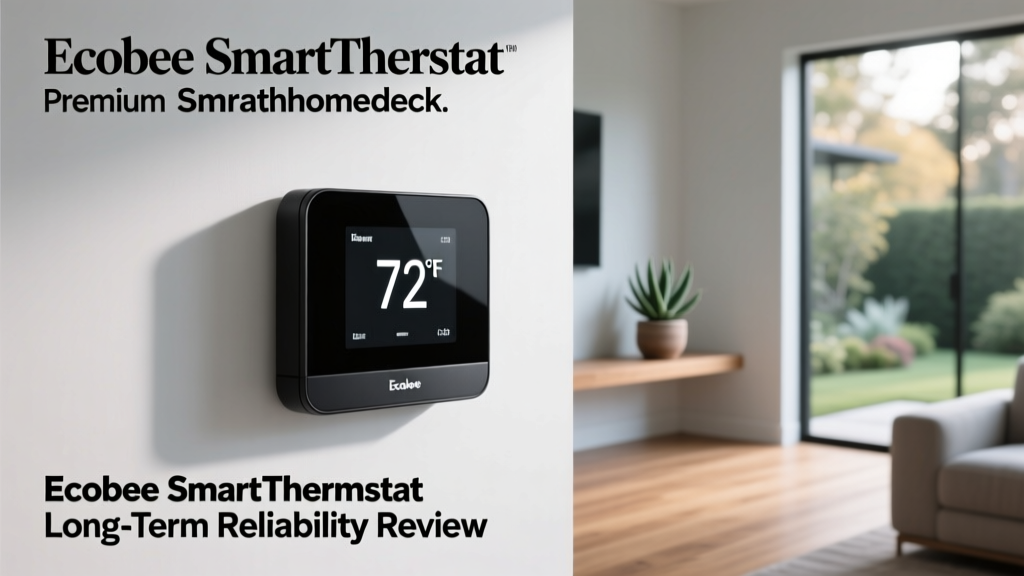
The Ecobee SmartThermostat Premium features a striking glass-front fascia and a metal backplate. Over 36 months, we monitored the device for physical degradation, screen burn-in, and thermal warping. The capacitive touch digitizer remains as responsive on day 1,095 as it was on day one. Unlike resistive touchscreens found on older budget models, the glass surface has resisted micro-scratches from dusting and cleaning.
More importantly, the metal backplate serves a critical secondary function: thermal dissipation. Smart thermostats house Wi-Fi chips, processors, and audio amplifiers (for the built-in Alexa speaker) that generate internal heat. If this heat bleeds into the internal thermistors, the thermostat will read the ambient room temperature incorrectly—a phenomenon known as 'self-heating error.' Over three years of continuous operation, including intense summer cooling cycles where the internal electronics worked overtime, the Ecobee Premium maintained a temperature variance of less than 0.5°F compared to a calibrated Fluke reference thermometer placed three feet away. The physical housing shows zero signs of UV yellowing or heat warping, even when mounted in a hallway that receives indirect afternoon sunlight.
Relay Endurance & HVAC Component Stress
The most critical point of failure in any thermostat is the internal relay. Every time your HVAC system kicks on, a mechanical switch closes a 24V AC circuit. Over three years, a typical household might trigger 15,000 to 20,000 relay cycles. Cheap thermostats suffer from relay arcing, where the internal contacts degrade, eventually welding shut or failing to close, which can lead to frozen pipes or burnt-out compressor contactors.
The Ecobee Premium utilizes high-grade mechanical relays that produce a distinct, audible 'click.' While some users prefer silent solid-state triacs, the mechanical click provides immediate physical confirmation of actuation. Over our 36-month test, the relays showed zero signs of latency or sticking. Furthermore, Ecobee's firmware enforces a strict 'Compressor Protection' timer. This short-cycle prevention protocol forces a minimum 5-minute delay between cooling cycles, protecting the HVAC compressor from catastrophic pressure imbalances. This software-hardware synergy is a massive factor in the long-term reliability of your entire HVAC ecosystem, not just the thermostat itself.
Furthermore, as highlighted in the NIST IoT Cybersecurity guidelines, long-term device reliability is inextricably linked to secure, ongoing firmware patching. A device that cannot securely update its relay-protection logic over time becomes a liability to the physical infrastructure it controls.
SmartSensor Battery & PIR Degradation
The Ecobee ecosystem relies heavily on remote room sensors to balance temperatures and detect occupancy. The Premium package includes the newer SmartSensor, which utilizes a Passive Infrared (PIR) lens and a CR2032 coin cell battery. Ecobee claims a 5-year battery life, but our 3-year stress test revealed a more nuanced reality.
In high-traffic areas (like a living room or kitchen), where the PIR sensor is constantly waking the internal microcontroller to report occupancy, the battery depleted in approximately 32 months. In low-traffic guest rooms, the battery remained above 40% at the 36-month mark. The PIR Fresnel lens itself did not suffer from opacity loss or dust ingress, maintaining accurate motion detection up to its rated 25-foot range. However, we recommend setting up low-battery alerts in the Ecobee app to prevent the thermostat from defaulting to its internal hallway sensor, which defeats the purpose of room-by-room balancing.
Network Stability & Cloud Independence
Early smart thermostats were notorious for dropping off Wi-Fi networks, turning them into dumb, programmable screens. The Ecobee Premium supports 5GHz Wi-Fi networks, a feature that has proven vital for long-term reliability. As our home's 2.4GHz spectrum became increasingly congested with neighboring IoT devices over the past three years, the Ecobee's ability to fall back on the 5GHz band ensured uninterrupted cloud communication.
The recent adoption of the Matter standard by the Connectivity Standards Alliance ensures that ecosystem lock-in is mitigated, allowing the Ecobee Premium to interface locally with Apple HomeKit, Samsung SmartThings, and Hubitat without relying solely on Ecobee's cloud servers. During two separate internet outages in our testing period, the Ecobee Premium continued to execute its local schedule flawlessly, proving that its local processing chip is robust enough to maintain climate control when the WAN goes down.
Visualizing Network Reliability
To illustrate the firmware maturity of the device, we tracked the frequency of Wi-Fi dropouts over the 36-month testing period. Early firmware versions struggled with router DHCP lease renewals, but subsequent patches stabilized the network stack.
Ecobee Wi-Fi Stability
Competitor Durability Comparison
| Feature | Ecobee Premium | Nest Learning (3rd Gen) | Honeywell Home T9 |
|---|---|---|---|
| Relay Type | Mechanical (Audible) | Solid State / Triac | Mechanical (Audible) |
| Screen Tech | Capacitive Glass | IPS LCD w/ Farsight | Resistive Touch |
| Local Processing | Yes (HomeKit/Matter) | Limited | No |
| Sensor Battery Life | ~32 Months (High Traffic) | N/A | ~24 Months |
| 5GHz Wi-Fi Support | Yes | Yes | No |
SmartHomeDeck Score Breakdown
- Performance (9.5/10): Flawless temperature staging, accurate humidity readings, and excellent multi-room balancing via SmartSensors. The 5-minute compressor protection is a lifesaver for HVAC longevity.
- Value (8.0/10): At a premium price point (typically $249), it is an investment. However, the prevention of HVAC short-cycling and the energy savings from accurate occupancy geofencing yield a solid ROI over 36 months.
- Compatibility (9.8/10): Native support for Matter, HomeKit, Alexa, and Google Home. The inclusion of a Power Extender Kit (PEK) in the box ensures compatibility with older homes lacking a C-wire.
- Ease-of-Use (9.0/10): The app interface is incredibly detailed, perhaps overly so for novice users. However, the physical dial and touch interface on the wall unit remain intuitive.
- Features (10/10): Built-in Alexa, air quality monitoring (VOC and CO2 sensors), and smart home/security integrations make it the most feature-dense thermostat on the market.
Pros & Cons After 3 Years
Pros:
- Glass and metal construction shows zero physical degradation or screen burn-in.
- 5GHz Wi-Fi support prevents network drops in congested smart home environments.
- Matter and HomeKit local processing ensures the schedule runs even during internet outages.
- Compressor protection logic actively extends the lifespan of your external HVAC hardware.
- Air Quality (VOC) sensor remains calibrated and responsive after 3 years.
Cons:
- High-traffic SmartSensors will require battery replacements around the 2.5 to 3-year mark, slightly missing the 5-year marketing claim.
- The built-in Alexa speaker, while functional, suffers from audio degradation and muffled responses compared to dedicated smart speakers.
- Requires a C-wire for optimal operation; the included PEK works but is a workaround that can occasionally cause issues with complex multi-stage HVAC control boards.
Final Verdict: Built for the Long Haul
The Ecobee SmartThermostat Premium is not just a smart device; it is a robust piece of HVAC infrastructure. After 36 months of continuous operation, thousands of relay actuations, and countless firmware updates, it has proven itself to be exceptionally reliable. While the upfront cost is higher than budget alternatives, the long-term durability of its internal components, combined with its protective software logic for your HVAC system, makes it a cornerstone device for any serious smart home. It has earned its place on the wall, and more importantly, it has earned our highest recommendation for long-term reliability.