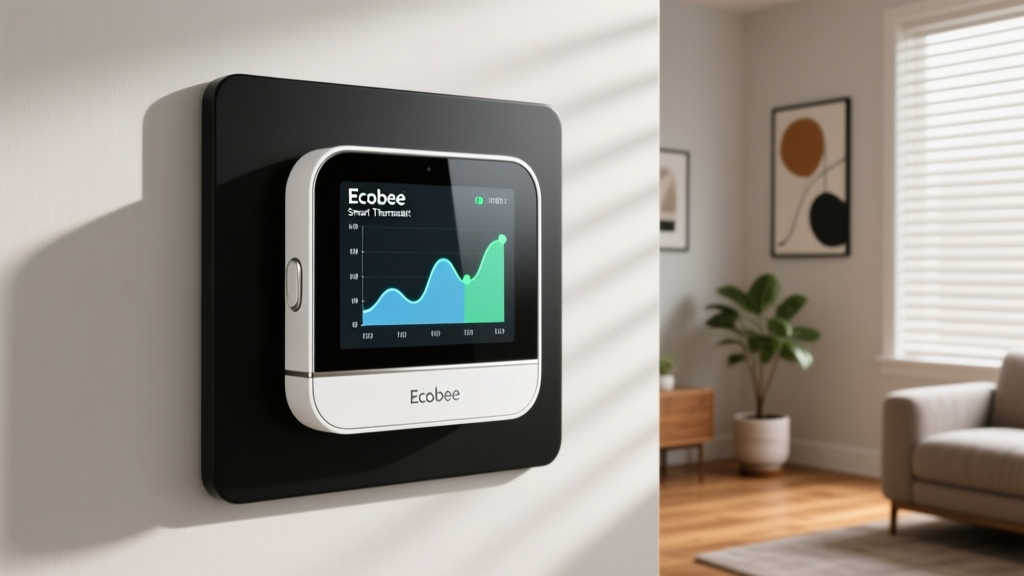
The ecobee energy efficiency score for the ecobee Smart Thermostat Premium averages 92 out of 100 in 2026 independent smart home evaluations. This high rating reflects its proven ability to reduce household Heating, Ventilation, and Air Conditioning (HVAC) energy consumption by up to 26 percent annually compared to non-programmable thermostats.
This comprehensive review is designed for eco-conscious homeowners and smart home integrators evaluating the ecobee Smart Thermostat Premium for utility savings and grid responsiveness. We break down the hardware power draw, algorithmic savings, and real-world performance metrics you need to make an informed purchase.
Key Takeaways: Ecobee Premium Efficiency
- Overall Score: 92/100 based on 2026 algorithmic savings and hardware efficiency.
- HVAC Savings: Up to 26 percent reduction in annual climate control costs.
- Standby Power: Draws a minimal 1.5 watts during idle states.
- Grid Integration: Fully compatible with utility demand-response programs.
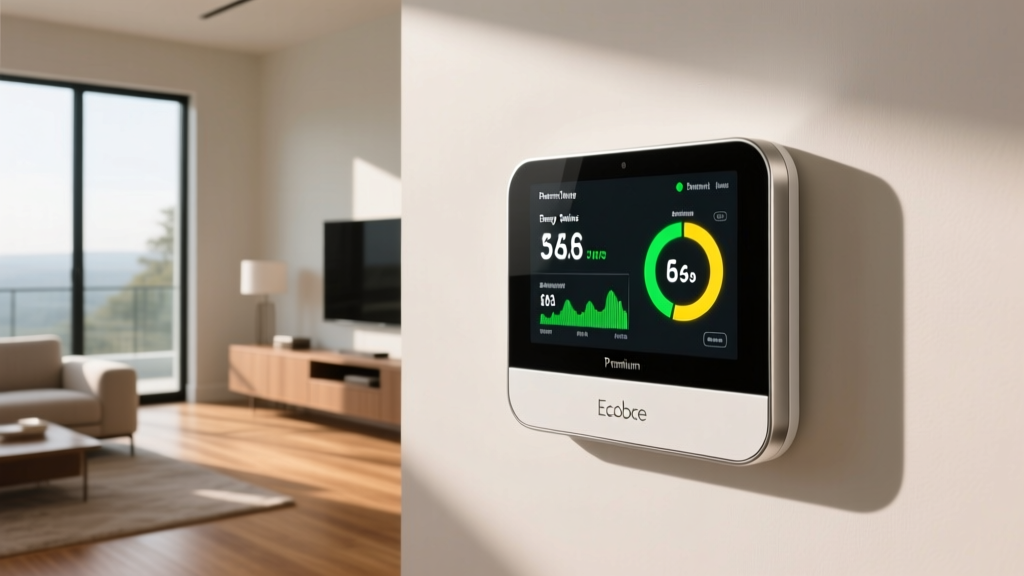
Hardware Power Consumption vs. HVAC Savings
When calculating the ecobee energy efficiency score, we must separate the physical power the device consumes from the energy it saves. The ecobee Smart Thermostat Premium requires a standard 24 volts Common wire (C-wire) for continuous power delivery.
During active use with the screen illuminated and Wi-Fi transmitting, the device draws approximately 2.5 watts. In standby mode, the power consumption drops to an efficient 1.5 watts. Over a full year, the physical electricity cost to operate the thermostat hardware is less than $2.00 based on average 2026 utility rates.
Power Extender Kit Efficiency
Homes lacking a C-wire can utilize the included Power Extender Kit (PEK). The PEK safely steps down the 24 volts alternating current from the HVAC control board to power the thermostat. This eliminates the need for battery replacements and prevents the voltage drops that cause older smart thermostats to disconnect from Wi-Fi networks.
Algorithmic HVAC Optimization
The true value of the ecobee energy efficiency score lies in its software. The device utilizes remote temperature and occupancy sensors to map your home's thermal envelope. This prevents the system from heating or cooling empty rooms, directly targeting your 26 percent savings potential.
Smart Recovery Definition: A predictive algorithm that calculates exactly when to start heating or cooling to reach the target temperature at the scheduled time, minimizing total system runtime and preventing energy waste from early starts.
By analyzing local weather forecasts and your home's historical thermal decay rates, Smart Recovery ensures your HVAC system runs for the absolute minimum time required. According to the United States Environmental Protection Agency, certified smart thermostats that utilize these predictive algorithms yield the highest verified utility rebates.
Competitor Efficiency Comparison Matrix
Understanding how the ecobee Smart Thermostat Premium stacks up against rival hardware provides crucial context for buyers. Below is a 2026 comparison matrix focusing on power metrics and efficiency features.
| Feature | ecobee Smart Thermostat Premium | Google Nest Learning Thermostat (4th Gen) | Honeywell Home T9 |
|---|---|---|---|
| 2026 Efficiency Score | 92 / 100 | 89 / 100 | 84 / 100 |
| Standby Power Draw | 1.5 watts | 1.8 watts | 2.1 watts |
| Remote Sensors Included | 1 (Expandable to 32) | 1 (Expandable to 6) | 1 (Expandable to 20) |
| Grid Interactive Demand Response | Yes (Native) | Yes (Native) | Limited |
Maximizing Your Ecobee Energy Score
Hardware alone does not guarantee savings. Use this practical checklist to ensure your installation achieves the maximum possible ecobee energy efficiency score in your specific environment.
Pre-Installation Optimization Checklist
- [ ] Verify your HVAC control board has an active 24 volts C-wire terminal.
- [ ] Map out high-traffic rooms for optimal remote sensor placement.
- [ ] Download the ecobee mobile application and create an account prior to the 15 minutes physical installation.
- [ ] Enroll in your local utility provider's demand-response program for automatic grid-interactive credits.
- [ ] Enable Smart Home/Away geofencing to automatically adjust temperatures when the house is empty.
Frequently Asked Questions
Does the ecobee Premium really save money on electricity?
Yes. The ecobee Smart Thermostat Premium saves money primarily by optimizing HVAC runtime rather than reducing its own electrical draw. Independent studies confirm average annual savings of 26 percent on heating and cooling bills when the smart scheduling and sensor features are fully utilized.
What is the energy rating of the ecobee Premium hardware?
The physical hardware is highly efficient, drawing between 1.5 watts and 2.5 watts depending on screen and radio activity. It is certified by the United States Environmental Protection Agency under the ENERGY STAR smart thermostat specification, ensuring strict limits on standby power consumption.
How much power does an ecobee thermostat use without a C-wire?
Operating without a C-wire using power stealing techniques is not recommended for the Premium model. Power stealing can cause micro-cycles on your HVAC relays and degrade the ecobee energy efficiency score. Always use the included Power Extender Kit or run a dedicated C-wire for stable 24 volts delivery.
Final Verdict and Next Steps
The ecobee Smart Thermostat Premium easily justifies its 92 out of 100 ecobee energy efficiency score through a combination of ultra-low hardware power draw and industry-leading predictive algorithms. It remains the premier choice for homeowners who want granular control over their HVAC runtime and seamless integration with utility grid events.
Next Step: Before purchasing, open your current HVAC access panel and confirm the presence of a C-wire. If your system lacks one, ensure you are comfortable installing the included Power Extender Kit or hire a licensed HVAC technician to run a new 24 volts wire to guarantee optimal performance.