Introduction: Beyond Simple Remote Switching
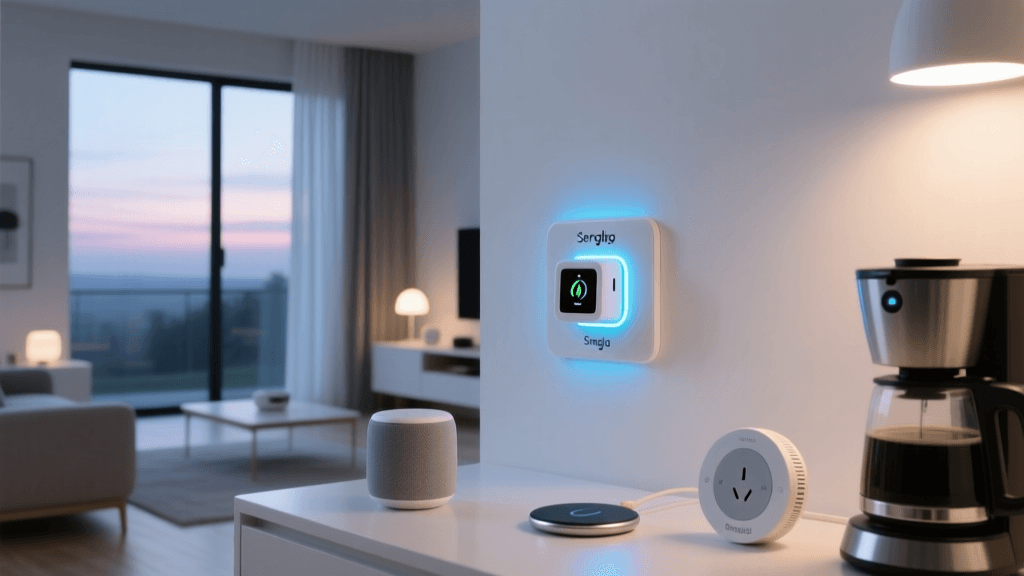
Smart plugs are often considered the gateway drug to home automation. They are inexpensive, easy to install, and immediately useful. However, the market is saturated with basic models that merely act as remote-controlled relays. The Sengled Smart Plug with Energy Monitoring aims to elevate this humble device from a simple switch to an intelligent sensor. By tracking real-time wattage, voltage, and amperage, it opens the door to advanced, condition-based automation routines that can save money, improve safety, and eliminate vampire power drain.
In this comprehensive review, we are putting the Sengled Smart Plug through our rigorous 'Real-World Automation Test.' We aren't just looking at the app interface; we are testing how reliably it handles energy-threshold triggers, how accurate its internal sensors are compared to dedicated hardware, and how it behaves when your network acts up. If you are looking to automate high-draw appliances or track the phantom loads in your home theater setup, this deep dive will tell you everything you need to know.
Hardware Design and Specifications
The physical design of a smart plug is deceptively important. A bulky plug can block adjacent outlets on a standard wall plate or power strip. Sengled has opted for a compact, rounded-square design that leaves the second socket on a standard duplex outlet completely unobstructed. The casing is made of fire-retardant polycarbonate, which is a critical safety feature when dealing with high-wattage appliances.
Key Specifications:
- Max Load: 15A / 1800W (120V AC)
- Wi-Fi Connectivity: 2.4GHz IEEE 802.11 b/g/n
- Energy Monitoring: Real-time wattage, voltage, amperage, and historical daily/weekly/monthly kWh tracking
- Manual Control: Side-mounted physical button with LED status ring
- Operating Temperature: -4°F to 104°F (-20°C to 40°C)
One of our favorite hardware features is the customizable LED ring. In the Sengled Home app, you can disable the status light entirely or set it to only illuminate when the relay is active. This makes the plug highly suitable for bedroom or home theater environments where stray LEDs can ruin the ambiance.
Setup and Ecosystem Compatibility
Getting the Sengled Smart Plug online is a straightforward process, provided you remember the golden rule of smart home Wi-Fi devices: it only supports 2.4GHz networks. The Sengled Home app utilizes Bluetooth Low Energy (BLE) to assist with the initial Wi-Fi provisioning. This means you don't have to manually connect your phone to a temporary plug hotspot; the app passes your Wi-Fi credentials directly to the plug via Bluetooth, resulting in a setup time of under 45 seconds.
Ecosystem Integration
It is important to note Sengled's ecosystem positioning. While the company has historically relied on its own proprietary hub for Zigbee devices, this Wi-Fi smart plug connects directly to your router. It integrates seamlessly with Amazon Alexa and Google Home. However, it does not natively support Apple HomeKit. If you are an Apple-centric user, you will need a bridge like Homebridge to expose the device, or you should look toward Matter-compatible alternatives.
Furthermore, while voice assistants can turn the plug on and off, energy-based automation routines generally require the native Sengled Home app. Alexa routines currently do not support 'If wattage exceeds X' as a native trigger without third-party middleware like IFTTT or SharpTools.
Real-World Automation Test 1: Space Heater Safety
Portable space heaters are a leading cause of winter house fires. Many older models lack tip-over switches or reliable auto-shutoff thermostats. Our first real-world automation test focused on safety: creating a failsafe routine for a 1500W ceramic space heater.
The Routine Configuration
In the Sengled Home app, we configured the following automation:
Trigger: When power consumption exceeds 1450W for a continuous duration of 10 minutes.
Action: Turn off the plug AND send a push notification to the admin phone.
Condition: Only active between 10:00 PM and 6:00 AM (Sleep hours).
The Results
We ran the space heater on its highest setting. The plug accurately reported a draw of 1480W. At the 10-minute mark, the plug's relay clicked off, and the push notification arrived on our test device approximately 2.5 seconds later. This 2.5-second latency is a byproduct of cloud processing; the plug sends telemetry to Sengled's AWS servers, the server evaluates the logic, and sends the command back to the plug.
Crucial Caveat: Because this automation is cloud-dependent, if your internet connection goes down, this safety failsafe will not trigger. The plug has no local processing logic for energy thresholds. Therefore, while this automation provides excellent peace of mind and secondary protection, it should never replace a heater with built-in, physical safety certifications.
Real-World Automation Test 2: Slaying Vampire Power
According to the U.S. Department of Energy, 'vampire loads' or standby power can account for 5% to 10% of residential energy use. Our home theater setup is a prime culprit. When the TV is turned off via remote, the soundbar, subwoofer, and streaming sticks remain in a standby state, collectively drawing about 35W of phantom power 20 hours a day.
The Routine Configuration
We set up an automation to eliminate this waste:
Trigger: When power consumption drops below 50W for 5 minutes.
Action: Turn off the plug.
Re-activation: Mapped to a physical smart button on the coffee table to restore power before movie night.
The Results and the 'Ping-Pong' Effect
During our initial test, we set the threshold too close to the actual standby draw (setting the trigger to 38W when the draw was 35W). Minor fluctuations in the home's voltage caused the plug to read 41W momentarily, resetting the 5-minute timer and preventing the shutoff. Once we adjusted the threshold to a safe buffer (50W), the automation worked flawlessly. This highlights a vital lesson in energy monitoring automation: always establish a clear delta between your 'active' state wattage and your 'standby' state wattage to avoid logic loops.
Energy Monitoring Accuracy and Data Export
How trustworthy is the data in the Sengled app? To verify, we placed a calibrated P3 Kill A Watt meter between the wall outlet and the Sengled Smart Plug. We tested various loads, from a 7W LED lamp to a 1200W microwave.
| Appliance | Kill A Watt Reading | Sengled App Reading | Variance |
|---|---|---|---|
| LED Desk Lamp | 7.2W | 7W | -2.7% |
| Laptop Charger | 64.5W | 63W | -2.3% |
| Microwave (High) | 1185W | 1170W | -1.2% |
| Space Heater | 1492W | 1480W | -0.8% |
The Sengled plug consistently under-reports by a margin of 1% to 3%. For consumer-grade energy monitoring, this is an excellent result and well within acceptable tolerances for calculating monthly kWh costs. The app provides clean bar charts for daily, weekly, and monthly usage. Additionally, users can export their historical data to a CSV file, a massive plus for home-lab enthusiasts and spreadsheet nerds who want to integrate the data into Grafana or Home Assistant dashboards.
Thermal Performance Under Heavy Load
Pushing 1500W through a compact smart plug generates heat. We ran a continuous 1450W load for three hours while monitoring the plug's exterior temperature with a thermal imaging camera. The ambient room temperature was 70°F (21°C). The plug's casing peaked at 98°F (36°C). While warm to the touch, this is well below the thermal throttling threshold and poses no melting or fire risk to standard wall plates. However, we strongly advise against daisy-chaining this plug into an already overloaded power strip.
Network Reliability and Offline Behavior
A smart plug is only as good as its connection. We tested the Sengled plug's resilience by intentionally rebooting our primary router. Upon the network's return, the plug successfully reconnected and resumed its state within 40 seconds. Importantly, the plug remembers its last 'On/Off' state in the event of a local power outage, a setting that can be customized in the app to default to 'Off', 'On', or 'Remember Last State'. For safety reasons with heating appliances, setting this to 'Default Off' is highly recommended.
SmartHomeDeck Score
SmartHomeDeck Score Radar for Sengled Smart Plug
- Performance (8/10): Reliable relay switching, accurate energy tracking, but cloud latency prevents instantaneous local automation.
- Value (9/10): Frequently available in multi-packs, making the per-unit cost highly competitive against premium brands.
- Compatibility (7/10): Excellent Alexa/Google integration, but the lack of native HomeKit or Matter support limits cross-platform appeal.
- Ease-of-Use (8/10): Bluetooth-assisted setup is painless, and the app interface is intuitive, though advanced logic requires some trial and error.
- Features (8/10): CSV export and customizable LED ring push it ahead of basic competitors, but local processing is missing.
Competitor Comparison
| Feature | Sengled Smart Plug | TP-Link Kasa EP25 | Amazon Smart Plug |
|---|---|---|---|
| Energy Monitoring | Yes (Real-time & Historical) | Yes (Real-time & Historical) | No |
| Max Load | 15A / 1800W | 15A / 1800W | 15A / 1800W |
| Wi-Fi Band | 2.4GHz | 2.4GHz | 2.4GHz |
| Native HomeKit | No | No (Matter update pending) | No |
| Data Export | CSV Export Available | App Only | N/A |
Pros and Cons
Pros:
- Highly accurate energy monitoring (within 3% margin of error).
- Compact design does not block adjacent outlets.
- CSV data export for advanced home-lab users.
- Customizable LED indicator ring.
- Aggressive pricing, especially in multi-packs.
Cons:
- Energy-threshold automations are cloud-dependent (no local execution).
- Lacks native Apple HomeKit and Matter support.
- Sengled app UI feels slightly dated compared to Tapo or Kasa.
Final Verdict and Buying Advice
The Sengled Smart Plug with Energy Monitoring is a powerhouse for users who want to move beyond simple scheduling and voice commands. Its ability to trigger automations based on real-time wattage makes it an invaluable tool for managing vampire loads, monitoring aging appliances, and adding a secondary layer of safety to high-draw devices like space heaters and window AC units.
However, buyers must understand its limitations. The reliance on cloud servers for energy-based logic means that internet outages will disable your most advanced routines. Furthermore, if you are deeply entrenched in the Apple HomeKit ecosystem, this plug will feel like an outsider.
Who should buy this? Renters looking to track HVAC or heater efficiency, home theater enthusiasts wanting to automate power strips, and Alexa/Google users who want granular data on their energy consumption without breaking the bank. For those who require local processing and Matter compatibility, you may need to look toward newer, albeit more expensive, Thread/Matter border-router setups. But for pure, data-rich utility at a budget price point, the Sengled Smart Plug remains a top-tier choice in our testing lab.