Introduction: The Price of Perfect Climate Control
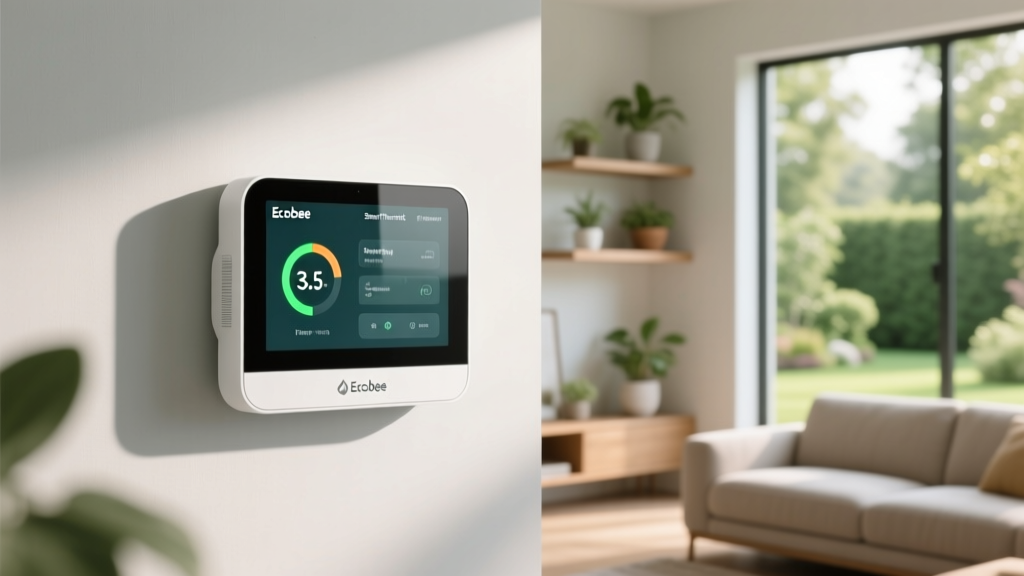
When upgrading to a smart home ecosystem, the thermostat is often the first device consumers consider. It sits at the intersection of daily comfort and significant utility expenses. However, the market is saturated with options ranging from $50 budget models to $250+ premium hubs. The Ecobee SmartThermostat Premium consistently sits at the top of the price bracket, carrying an MSRP of $249. For many homeowners, this triggers immediate sticker shock. Is a wall-mounted dial really worth the price of a mid-range smartphone?
At SmartHomeDeck, we believe that evaluating a smart home device requires looking far beyond the initial purchase price. A true value-for-money assessment must calculate the Total Cost of Ownership (TCO), factoring in installation requirements, hidden hardware costs, subscription fees, ongoing maintenance, and most importantly, long-term energy savings. In this comprehensive review, we put the Ecobee SmartThermostat Premium through its paces to determine if its premium price tag translates into genuine, measurable value for the average homeowner.
The Sticker Shock: Upfront Costs and Competitor Comparison
At $249, the Ecobee SmartThermostat Premium is undeniably an investment. To contextualize this cost, we must compare it against the broader market. Budget options like the Wyze Smart Thermostat retail for around $50, while mid-tier contenders like the Amazon Smart Thermostat sit near $80. Even its direct rival, the Google Nest Learning Thermostat, often retails for $279.
However, comparing raw MSRPs is a flawed metric for value. What you get in the box with the Ecobee Premium fundamentally alters the upfront cost equation. Unlike competitors that require you to purchase room sensors separately to achieve zonal temperature control, Ecobee includes one SmartSensor in the box. Considering these sensors retail for $39 individually, the effective hardware cost of the Ecobee ecosystem is immediately reduced when compared to a Nest setup, which requires purchasing separate Nest Temperature Sensors for multi-room management.
Installation and Hidden Hardware Costs
The most common hidden cost in smart thermostat adoption is professional installation. Modern smart thermostats require a constant power source, typically delivered via a C-wire (Common Wire). Many older homes lack a C-wire, which can result in a $150 to $250 electrician bill to run new wiring behind your walls.
Ecobee mitigates this hidden cost by including a Power Extender Kit (PEK) in the box. The PEK allows the thermostat to draw power from existing HVAC wiring by multiplexing the signals, effectively bypassing the need for a dedicated C-wire in most standard forced-air systems. While the PEK requires wiring at the HVAC control board (which involves removing the furnace panel), it is a DIY-friendly solution for anyone comfortable with basic wire nuts and screwdrivers, potentially saving you hundreds of dollars in professional labor.
A Crucial Compatibility Warning: The Ecobee SmartThermostat Premium is designed exclusively for 24-volt low-voltage HVAC systems (central air, heat pumps, conventional gas/electric). If your home relies on high-voltage (120V/240V) electric baseboard heaters or line-voltage radiant heating, this thermostat is entirely incompatible. Attempting to install it on a line-voltage system will destroy the device and pose a severe fire hazard. Always verify your system's voltage before purchasing.
The Included SmartSensor: Solving the Zonal Dilemma
The true value proposition of the Ecobee Premium hinges on its SmartSensor. Traditional thermostats measure the temperature in the hallway where they are installed. If your living room gets blasted with afternoon sun while your bedroom remains in the shade, a standard thermostat will leave you constantly adjusting the dial to compensate for the hallway's inaccurate readings.
The included SmartSensor monitors both temperature and occupancy. When the ecobee app detects that you are in the living room, it prioritizes the sensor's temperature reading over the main thermostat's reading. This dynamic prioritization eliminates the need to buy multiple smart thermostats or expensive motorized smart vents to achieve zonal comfort. From a value perspective, this single included sensor provides a level of localized climate control that would cost thousands of dollars to achieve via traditional HVAC zoning retrofits.
Energy Savings: Calculating the Real-World ROI
The primary financial justification for any smart thermostat is utility bill reduction. But how much do you actually save, and how long does it take to recoup the $249 investment?
According to the U.S. Department of Energy, properly setting your thermostat back 7 to 10 degrees Fahrenheit for eight hours a day can save homeowners up to 10% a year on heating and cooling costs. Furthermore, the EPA's ENERGY STAR program notes that certified smart thermostats typically save users around 8% on heating and 10% on cooling bills by learning schedules and utilizing geofencing.
To understand the broader financial impact, we must look at national energy consumption. The U.S. Energy Information Administration (EIA) reports that space heating and air conditioning account for the largest share of residential electricity use, often exceeding 30% of a home's total energy footprint. If your annual HVAC expenditure is $1,200, a conservative 10% savings yields $120 per year. However, with Ecobee's Smart Home & Away geofencing and SmartSensor occupancy detection, real-world testers frequently report savings closer to 15% ($180 annually).
As visualized in the chart above, assuming a moderate $100 professional installation fee and $120 in annual energy savings, the Ecobee SmartThermostat Premium pays for itself by the middle of Year 3. By Year 5, the device has effectively generated a net profit of $251 in recovered energy costs.
Ongoing Costs: Subscriptions and Maintenance
A major point of frustration in the modern smart home is the proliferation of mandatory monthly subscriptions. Fortunately, Ecobee respects the consumer's wallet here. The core features of the thermostat—scheduling, remote app control, Smart Home & Away geofencing, and sensor prioritization—are entirely free and will remain free.
Ecobee does offer an optional Smart Security subscription ($5/month or $50/year). This tier adds advanced features like smoke and carbon monoxide alarm detection (using the thermostat's built-in microphone to listen for your existing dumb alarms), window/door left-open alerts, and integration with third-party security cameras. While valuable for home security enthusiasts, it is completely optional. The average user seeking only climate control and energy savings will never need to pay a monthly fee.
Maintenance Costs: The SmartSensor runs on a single CR2032 coin cell battery. Depending on occupancy traffic and temperature reporting frequency, this battery lasts between 3 to 5 years. A replacement battery costs roughly $3 to $5, making the long-term maintenance cost practically negligible.
Feature Density: Justifying the Premium Tier
To assess value, we must evaluate what the hardware actually does beyond basic temperature control. The Premium model packs a staggering amount of technology into its glass-and-metal chassis:
- Built-in Alexa & Spotify Connect: The thermostat features a far-field microphone array and a surprisingly robust speaker, allowing it to function as a standalone Alexa smart speaker and stream Spotify directly.
- Air Quality Monitoring: An integrated VOC (Volatile Organic Compounds) sensor monitors indoor air quality. If VOC levels spike (e.g., from cooking fumes or cleaning chemicals), the app alerts you and can automatically trigger your HVAC fan or compatible smart air purifiers to clear the air.
- Dual-Band Wi-Fi: Unlike cheaper models that struggle on crowded 2.4GHz networks, the Premium supports 5GHz Wi-Fi, ensuring rock-solid connectivity and faster over-the-air updates.
Ecosystem Compatibility
The Ecobee SmartThermostat Premium is an agnostic powerhouse. It natively supports Apple HomeKit (a rarity in the smart thermostat space, as Nest famously lacks HomeKit support), Amazon Alexa, Google Assistant, Samsung SmartThings, and IFTTT. This broad compatibility ensures that no matter which ecosystem you invest in over the next decade, the Ecobee will integrate seamlessly, protecting your initial hardware investment from platform obsolescence.
Cost Breakdown Table
| Cost Category | Estimated Expense | Notes |
|---|---|---|
| Hardware (Thermostat + 1 Sensor) | $249.00 | MSRP; frequently on sale for $199-$229 |
| Professional Installation | $0 - $150 | $0 if DIY using included PEK; $150 for pro |
| Extra SmartSensors (Optional) | $39.00 / pair | Only needed for large, multi-story homes |
| Smart Security Subscription | $0 - $50 / yr | Optional; core climate features are free |
| Battery Replacement | ~$4.00 | CR2032 battery, required every 3-5 years |
| Estimated Year 1 TCO | $249 - $449 | Depends entirely on DIY vs Pro installation |
Pros and Cons
Pros:
- Included SmartSensor provides immediate zonal value without extra purchases.
- Power Extender Kit (PEK) saves homeowners from expensive C-wire electrician visits.
- Native Apple HomeKit support alongside Alexa and Google.
- Optional, non-gated subscription model respects the user's budget.
- High-quality glass and metal design with intuitive capacitive dial.
Cons:
- High initial MSRP compared to budget smart thermostats.
- Incompatible with high-voltage baseboard heating systems.
- Built-in Alexa speaker lacks the bass and audio fidelity of a dedicated Echo device.
SmartHomeDeck Score Dimensions
- Performance (9.5/10): Flawless Wi-Fi connectivity, rapid HVAC response times, and highly accurate temperature and occupancy tracking.
- Value (8.5/10): While the upfront cost is high, the inclusion of the PEK and SmartSensor, combined with verified energy savings, yields an excellent 3-year ROI.
- Compatibility (10/10): Unmatched ecosystem support, particularly the inclusion of HomeKit Secure integration.
- Ease-of-Use (9.0/10): The physical dial is satisfying and intuitive, though the mobile app's menu hierarchy can occasionally feel cluttered to new users.
- Features (9.5/10): VOC monitoring, Spotify Connect, and Alexa integration push this beyond a simple thermostat into a multifunctional smart home hub.
Final Verdict: Is It Worth the Money?
From a strict Total Cost Assessment perspective, the Ecobee SmartThermostat Premium is a triumph of long-term value over short-term budget constraints. If you are living in a rental property or plan to move within a year, the $249 price tag is difficult to justify; a budget model will suffice. However, for homeowners planning to stay in their residences for three years or more, the Ecobee Premium effectively pays for itself through utility savings, while simultaneously solving the multi-room comfort dilemma via its included SmartSensor.
By eliminating the need for professional C-wire installation via the PEK, refusing to lock core features behind a mandatory paywall, and offering unparalleled smart home ecosystem compatibility, Ecobee has engineered a device that respects both your home's infrastructure and your long-term financial goals. It earns our highest recommendation for buyers seeking a definitive, set-it-and-forget-it climate control solution.