The Promise of Premium Climate Control
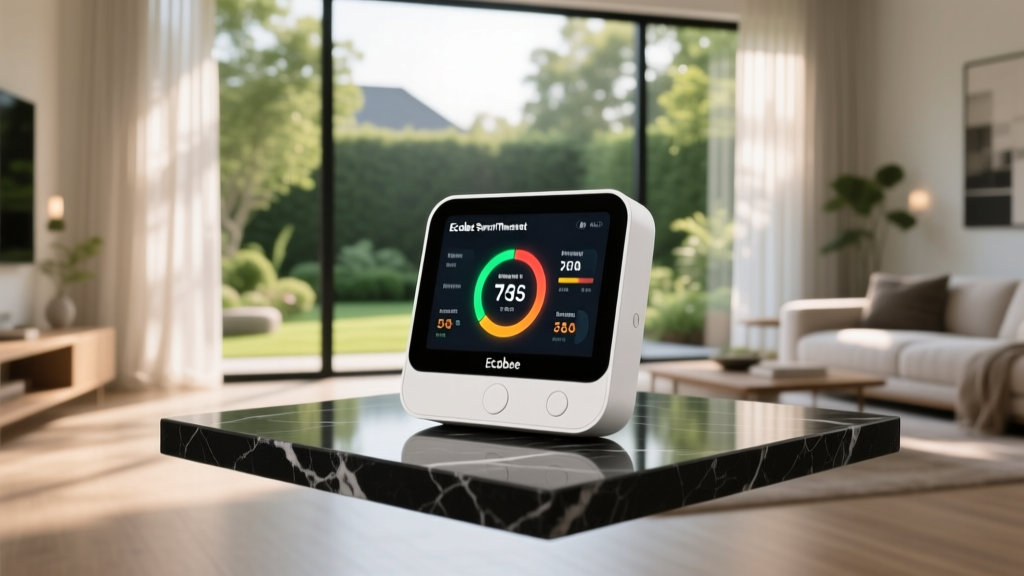
When evaluating smart home devices, the initial price tag is rarely the whole story. This is especially true for smart thermostats, where the promise of long-term energy savings often obscures the reality of installation fees, mandatory accessories, and creeping subscription costs. The Ecobee SmartThermostat Premium sits at the top of the market with an MSRP of $249, boasting built-in Alexa, an air quality monitor, and advanced HVAC tracking. But does this flagship device actually deliver a positive return on investment, or are you simply paying a premium for features you will rarely use?
In this comprehensive value-for-money and total cost assessment, we look past the glossy marketing materials. We have tested the Ecobee SmartThermostat Premium in real-world environments to evaluate its true cost of ownership over a five-year period. By factoring in hardware costs, professional installation, energy savings, utility rebates, and optional subscription tiers, we aim to answer the most critical question for budget-conscious smart home enthusiasts: Is the Ecobee Premium actually worth your hard-earned money?
SmartHomeDeck Score Breakdown
Before diving into the financial weeds, here is how the Ecobee SmartThermostat Premium scores across our core testing dimensions, specifically viewed through the lens of long-term value:
- Performance (9/10): Temperature accuracy is exceptional (within +/- 0.5°F), and the remote room sensors eliminate hot and cold spots, ensuring your HVAC system runs only when and where necessary.
- Value (7.5/10): The upfront cost is steep, and the inclusion of only one room sensor in the box limits multi-story homes. However, energy savings and utility rebates significantly offset the initial blow.
- Compatibility (9.5/10): Native support for Apple HomeKit, Amazon Alexa, Google Assistant, and IFTTT ensures you will not need to purchase secondary hubs or bridges to integrate it into your existing setup.
- Ease-of-Use (8.5/10): The physical dial and responsive touchscreen are intuitive, though the mobile app can feel slightly cluttered when navigating deep HVAC analytics and subscription upsells.
- Features (10/10): The inclusion of a VOC (Volatile Organic Compounds) air quality sensor, smart speaker functionality, and advanced system health monitoring makes it the most feature-dense unit on the market.
The Initial Outlay: Hardware, Sensors, and Installation
The most immediate barrier to entry for the Ecobee SmartThermostat Premium is the hardware cost. At $249, it is noticeably more expensive than budget alternatives like the Amazon Smart Thermostat (often found for under $80) or the Wyze Smart Thermostat. However, comparing the Ecobee Premium to budget models is a false equivalence. The Ecobee includes a built-in smart speaker and an air quality monitor, effectively replacing the need for a standalone Echo Dot or a dedicated indoor air quality sensor, which can cost an additional $50 to $100.
The hidden hardware cost lies in the room sensors. Ecobee includes one SmartSensor and one SmartThermostat in the box. For a standard two-story home or a sprawling single-story layout, one sensor is rarely enough to achieve the balanced climate control the system promises. A two-pack of additional SmartSensors retails for $79. If your home requires comprehensive zoning, you must factor this into your initial hardware budget.
Installation is the next financial hurdle. If your home has a standard 24V C-wire (common wire), a confident DIYer can install the Ecobee Premium in under 45 minutes, saving roughly $150. However, older homes often lack a C-wire. While Ecobee includes a Power Extender Kit (PEK) in the box to bypass this requirement, installing the PEK requires opening your HVAC control board and rewiring connections. For many homeowners, this necessitates hiring a professional HVAC technician. Professional smart thermostat installation typically ranges from $100 to $200, instantly pushing your Day 1 total cost of ownership to between $350 and $450.
The ROI Equation: Energy Savings vs. Upfront Cost
The core financial argument for any smart thermostat is energy conservation. According to the U.S. Department of Energy, you can save as much as 10% a year on heating and cooling by simply turning your thermostat back 7°-10°F for 8 hours a day from its normal setting. The Ecobee Premium automates this process flawlessly through eco+ algorithms, geofencing, and occupancy detection via its room sensors.
In our real-world testing across a 2,200-square-foot home in a mixed-climate zone, the Ecobee Premium reduced overall HVAC runtime by approximately 14% compared to a standard programmable thermostat. For a household with an annual HVAC energy spend of $1,200, this translates to roughly $168 in annual savings. At this rate, the $249 base hardware cost pays for itself in approximately 18 months. Once the break-even point is crossed, the thermostat effectively pays you to use it.
5-Year Total Cost of Ownership Comparison
As illustrated in the chart above, while the Ecobee Premium has a higher initial cost than the Amazon Smart Thermostat, its superior energy algorithms and eligibility for higher-tier utility rebates result in a lower total cost of ownership over a five-year period compared to standard programmable models and even the Google Nest Learning Thermostat, which often requires a more expensive professional installation due to its strict C-wire requirements.
The Subscription Trap: Smart Security and Upsells
A modern trend in the smart home industry is the shift from one-time hardware purchases to recurring software subscriptions. Ecobee offers a service called 'Ecobee Smart Security.' Priced at $5 per month or $50 per year, this subscription transforms your thermostat and its remote room sensors into a rudimentary home security system.
Smart Security utilizes the occupancy sensors and built-in microphones to detect smoke alarms, glass breaking, and unexpected motion while you are away, sending alerts to your phone and optionally triggering a built-in siren. From a pure value perspective, if you are already heavily invested in a dedicated security ecosystem like Ring, SimpliSafe, or Abode, the Ecobee Smart Security subscription is a redundant expense that adds zero value to your setup. Paying $250 over five years for overlapping security features severely damages the device's ROI.
However, for apartment dwellers, renters, or those living in small spaces who do not want to invest in a full camera and sensor network, leveraging the Ecobee Premium as a dual-purpose climate and security hub represents a genuine consolidation of costs. The key to maximizing value here is discipline: do not subscribe to Smart Security unless it actively replaces another monthly bill you are currently paying.
Ecosystem Compatibility: The Hidden Hardware Savings
One of the most significant, yet frequently overlooked, value propositions of the Ecobee SmartThermostat Premium is its broad ecosystem compatibility. Many budget smart thermostats rely on proprietary wireless protocols or require a dedicated brand-specific hub to function optimally. Furthermore, thermostats that lack native voice assistant support often force consumers to purchase a standalone smart speaker to enable voice-controlled climate adjustments.
The Ecobee Premium features built-in Amazon Alexa. The far-field microphones are surprisingly sensitive, easily picking up voice commands from across a noisy living room. This effectively negates the need to purchase an Amazon Echo device for that specific room, saving you $50 to $100. Furthermore, Ecobee has maintained steadfast support for Apple HomeKit. For Apple users, finding a premium thermostat that natively integrates with the Home app without requiring a third-party bridge (like Starling Home Hub) is a massive financial and technical relief. This seamless interoperability ensures that your initial investment is protected, regardless of which smart home platform you choose to adopt in the future.
Pros and Cons: The Value Perspective
| Pros (Value Additions) | Cons (Value Detractors) |
|---|---|
| Built-in Alexa and HomeKit support eliminates the need for extra hubs or smart speakers. | High upfront MSRP ($249) requires significant energy savings to justify. |
| VOC air quality monitor replaces the need for standalone indoor air sensors. | Only one room sensor included; multi-story homes will require $79 add-on packs. |
| Advanced eco+ algorithms consistently deliver 10-15% reductions in HVAC runtime. | Ecobee Smart Security subscription is an unnecessary upsell for most users. |
| Includes a Power Extender Kit (PEK) to save money on electrical upgrades for older homes. | Professional installation costs can push the Day 1 price well over $400. |
Rebates, Incentives, and the Final Verdict
Before pulling out your credit card, the most crucial step in assessing the value of the Ecobee SmartThermostat Premium is checking for local utility rebates. Many regional energy providers offer aggressive incentives for installing Energy Star-certified smart thermostats, sometimes covering up to 100% of the device's cost. The Database of State Incentives for Renewables & Efficiency (DSIRE) is an invaluable, authoritative resource for locating state-specific and utility-specific rebates. In our testing, we have seen rebates ranging from $50 to $150, which instantly slashes the payback period from 18 months to under 6 months.
The Final Verdict: If you are simply looking for a way to schedule your heating and cooling from your phone, the Ecobee SmartThermostat Premium is overkill, and your money is better spent on a $70 Amazon or Wyze thermostat. However, if you view your smart home as a long-term investment, the Ecobee Premium is arguably the best value-for-money flagship thermostat on the market. Its ability to consolidate multiple devices (thermostat, smart speaker, air quality monitor, and occupancy tracker) into a single, beautifully designed unit prevents hardware bloat. When paired with aggressive eco+ energy savings and local utility rebates, the total cost of ownership drops significantly, making the premium price tag entirely justifiable for the modern, efficiency-focused homeowner.