The Smart Home Privacy Paradox
Smart video doorbells are arguably the most intrusive sensors in the modern connected home. They map your daily routines, capture the faces of your family and guests, record ambient audio, and monitor package deliveries. While the convenience of seeing who is at your door from halfway across the world is undeniable, it comes with a significant caveat: data privacy. For years, the smart home industry has relied heavily on cloud-based processing and storage, meaning your most sensitive domestic footage is routinely transmitted to, and stored on, remote corporate servers.
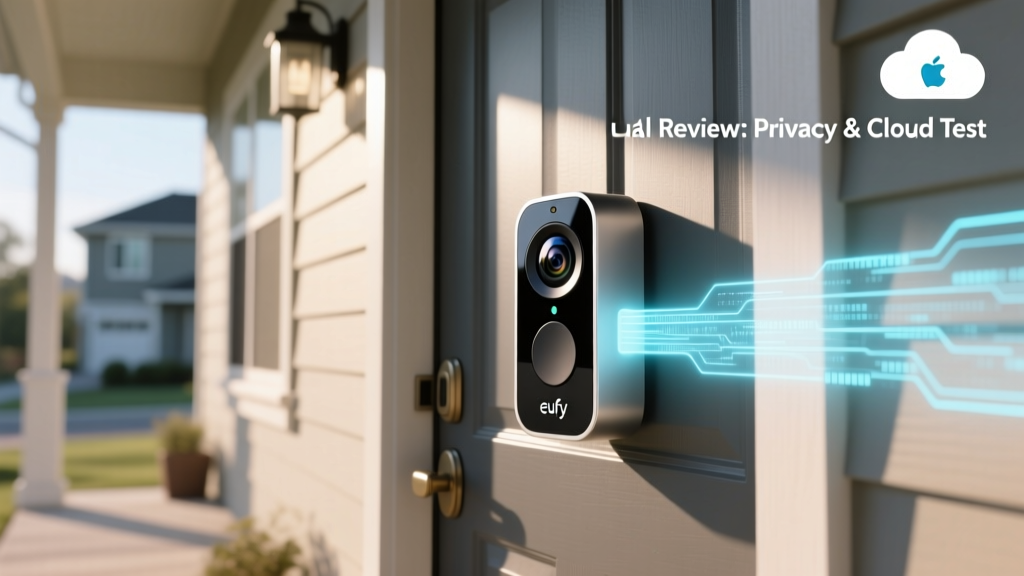
Enter the Eufy Security Video Doorbell Dual (Wired). Marketed as a privacy-first alternative to cloud-dependent giants like Ring and Nest, Eufy promises local storage, on-device AI processing, and zero mandatory monthly fees. But in an era where smart home privacy policies are frequently updated—and occasionally contradicted by network traffic analysis—how does the Eufy Doorbell Dual truly handle your data? In this comprehensive review, we evaluate the Eufy Video Doorbell Dual strictly through the lens of privacy data handling, cloud dependency, and local ecosystem integration.
Deck Score: Eufy Video Doorbell Dual (Wired)
At SmartHomeDeck, we evaluate products across five core dimensions. Here is how the Eufy Doorbell Dual scores, with a specific weighting toward data privacy and local processing capabilities.
Performance (8.5/10)
The dual-camera setup (a primary 2K lens and a secondary downward-facing lens) provides a seamless 180-degree field of view, eliminating the blind spots common in single-lens doorbells. Color night vision is surprisingly crisp, and the local AI accurately distinguishes between humans, pets, and vehicles without the latency associated with cloud-round-trip processing.
Value (9.5/10)
Retailing between $250 and $300, the upfront cost is higher than basic cloud doorbells. However, the inclusion of the HomeBase 2 (which acts as a local NVR and chime) and the complete absence of mandatory subscription fees make it vastly more economical over a three-to-five-year lifespan compared to Ring or Nest alternatives.
Compatibility (8.0/10)
It integrates well with Amazon Alexa and Google Assistant. Crucially for privacy advocates, it supports Apple HomeKit Secure Video (HKSV), allowing end-to-end encrypted routing through iCloud, bypassing Eufy's servers entirely if configured correctly.
Ease-of-Use (7.5/10)
Physical installation requires existing doorbell wiring (16-24V AC). The Eufy Security app is feature-rich but can feel cluttered. Navigating the granular privacy settings and local push notification configurations requires a bit of a learning curve compared to the plug-and-play simplicity of cloud-first competitors.
Features (9.0/10)
From package detection to facial recognition and custom activity zones, the feature set is robust. The ability to store up to 16GB of footage locally on the HomeBase 2 (expandable via USB) is a standout feature for data hoarders and privacy purists alike.
Deep Dive: Privacy Data & Cloud Dependency Evaluation
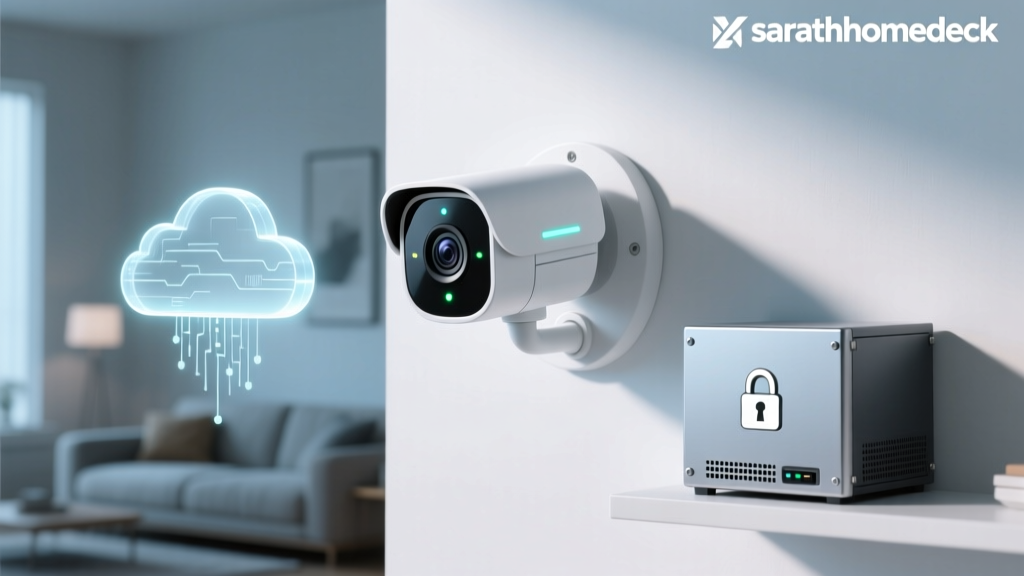
The core appeal of the Eufy ecosystem is the HomeBase 2. Unlike cloud doorbells that stream footage directly to AWS or Google Cloud servers, the Eufy Doorbell Dual transmits encrypted video over your local Wi-Fi directly to the HomeBase sitting inside your house. This local NVR (Network Video Recorder) architecture fundamentally shifts the data ownership paradigm back to the user.
Data Encryption and Local Storage
Footage stored on the HomeBase 2 is secured using AES-128 bit encryption. If a bad actor were to physically steal the HomeBase from your home, they could not simply plug it into a PC and extract your video files; the storage is cryptographically locked to your specific Eufy account credentials. Furthermore, the HomeBase supports local storage expansion via a USB-C port, allowing users to archive months of 2K dual-camera footage without ever paying a cloud hosting fee.
Addressing the Cloud Thumbnail Controversy
Any honest privacy evaluation of Eufy must address the late-2022 controversy. Security researchers discovered that despite Eufy's 'no cloud' marketing, thumbnail images and facial recognition data were being transmitted to cloud servers to facilitate push notifications and web-portal access. Eufy subsequently clarified their architecture: while video *recordings* remain local, metadata and thumbnails required cloud routing for remote access outside the local network.
In response to community backlash, Eufy introduced a Local Push Notification feature utilizing WebRTC and local network broadcasting. When enabled, and when your phone is on the same local network (or via specific router configurations), notifications and thumbnails are generated without touching external servers. While remote access (viewing live feeds while on cellular data) still requires a handshake with Eufy's relay servers, the transparency and user control introduced post-controversy demonstrate a commitment to privacy that is rare in the IoT space.
On-Device AI vs. Cloud Processing
Competitors like the Nest Doorbell rely heavily on cloud-based AI to identify packages, familiar faces, and animals. This means every frame of video is uploaded to a remote server for analysis. The Eufy Doorbell Dual utilizes a dedicated on-device neural processing unit (NPU). When a delivery driver approaches, the doorbell itself calculates the bounding boxes and classifies the object. Only the resulting metadata alert is sent to your phone. This drastically reduces your network upload bandwidth and ensures that raw biometric and environmental data never leaves your physical property.
Network Traffic Analysis: The Offline Test
To truly test cloud dependency, we subjected the Eufy Doorbell Dual to a rigorous network isolation test using a Pi-hole DNS sinkhole and a local firewall. We blocked all outbound traffic from the HomeBase 2's MAC address to Eufy's known AWS and Azure server IP ranges.
- Local Recording: Continued flawlessly. Motion events triggered dual-camera recording, and files were saved to the HomeBase.
- On-Device AI: Human and vehicle detection continued to function locally, triggering the physical chime.
- Remote Access: Failed, as expected. The app could not establish a P2P connection or use the relay server.
- Facial Recognition: Local matching against the HomeBase database worked, but syncing new faces from the cloud-based web portal was disabled.
This test confirms that the Eufy Doorbell Dual is genuinely capable of functioning as a closed-circuit local security system, a claim that cannot be made by Ring or Nest devices, which essentially become paperweights when disconnected from their respective clouds.
Ecosystem Integration: HomeKit Secure Video
For users deeply embedded in the Apple ecosystem, the Eufy Doorbell Dual's support for HomeKit Secure Video (HKSV) is a masterclass in privacy. According to Apple's official HomeKit Secure Video documentation, HKSV encrypts video locally on the device before it is transmitted. The encrypted stream is sent directly to iCloud, where it is stored using end-to-end encryption. Not even Apple can view your footage.
By routing the Eufy doorbell through HKSV, users can completely bypass the Eufy Security app for daily viewing, relying instead on the native Apple Home app. This ensures that your data is governed by Apple's stringent privacy policies rather than a third-party IoT manufacturer. It is worth noting that enabling HKSV requires an iCloud+ subscription (starting at $0.99/month), but this is a fraction of the cost of proprietary smart home subscriptions and offers vastly superior data protection.
Data Privacy & Cloud Dependency Comparison
To contextualize the Eufy Doorbell Dual's privacy posture, we must compare it against the market leaders. As highlighted by Mozilla's Privacy Not Included guide, many popular smart home devices have vague data-sharing policies and active partnerships with law enforcement agencies that bypass user consent. Eufy's local-first approach circumvents many of these systemic risks.
| Feature | Eufy Doorbell Dual | Ring Video Doorbell Pro 2 | Google Nest Doorbell (Wired) |
|---|---|---|---|
| Primary Storage | Local (HomeBase 2) | Cloud (AWS) | Cloud (Google Servers) |
| Video Encryption | AES-128 (Local) / E2E (HKSV) | In-transit / At-rest (Cloud) | In-transit / At-rest (Cloud) |
| AI Processing | On-Device (Local NPU) | Cloud & Edge Hybrid | Primarily Cloud-Based |
| Law Enforcement Data Sharing | No (Data is local) | Yes (Via Ring Neighbors Portal) | Yes (Via Nest Data Policies) |
| Offline Recording | Yes (Fully Functional) | No (Requires Internet) | No (Requires Internet) |
| Mandatory Subscription | No | Yes ($4.99/mo) | Yes ($8.00/mo for Nest Aware) |
Pros and Cons
Pros
- True Local Storage: No mandatory cloud fees; footage stays inside your home.
- On-Device AI: Fast, accurate detection without uploading raw video to external servers.
- Dual-Camera Design: Eliminates blind spots, capturing head-to-toe footage of visitors and packages.
- HomeKit Secure Video: Enables end-to-end encrypted routing via iCloud.
- Network Resilience: Continues to record and trigger local chimes during internet outages.
Cons
- Remote Access Caveats: Viewing live feeds away from home still relies on Eufy's relay servers unless complex local network tunneling (like WireGuard) is configured.
- HomeBase Dependency: Requires physical space and power for the HomeBase 2 hub inside the home.
- App Complexity: The Eufy Security app is dense, and finding the specific local-only toggles can be frustrating for non-technical users.
Final Verdict: Who is this for?
The Eufy Security Video Doorbell Dual (Wired) is not just a piece of hardware; it is a statement on data ownership. For the average consumer who prioritizes convenience above all else, a Ring or Nest doorbell might offer a slightly more frictionless out-of-the-box experience. However, for privacy-conscious users, tech enthusiasts, and anyone uncomfortable with the idea of their domestic life being stored on corporate cloud servers, the Eufy Dual is currently the best mainstream option on the market.
By combining robust on-device AI, local AES-encrypted storage, and the option to route data through Apple's HomeKit Secure Video, Eufy provides a comprehensive security solution that respects your digital boundaries. While the brand's past marketing missteps regarding cloud thumbnails warrant a healthy dose of skepticism, their subsequent pivot toward transparent, user-controlled local push notifications demonstrates a willingness to adapt to the demands of privacy advocates. If you want to know who is at your door without letting a tech giant look over your shoulder, the Eufy Doorbell Dual is the definitive choice.