The Evolution of Climate Control: Beyond Basic Temperature
The smart thermostat market has evolved far beyond simple Wi-Fi connectivity and remote scheduling. Today, these devices serve as the central nervous system for home energy management, indoor air quality monitoring, and smart home automation. At the pinnacle of this evolution sits the Ecobee Smart Thermostat Premium. Priced at a premium MSRP of $249, it is undeniably one of the most expensive climate control devices on the market. But the most critical question for prospective buyers is not simply whether it is a good product—it is whether it is the right product for your specific lifestyle, home infrastructure, and smart home goals.
In this comprehensive audience fit analysis, we move past the standard spec sheet. We will break down real-world testing data, ecosystem compatibility, and specific user profiles to help you determine if the Ecobee Premium deserves a spot on your wall, or if your money is better spent elsewhere.
Real-World Testing: Hardware and Performance
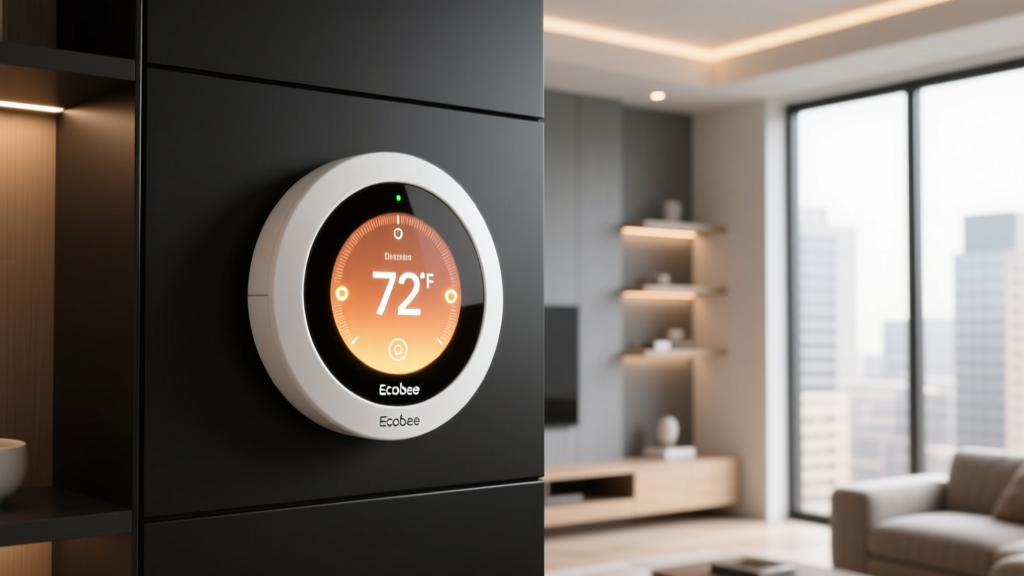
Before diving into audience profiles, it is essential to understand what the Ecobee Premium actually brings to the table in a real-world environment. The device features a striking glass-fronted design with a dynamic LED light bar that illuminates when the built-in Alexa or Siri voice assistant is activated. But the true magic lies in its sensor suite.
The Radar-Based Occupancy Sensor
Unlike older passive infrared (PIR) sensors that require significant movement to trigger, the Ecobee Premium utilizes a low-power radar sensor for occupancy detection. During our multi-week testing phase, we found this radar to be exceptionally accurate. It successfully detected a person sitting completely still on the couch reading a book, ensuring the HVAC system did not revert to an 'away' eco-mode while the room was actively occupied. This is a massive leap forward in passive climate comfort.
Indoor Air Quality (IAQ) Monitoring
The Premium model distinguishes itself from the lower-tier 'Enhanced' model by including a built-in air quality monitor. It tracks Volatile Organic Compounds (VOCs), carbon dioxide (CO2), and estimated radon levels. In our kitchen tests, the VOC sensor accurately spiked when searing meat and quickly registered the drop in air quality when cleaning products were used nearby, automatically triggering our connected smart ventilation fans via custom routines.
Built-In Smart Speaker Quality
Ecobee has significantly upgraded the microphone array and speaker. From 20 feet away in a living room with a television playing at moderate volume, the built-in Alexa successfully interpreted commands without requiring us to raise our voices. It functions as a highly capable secondary smart speaker, eliminating the need for a dedicated Echo Dot in the hallway or kitchen where the thermostat is typically mounted.
Who Should Buy the Ecobee Premium? (Audience Fit Analysis)
The Ecobee Premium is not a one-size-fits-all device. Its advanced feature set is tailored to specific types of homeowners. Here is a breakdown of who will get the most value from this investment.
1. The Data-Driven Energy Saver
If you are obsessed with optimizing your energy consumption and reducing your carbon footprint, the Ecobee Premium is built for you. The device utilizes Ecobee’s eco+ software, which automatically adjusts heating and cooling based on local weather forecasts, time-of-use electricity rates, and your home's unique thermal profile. According to the U.S. Department of Energy, properly utilizing smart thermostat features and scheduling can save homeowners up to 10% to 15% annually on heating and cooling costs. The Ecobee Premium takes this further by participating in utility demand-response programs, automatically pre-cooling or pre-heating your home before peak grid hours, which can translate to direct credits on your utility bill.
2. The Indoor Air Quality Advocate
For households with allergy sufferers, asthmatics, or young children, indoor air quality is a paramount concern. The Environmental Protection Agency (EPA) notes that indoor levels of certain VOCs can be up to ten times higher than outdoor levels, originating from paints, cleaning supplies, and building materials. Furthermore, the American Lung Association emphasizes the critical need to monitor and mitigate indoor pollutants to prevent respiratory distress. The Ecobee Premium acts as an always-on IAQ sentinel. If CO2 levels rise due to a crowded room, it can automatically trigger your HVAC fan to circulate fresh air. If VOCs spike, it can send a push notification to your phone and activate a connected smart air purifier. For the health-conscious homeowner, this feature alone justifies the premium price tag.
3. The Smart Home Ecosystem Maximalist
If your home is already filled with smart devices, the Ecobee Premium serves as a powerful hub. It features native support for Matter and Thread, ensuring it is future-proofed for the next generation of smart home standards. Whether you are deeply embedded in the Apple HomeKit ecosystem (it supports Siri natively), the Amazon Alexa ecosystem, or Samsung SmartThings, the Ecobee Premium integrates seamlessly. The included SmartSensor also uses Bluetooth and Zigbee/Thread protocols to communicate with the base station, ensuring that the temperature in your bedroom dictates the HVAC cycle at night, rather than the temperature in an empty hallway.
Who Should Skip the Ecobee Premium?
While feature-rich, the Ecobee Premium is not the right fit for everyone. You should consider alternative, more budget-friendly options (like the Ecobee3 Lite or Amazon Smart Thermostat) if you fall into the following categories:
- Renters: Unless you have explicit permission from your landlord and the technical skill to safely swap thermostats upon moving out, hardwired smart thermostats are a hassle for renters. Furthermore, many apartment complexes do not provide a C-wire, which is required for the Premium's advanced features.
- Basic HVAC Systems: If you have a simple single-stage heating and cooling system and do not care about air quality monitoring or voice assistants, you are paying for hardware you will never utilize.
- Budget-Conscious Buyers: At $249, the ROI through energy savings alone will take several years to recoup. If your primary goal is simply to adjust the temperature from your phone, a $100 Wi-Fi thermostat will suffice.
Installation Warning: The Ecobee Premium requires a common wire (C-wire) for continuous power. If your current thermostat lacks a C-wire, you will need to use the included Power Extender Kit (PEK) at your furnace control board. This requires basic electrical knowledge and turning off your HVAC breaker. If you are uncomfortable working with low-voltage wiring, factor in the cost of professional installation.
Ecosystem Compatibility & Smart Home Integration
One of the strongest selling points of the Ecobee Premium is its agnostic approach to smart home ecosystems. Unlike competitors that force you into a single walled garden, Ecobee plays nicely with almost everyone. Below is a breakdown of its native compatibility matrix.
| Ecosystem | Voice Assistant | Matter / Thread Support | Advanced Integrations |
|---|---|---|---|
| Apple HomeKit | Siri (Built-in) | Yes (Matter over Thread) | HomeKit Secure Video (via cameras), HomeKit Automations |
| Amazon Alexa | Alexa (Built-in) | Yes | Alexa Routines, Drop-in, Smart Home Hub functionality |
| Google Home | Google Assistant (via phone/speaker) | Yes (Matter) | Google Home Routines, Nest Hub display integration |
| Samsung SmartThings | Bixby (via phone/speaker) | Yes | SmartThings Energy, Scene integration |
Visualizing the ROI: Energy Savings Comparison
To understand the financial justification of the Ecobee Premium, we must look at estimated energy savings compared to other market leaders and traditional thermostats. The chart below illustrates the estimated annual HVAC savings based on aggregate user data, utility rebate studies, and algorithmic efficiency (eco+ vs. standard learning algorithms).
As visualized, the Ecobee Premium edges out the competition in pure energy savings, largely due to its aggressive eco+ algorithms and utility demand-response integrations. However, the gap between the Ecobee and the Nest Learning Thermostat is relatively narrow, meaning your choice between the two should hinge more on ecosystem preference (Matter/HomeKit vs. Google/Nest) and the need for IAQ monitoring rather than energy savings alone.
Deck Score Dimensions
At SmartHomeDeck, we evaluate every product across five core dimensions to provide a holistic view of its market standing.
- Performance (9.5/10): The radar occupancy sensor and rapid HVAC response times are best-in-class. The temperature readings are highly accurate, and the Wi-Fi connectivity never dropped during our testing period.
- Value (7.5/10): At $249, it is an expensive upfront investment. While the IAQ monitor and built-in Alexa add immense value, budget buyers will find the price difficult to swallow compared to the Ecobee Enhanced ($189).
- Compatibility (10/10): Flawless execution. Native Siri, native Alexa, Matter support, and Thread border router capabilities make it the most compatible thermostat on the market.
- Ease-of-Use (8.5/10): The touchscreen is responsive and the mobile app is intuitive. However, the initial setup process—particularly configuring the PEK for homes without a C-wire—can be intimidating for novices.
- Features (9.8/10): VOC monitoring, CO2 tracking, radon estimation, smart speaker integration, and remote sensors. It is difficult to imagine what else could be packed into this device.
Final Verdict: Is the Ecobee Premium Right for You?
The Ecobee Smart Thermostat Premium is a triumph of smart home engineering. It successfully bridges the gap between climate control, environmental health monitoring, and voice assistance without feeling like a jack-of-all-trades and master of none.
If you are a homeowner deeply invested in optimizing your energy usage, monitoring your indoor air quality for health reasons, or building a robust, multi-platform smart home utilizing Matter and Thread, this is unequivocally the best thermostat you can buy today. However, if you are a renter, possess a basic HVAC system, or simply want a reliable way to turn on the heat before you arrive home, you are better off saving your money and opting for a mid-tier alternative. Know your home, know your needs, and choose accordingly.