The Smart Thermostat Duopoly: Ecobee vs. Nest
When it comes to upgrading your home's HVAC control, the market is dominated by two heavyweights: the Ecobee SmartThermostat (often referred to as the Premium or Voice Control model) and the Google Nest Learning Thermostat. Both devices promise to slash your energy bills, learn your daily routines, and integrate seamlessly into your broader smart home ecosystem. However, beneath their sleek exteriors, they employ fundamentally different philosophies regarding hardware design, sensor technology, and ecosystem lock-in.
In this comprehensive head-to-head review, we put the Ecobee SmartThermostat and the Nest Learning Thermostat to the test. We will evaluate their real-world performance, installation quirks, sensor ecosystems, and long-term value to help you decide which device deserves a spot on your wall.
Design and Hardware: Minimalist Dial vs. Glass Touchscreen
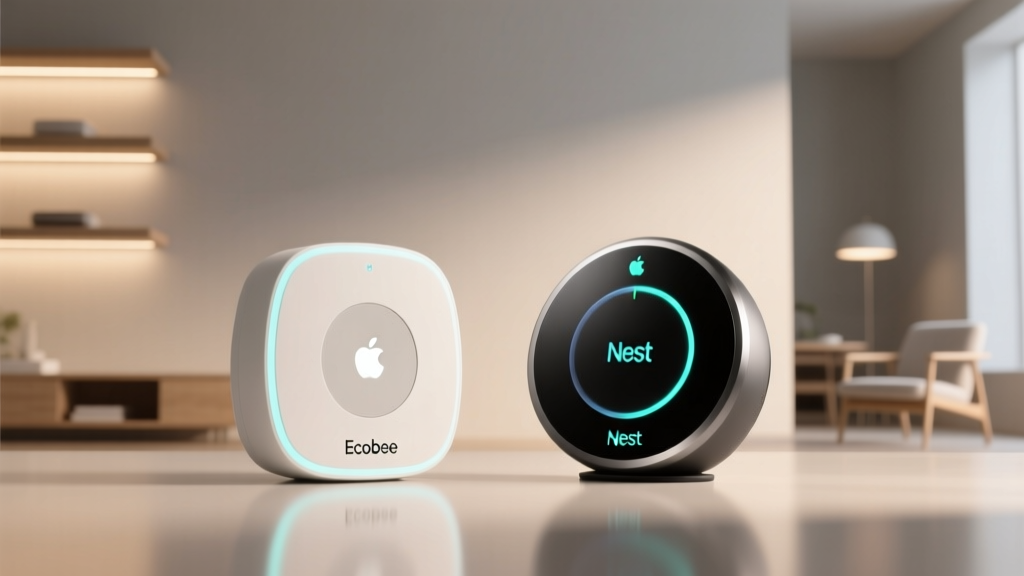
The physical design of a smart thermostat is crucial, as it serves as a permanent fixture in a high-traffic area of your home. The Google Nest Learning Thermostat is widely considered a masterpiece of industrial design. It features a circular, stainless-steel bezel that rotates with a satisfying, mechanical click, mimicking the tactile feedback of vintage analog thermostats. The 3.3-inch diameter screen is vibrant, and the device uses a proximity sensor to wake up and illuminate the moment you walk into the room. Its minimalist footprint allows it to blend into almost any interior decor, from mid-century modern to contemporary.
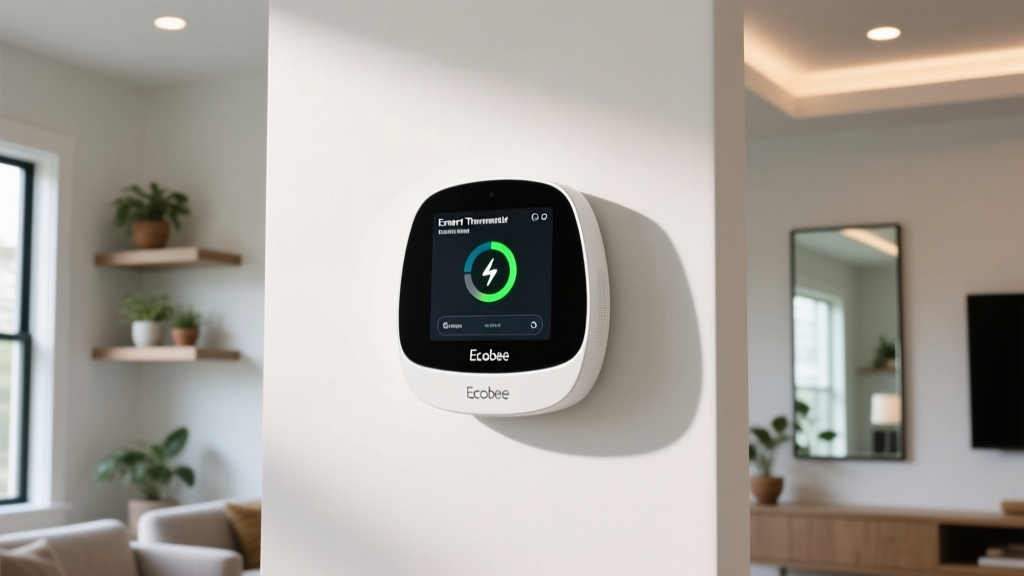
Conversely, the Ecobee SmartThermostat opts for a more tech-forward, utilitarian aesthetic. It features a 4.09-inch square glass touchscreen with a dark, mirrored finish when inactive. While it lacks the physical, tactile satisfaction of the Nest's rotating dial, the Ecobee's touchscreen is highly responsive and displays a wealth of information at a glance, including local weather, indoor humidity, and active HVAC stages. Furthermore, the Ecobee houses a built-in far-field microphone array and a surprisingly robust speaker, allowing it to double as a fully functional Amazon Alexa smart speaker—a hardware feature the Nest entirely lacks.
The Sensor Ecosystem: Occupancy vs. Temperature
The most significant differentiator between these two platforms is how they handle remote room sensors. Traditional thermostats only measure the temperature in the hallway where they are installed, often leading to hot or cold spots in bedrooms and living areas. Both Ecobee and Nest offer remote sensors to solve this, but their execution varies wildly.
Ecobee SmartSensors
Ecobee includes one SmartSensor in the box with the Premium model. These sensors track both temperature and occupancy using a passive infrared (PIR) motion detector. This dual-sensing capability is a game-changer for energy efficiency and comfort. If you are reading in your home office and the main hallway is empty, the Ecobee knows you are occupied in the office and adjusts the HVAC system to prioritize that specific room. The sensors run on standard CR2032 coin batteries that last up to five years, and they communicate via a low-energy proprietary radio frequency that easily penetrates walls and floors.
Nest Temperature Sensors
The Nest Learning Thermostat supports Nest Temperature Sensors, but they are sold separately and lack occupancy detection. They only report the ambient temperature of the room they are placed in. While you can schedule the Nest to prioritize the bedroom sensor at night and the living room sensor during the day, it cannot dynamically react to your actual presence. If you decide to take a nap in the guest room at 2:00 PM, the Nest will not know you are there, potentially leaving you uncomfortable. Furthermore, Nest sensors rely on Bluetooth Low Energy (BLE), which can occasionally struggle with range in larger homes with thick walls.
Smart Learning and Geofencing Capabilities
Both devices excel at automating your home's climate, but they use different methodologies to achieve it.
The Nest Learning Thermostat pioneered the 'learning' algorithm. For the first week, you manually adjust the dial to your preferred temperatures. Nest records these inputs, cross-references them with local weather data and the thermal dynamics of your home (how long it takes to heat up or cool down), and automatically generates a customized schedule. It also utilizes built-in geofencing via your smartphone's GPS to switch to 'Eco' temperatures when the last person leaves the house.
The Ecobee SmartThermostat takes a more manual, schedule-first approach, augmented by its 'Smart Recovery' and 'Follow Me' features. Instead of guessing your schedule, Ecobee prompts you to set your desired sleep, wake, and away times during setup. Its 'Follow Me' feature uses the occupancy sensors mentioned above to override the schedule if it detects you are home when you should be away, or vice versa. While Nest feels more like magic, Ecobee offers granular control for power users who prefer explicit programming over algorithmic guesswork.
Energy Savings and Environmental Impact
The primary justification for the premium price tag of these devices is long-term energy savings. According to the U.S. Department of Energy, you can save as much as 10% a year on heating and cooling by simply turning your thermostat back 7°-10°F for 8 hours a day from its normal setting. Smart thermostats automate this process, ensuring you never pay to heat or cool an empty house.
Devices certified by ENERGY STAR are independently verified to deliver genuine energy savings based on real-world field data, rather than just laboratory simulations. Both the Ecobee and Nest carry this certification, but their real-world savings profiles differ slightly based on user behavior and sensor utilization.
As visualized above, Ecobee users often report slightly higher aggregate savings, primarily because the included occupancy sensors prevent the system from running unnecessarily when homeowners deviate from their standard schedules. Nest's savings are highly dependent on the user remembering to carry their smartphone for accurate geofencing.
Ecosystem Compatibility and Voice Assistants
Your choice of thermostat should align with your existing smart home infrastructure.
- Ecobee: A champion of cross-platform compatibility. It features built-in Amazon Alexa, meaning you can use it to control other smart devices, play music, or use the intercom feature without needing a separate Echo Dot. It also natively supports Apple HomeKit, Samsung SmartThings, and the new Matter standard, making it the most versatile option for mixed-ecosystem homes.
- Nest: Deeply integrated into the Google Home ecosystem. If you use Google Assistant, Nest Cams, and Nest Doorbells, the synergy is unmatched. For example, if your Nest Doorbell detects a package, your Nest Thermostat screen can display the camera feed. However, it lacks native Apple HomeKit support and does not support Matter out of the box without specific bridge updates, limiting its appeal for iOS-centric households.
Installation Realities: The C-Wire Conundrum
Before purchasing any smart thermostat, you must inspect your current wiring. As noted in thermostat buying guides by Consumer Reports, checking your wiring before purchasing is critical to avoid installation headaches. Both the Ecobee and Nest require a continuous 24V power supply, typically provided by a Common wire (C-wire).
If your home lacks a C-wire, the Ecobee includes a Power Extender Kit (PEK) in the box. The PEK wires into your HVAC control board at the furnace or air handler, safely multiplexing the existing wires to deliver continuous power to the thermostat. It is a reliable, hardware-based solution that guarantees stable Wi-Fi connectivity and prevents the thermostat from rebooting when the HVAC kicks on.
The Nest claims it does not need a C-wire, relying on a technique called 'power stealing.' It sips small amounts of power from the heating or cooling wires when the system is off, and occasionally turns on the HVAC fan for a few seconds to charge its internal battery when the system is running. While this works in many modern homes, it can cause severe issues with older HVAC systems, zone controllers, or sensitive gas valves, leading to Wi-Fi drops or even component damage. For a reliable Nest installation, running a new C-wire or buying a third-party Nest Power Connector is highly recommended.
Head-to-Head Specification Table
| Feature | Ecobee SmartThermostat Premium | Google Nest Learning Thermostat |
|---|---|---|
| MSRP | $249.99 | $249.99 |
| Display | 4.09" Glass Touchscreen | 3.3" Circular LCD w/ Rotating Dial |
| Voice Assistant | Amazon Alexa Built-in | None (Requires separate Google speaker) |
| Remote Sensors | SmartSensor (Temp + Occupancy) | Temp Sensor (Temp only, sold separately) |
| C-Wire Required | Yes (PEK included for adaptability) | No (Power stealing, C-wire recommended) |
| Smart Home Hubs | HomeKit, SmartThings, Matter, Alexa | Google Home, Works with Alexa |
| HVAC Monitoring | Advanced Alerts & Filter Tracking | Basic System Alerts |
SmartHomeDeck Score Breakdown
Ecobee SmartThermostat Premium
- Performance (9.5/10): Flawless temperature regulation and rapid Wi-Fi connectivity.
- Value (9.0/10): Includes a premium occupancy sensor and Alexa speaker in the box.
- Compatibility (10/10): Unmatched support across Apple, Amazon, and Samsung ecosystems.
- Ease-of-Use (8.5/10): The app is powerful but has a steeper learning curve for beginners.
- Features (9.5/10): HVAC health monitoring and intercom capabilities set it apart.
- Deck Score: 9.3 / 10
Google Nest Learning Thermostat
- Performance (9.0/10): Excellent learning algorithm, though power-stealing can cause hiccups.
- Value (7.5/10): Sensors are sold separately, increasing the total cost of ownership.
- Compatibility (7.0/10): Heavily biased toward Google Home; poor Apple HomeKit support.
- Ease-of-Use (9.5/10): The rotating dial and auto-scheduling are incredibly intuitive.
- Features (8.0/10): Lacks built-in voice control and advanced HVAC diagnostics.
- Deck Score: 8.2 / 10
Final Verdict: Which Thermostat Wins?
The battle between the Ecobee SmartThermostat and the Nest Learning Thermostat ultimately comes down to your smart home ecosystem and your desire for granular control versus automated simplicity.
If you are an Apple HomeKit user, have a multi-story home with hot/cold spots, or want the most comprehensive HVAC monitoring and voice control built directly into the wall, the Ecobee SmartThermostat Premium is the undisputed winner. Its inclusion of an occupancy-sensing SmartSensor and the Power Extender Kit makes it a superior value proposition and a more reliable piece of hardware for complex HVAC systems.
However, if you are deeply entrenched in the Google Home ecosystem, value stunning, minimalist industrial design, and prefer a thermostat that quietly learns your habits without requiring you to program a schedule, the Google Nest Learning Thermostat remains a fantastic choice. Just be prepared to purchase additional temperature sensors separately and verify that your HVAC system can handle its power requirements.
For the majority of smart home enthusiasts seeking maximum compatibility and out-of-the-box value, the Ecobee takes the crown in this head-to-head matchup.