Introduction: The Promise and Peril of Local Storage
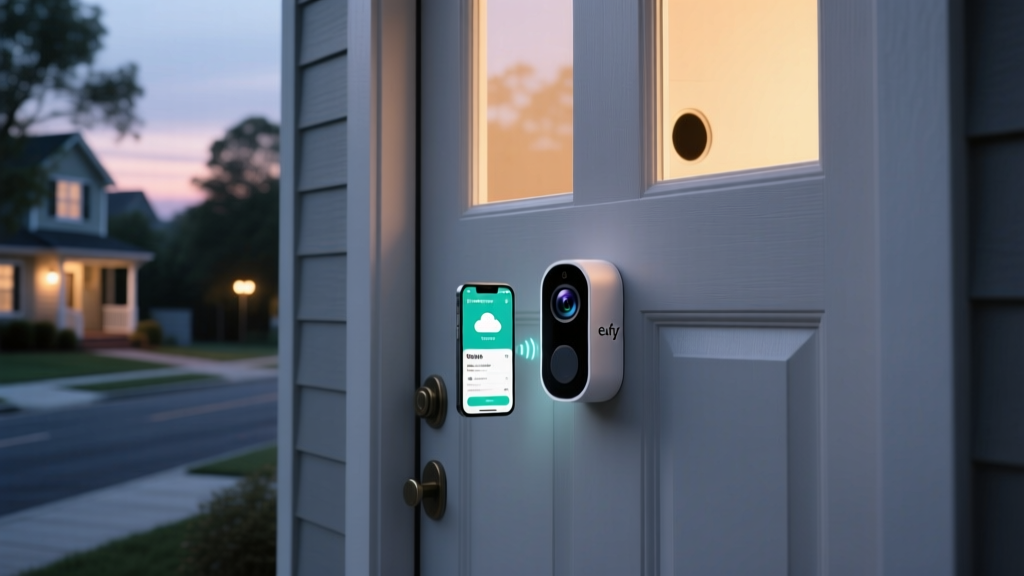
The smart home industry is built on a foundation of data collection. Every motion event, doorbell ring, and package delivery is typically whisked away to remote servers for processing and storage. For privacy-conscious consumers, this paradigm is deeply unsettling. Enter the Eufy Security Video Doorbell Dual (Wired), a device that has heavily marketed its local storage capabilities and zero-subscription model as a sanctuary for user privacy. But in an era where IoT vulnerabilities and corporate data policies are under constant scrutiny, does Eufy truly deliver on its promise of keeping your data off the cloud?
In this comprehensive SmartHomeDeck review, we are evaluating the Eufy Video Doorbell Dual not just for its optical performance and AI features, but through the critical lens of Privacy Data and Cloud Dependency. We will dissect its network behavior, analyze the fallout and remediation of its 2022 privacy controversy, and provide actionable network configurations to ensure your front porch remains your private domain.
SmartHomeDeck Deck Score Dimensions
Before diving into the privacy architecture, it is essential to understand how the device performs as a holistic smart home product. Our Deck Score evaluates five core dimensions.
Performance: 9/10
The dual-lens setup is a game-changer for porch monitoring. The primary 2K sensor captures facial details and wide-angle porch activity, while the secondary downward-facing 1600p sensor eliminates blind spots, capturing head-to-toe footage and package deliveries with remarkable clarity. The local AI processing on the HomeBase 2 ensures that human, pet, and vehicle detection occurs in milliseconds without relying on round-trip cloud latency.
Value: 8.5/10
With a retail price hovering around $250, the upfront cost is steep compared to basic cloud-dependent doorbells. However, the absence of mandatory monthly subscription fees means the device pays for itself within two years when compared to Ring or Nest premium tiers.
Compatibility: 7.5/10
The doorbell integrates seamlessly with Amazon Alexa and Google Assistant. Apple HomeKit Secure Video (HKSV) is supported, though enabling HKSV forces the video stream into Apple's iCloud ecosystem, which complicates the strict local-only privacy model. RTSP support is available for third-party NVR systems, a massive win for advanced users.
Ease-of-Use: 8/10
The Eufy Security app is intuitive, and the physical installation is straightforward for those with an existing 16-24V AC transformer. Pairing the doorbell to the HomeBase 2 is a one-button process that takes under a minute.
Features: 9/10
Features like Delivery Detection, familiar face recognition, and customizable activity zones are processed locally. The included HomeBase 2 also acts as a Wi-Fi chime, eliminating the need for separate plug-in chimes around the house.
Privacy Data Evaluation: The 2022 Controversy and Current State
To evaluate the Eufy Video Doorbell Dual's privacy credentials, we must address the elephant in the room. In late 2022, security researchers discovered that Eufy devices were uploading unencrypted thumbnail images to cloud servers, even when users had explicitly selected local-only storage. Furthermore, the web portal allowed remote viewing of these streams without the end-to-end encryption that the mobile app utilized.
This revelation severely damaged trust. According to the Mozilla Foundation Smart Home Privacy Guide, transparency regarding data routing is a fundamental requirement for consumer IoT devices. Eufy's initial failure to disclose the thumbnail upload mechanism was a significant breach of that transparency.
The Remediation: Firmware Updates and Transparency
In response to the backlash, Eufy overhauled its privacy architecture. The current firmware introduces a strict 'Local Storage Only' toggle within the app. When enabled, this setting fundamentally alters the device's network behavior. The HomeBase 2 ceases all media uploads to Eufy's AWS-hosted servers. Thumbnails are now encrypted using AES-128 before being transmitted to the mobile app for push notifications, and the web portal access was deprecated in favor of app-only, end-to-end encrypted viewing.
From a data security perspective, the NIST Core Baseline for IoT Device Cybersecurity emphasizes the need for secure local data storage and encrypted transit. Eufy's current implementation, utilizing local AES encryption on the HomeBase 2's internal eMMC storage and TLS 1.2 for mobile app handshakes, now aligns closely with these federal guidelines.
Cloud Dependency: What Actually Requires the Cloud?
A truly private smart home device should function flawlessly when the internet connection is severed. We tested the Eufy Video Doorbell Dual by physically disconnecting the HomeBase 2 from the WAN router.
- Local Recording: Continuous and event-based recordings continued without interruption. The HomeBase 2 successfully stored all dual-lens footage locally.
- AI Processing: Human detection, package detection, and facial recognition continued to function perfectly, proving that the machine learning models reside on the HomeBase's local neural engine, not on remote servers.
- Push Notifications: Unsurprisingly, push notifications to mobile devices failed, as these require a cloud-based MQTT broker to route alerts to Apple and Google notification servers.
- RTSP Streaming: Local RTSP streams remained active and accessible to our local Frigate NVR instance, confirming that local network routing is independent of WAN access.
This level of offline resilience is exceptionally rare. Competing devices from Ring and Nest essentially become expensive paperweights when the internet drops, as their AI processing and storage are entirely cloud-dependent.
Feature and Privacy Breakdown: Eufy vs. The Competition
How does the Eufy Video Doorbell Dual stack up against the market leaders when privacy and cloud reliance are the primary metrics? The following table outlines the structural differences in data handling.
| Feature / Metric | Eufy Video Doorbell Dual | Ring Video Doorbell Pro 2 | Google Nest Doorbell (Wired) |
|---|---|---|---|
| Primary Storage Location | Local (HomeBase 2 eMMC) | Cloud (AWS) | Cloud (Google Servers) |
| Mandatory Subscription | No | Yes (for recording history) | Yes (for continuous history) |
| AI Processing Location | Local (HomeBase 2) | Cloud | Cloud / Edge Hybrid |
| Offline Recording | Yes | No | No |
| RTSP / Local NVR Support | Yes (Native) | No | No |
| End-to-End Encryption | Yes (Optional / Configurable) | Yes (Optional) | No (Encrypted in transit/rest) |
Advanced Privacy Configurations for Power Users
While the Eufy Security app provides a 'Local Storage Only' toggle, advanced users who adhere to the strict privacy principles outlined in the Wired Guide to Smart Home Privacy may want to take network-level control. Here is how you can further harden your Eufy ecosystem.
1. VLAN Isolation
Place the HomeBase 2 and the doorbell on a dedicated IoT Virtual Local Area Network (VLAN). Configure your firewall to block all outbound traffic from the HomeBase's IP address to the internet, except for the specific NTP (Network Time Protocol) ports required to keep the system clock synced. This guarantees that no telemetry, thumbnails, or metadata can physically leave your local network.
2. Leveraging RTSP and Frigate NVR
By enabling RTSP in the Eufy app, you can pull the dual video streams into a local instance of Frigate NVR running on a Raspberry Pi or Synology NAS. Frigate utilizes local Coral TPU accelerators for object detection, allowing you to completely bypass Eufy's internal AI and notification systems. You can then use Home Assistant to trigger local automations—such as turning on porch lights or triggering a local siren—without a single byte of data touching the external internet.
3. DNS Sinkholing
If you prefer not to use a VLAN, you can use a network-wide DNS sinkhole like Pi-hole to block Eufy's known telemetry domains. Domains such as mqtt.eufylife.com and various AWS S3 buckets associated with Anker's media servers can be routed to 0.0.0.0. Note that doing this will break push notifications to your smartphone, but it ensures absolute data sovereignty.
Ecosystem Compatibility and the HomeKit Dilemma
Apple's HomeKit Secure Video (HKSV) is often touted as a privacy-first alternative to third-party clouds. When you enable HKSV on the Eufy Video Doorbell Dual, the video stream is encrypted and sent to Apple's iCloud servers. While Apple's privacy policies are generally superior to ad-driven tech giants, routing your footage to iCloud inherently violates the 'local-only' philosophy.
Furthermore, HKSV currently only supports a single lens feed. If you enable HomeKit, you will lose access to the secondary downward-facing package camera in the Apple Home app, relegating it to the Eufy app. For users strictly focused on minimizing third-party cloud dependency, we recommend bypassing HomeKit entirely and utilizing RTSP integrated with Home Assistant or a local NVR.
Hardware Considerations: The HomeBase 2 Limitation
The privacy and local storage features of the doorbell are entirely dependent on the HomeBase 2. The base station houses the 16GB eMMC flash storage (expandable via USB), the local AI chip, and the Wi-Fi radio that communicates with the doorbell. If the HomeBase 2 fails, your local storage and offline capabilities vanish with it.
Additionally, the HomeBase 2 operates on a proprietary 2.4GHz Wi-Fi protocol to communicate with the doorbell. In environments with heavy 2.4GHz congestion, users may experience occasional latency in live-view loading within the app. This is a minor trade-off for the benefit of keeping the processing hardware centralized inside your home rather than cramming it into the doorbell chassis, which helps preserve battery life on wireless models and reduces heat on wired models.
Final Verdict: Is Your Data Truly Safe?
The Eufy Security Video Doorbell Dual (Wired) remains one of the most compelling options on the market for consumers who prioritize local storage and zero-subscription models. The dual-lens hardware is phenomenal, providing unparalleled coverage of porch piracy and package deliveries.
From a privacy perspective, Eufy has successfully navigated its 2022 crisis by implementing transparent, user-controlled toggles that genuinely sever cloud media uploads. While the device still requires an internet connection for initial setup, firmware updates, and mobile push notifications, the ability to maintain full AI processing and local recording during an internet outage places it in a tier above Ring and Nest.
For the average consumer, simply flipping the 'Local Storage Only' switch in the app provides a massive upgrade in data sovereignty. For the advanced network administrator, the inclusion of native RTSP support transforms this device into a powerful, locally-contained security node. If you are willing to invest the time into proper network configuration, the Eufy Video Doorbell Dual proves that you do not have to sacrifice modern smart home convenience to protect your privacy.