Introduction: The End of the Walled Garden
For years, smart home enthusiasts have faced a frustrating dilemma: walled gardens. You buy a smart plug for Apple HomeKit, only to realize it won't work with your new Google Nest setup. Or you invest in a Zigbee hub, only to find out your favorite brand doesn't support it. The fragmentation of the smart home ecosystem has been the single biggest barrier to mainstream adoption. Enter Matter, the unified connectivity standard designed to tear down these walls.
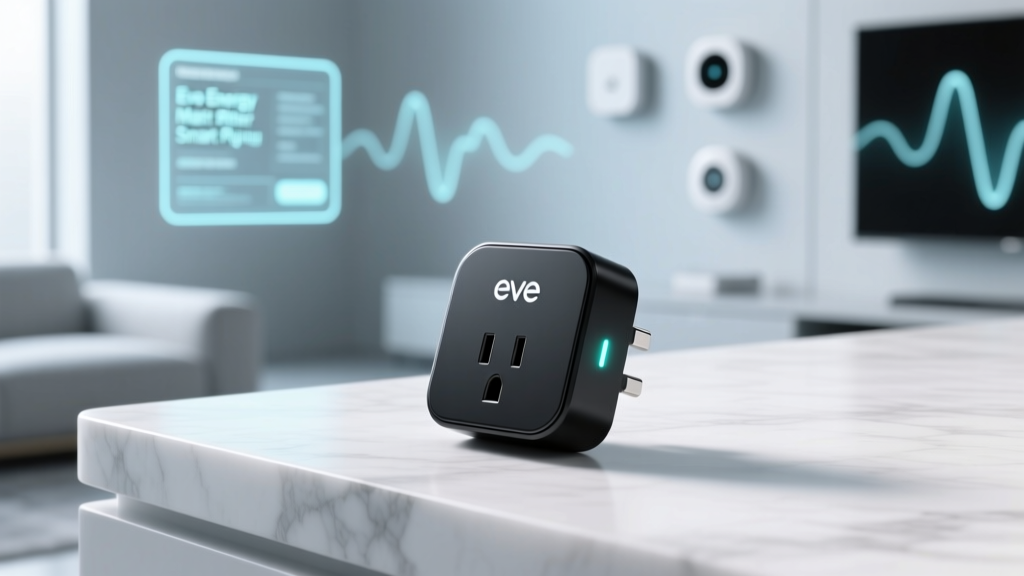
As a leading product review platform, SmartHomeDeck has tested dozens of devices claiming Matter compatibility. But not all Matter implementations are created equal. Today, we are taking an in-depth look at the Eve Energy (Matter Edition), a smart plug that leverages the Thread networking protocol to deliver low-latency control, robust mesh networking, and granular energy monitoring. Is it the ultimate bridge between ecosystems, and does it justify its premium price tag? Let's dive into the real-world data.
The Matter and Thread Advantage
To understand why the Eve Energy stands out, we first need to distinguish between Matter over Wi-Fi and Matter over Thread. According to the Connectivity Standards Alliance (CSA), Matter is an application layer protocol that unifies how devices communicate, regardless of the underlying transport. While many budget smart plugs use Matter over Wi-Fi, the Eve Energy utilizes Thread.
Thread is an IP-based, low-power mesh networking protocol. Unlike Wi-Fi plugs that connect directly to your router and consume significant bandwidth, Thread devices connect to a Thread Border Router (such as an Apple TV 4K, HomePod Mini, or Nest Hub). This creates a self-healing mesh network. If you plug the Eve Energy into an outlet on the far side of your house, it can relay its signal through other Thread devices, ensuring rock-solid reliability without congesting your primary Wi-Fi network. As detailed by the Thread Group, this architecture drastically reduces latency and prevents the 'device offline' errors that plague Wi-Fi-heavy smart homes.
Design, Build Quality, and Installation
Eve Systems has maintained a consistent, premium design language, and the Matter-enabled Eve Energy is no exception. It features a compact, cylindrical form factor with a matte white finish that blends seamlessly into most baseboards. Crucially, its slim profile ensures it will not block adjacent outlets on a standard duplex wall plate—a common failing of bulkier competitors like the TP-Link Kasa series.
Hardware Specifications
- Max Load: 15 Amps / 1800 Watts (US Version)
- Connectivity: Thread (802.15.4), Bluetooth Low Energy (for setup)
- Energy Monitoring: Voltage, Ampere, Wattage, and Kilowatt-hour tracking
- Physical Controls: Side-mounted manual toggle switch with multi-color LED status ring
Installation is a masterclass in modern smart home onboarding. If you have an Apple device running iOS 16.4 or later, you simply hold your phone near the plug, scan the HomeKit/Matter QR code, and the device is instantly provisioned to your network via your Thread Border Router. For Google Home and Amazon Alexa users, the native apps now support Matter commissioning natively, though you must ensure you have a compatible Thread Border Router on your network to facilitate the connection.
Energy Monitoring: Real-World Testing and Savings
The standout feature of the Eve Energy is its built-in energy monitoring. While basic smart plugs simply turn power on and off, the Eve Energy acts as a diagnostic tool for your home's electrical consumption. We tested the plug on three different appliances over a 30-day period to evaluate its accuracy and utility.
Test 1: The Entertainment Center
We connected a large OLED TV, a soundbar, and a gaming console to a power strip plugged into the Eve Energy. We discovered that even when 'turned off', the devices were drawing a combined standby power of 14 watts. According to the U.S. Energy Information Administration (EIA), the national average retail price of electricity hovers around 16 cents per kilowatt-hour (kWh). By using the Eve Energy to completely cut power to the entertainment center via an automation when the house is empty or asleep, we calculated an annual savings of approximately $19.50 on a single plug. Multiply that by three or four 'vampire power' zones in a home, and the plug pays for itself.
Test 2: The Space Heater
During winter months, space heaters are notorious energy hogs. We set up an automation in Apple Home: If the Eve Energy detects a draw of over 1000W for more than 2 hours, send a notification and shut off the plug. The Eve Energy reported wattage changes with less than a one-second delay, proving the low-latency benefit of the Thread protocol. Wi-Fi plugs often suffer from 3-to-5-second polling delays, which can be dangerous for high-wattage safety automations.
Test 3: The Older Refrigerator
We used the plug to monitor an aging garage refrigerator. The Eve app's historical graphing revealed that the compressor was cycling on and off far more frequently than a modern unit, indicating a failing seal. The granular data provided by the Eve Energy isn't just about saving pennies; it's about predictive maintenance for your appliances.
SmartHomeDeck Tip: To maximize energy savings, pair the Eve Energy with a smart motion sensor. Create an automation that cuts power to your home office setup (monitors, printers, speakers) when no motion is detected in the room for over an hour.
Ecosystem Compatibility: The True Matter Promise
Historically, Eve products were exclusive to Apple HomeKit. The transition to Matter changes everything. We provisioned the Eve Energy into three distinct ecosystems to test the boundaries of cross-platform compatibility.
Apple Home
In Apple Home, the experience is flawless. The Eve app offers deep historical data, but Apple's native Home app now supports energy dashboards for Matter devices. Automations trigger instantly via Thread, and the 'Adaptive Charging' feature (if supported by the connected device) works seamlessly.
Google Home
Google Home has aggressively integrated Matter. The Eve Energy appeared as a controllable plug with energy metrics visible in the device details page. However, we noted that Google's historical energy graphing is not as robust as Eve's proprietary app or Apple's Home app. Still, voice control via Google Assistant and integration into Google Home Routines worked without a hitch.
Amazon Alexa
Alexa's Matter support is functional but slightly more cumbersome to set up, requiring the Alexa app to scan the Matter QR code and route it through an Echo device acting as a Thread Border Router. Once connected, on/off commands and energy queries ('Alexa, how much power is the TV using?') were processed accurately.
Pros and Cons
No device is perfect. Here is our objective breakdown of the Eve Energy's strengths and weaknesses based on our testing.
- Pros:
- Thread mesh networking eliminates Wi-Fi congestion and dropouts.
- Highly accurate, real-time energy monitoring with historical graphs.
- True cross-platform compatibility (Apple, Google, Alexa) via Matter.
- Compact design does not block adjacent outlets.
- Physical side-button for manual override.
- Cons:
- Premium price point compared to basic Wi-Fi plugs.
- Requires a Thread Border Router (not included) for optimal performance.
- Native energy dashboards in Google/Alexa are less detailed than the Eve app.
SmartHomeDeck Scorecard
We evaluate every smart home device across five core dimensions to help you make an informed purchasing decision. Below is our official Deck Score breakdown for the Eve Energy Matter Smart Plug.
| Dimension | Score | Analysis |
|---|---|---|
| Performance | 9.2 / 10 | Thread ensures sub-second latency and 100% uptime during router reboots. |
| Value | 7.5 / 10 | Priced higher than Wi-Fi alternatives, but energy savings offset the cost over time. |
| Compatibility | 9.8 / 10 | |
| Ease-of-Use | 9.0 / 10 | QR code setup is instant, though users must understand Thread Border Router requirements. |
| Features | 9.5 / 10 | Granular energy tracking, voltage monitoring, and robust automation triggers. |
Eve Energy Deck Score Breakdown
Comparison: Eve Energy vs. The Competition
How does the Eve Energy stack up against the market leaders? We compared it to the TP-Link Kasa Smart Plug (EP25) and the Meross Matter Smart Plug (MSS210).
The TP-Link Kasa EP25 is a Wi-Fi plug. It is significantly cheaper and includes energy monitoring. However, it requires the Kasa proprietary cloud, does not support Matter natively (without a hub workaround), and adds to your router's DHCP client load. If you have more than 20 smart devices, Wi-Fi plugs will inevitably cause network congestion.
The Meross MSS210 is a fantastic budget Matter-over-Wi-Fi plug. It is incredibly affordable and works across all ecosystems. However, it lacks energy monitoring entirely. If your goal is simply to turn a lamp on and off via voice, Meross is the better value. If your goal is appliance diagnostics, energy savings, and network stability, Eve Energy is the undisputed champion.
Final Verdict: Is the Eve Energy Worth the Premium?
The Eve Energy (Matter Edition) is more than just a smart plug; it is a foundational building block for a modern, Thread-based smart home. By shifting the heavy lifting of device communication away from your Wi-Fi router and onto a dedicated Thread mesh network, it provides a level of reliability that budget plugs simply cannot match.
While the upfront cost is undeniably higher than a basic Wi-Fi alternative, the inclusion of highly accurate energy monitoring transforms it from a simple remote-control switch into a home-management tool. The ability to track vampire power, diagnose failing appliances, and automate high-wattage safety shutoffs provides tangible financial and practical value.
If you already have a Thread Border Router in your home (like an Apple TV 4K or Nest Hub) and you want a cross-platform, highly reliable smart plug that respects your network bandwidth, the Eve Energy is the gold standard. It earns the SmartHomeDeck Editor's Choice award for Matter-compatible energy monitoring plugs.